The right stage monitor helps musicians hear vocals, instruments, and timing without relying entirely on front-of-house sound. The best choice depends on venue size, power availability, feedback control, and whether you need a powered or passive design.
We’ve gathered 10 stage monitors for music, from compact 8- and 10-inch wedges to powerful 12- and 15-inch models, so you can match your monitoring setup to rehearsals, small gigs, worship spaces, bands, and larger performances.
Best 10 Stage Monitors for Music Picks for 2026
Compact Power Monitor

- 800W active coaxial monitor
- 10-inch woofer with 1-inch tweeter
- XLR/1/4-inch input and XLR link
Best For: High-output wired stage and DJ monitoring
Wireless PA Monitor

- 350W bi-amplified 10-inch speaker
- Built-in two-channel mixer
- Bluetooth and TWS wireless linking
Best For: Flexible live, DJ, and event setups
Passive Full-Range Monitor

- 12-inch woofer with 1-inch compression driver
- 300W program and 600W peak handling
- Pole socket and durable carrying hardware
Best For: Established passive PA and live sound systems
Portable Bluetooth Monitor

- 350W powered 8-inch speaker
- Bluetooth streaming and TWS linking
- Built-in two-channel mixer
Best For: Small gigs, home studios, and portable monitoring
Best Pair for Live Setups
Seismic Audio SA-10MT Stage Monitors
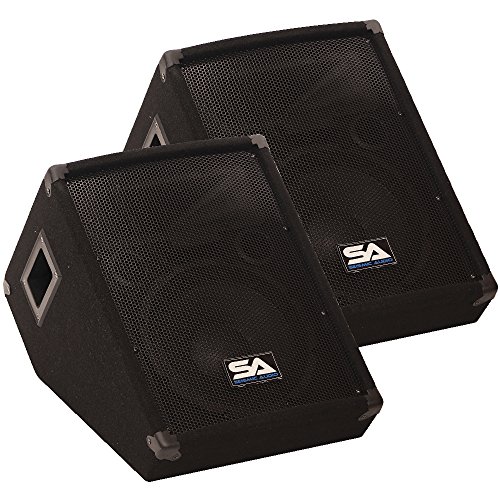
- Pair of 10-inch wedge monitors
- 150W RMS and 300W peak per speaker
- Titanium compression horn with XLR and auxiliary connectivity
Best For: Bands and ensembles needing two floor monitors
Best Powered Monitor

- Active 300-watt two-way monitor
- 12-inch woofer and 1-inch compression driver
- Feedback filter, limiter, processor, and 3-band EQ
Best For: Live and playback setups needing built-in control
Best Single Wedge

- Single 10-inch two-way floor monitor
- 150W RMS and 300W peak rating
- Titanium horn with 1/4-inch and Speakon connectivity
Best For: Solo performers and adding one monitor to a rig
Powerhouse Pick
NBVOICE PRX ONE 15-Inch PA System

- 2400W peak output with 131dB SPL
- Bluetooth DSP and feedback suppression
- Complete system with subwoofer and tower speakers
Best For: Large venues, outdoor festivals, and touring bands
Compact Monitor Value
multicomp PRO 10-Inch Floor Monitor

- 110W RMS and 220W peak handling
- Metal grille with recessed handles
- 30-pound floor-standing design
Best For: Small-to-medium live performances, DJs, and parties
Road-Ready Wedge
Rockville RSM15P 15-Inch Monitor

- 1400W peak passive 15-inch monitor
- 70° x 50° horn coverage
- 1/4-inch and Speakon connections
Best For: Bands and DJs with a separate amplifier
Compact Power Monitor – Samson RSXM10A
The Samson RSXM10A is a practical choice for stage monitors for music when you need a compact, powered wedge with substantial output. Its coaxial 10-inch design combines an 800-watt amplifier, flexible connectivity, and a durable all-wood cabinet for live performances, DJ booths, and sound engineering.
Best For: Performers, DJs, and sound engineers who want a compact active monitor with high output and pole-mount flexibility.
Pros:
- 800 watts of output from a lightweight Class D powered design
- 10-inch low-frequency driver and 1-inch tweeter in a coaxial cabinet
- XLR/1/4-inch combo input and XLR link output support flexible setups
- FOH/Monitor selector, all-wood cabinet, and 1 3/8-inch pole mount receptacle
Cons:
- At 30 pounds, it is not the lightest monitor in this group
- It is corded and does not offer wireless connectivity
- It is not waterproof
The RSXM10A stands out when output and straightforward wired integration matter more than Bluetooth or minimal weight. Its coaxial layout and selectable monitoring mode make it especially suitable for conventional stage and DJ setups.
Wireless PA Monitor – Alto TX410
The Alto TX410 is a versatile option among stage monitors for music, combining a 10-inch driver with 350 watts of bi-amplified power and a built-in two-channel mixer. Bluetooth streaming, TWS linking, and wedge-monitor placement make it useful for performers, DJs, events, and rehearsal spaces.
Best For: Bands, DJs, and presenters who want a powered monitor with Bluetooth, mixing controls, and pole-mount capability.
Pros:
- 350-watt Class D bi-amplified system with 10-inch LF driver
- Built-in two-channel mixer for microphone, line-level, and Bluetooth inputs
- Bluetooth streaming and True Wireless Stereo linking add setup flexibility
- Rugged metal grille, ergonomic handles, wedge-monitor position, and 36 mm pole socket
Cons:
- It is not water resistant
- Bluetooth and app-based controls may be unnecessary for strictly wired monitor rigs
- The listed input power is limited to 100/120V, 50/60 Hz operation
The TX410 is a strong all-purpose pick for users who value convenience as much as traditional monitoring. Its mixer and wireless features make it particularly adaptable for mixed audio sources, while the 10-inch format provides broader low-frequency coverage than the smaller TX408.
Passive Full-Range Monitor – Yamaha BR12M
The Yamaha BR12M is a traditional passive choice for stage monitors for music and sound reinforcement. Its 12-inch woofer, 1-inch compression driver, 300-watt program rating, and 600-watt peak handling suit live performance and public-address systems when you already have an amplifier or powered mixer.
Best For: Live bands and sound crews seeking a larger passive floor monitor for amplified systems.
Pros:
- 12-inch high-power woofer provides a larger low-frequency platform
- 1-inch titanium compression driver with a 90-by-40-degree CD horn
- 300-watt program and 600-watt peak power handling
- Built-in pole socket, steel handles, corner protectors, and protection circuitry
Cons:
- Requires a separate amplifier, powered mixer, or suitable speaker system
- It is a larger wired cabinet at approximately 15.6 kg
- It has no wireless connectivity or built-in mixer
The BR12M makes the most sense for established PA systems that prioritize passive scalability and a 12-inch format. Choose it over powered alternatives when your rig already includes amplification and you want a straightforward floor monitor.
Portable Bluetooth Monitor – Alto TX408
The Alto TX408 is a compact powered option for stage monitors for music, especially where portability and simple wireless playback are priorities. Its 8-inch LF driver, 350 watts of bi-amplified power, Bluetooth, and wedge-monitor shape fit small gigs, home studios, DJ setups, and intimate venues.
Best For: Small bands, DJs, home-studio users, and presenters who need a portable powered monitor with Bluetooth.
Pros:
- Compact 8-inch powered loudspeaker with 350 watts of bi-amplified power
- Bluetooth streaming supports smartphones, tablets, and laptops
- True Wireless Stereo linking enables cable-free paired playback
- Two-channel mixer, mix output, handles, wedge position, and 36 mm pole socket
Cons:
- The 8-inch driver offers less low-frequency scale than larger models
- It is not water resistant
- Bluetooth range is listed at 75 feet, so wireless placement has practical limits
The TX408 is the most compact and portable choice in this selection. It is well suited to smaller spaces and quick setups, while its built-in mixer and Bluetooth features provide useful flexibility without requiring an external mixer for every application.
Best Pair for Live Setups – Seismic Audio SA-10MT Stage Monitors
Seismic Audio - SA-10MT - Pair of 10" Floor / Stage Monitors Wedge Style with Titanium Horn
Check Price On AmazonIf you need stage monitors for music in multiple performer positions, the Seismic Audio SA-10MT provides a matched pair of wedge-style monitors. Each 10-inch, two-way speaker is rated at 150 watts RMS and 300 watts peak, with a titanium compression horn for high-frequency projection.
Best For: Bands, ensembles, and live events that need two floor monitors from one purchase.
Pros:
- Includes two 10-inch wedge-style stage monitors.
- 150 watts RMS and 300 watts peak per speaker.
- Titanium compression horn and 40 oz woofer magnet.
- Offers auxiliary and XLR connectivity.
Cons:
- At 44 pounds for the pair, it is not especially lightweight.
- Not waterproof or water resistant.
The SA-10MT is a practical choice when coverage for more than one performer matters. Its wired, floor-mounted design suits straightforward live-performance setups, while the matched pair avoids buying a second monitor separately.
Best Powered Monitor – Behringer EUROLIVE F1320D
The Behringer EUROLIVE F1320D is an active option for stage monitors for music, combining a 300-watt two-way system with a 12-inch woofer and 1-inch compression driver. Its integrated sound processor, feedback filter, limiter, and 3-band EQ add useful control for live and playback applications.
Best For: Performers and playback setups wanting an active monitor with built-in processing and feedback control.
Pros:
- Built-in 300-watt Class-D amplification.
- 12-inch woofer provides a larger driver format than the 10-inch alternatives.
- Integrated feedback filter and limiter help with system control and protection.
- Includes a 3-band EQ and integrated sound processor.
Cons:
- It is a single monitor rather than a pair.
- Wired connectivity is listed, with auxiliary input noted in the specifications.
- Not waterproof or water resistant.
With amplification and processing built in, the F1320D can simplify a monitor rig by reducing the need for a separate power amplifier. It is a strong fit for users prioritizing control features and a 12-inch woofer in a single cabinet.
Best Single Wedge – Seismic Audio SA-10MTSingle
Seismic Audio - SA-10MTSingle - 10" Floor / Stage Monitor Wedge Style with Titanium Horn
Check Price On AmazonFor a single position on stage, the Seismic Audio SA-10MTSingle offers a compact wedge-style format for stage monitors for music. Its two-way 10-inch design delivers 150 watts RMS and 300 watts peak, with a titanium compression horn and wired 1/4-inch and Speakon connectivity.
Best For: Solo performers, small bands, or buyers adding one monitor to an existing system.
Pros:
- Single 10-inch floor monitor is easy to add to an existing setup.
- Rated for 150 watts RMS and 300 watts peak.
- Titanium compression horn supports high-frequency output.
- Provides 1/4-inch and Speakon connections.
Cons:
- Only one monitor is included.
- It is a passive speaker requiring a suitable external power source.
- Not waterproof or water resistant.
The SA-10MTSingle makes sense when you need one additional wedge rather than a full pair. Its 22-pound cabinet and stage-ready floor format offer a practical balance for smaller or expanding live-performance systems.
Powerhouse Pick – NBVOICE PRX ONE 15-Inch PA System
For bands and event crews needing high-output stage monitors for music, the NBVOICE PRX ONE combines a 15-inch subwoofer, tower speakers, and 2400W peak output in a touring-oriented system. Bluetooth DSP control, multiple inputs, and feedback suppression make it flexible for demanding live setups.
Best For: Large venues, outdoor festivals, touring bands, and users who want an all-in-one PA system with extensive control options.
Pros:
- 2400W peak output and 131dB SPL suit large crowds and venues.
- Bluetooth DSP offers presets, reverb, delay, compression, and feedback suppression.
- Includes subwoofer, tower speakers, casters, and ComfortGrip handles.
- 18mm birch plywood construction and a stated 7-year warranty support touring use.
Cons:
- At about 128–130 pounds, it is much heavier than a compact floor monitor.
- The large system may be excessive for small rooms or simple rehearsals.
- It requires corded power and has a substantial setup footprint.
This is the most capable option here for scale and built-in processing, but its size and weight favor serious productions over casual stage monitoring. Choose it when coverage, output, and integrated control matter more than portability.
Compact Monitor Value – multicomp PRO 10-Inch Floor Monitor
The multicomp PRO 10-inch speaker is a straightforward choice for stage monitors for music, DJ sets, parties, and live performances. Its floor-standing wedge format, 110W RMS handling, metal grille, and recessed handles provide practical features for basic stage use.
Best For: Small-to-medium live setups, DJs, parties, and buyers seeking a lighter conventional floor monitor.
Pros:
- 10-inch woofer with 110W RMS and 220W peak power handling.
- Recessed handles and metal grilles improve transport and protection.
- Piezoelectric horn tweeter design covers a stated 50Hz–20kHz range.
- At approximately 30 pounds, it is relatively easy to move.
Cons:
- It is not waterproof, so outdoor use requires weather protection.
- Its 90dB SPL and lower power handling are less suited to very large stages.
- Connectivity is comparatively basic, using RCA and binding-post connections.
This monitor keeps the design simple and portable, making it a practical fit when you need basic performer-facing sound without the weight of a larger 15-inch cabinet. Confirm your amplifier and connector requirements before buying.
Road-Ready Wedge – Rockville RSM15P 15-Inch Monitor
The Rockville RSM15P is a passive 15-inch wedge designed for performers who want substantial stage monitors for music without built-in electronics. Its angled enclosure, 1400W peak rating, wide horn coverage, and 1/4-inch and Speakon connections make it suitable for integration with an amplifier and mixer.
Best For: Bands, DJs, and PA users who already have amplification and need a high-output passive floor monitor.
Pros:
- 15-inch woofer and 1.75-inch titanium compression driver provide substantial output.
- 70° x 50° horn coverage helps distribute sound across the stage.
- Dual 1/4-inch and Speakon input/output connectors support pro-audio integration.
- Angled wedge cabinet, handles, steel grille, and carpet finish suit event use.
Cons:
- As a passive speaker, it requires a separate amplifier.
- At about 54.9 pounds, it is less portable than the 10-inch multicomp PRO.
- It is not waterproof, and the listing states no warranty.
This is a strong fit when you need a traditional, full-size passive wedge and already own compatible amplification. Its 15-inch driver and pro-style connectors offer flexibility, though the separate amp adds to the overall system cost and setup.
How We Picked the Best Stage Monitors for Music
We compared these monitors by speaker size, power design, portability, connection requirements, stated frequency response, maximum output, and practical stage usability. Powered models can simplify a setup by combining the amplifier and speaker in one cabinet, while passive wedges may suit systems that already include a compatible PA amplifier.
We also considered common use cases rather than treating wattage as the only measure of quality. A compact monitor can be easier to place and control on a crowded stage, while a larger cabinet may provide more low-end authority and headroom. Features such as feedback filtering, DSP, Bluetooth control, horn design, cabinet construction, and sold-as-pair configurations can also affect overall value.
Quick Comparison
| Best For | Recommended Type | What to Look For |
|---|---|---|
| Solo performers and small venues | Powered 8- or 10-inch wedge | Simple inputs, compact size, adequate vocal clarity |
| Bands and rehearsal spaces | Powered 10- or 12-inch monitor | More headroom, durable enclosure, flexible placement |
| Large stages or bass-heavy monitoring | 15-inch powered or passive monitor | Higher output, extended low end, suitable amplification |
| Existing PA systems | Passive floor monitor | Correct impedance, amplifier compatibility, speaker cable connections |
Key Buying Factors for Stage Monitors for Music
Powered Versus Passive
Powered monitors are usually the easiest option for smaller rigs because they include built-in amplification. Passive monitors can be lighter or more economical when you already own an amplifier, mixer-powered system, or complete PA rack, but matching impedance and power ratings is essential.
Woofer Size and Output
Eight-inch models are often compact and focused, making them useful for vocals and limited stage space. Ten- and 12-inch monitors offer a broader balance for singers and instrumentalists. Fifteen-inch designs can deliver stronger low frequencies, but they are typically larger and may be more than necessary for basic vocal monitoring.
Feedback Control and Connectivity
Look for adjustable level controls, useful input options, and feedback-reduction features when available. A monitor should be positioned so its loudest coverage points toward the performer while microphones are kept outside the most sensitive pickup areas.
Build and Portability
Wedge cabinets, protective grilles, sturdy handles, and reinforced corners matter when equipment is transported regularly. Check dimensions and weight before buying, especially if the monitor must fit in a compact vehicle or share limited stage space.
Who Should Buy Which Stage Monitors for Music?
Choose a compact powered model if you perform solo, use backing tracks, or need a straightforward vocal monitor for small venues. A powered 10- or 12-inch wedge is a practical middle ground for bands, churches, rehearsal rooms, and mobile entertainers. Choose a passive monitor if your current PA already provides suitable amplification and cabling. For DJs, full bands, or performers who need pronounced low-end coverage, a larger 15-inch option may be worthwhile—provided the venue, amplifier, and stage layout can support it.