Speaker isolation platforms can make a surprisingly big difference when low-end resonance, desk buzz, or floor vibration is muddying your sound. The right platform helps decouple your speaker or subwoofer from the surface beneath it for tighter, cleaner playback.
Below, we’ve rounded up 10 strong options for home theaters, studios, and desktop setups, with choices for different speaker sizes, budgets, and isolation needs.
Best 10 Speaker Isolation Platforms Picks for 2026
Foam Damping Platform
VibeBoss P10 Platform for 8-10 Inch Subs
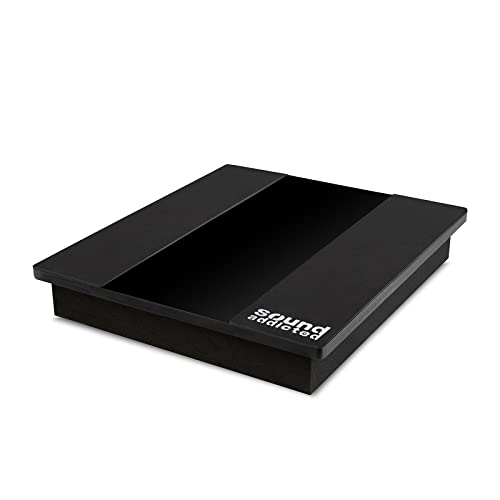
- Built for 8-inch to 10-inch subwoofers
- Foam, EVA, and MDF construction
- Non-slip base helps stabilize the cabinet
Best For: small-subwoofer setups in studios or apartments
Engineered Isolation Stand
IsoAcoustics ISO-200Sub Subwoofer Stand
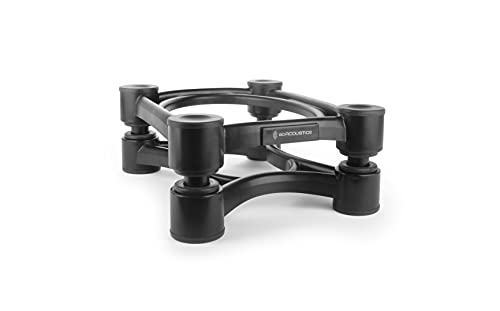
- Patented isolation design tested by NRC
- Reduces vibration through the supporting surface
- Compact stand with 75 lb capacity
Best For: audiophile subwoofer setups needing engineered decoupling
Classic Decoupling Platform
Auralex SubDude-II Isolation Platform

- Decouples subwoofers from the floor
- Helps reduce coloration and muddy bass
- Sized for 15-inch subwoofers
Best For: listeners wanting a proven platform for a large subwoofer
Heavy-Duty Floor Riser
2 Floors Subwoofer Isolation Stand

- High-density engineered wood platform
- Copper spike feet for stability and height adjustment
- Rubber bottom pad helps protect speakers
Best For: Floor-based subwoofer and speaker isolation in dedicated listening spaces
Compact Foam Stabilizer
Pyle PSIO4 Speaker Isolation Pads

- High-density foam reduces vibration and noise
- Anti-slip rubber base with steel top plate
- Compact size fits many speaker setups
Best For: Small studio monitors and compact speaker setups that need vibration control
Dual-Pad Monitor Base

- 3-layer acoustic foam helps reduce vibration
- Sized for 8" to 10" monitors and subwoofers
- Includes two pads for stereo setups
Best For: Medium to large studio monitors needing a matched pair of isolation pads
Compact Foam Riser
Pyle PSI15 15 x 15 x 1.8 Inch Speaker Pad

- High-density foam for noise isolation
- Anti-slip rubber base for stability
- 90 lb capacity for common speaker setups
Best For: Studio monitors and compact speaker setups
Steel-Top Isolation Pad
15 x 15 Foam Speaker Riser with Steel Top Plate
- Foam base reduces vibration and resonance
- CNC steel top-plate adds rigid support
- Anti-slip rubber base improves stability
Best For: Studio or stage setups needing extra top-plate support
Large Format Riser
Pyle PSI21 22.3 x 15 x 3 Inch Isolation Pad

- Largest footprint in the group
- 100 lb capacity for heavier speakers
- Steel top-plate adds rigid support
Best For: Larger monitors and subwoofers needing extra surface area
Compact Decoupling Feet – SVS SoundPath Isolation Feet for Subwoofers
If you want speaker isolation platforms benefits without adding a bulky riser, the SVS SoundPath Subwoofer Isolation System is a compact way to cut floor vibration and tighten up bass. These isolation feet are designed for subwoofers that accept screw-in feet, with adhesive pads as a fallback when threaded inserts aren’t available.
Best For: Apartment, townhouse, and home theater subwoofer owners who want a discreet vibration-control upgrade.
Pros:
- Affordable, low-profile alternative to larger platforms and risers
- Helps reduce floor boom, vibration, and room buzz/rattle
- Can lead to fewer complaints from neighbors or other occupants
- Works with any brand subwoofer that accepts screw-in feet
Cons:
- Not a traditional full-size isolation platform
- Requires threaded inserts for the cleanest installation
- May need double-sided tape or adhesive pads on some subs
For buyers focused on practical vibration control, this is a simple and discreet solution that aims at the same real-world goal as larger speaker isolation platforms. It’s especially appealing when you want cleaner bass without changing the footprint of the subwoofer.
Foam Damping Platform – VibeBoss P10 Platform for 8-10 Inch Subs
The VibeBoss P10 is a speaker isolation platform built for 8-10 inch subwoofers and similar speakers when you want extra damping under the cabinet. Its thick foam, EVA material, and MDF board are aimed at reducing vibration and stabilizing the sub in studios, apartments, or anywhere you want cleaner playback.
Best For: Home studio and apartment users with 8-10 inch subwoofers who want a sturdy isolation riser.
Pros:
- Compatible with 8-inch, 9-inch, and 10-inch subwoofers
- High-density foam and MDF construction for added stability
- Helps reduce vibrations and improve noise isolation
- Non-slip base suits studio and apartment setups
Cons:
- Sized specifically for smaller subwoofers
- Single-platform design may not suit larger cabinets
- Bulkier than simple isolation feet
If you want a more traditional platform-style approach, the P10 gives you a stable base with damping materials built in. It’s a straightforward pick for buyers who care more about isolation and placement stability than about keeping the footprint minimal.
Engineered Isolation Stand – IsoAcoustics ISO-200Sub Subwoofer Stand
The IsoAcoustics ISO-200Sub is a purpose-built speaker isolation platform for subwoofers that need strong decoupling and a compact footprint. With a 75 lb capacity and a design tested at the National Research Council of Canada, it focuses on reducing vibrations through the supporting surface while also helping minimize internal reflections.
Best For: Audiophile subwoofer setups where isolation performance matters more than a simple riser.
Pros:
- Patented IsoAcoustics isolation design tested by the NRC
- Helps reduce surface-borne vibration and dissonant sounds
- Can improve stereo image by reducing internal reflections
- Compact size with a 75 lb weight capacity
Cons:
- Lower weight capacity than some larger platform options
- Sold as a single stand, not a multi-piece set
- May need additional units for larger subwoofers
This model stands out when you want a more engineered take on speaker isolation platforms rather than a basic foam pad. It’s a strong choice for listeners who want controlled bass, less room disturbance, and a more refined listening presentation.
Classic Decoupling Platform – Auralex SubDude-II Isolation Platform
Auralex Acoustics SubDude-II Subwoofer Acoustic Isolation Platform, 1.75" x 15" x 15"
Check Price On AmazonThe Auralex SubDude-II is a classic speaker isolation platform designed to decouple a subwoofer from the floor and cut down on structural vibrations. Its inert layer and velour finish are aimed at reducing coloration and muddy bass, making it a practical add-on for cleaner low-frequency response.
Best For: Home theater and music listeners who want a proven isolation platform for a 15-inch subwoofer.
Pros:
- Decouples the sub from the floor to reduce structural vibration
- Aims to improve bass clarity and reduce muddy sound
- Sized for 15-inch subwoofers
- Lightweight platform design
Cons:
- Less discreet than isolation feet
- Limited to a 15-inch subwoofer size
- One-year manufacturer defect warranty only
If you prefer a straightforward platform approach, the SubDude-II is a familiar solution with a simple goal: isolate the sub and improve the way it couples to the room. It remains a sensible choice for buyers comparing speaker isolation platforms on proven bass-control performance.
Heavy-Duty Floor Riser – 2 Floors Subwoofer Isolation Stand
For speaker isolation platforms that need a sturdier floor-based solution, this SUZEPER stand focuses on reducing unwanted resonance while giving subwoofers or larger speakers a stable place to sit. The thick high-density board, copper spike feet, and rubber bottom pad are aimed at cleaner sound projection and better stability in home theaters, studios, or office setups.
Best For: Users who want a solid floor isolation platform for subwoofers or larger speakers in studios, home theaters, or live-use spaces.
Pros:
- Thick high-density engineered wood construction with a polished surface
- Copper spike feet help with height adjustment, stability, and noise reduction
- Rubber bottom pad adds extra speaker safety and grip
- Designed to help reduce resonance for cleaner speaker projection
Cons:
- Sold as a single unit, not a pair
- Requires choosing the right size for compatibility
- Bulkier floor stand design may not suit small desktop setups
Overall, this is a practical pick if you want an isolation platform that prioritizes physical stability and a cleaner sound path over compactness. Its heavier build and spike-foot design make it better suited to dedicated listening spaces than casual desktop use.
Compact Foam Stabilizer – Pyle PSIO4 Speaker Isolation Pads
Among speaker isolation platforms, this Pyle foam riser is built to absorb low-frequency vibrations and keep speakers steadier on desks, stands, or shelves. Its high-density foam construction, anti-slip rubber base, and machined steel top plate make it a straightforward option for taming vibration in studio monitor or subwoofer setups.
Best For: Desktop studios, home theater systems, and listening rooms that need a compact foam isolation pad for speaker stabilization.
Pros:
- High-density engineered foam helps dampen vibration and noise
- Anti-slip rubber base supports stable placement
- Machined steel top plate adds sturdy support
- Compact 7.5″ x 9.1″ size works with many speaker types
Cons:
- 44.6 lb load capacity may be limiting for heavier powered subwoofers
- Small footprint is not ideal for larger monitors
- Foam design offers less height and structure than rigid stands
This is a sensible, no-fuss choice if your priority is vibration control in a compact footprint. It makes the most sense for smaller to mid-size speakers where isolation and desk stability matter more than a tall platform.
Dual-Pad Monitor Base – 2-Pack 8"-10" Speaker Riser
If you want speaker isolation platforms for larger desktop monitors or subwoofers, this 2-pack uses a 3-layer acoustic foam design to cut vibration and improve clarity. Sized for 8″ to 10″ speakers, it combines shock-absorbent rubber sponge with a non-slip fiberboard base to keep gear steady on desks or studio surfaces.
Best For: Users with 8″ to 10″ studio monitors or subwoofers who want a two-pack of isolation pads for home or studio use.
Pros:
- 3-layer dampening design targets vibration from speakers and desks
- Sized for most 8″, 8.5″, 9″, and 10″ monitors and subwoofers
- Shock-absorbent foam and non-slip fiberboard base improve stability
- Includes two pads for a matched stereo setup
Cons:
- Only fits the listed speaker size range well
- Foam-and-board build is less rigid than hard platforms
- At 1.8″ high, it adds limited elevation
This 2-pack is a practical option when you want basic isolation and a cleaner desktop setup for medium to larger monitors. It is especially useful if you need matching left-right support rather than a single riser.
Compact Foam Riser – Pyle PSI15 15 x 15 x 1.8 Inch Speaker Pad
If you want one of the more straightforward speaker isolation platforms for a studio desk or small monitoring setup, this Pyle foam riser focuses on vibration control and cleaner speaker projection. Its high-density engineered foam and anti-slip rubber base are designed to help reduce resonance while keeping compact speakers stable.
Best For: Studio monitors, shelf speakers, and subwoofers that need a simple 15 x 15 inch isolation pad with a 90 lb capacity.
Pros:
- High-density foam helps with speaker stabilization, noise isolation, and dampening absorption.
- Anti-slip rubber base helps keep speakers secured on stage or in the studio.
- Universal compatibility works with many speaker types, brands, and models.
- 90 lb load capacity fits many common monitor and bookshelf speaker setups.
Cons:
- Single pad only, so stereo pairs require two purchases.
- 15 x 15 inch footprint may be too small for larger speaker cabinets.
- Basic design offers isolation, not adjustable height or angle.
Overall, this is a practical pick if you want a no-frills speaker riser that emphasizes stability, vibration reduction, and broad compatibility. It is best suited to lighter setups where a compact footprint matters.
Steel-Top Isolation Pad – 15 x 15 Foam Speaker Riser with Steel Top Plate
Among speaker isolation platforms, this Pyle riser stands out by adding an integrated CNC machined thick steel top-plate on top of its sound-dampening foam base. The result is a more rigid placement surface for studio monitors, subwoofers, and loudspeakers while still aiming to reduce vibration and resonance.
Best For: Users who want a 15 x 15 inch isolation pad with a steel top plate and a 90 lb load rating for studio or stage use.
Pros:
- High-density engineered foam helps reduce vibration and unwanted resonance.
- Integrated CNC machined thick steel top-plate adds sturdy speaker placement.
- Anti-slip rubber base helps keep the riser secure in place.
- Universal compatibility fits many speaker types, brands, and models.
Cons:
- Single pad included, so it is not a pair for stereo use.
- 15 x 15 inch size may be limiting for larger cabinets.
- Heavier than the simplest foam-only designs at 1.55 pounds.
This is a good choice if you like the idea of a foam isolation platform but want extra rigidity from a steel top plate. It balances damping and support in a format that should work well for many desktop and small-room setups.
Large Format Riser – Pyle PSI21 22.3 x 15 x 3 Inch Isolation Pad
If you need speaker isolation platforms for larger speakers, this Pyle PSI21 gives you more surface area and a higher weight rating than the smaller version. Its high-density foam construction is built to reduce recoil and vibration, while the anti-slip rubber base and steel top-plate help support more demanding audio setups.
Best For: Larger studio monitors, subwoofers, and loudspeakers that need a 22.3 x 15 x 3 inch isolation platform with a 100 lb capacity.
Pros:
- Larger 22.3 x 15 inch footprint fits bigger speakers more comfortably.
- 100 lb load capacity supports heavier audio gear than the smaller models.
- High-density foam helps with stabilization, noise isolation, and dampening absorption.
- Integrated CNC machined thick steel top-plate adds sturdy placement support.
Cons:
- Three-inch height may be more than some desktop setups want.
- Single pad only, so dual-speaker systems need two units.
- Bulkier size takes up more space than the 15 x 15 inch options.
For buyers comparing speaker isolation platforms for larger cabinets, this model offers the most room and the highest load capacity in the group. It is the most practical choice when stability and size matter more than keeping the footprint small.
How We Picked These Speaker Isolation Platforms
We focused on the factors that matter most in real-world use: size compatibility, vibration control, build quality, stability, and value. For Speaker Isolation Platforms, the best choice is not always the thickest foam or the heaviest stand; it is the one that matches your speaker weight, footprint, and listening environment.
We also looked for options that suit different use cases, from subwoofers in living rooms to studio monitors on desks and shelves.
Quick Comparison
As you compare Speaker Isolation Platforms, think about the platform style first. Foam risers and pads are usually more affordable and easy to place, while rigid or semi-rigid stands and isolation systems may offer stronger control and better support for heavier gear. If you are isolating a subwoofer, prioritize load capacity and footprint. For monitors, check whether the platform helps maintain a stable angle and reduces desk resonance.
Key Buying Factors for Speaker Isolation Platforms
Size and Weight Capacity
Match the platform to your speaker or subwoofer dimensions, including depth and width, not just the diagonal size. Weight capacity should be comfortably above the actual load so the material can compress or support properly without bottoming out.
Material and Isolation Method
Foam models absorb some vibration and are common for lighter speakers. More engineered designs may use rubber, composite layers, or decoupling mechanisms to reduce transfer more effectively. The best material depends on whether your goal is taming desk shake, reducing floor rumble, or improving monitor accuracy.
Stability and Placement
A good platform should stay put and keep the speaker steady at normal listening volume. Rubber feet, textured surfaces, and wider bases help prevent sliding, especially on smooth furniture or laminate floors.
Intended Use
Home theater subwoofers, studio monitors, and bookshelf speakers do not need the same solution. Subwoofer users should focus on low-frequency vibration control, while studio buyers may care more about cleaner mids and improved imaging from a more isolated listening position.
Who Should Buy Which Speaker Isolation Platforms?
If you want maximum isolation for a subwoofer, choose a sturdier platform or stand built for heavier loads and larger cabinets. If you are setting up desktop monitors or small bookshelf speakers, lighter foam-based Speaker Isolation Platforms can offer a simple, budget-friendly upgrade. For mixed-use rooms, look for a model that balances support, footprint, and vibration reduction without adding too much height.
In short, pick the platform that fits your gear first, then compare isolation performance, stability, and price. That approach will help you find the right match without overbuying or under-supporting your speakers.