Choosing the right rackmount audio interface can make a studio feel faster, cleaner, and far more flexible. Whether you need more mic inputs, better conversion, or tighter integration with your DAW, the best models save rack space while simplifying your workflow.
In this roundup, we focused on interfaces that balance sound quality, connectivity, and practical features for recording, mixing, and production.
Best 10 Rackmount Audio Interface Picks for 2026
High-Input Studio Workhorse
Tascam US-16x08 Rackmount USB Audio/MIDI Interface
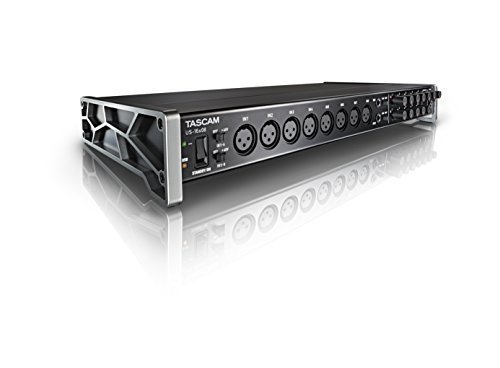
- 16 inputs for larger tracking sessions
- Eight Ultra-HDDA mic preamps with up to 56dB gain
- DSP mixer adds low-latency EQ and compression
Best For: Windows users recording drums, bands, and multi-mic projects
Dante-Ready Hybrid Rack
Apollo x16D Rackmount Thunderbolt 3 Audio Interface

- 16 x 16 Dante I/O with AES67 support
- HEXA Core processing for near-zero-latency UAD mixing
- 24-bit/192 kHz conversion with Dual-Crystal Clocking
Best For: Pro studios and engineers using Dante and UAD ecosystems
Studio-Grade Expansion Rack
Focusrite Clarett+ 8Pre Rackmount Audio Interface

- Eight Clarett+ preamps with low noise and distortion
- Air mode adds classic-style high-frequency emphasis
- ADAT input supports expansion with compatible gear
Best For: Producers who want clean capture and future expansion
Vintage-Tone Rack Interface
Universal Audio Volt 876 Rack-Mount Style Audio Interface
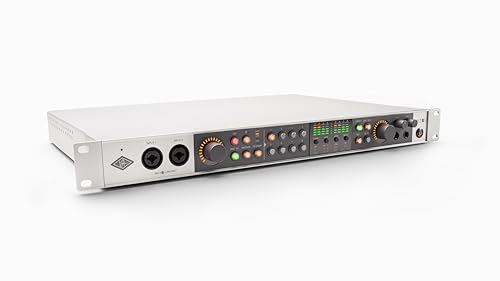
- Eight Vintage preamps with classic compressors
- 32-bit / 192 kHz conversion across Mac, PC, iPad, and iPhone
- UAD Console app offers auto-gain and session recall
Best For: Creators wanting UA tone and fast production workflows
Premium rack studio hub
SSL 18 Rackmount Audio Interface with 10 Line Outs

- 32-bit/192 kHz conversion
- 8 SSL-designed mic preamps
- 10 balanced line outputs
Best For: High-end studio routing and tracking
Straightforward 16-channel rack interface
Arturia AudioFuse 16Rig Audio Interface

- 16-channel USB connectivity
- Works with major DAWs
- XLR input support
Best For: Studio users needing a simple 16-channel rack interface
Expandable project-studio rack interface
Focusrite Clarett+ 8Pre Rackmount Audio Interface Bundle
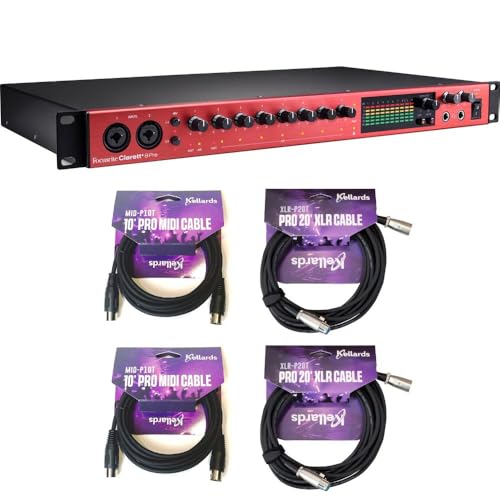
- 8 mic/line preamps with 2 Hi-Z
- 24-bit/192 kHz conversion
- ADAT, S/PDIF, MIDI, and wordclock
Best For: Project studios needing flexible expansion and 8 preamps
Flagship rackmount audio interface
Focusrite Scarlett 18i20 4th Gen

- 18-in/20-out with eight mic preamps
- Dual ADAT, S/PDIF, MIDI, and Word Clock
- Auto Gain, Clip Safe, and software bundle
Best For: Large project studios and expanding recording rigs
Budget-friendly rackmount audio interface

- 18x20 USB 2.0 with ADAT and MIDI
- Eight MIDAS-designed mic preamps
- 24-bit/96kHz resolution for recording
Best For: Cost-conscious studios needing lots of I/O
Compact rackmount audio interface
Focusrite Scarlett 18i16 4th Gen

- 18-in/16-out with four mic preamps
- 24-bit/192kHz conversion and 69dB gain
- Auto Gain, Clip Safe, and included software
Best For: Songwriters and small studios needing flexible routing
High-Input Studio Workhorse – Tascam US-16×08 Rackmount USB Audio/MIDI Interface
If you need a rackmount audio interface built for bigger tracking sessions, the Tascam US-16×08 focuses on input count, clean preamps, and practical monitoring tools. It gives you 16 channels of capture, including eight Ultra-HDDA mic preamps and additional line inputs, so it suits projects that need more than a basic two-channel setup.
Best For: Recordists who want lots of inputs for bands, drums, and larger home studios on Windows.
Pros:
- 16 total inputs with eight XLR mic preamps and eight 1/4″ line inputs
- Eight Ultra-HDDA preamps offer up to 56dB of gain and quiet operation
- Built-in DSP mixer supports low-latency monitoring with EQ and compression
- Eight balanced outputs add flexible routing for monitoring and outboard gear
Cons:
- Windows compatibility is listed, so it is not positioned as a cross-platform option
- Only two front-panel outputs have level control for monitoring
The US-16×08 is a sensible pick if your priority is channel count and dependable front-end performance rather than premium networked features. For multi-mic sessions, it offers a straightforward rackmount layout with enough I/O to keep a serious recording workflow moving.
Dante-Ready Hybrid Rack – Apollo x16D Rackmount Thunderbolt 3 Audio Interface
Universal Audio Apollo x16D Essentials+ 18 x 20 Audio Interface with Dante I/O and UAD DSP
Check Price On AmazonThe Universal Audio Apollo x16D is a rackmount audio interface aimed at pro workflows that need both Thunderbolt and Dante connectivity. With 16 x 16 Dante network I/O, onboard HEXA Core processing, and 24-bit/192 kHz conversion, it is designed for studio and live environments that depend on low-latency routing and premium digital integration.
Best For: Engineers and studios that need Dante networking, onboard UAD processing, and high-end digital connectivity.
Pros:
- 16 x 16 Dante network I/O with AES67 support at 48 kHz
- HEXA Core processing enables near-zero-latency UAD plug-in mixing
- 24-bit / 192 kHz resolution with Dual-Crystal Clocking
- Includes monitor outs, word clock I/O, and stereo AES I/O
Cons:
- More specialized than a basic USB interface for simple recording setups
- Its feature set is geared toward advanced digital systems and pro workflows
This is a powerful option if your rackmount interface needs to slot into a larger Dante-based system without sacrificing UA processing. It is best matched to users who will actually use the network audio, clocking, and plug-in recall features.
Studio-Grade Expansion Rack – Focusrite Clarett+ 8Pre Rackmount Audio Interface
The Focusrite Clarett+ 8Pre is a rackmount audio interface built for producers who want clean capture, strong converter performance, and room to expand. Its eight Clarett+ mic preamps, two hi-Z inputs, and ADAT expansion make it a flexible centerpiece for a serious project or production studio.
Best For: Established producers who want transparent preamps, strong conversion, and ADAT expandability.
Pros:
- Eight low-noise Clarett+ mic preamps with lots of headroom
- Air mode adds analog-style high-frequency lift on every preamp
- High-performance A-D and D-A converters support detailed recording and playback
- ADAT optical input expands the system with compatible outboard gear
Cons:
- It is an 18-in/20-out interface, so it is less input-heavy than some larger rack units
- Focus is on studio quality rather than advanced digital network features
The Clarett+ 8Pre is a strong fit if you want a rackmount interface that emphasizes clean analog capture and flexible growth. It is especially appealing when you need reliable preamps and good monitoring without moving into a more complex networked setup.
Vintage-Tone Rack Interface – Universal Audio Volt 876 Rack-Mount Style Audio Interface
The Universal Audio Volt 876 is a rack-mount style audio interface for users who want classic tone tools alongside modern USB recording. With eight Vintage preamps, built-in compressors, 32-bit/192 kHz conversion, and session recall through the UAD Console app, it is aimed at streamlined production workflows on Mac, PC, iPad, and iPhone.
Best For: Creators who want a rackmount interface with vintage-style preamps, compression, and modern recall tools.
Pros:
- Eight onboard Vintage preamps and classic compressors inspired by UA hardware
- 32-bit / 192 kHz conversion supports detailed recording and playback
- UAD Console app adds auto-gain, session recall, and two low-latency cue mixes
- Can expand by combining multiple Volt 876 units or integrating with ADAT gear
Cons:
- It is listed as a rack-mount style interface rather than a traditional full rack unit
- To use its expanded setup options, you need compatible additional gear
The Volt 876 is a practical choice if you want UA flavor in a rack-ready format without giving up modern workflow helpers. Its mix of onboard tone shaping and session-management features makes it appealing for producers who value speed as much as sound.
Premium rack studio hub – SSL 18 Rackmount Audio Interface with 10 Line Outs
If you want a rackmount audio interface built around high-end conversion and lots of routing, the Solid State Logic SSL 18 is designed for exactly that kind of studio workflow. It pairs 32-bit/192 kHz converters with eight SSL-designed mic preamps and ten balanced line outputs, giving you plenty of I/O for tracking, monitoring, and outboard integration.
Best For: Engineers and producers who need a high-output rack interface with premium conversion and SSL mic pres.
Pros:
- 32-bit, 192 kHz converters with up to 120 dB dynamic range on inputs
- Eight SSL-designed mic preamps with switchable mic/line configuration
- 10 balanced line outputs for flexible studio routing
- Monitor and line outputs offer 125 dB dynamic range
Cons:
- Large rack-style unit at 12 pounds and 24.4 x 14.4 x 4.6 inches
- No MIDI or bundled software details listed in the supplied notes
Overall, the SSL 18 is the most routing-heavy choice in this group, and its converter and preamp specs make it a strong fit when sonic headroom and line-output count matter most.
Straightforward 16-channel rack interface – Arturia AudioFuse 16Rig Audio Interface
The Arturia AudioFuse 16Rig is a practical rackmount audio interface pick when you want a straightforward 16-channel USB setup for a computer-based studio. Its notes point to USB connectivity, 16 channels, XLR input support, and compatibility with popular DAWs, which makes it a sensible choice for organized recording and playback duties.
Best For: Computer-based studios that want a 16-channel USB interface with broad DAW compatibility.
Pros:
- 16 channels for multi-input studio workflows
- USB connectivity for simple computer integration
- Compatible with Ableton Live, Pro Tools, Logic Pro, and FL Studio
- XLR audio input support
Cons:
- Maximum sample rate is listed at 48 kHz
- Fewer detailed I/O and conversion specs provided in the notes
In a rack setup, the AudioFuse 16Rig stands out more for channel count and software compatibility than for headline conversion figures, so it fits users who value practical routing over spec chasing.
Expandable project-studio rack interface – Focusrite Clarett+ 8Pre Rackmount Audio Interface Bundle
The Focusrite Clarett+ 8Pre is a strong rackmount audio interface option for studios that need eight mic/line preamps, modern USB connectivity, and expansion-friendly I/O. The supplied notes highlight upgraded 24-bit/192 kHz conversion, internal power, MIDI, S/PDIF, ADAT, and wordclock output, which makes it well suited to more developed recording setups.
Best For: Project studios and producers who need an 8-preamp rack interface with lots of digital connectivity.
Pros:
- Eight mic/line preamps, including 2 Hi-Z inputs
- 24-bit/192 kHz conversion with internal power supply
- USB-C and USB-A connectivity for Mac and Windows systems
- ADAT, S/PDIF, MIDI, and wordclock output for expansion
Cons:
- Bundle includes cables, which may be unnecessary if you already have accessories
- Uses USB 2.0 protocol over USB-C, not a higher-speed USB spec
For studios that want a rack interface with proven I/O flexibility, the Clarett+ 8Pre offers a balanced mix of mic inputs, conversion quality, and expansion options.
Flagship rackmount audio interface – Focusrite Scarlett 18i20 4th Gen
If you’re shopping for a rackmount audio interface that can handle larger recording sessions, the Focusrite Scarlett 18i20 4th Gen is built for serious studio routing. It offers 18 inputs and 20 outputs, eight mic preamps, dual ADAT, S/PDIF, MIDI I/O, and Word Clock, making it a flexible hub for multitrack recording, podcasting, and expanding a growing setup.
Best For: Home and project studios that need high channel count, broad digital connectivity, and included production software.
Pros:
- 18-in/20-out design with eight mic preamps plus Hi-Z, line, ADAT, S/PDIF, MIDI, and Word Clock connections.
- 4th Gen preamps provide up to 69dB of gain, with 24-bit/192kHz conversion and a 122dB dynamic range.
- Auto Gain and Clip Safe help speed up setup and reduce clipping during sessions.
- Includes Pro Tools Intro+, Ableton Live Lite, Cubase LE, and the Hitmaker Expansion software bundle.
Cons:
- Larger desktop footprint than more compact interfaces.
- More advanced routing may be more than casual users need.
This is the most feature-rich option in the group and the clear pick if you want a rackmount audio interface with strong expandability and studio-grade workflow tools. It leans toward users who need lots of I/O now and room to grow later.
Budget-friendly rackmount audio interface – Behringer UMC1820
The Behringer UMC1820 is a straightforward rackmount audio interface for users who need plenty of channels without a complicated workflow. It streams 18 inputs and 20 outputs over USB 2.0, adds ADAT I/O and MIDI support, and uses MIDAS-designed mic preamps, so it fits well in a recording setup for microphones and instruments.
Best For: Budget-conscious studios that want a high-channel-count interface with ADAT expansion.
Pros:
- 18×20 USB audio/MIDI interface with ADAT I/O.
- Eight MIDAS-designed mic preamps with +48V phantom power.
- 24-bit/96kHz resolution for professional audio quality.
- Compatible with major recording software like Pro Tools, Ableton Live, and Cubase.
Cons:
- Lower maximum sample rate than the 192kHz models in this roundup.
- Older USB 2.0 design may be less modern than newer interfaces.
If you want a rackmount audio interface that covers the essentials and keeps costs in check, the UMC1820 is an easy model to understand. It’s best for users who value channel count, MIDAS preamps, and software compatibility over premium extras.
Compact rackmount audio interface – Focusrite Scarlett 18i16 4th Gen
The Focusrite Scarlett 18i16 4th Gen is a smaller rackmount audio interface option for songwriters and producers who still need serious connectivity. With 18 inputs and 16 outputs, four mic preamps, two Hi-Z inputs, eight line inputs, plus ADAT, S/PDIF, and MIDI, it gives you a capable center for recording and mixing without stepping up to the larger 18i20.
Best For: Songwriters and small studios that want Focusrite flexibility in a more compact format.
Pros:
- 18-in/16-out layout with four mic preamps and broad digital I/O.
- 4th Gen preamps offer up to 69dB of gain and 24-bit/192kHz conversion.
- Auto Gain and Clip Safe simplify gain staging and help prevent clipping.
- Includes Pro Tools Intro+, Ableton Live Lite, Cubase LE, and Hitmaker Expansion.
Cons:
- Fewer mic preamps and outputs than the larger Scarlett 18i20.
- Still more interface than a simple single-artist recording setup may need.
This model makes sense if you want a rackmount audio interface with modern Focusrite workflow features but don’t need the maximum I/O of the bigger unit. It strikes a practical balance between flexibility, size, and recording-focused tools.
How We Picked These Rackmount Audio Interfaces
We looked for models that offer real value for recording setups that need more than a basic desktop interface. Priority went to solid preamps, dependable drivers, enough I/O for drums and band tracking, and useful expansion options such as ADAT, MIDI, Dante, or extra line outputs. We also favored units that are easy to integrate into a rack-based studio without adding unnecessary complexity.
Quick Comparison: What to Look for at a Glance
Before buying, compare the number of mic inputs, line outputs, digital expansion, and connection type. A Rackmount Audio Interface for solo music production may only need a few high-quality inputs, while drum recording, hybrid mixing, and live tracking often benefit from 8 or more mic pres plus additional outputs. Also check whether the unit is USB-C, Thunderbolt, or networked audio, since that affects latency, compatibility, and future upgrade paths.
Key Buying Factors for a Rackmount Audio Interface
Input and Output Count
Match the interface to your recording goals. Singer-songwriters and podcasters can often work with fewer inputs, while drum sessions, full bands, or outboard-heavy mixing setups need more simultaneous channels and monitor sends.
Preamps and Converter Quality
Good preamps matter, especially if you record vocals, acoustic instruments, or quiet sources. Cleaner gain, lower noise, and strong converters help tracks stay detailed before mixing and processing.
Connectivity and Latency
USB-C is common and broadly compatible, while Thunderbolt can deliver very low latency and strong performance for demanding sessions. If you work in larger studios, Dante or other network features can be a major advantage.
Expandability and Routing
ADAT, MIDI, software control, and flexible cue mixing can extend the life of a Rackmount Audio Interface. These features are especially useful if you plan to add more preamps, integrate hardware synths, or build monitor mixes for multiple musicians.
Who Should Buy Which Rackmount Audio Interface?
If you are building a compact project studio, choose a model with enough onboard preamps and straightforward USB connectivity. Producers who record drums or multiple live sources should prioritize higher input counts and solid expansion. Engineers and advanced users will benefit most from interfaces with pro-level routing, premium conversion, and broader digital connectivity. In short, the best Rackmount Audio Interface is the one that fits your session size, computer setup, and long-term workflow without forcing compromises.