The right portable DAC can make IEM listening cleaner, louder, and more flexible without adding much bulk to your phone, tablet, or laptop setup. This roundup compares 10 compact options across simple dongles, balanced-output amplifiers, high-resolution decoding, and advanced EQ features.
Whether you want an affordable everyday adapter or a more powerful DAC amp for demanding earphones, the best choice depends on output power, connector compatibility, controls, battery demands, and how much customization you actually need.
Best 10 Portable Dacs for Iems Picks for 2026
Tube-Tuned Detail
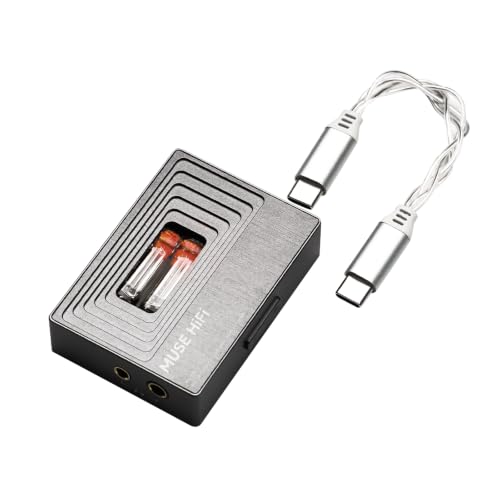
- JAN6418 tube hybrid amplification
- 3.5mm and 4.4mm outputs
- PCM 384kHz and DSD256 support
Best For: Tube-inclined IEM and headphone listeners
Screen-Controlled Power

- Dual CS43198 DAC architecture
- 3.5mm and 4.4mm outputs
- OLED screen with gain and filter controls
Best For: Versatile IEM users who want onboard controls
EQ-Focused Performance

- 600mW balanced amplification
- Persistent 10-band parametric EQ
- Eco and Boost power modes
Best For: Listeners who want adjustable IEM sound profiles
Everyday Dongle Value

- CX31993 and MAX97220 chips
- 32-bit/384kHz support
- USB-A adapter included
Best For: Portable 3.5mm IEM listening from USB-C devices
Best for Custom EQ

- Detailed app-based parametric EQ
- Dual CS43198 DACs with DSD256 support
- 3.5mm and 4.4mm outputs
Best For: Listeners who want adjustable sound and flexible outputs
Best for Output Power

- Up to 320mW through 4.4mm balanced
- Dual CS43131 DACs support DSD256
- Physical buttons and 25g metal build
Best For: Users wanting powerful balanced output in a compact DAC
Best Compact Kiwi Ears Match
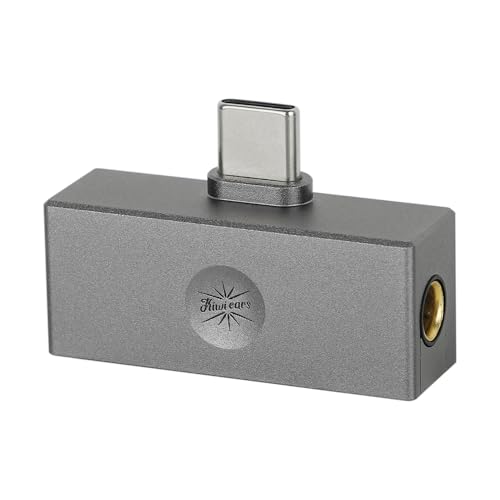
- Compact all-aluminum alloy body
- 3.5mm and 4.4mm outputs
- 32-bit/384kHz PCM and DSD128 support
Best For: Portable IEM listening with simple high-resolution playback
Best Plug-In Design
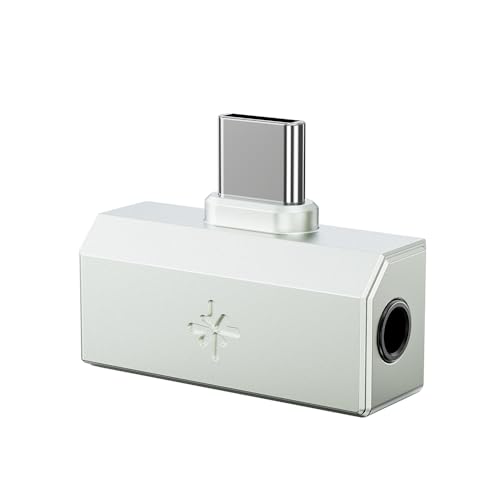
- 7g direct plug-in aluminum design
- 10-band PEQ via Android or PC web
- PCM 384kHz/32-bit and DSD256 support
Best For: Android listeners seeking a tiny, cable-free DAC with EQ
Best Output Flexibility

- 3.5mm and 4.4mm outputs
- Dual CS43198 chips with DSD256 support
- App EQ memory and five digital filters
Best For: Multi-platform listeners using both single-ended and balanced IEMs
Best Simple Controls
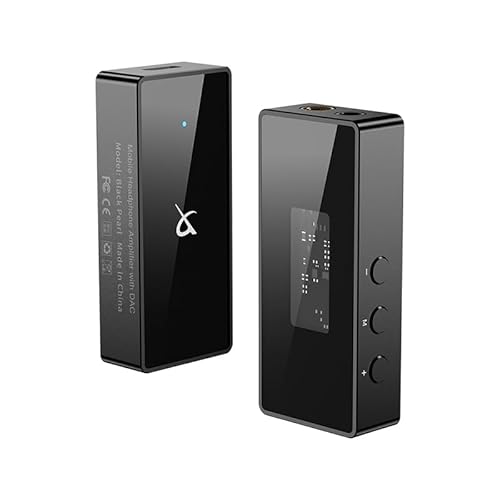
- 3.5mm and 4.4mm headphone outputs
- Dual CS43131 chips and DSD256 support
- Push buttons, recording, and eight-band EQ
Best For: Android users wanting dual outputs and straightforward controls
Tube-Tuned Detail – MUSEHiFi M3 Ultra
The MUSEHiFi M3 Ultra is one of the more distinctive portable dacs for iems, pairing a JAN6418 vacuum tube with hybrid amplification. It offers both 3.5mm and 4.4mm outputs, high-resolution PCM and DSD support, and noise-reduction measures intended to keep sensitive IEM listening cleaner.
Best For: Listeners who want tube warmth, flexible outputs, and a powerful portable DAC/amp for IEMs and headphones.
Pros:
- JAN6418 tube and op-amp hybrid design aims for smooth vocals and rich harmonics.
- Provides 3.5mm and 4.4mm outputs with up to 460mW and 480mW respectively.
- Supports PCM up to 32-bit/384kHz and DSD256.
- Uses circuit, physical, and algorithmic measures to reduce tube microphonics and other noise.
Cons:
- The tube-based design may be less convenient for listeners who frequently move while using it.
- Its high output power may be more than needed for especially sensitive IEMs.
The M3 Ultra stands out when you want a more characterful presentation than a conventional dongle can provide. Its dual outputs and strong decoding support also make it suitable for a compact desk or travel setup.
Screen-Controlled Power – SHANLING Alpha XI1
The SHANLING Alpha XI1 is a feature-rich choice among portable dacs for iems, combining dual CS43198 DAC chips with dual SGM8262 amplifiers. Its low output impedance, two gain levels, OLED screen, and 3.5mm/4.4mm connections give it broad usability with phones, tablets, laptops, and many IEMs.
Best For: Users who want a compact DAC/amp with screen-based controls, gain options, and both single-ended and balanced outputs.
Pros:
- Dual CS43198 DACs and dual SGM8262 amplifiers deliver up to 500mW into 32 ohms.
- Includes 3.5mm single-ended and 4.4mm balanced outputs.
- Two-speed gain and sub-ohm output impedance support a wide range of IEMs.
- 0.87-inch OLED screen, physical controls, and five digital filters add flexibility.
Cons:
- The product information lists conflicting maximum DSD specifications, so buyers should verify the intended playback limit.
- Its feature set may be unnecessary if you only need a simple plug-and-play adapter.
The Alpha XI1 is a strong all-around option for listeners who value hands-on control rather than a minimalist dongle. Its low output impedance and selectable gain are particularly practical for pairing with different IEMs.
EQ-Focused Performance – Protocol Max
The Protocol Max targets listeners who want more control from their portable dacs for iems. Along with dual CS43198 DAC chips and dual SGM8262 amplifiers, it adds a persistent 10-band parametric EQ, dual power modes, and both 3.5mm and 4.4mm outputs.
Best For: IEM users who want to save custom EQ profiles while retaining enough output power for larger headphones.
Pros:
- Offers up to 600mW through the balanced 4.4mm output.
- 10-band parametric EQ profiles can be saved directly to the device using a PC browser.
- Low 0.2-ohm impedance and dual outputs support broad device and headphone compatibility.
- Eco and Boost modes let users prioritize battery life or maximum output.
Cons:
- Using the parametric EQ requires access to a PC browser rather than an additional mobile app.
- Its 600mW capability may be excessive for efficient IEMs.
- The supplied specifications describe it as portable but do not provide battery-life figures.
The Protocol Max is especially compelling when tuning matters as much as conversion quality. Its low impedance is well suited to IEM use, while the balanced output and Boost mode leave room for more demanding headphones.
Everyday Dongle Value – BZINK USB-C DAC Adapter
The BZINK USB-C adapter is the simplest and most pocketable option here for portable dacs for iems. It combines CX31993 and MAX97220 chips in a USB-C-to-3.5mm design, includes a USB-A adapter, and supports audio up to 32-bit/384kHz for compatible phones, tablets, computers, and other devices.
Best For: Everyday IEM and headphone users who need a compact USB-C-to-3.5mm adapter for multiple devices.
Pros:
- Compact cable-style design is easy to carry with a phone or laptop.
- Includes CX31993 and MAX97220 chips with support up to 32-bit/384kHz.
- USB-A adapter expands compatibility with computers and other USB-A sources.
- Uses an aluminum alloy housing and includes a 20-month warranty according to the supplied notes.
Cons:
- It provides only a 3.5mm connection, with no 4.4mm balanced output.
- Its dongle-style output is less suited to demanding full-size headphones than the larger amplifiers in this roundup.
- Actual compatibility can vary by device and USB-C audio support.
The BZINK is the practical pick when low size and broad connectivity matter more than advanced controls. It is well matched to efficient IEMs and everyday listening from USB-C devices.
Best for Custom EQ – MOONDROP Dawn PRO 2
The MOONDROP Dawn PRO 2 is a versatile pick among portable dacs for iems, especially if you want adjustable sound and both 3.5mm and 4.4mm outputs. Its dual CS43198 design, independent power regulation, and app-based DSP give it a feature set suited to listeners who like to fine-tune playback.
Best For: IEM users who want customizable EQ, smooth hardware volume control, and flexible single-ended or balanced connectivity.
Pros:
- MOONDROP app supports detailed parametric EQ adjustments, including filter type, frequency, gain, and Q value.
- Dual CS43198 DAC chips support up to 32-bit/384kHz PCM and DSD256.
- Provides both 3.5mm and 4.4mm outputs, with up to 124 + 124mW output and 4Vrms voltage.
- Aluminum-alloy housing includes vents designed to improve heat dissipation.
Cons:
- The advanced EQ features may be more than users who prefer simple plug-and-play listening need.
- The supplied notes do not specify operating-system compatibility for the MOONDROP app.
The Dawn PRO 2 stands out for its combination of tuning flexibility, high-resolution support, and independent volume control. It is a strong choice when you want a portable DAC/amp that can adapt to different IEMs rather than simply provide a fixed output.
Best for Output Power – TRN Black Pearl USB-C DAC Amp
The TRN Black Pearl is a compact option for portable dacs for iems, combining dual DAC chips with both 3.5mm and 4.4mm outputs. It is particularly practical for users who want strong balanced-output power, physical playback controls, and compatibility with phones and computers.
Best For: IEM and headphone listeners who need a lightweight USB-C DAC/amp with powerful 4.4mm balanced output and onboard controls.
Pros:
- Dual CS43131 DACs support PCM up to 32-bit/384kHz and DSD256.
- 4.4mm balanced output delivers up to 320mW at 32 ohms, while 3.5mm provides up to 125mW.
- Physical buttons control volume, playback, and track changes.
- Approximately 25g, with a metal body and tempered-glass panel for easy everyday carry.
Cons:
- Only one output should be used at a time.
- EQ adjustment requires the WALK PLAY app and is specified for compatible Android devices.
- The package includes a Type-C-to-Type-C cable, so other device connections may require an additional cable.
With its high balanced-output rating and small metal enclosure, the Black Pearl is aimed at users who want more drive than a basic dongle can provide. Its physical controls also make it convenient for everyday phone, computer, gaming, and recording use.
Best Compact Kiwi Ears Match – Kiwi Ears Allegro Mini
The Kiwi Ears Allegro Mini is a streamlined choice among portable dacs for iems, with a compact aluminum body and USB-C connection. It offers both common headphone outputs and high-resolution playback while keeping the feature set focused on portable, plug-and-play listening.
Best For: Kiwi Ears and other IEM users who prioritize a small metal design, dual output options, and straightforward Android or PC compatibility.
Pros:
- Compact all-aluminum alloy body is designed for portability and durability.
- Includes both 3.5mm single-ended and 4.4mm outputs.
- Supports PCM up to 32-bit/384kHz and DSD128.
- Lists a THD+N of 0.004% at 32 ohms for clean, low-distortion output.
Cons:
- DSD support is limited to DSD128, below the other listed products’ DSD256 support.
- The supplied compatibility details specifically identify Android 5.1 or later and PC, rather than a wider range of devices.
- The notes do not list physical volume or playback controls.
The Allegro Mini focuses on a simple, durable design with useful 3.5mm and 4.4mm connectivity. It makes the most sense for listeners who value compactness and clean high-resolution playback over extensive onboard controls or advanced EQ.
Best Plug-In Design – FiiO/Snowsky TINY A
The FiiO/Snowsky TINY A is one of the more convenient portable dacs for iems if you want a compact, cable-free setup. Its direct plug-in design weighs just 7g, while 10-band PEQ controls let Android and PC users personalize the sound.
Best For: Android users who want an ultra-light DAC with built-in EQ and simultaneous charging and playback.
Pros:
- Direct plug-in design helps avoid cable clutter and features a durable T-shaped side output.
- Supports PCM up to 384kHz/32-bit and DSD256.
- Offers 10-band PEQ, preset switching, UAC mode switching, and volume control.
- Supports inline headphone controls, call recording, and charging while playing.
Cons:
- The control app is supported on Android and PC web, not iOS.
- Its direct plug-in format may be less flexible than a cabled dongle for some devices.
The TINY A stands out for portability and control flexibility, especially for Android listeners. Choose it when a minimal, lightweight connection matters more than broad iOS app support.
Best Output Flexibility – EPZ TP35 PRO
The EPZ TP35 PRO is a strong choice among portable dacs for iems when you want both 3.5mm and 4.4mm outputs. Dual CS43198 chips, high-resolution decoding, app-based EQ, and broad Apple, Android, and Windows compatibility make it a versatile dongle for varied setups.
Best For: Listeners who use both single-ended and balanced IEM cables and want adjustable sound across multiple platforms.
Pros:
- Provides 3.5mm and 4.4mm outputs in one compact CNC aluminum body.
- Supports PCM up to 384kHz/32-bit and DSD256 with dual CS43198 DAC chips.
- Offers up to 112mW at 32Ω through 3.5mm and 262mW at 32Ω through 4.4mm.
- App EQ settings can be saved, and five digital filters provide additional tuning options.
Cons:
- Downloading the tuning driver may require visiting the official EPZ website or contacting the seller.
- The listed compatible devices require a USB-C port.
With its dual output format and strong published power figures, the TP35 PRO is the most adaptable option here for users with different IEM cables. Its EQ memory is useful if you frequently switch source devices.
Best Simple Controls – LEAUDIO TRN Black Pearl
The LEAUDIO TRN Black Pearl is a practical pick among portable dacs for iems if you prefer physical controls and dual headphone outputs. It uses dual CS43131 chips, supports high-resolution PCM and DSD playback, and adds recording and eight-band EQ features.
Best For: Users who want 3.5mm and 4.4mm connectivity with push-button operation and app-linked EQ adjustment.
Pros:
- Includes both 3.5mm single-ended and 4.4mm balanced headphone outputs.
- Supports PCM up to 384kHz/32-bit and DSD64, DSD128, and DSD256.
- Dual CS43131 decoding chips are designed for low-power, high-performance operation.
- Provides push-button controls, recording support, and eight-band EQ through the WALK PLAY app.
Cons:
- Its supplied compatibility information focuses on Android and devices with 3.5mm or 4.4mm headphone connections.
- The enclosure is listed as plastic rather than aluminum.
The Black Pearl offers a straightforward feature set with useful output flexibility and physical buttons. It is a good fit if you value simple operation and app-linked EQ over a premium metal enclosure.
How We Picked the Best Portable Dacs for Iems
We focused on portable models designed specifically for wired in-ear monitors, including USB-C dongles and compact DAC amplifiers with 3.5mm or 4.4mm outputs. The selection covers entry-level adapters, balanced-output devices, high-resolution models, and units with practical extras such as parametric or 10-band EQ, app support, and onboard tuning.
We also considered output power, codec and file-format support, physical size, connector flexibility, usability with phones and computers, and the likelihood of audible hiss with sensitive IEMs. Specifications can vary by source device and output mode, so treat maximum power ratings as a comparison point rather than a guarantee of real-world volume.
Quick Comparison
| Type | Best For | What to Check |
|---|---|---|
| Basic USB-C dongle | Simple phone and laptop listening | Device compatibility, noise floor, and output connector |
| 3.5mm DAC amp | Most standard IEM cables | Single-ended power and volume control |
| 4.4mm balanced DAC amp | More power and balanced-cable setups | Cable termination, battery use, and output safety |
| EQ-enabled DAC amp | Listeners who tune multiple IEMs | App support, preset storage, and adjustment range |
| High-power portable amp | Harder-to-drive earphones or headphones | Size, heat, battery requirements, and sensitive-IEM hiss |
Key Buying Factors for Portable Dacs for Iems
Output Power and Sensitivity
Most efficient IEMs do not require extreme power. A clean, low-noise output is often more important than a very high wattage rating. More powerful models make sense if you also use less-sensitive earbuds or headphones, but check whether their gain settings introduce hiss with sensitive monitors.
3.5mm Versus 4.4mm
A 3.5mm output works with the widest range of IEM cables. A 4.4mm balanced output can provide more headroom and may reduce channel interaction, but it requires a compatible balanced cable. Never use an adapter that combines balanced and single-ended wiring incorrectly.
Sound, EQ, and Controls
Modern DAC chips generally deliver clean conversion, so features and implementation matter more than chip branding alone. Hardware volume buttons, gain controls, PEQ, app access, and stored profiles can be more useful than marginal specification differences.
Compatibility and Portability
Confirm USB-C support, operating-system compatibility, cable orientation, and whether the DAC draws power from your phone. Battery-powered units may offer stronger amplification and more controls, while dongles are lighter and simpler for everyday carry.
Who Should Buy Which Portable Dacs for Iems?
Choose a basic USB-C adapter if you want the smallest, least expensive replacement for a missing headphone jack. Pick a compact 3.5mm DAC amp for general IEM use and broad cable compatibility. A 4.4mm model is better for listeners who already own balanced cables or want additional output headroom.
Choose an EQ-equipped device if you regularly switch between IEMs or want to correct tonal preferences without relying on a phone’s system-wide audio settings. High-power models suit mixed IEM and headphone collections, but they are unnecessary for efficient monitors and may be less pocket-friendly. For the best everyday match, prioritize low noise, reliable device compatibility, and convenient controls over headline decoding numbers alone.