Planar headphones can deliver bass that feels fast, textured, and controlled rather than bloated. If you want clean low-end impact without losing detail, they are a smart place to start.
This roundup highlights 10 of the best planar headphones for bass in 2026, with options for casual listening, studio work, gaming, and more immersive home setups.
Best 10 Planar Headphones for Bass Picks for 2026
Studio-Friendly Balanced Pick

- Redesigned RP planar driver for controlled sound.
- 4-pole 3.5mm connector supports balanced use.
- Thicker ear pads help long-session comfort.
Best For: music listeners and production users wanting tight bass
Big-Driver Open-Back Bass Choice

- 106mm driver delivers tight, clean bass.
- Open-back design gives an airy soundstage.
- Includes lambskin and velour memory foam pads.
Best For: home listeners wanting spacious planar bass
Isolation-Friendly Bass Choice
Monolith M1070C Closed-Back Planar

- 106mm planar drivers tuned for tight, deep bass
- Closed-back enclosure adds useful isolation
- Includes lambskin and velour memory foam earpads
Best For: Listeners who want planar bass with isolation in shared or noisy spaces
Wide-Stage Value Choice
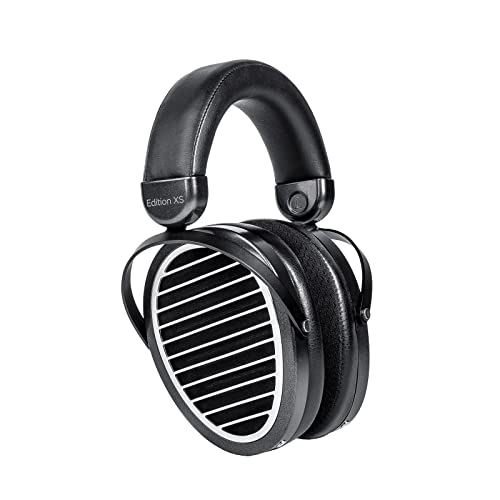
- Stealth Magnet design reduces wave interference
- Supernano diaphragm aims for fast, detailed sound
- Open-back build favors soundstage over isolation
Best For: Audiophiles who want spacious planar sound and clean bass at home
Top Pick for Detail-Oriented Bass
HIFIMAN Ananda Nano Open-Back Planar Magnetic Hi-Fi Headphones

- Nanometer-thickness diaphragm targets lower distortion and better dynamics.
- Stealth Magnets are designed to reduce interference and wave turbulence.
- High sensitivity works with smartphones and portable audio devices.
Best For: Listeners who want a fast, detailed open-back planar with clean bass and easy drivability
Value Open-Back Bass Option
Monolith M1060 Over Ear Planar Magnetic Headphones

- 106mm planar magnetic driver gives it a large-format design.
- Open-back construction creates a spacious, holographic sound.
- Large earpads are built for extended listening comfort.
Best For: Budget-conscious listeners who want a big planar driver and comfortable open-back listening
Best Gaming-Audiophile Hybrid
ASUS ROG Kithara Open-Back Wired Headphones

- 100mm HIFIMAN planar magnetic drivers aim for vivid detail and low distortion.
- Includes multiple plug options plus a USB-C adapter for broad compatibility.
- On-cable MEMS boom microphone supports voice chat and communication.
Best For: Gamers and audio fans who want a planar headset with flexible connectivity and a mic
Portable Bass-Focused Planar Pick – FiiO JT7 Lightweight Foldable Planar
If you want planar headphones for bass without giving up portability, the FiiO JT7 is built around that use case. Its 95x86mm planar driver and F.E.S. Elastic Support System are both aimed at producing deeper, more dynamic low end, while the 92dB/mW sensitivity makes it easier to drive from portable gear.
Best For: listeners who want a foldable planar headphone with stronger bass emphasis for travel, desktop, and everyday portable use.
Pros:
- 95x86mm planar magnetic driver is tuned for wide soundstage and powerful bass.
- F.E.S. Elastic Support System is designed to increase diaphragm movement for deeper, more flexible bass.
- 92dB/mW sensitivity helps it work more easily with phones, tablets, and laptops.
- Lightweight 318g foldable build is convenient for storage and travel.
Cons:
- It is tuned with a slightly firmer clamp force to improve sealing and bass performance.
- Comfort may improve only after a short break-in period.
Overall, the JT7 stands out as a practical planar option if bass impact and portability matter together. It is not the most relaxed fit out of the box, but the combination of foldability, easy drivability, and bass-oriented tuning makes it a smart everyday pick.
Studio-Friendly Balanced Pick – Fostex T50RP mk4 Planar
The Fostex T50RP mk4 is a straightforward choice if you want planar headphones for bass with a more controlled, studio-style presentation. Its redesigned RP planar magnetic driver is paired with an open, versatile wired setup and thick low-resilience ear pads for longer sessions.
Best For: music listeners and production users who want a balanced planar headphone with tight bass and balanced-connection support.
Pros:
- Completely redesigned RP planar magnetic driver.
- Supports balanced connections through a 4-pole 3.5mm connector.
- High-quality OFC conductors in the cable.
- Thicker around-ear ear pads improve long-listening comfort.
Cons:
- On-ear design may not suit everyone seeking a fully over-ear fit.
- Open in the broad sense of semi-open back, so isolation is limited.
In practice, the T50RP mk4 makes more sense for listeners who value driver control and connection flexibility over a heavily boosted bass profile. If you want planar headphones for bass that stay composed for music production and longer sessions, this is a strong, utilitarian option.
Wide-Range Audiophile Classic – HIFIMAN SUNDARA Planar
The HIFIMAN SUNDARA is a classic over-ear planar option for buyers who want detail, speed, and a full-size fit rather than exaggerated bass. Its newly developed diaphragm is 80% thinner than the HE400 series, which helps deliver a wider frequency response and faster, more detailed sound.
Best For: audiophiles and studio listeners who want a lightweight-feeling full-size planar with clear, extended bass and treble.
Pros:
- 80% thinner diaphragm is designed for a wider frequency response and more detail.
- 32-ohm impedance and 94 dB sensitivity make it relatively easy to drive.
- All-metal headband adds durability.
- Detachable 3.5mm cable and enhanced connector durability.
Cons:
- It is not described as bass-heavy, so listeners seeking strong bass emphasis may want a different tuning.
- It is wired only.
The SUNDARA is best viewed as a refined planar headphone that can still satisfy bass listeners who care more about cleanliness and extension than sheer boost. If you want a reliable all-rounder for critical listening, it remains an easy recommendation.
Big-Driver Open-Back Bass Choice – Monolith M1070 Planar
If you are shopping for planar headphones for bass and want a larger, more spacious presentation, the Monolith M1070 is worth a look. Its 106mm planar driver with a dual linear symmetry magnet array is described as delivering low distortion, accurate sound, and tight, clean bass inside an open-back design.
Best For: listeners who want a spacious open-back planar with clean bass and comfortable long-session wear.
Pros:
- 106mm planar driver with dual linear symmetry magnet array.
- Tight, clean bass is specifically called out in the product notes.
- Open-back grille design creates a wider, airier soundstage.
- Comes with both lambskin and velour memory foam earpads.
Cons:
- At 580g, it is relatively heavy.
- Open-back design provides little isolation.
The M1070 is a compelling pick if you want bass that stays controlled while still feeling big and open. The tradeoff is weight and leakage, so it makes more sense for home listening than for travel or shared spaces.
Ultra-Detail Open-Back Pick – FiiO FT1 Pro
If you want planar headphones for bass with a more spacious, airy presentation, the FiiO FT1 Pro is built around a large 95x86mm planar driver and a 1μm ultra-thin diaphragm. It leans toward speed, clarity, and width rather than heavy isolation, making it a strong home or studio option when you want bass that stays tight and controlled.
Best For: Home listening, studio work, and buyers who want detailed planar sound with a wide soundstage.
Pros:
- 95x86mm planar driver for a wide lateral soundstage
- 1μm ultra-thin diaphragm supports fast, detailed response
- Sapphire and aluminum dual-coating is designed to improve resolution
- 20 ohm impedance makes it easy to pair with common wired devices
Cons:
- Open-back design offers no isolation
- Not aimed at listeners who want a sealed, bass-boosted fit
- Wired-only setup limits casual portable use
Overall, the FT1 Pro fits listeners who value planar precision, clean low end, and an expansive stage more than maximum punch or isolation. If your priority is bass quality over bass quantity, it is a compelling choice in this category.
Isolation-Friendly Bass Choice – Monolith M1070C Closed-Back Planar
For planar headphones for bass in a quieter, more isolated design, the Monolith M1070C stands out with its closed-back enclosure and 106mm planar drivers. The tuning is described as delivering tight, deep bass with an extended soundstage, so it suits listeners who want low-end presence without giving up detail.
Best For: Commuting at a desk, shared spaces, and listeners who want planar bass with isolation.
Pros:
- Closed-back design helps keep outside noise out
- 106mm planar drivers are tuned for tight, deep bass
- Comes with both lambskin and velour memory foam earpads
- Removable earpads make customization easier
Cons:
- Heavier than many portable headphones at under 23 ounces
- Wired-only design requires a 3.5mm connection or adapter
- Closed-back tuning may not feel as open as open-back rivals
The M1070C is a practical pick if you want bass impact and isolation in a planar headphone. Its closed-back build and driver tuning make it especially useful when you need strong low-end performance away from a silent listening room.
Wide-Stage Value Choice – HIFIMAN Edition XS
If you’re comparing planar headphones for bass and want a roomy, detailed presentation, the HIFIMAN Edition XS is built around Stealth Magnet Technology and a supernano diaphragm. It is an open-back model with a wide, natural soundstage, so the bass presentation should be judged in the context of its speed, balance, and separation rather than isolation or heavy slam.
Best For: Audiophiles and home listeners who want an open, comfortable planar headphone with detailed bass.
Pros:
- Stealth Magnets are designed to reduce diffraction and distortion
- NsD diaphragm is 75% thinner for fast response and detail
- Lightweight headband with memory foam supports long sessions
- Detachable 3.5mm cable makes replacement straightforward
Cons:
- Open-back design provides no noise isolation
- Not the best fit for listeners who want strong sealed bass impact
- Wired setup limits convenience away from a desk or home system
The Edition XS is a strong option if you want a refined planar sound with spacious imaging and bass that stays clean rather than exaggerated. It’s a good fit for buyers who prioritize technical performance and comfort over isolation.
Top Pick for Detail-Oriented Bass – HIFIMAN Ananda Nano Open-Back Planar Magnetic Hi-Fi Headphones
If you want planar headphones for bass that still prioritize speed, clarity, and low distortion, the HIFIMAN Ananda Nano is built for that kind of listening. Its nanometer-thickness diaphragm and Stealth Magnets are designed to improve transient response and reduce interference, which helps bass notes stay clean rather than bloated.
Best For: Listeners who want a fast, detailed open-back planar with strong tonal clarity and easy drivability from portable gear.
Pros:
- Nanometer-thickness diaphragm aims for lower distortion and better dynamics.
- Stealth Magnets are designed to reduce wave diffraction turbulence.
- High sensitivity makes it usable with smartphones and portable audio devices.
- Hybrid headband and weight-dispersing strap support long listening comfort.
Cons:
- Open-back design will leak sound and offer little isolation.
- Bass focus is more on cleanliness and detail than on heavy slam.
- At 419 g, it is not a lightweight headphone.
The Ananda Nano makes sense if you want bass that stays tight and controlled while the rest of the mix remains highly resolved. It is a strong choice for buyers who value technical performance and comfortable long-session listening over maximum low-end weight.
Value Open-Back Bass Option – Monolith M1060 Over Ear Planar Magnetic Headphones
For shoppers comparing planar headphones for bass, the Monolith M1060 stands out as a straightforward open-back model with a large 106mm driver and 50-ohm impedance. Its planar magnetic design is aimed at a holographic listening experience, and the big earpads plus over-ear fit are meant to keep long sessions comfortable.
Best For: Budget-conscious listeners who want a big planar driver, open-back soundstage, and comfortable fit for extended music or studio use.
Pros:
- 106mm planar magnetic driver for a large-format design.
- Open-back layout delivers a more spacious, holographic presentation.
- Large comfort ear pads are designed for extended listening.
- 50-ohm impedance keeps it relatively approachable for wired setups.
Cons:
- Open-back design provides no isolation.
- Frequency range is listed as 20 Hz – 20,000 Hz, so it is not an ultra-wide spec set.
- Wired-only use may limit convenience for portable listening.
The M1060 is a practical pick if you want the planar sound experience without moving into premium pricing. It leans more toward spaciousness and comfort than raw bass impact, but the large driver and open design make it a compelling value option.
Best Gaming-Audiophile Hybrid – ASUS ROG Kithara Open-Back Wired Headphones
If you want planar headphones for bass with gaming-friendly versatility, the ASUS ROG Kithara brings ROG-tuned 100mm HIFIMAN planar magnetic drivers into an open-back wired design. The wide frequency range and low-distortion driver approach are aimed at detailed audio, while the included microphone and multi-plug compatibility make it easier to use across different devices.
Best For: Gamers and audio fans who want an open-back planar headphone with flexible connectivity and a built-in mic.
Pros:
- 100mm HIFIMAN planar magnetic drivers are tuned for vivid detail and low distortion.
- Open-back architecture supports a spacious soundstage and clear separation.
- Included 4.4mm, 3.5mm, 6.3mm, and USB-C options improve compatibility.
- On-cable MEMS boom microphone adds voice chat support.
Cons:
- Open-back design will leak sound and does not isolate noise.
- Bass emphasis is not described as boosted; it is more about clarity and separation.
- Wired setup may be less convenient than wireless gaming headsets.
The Kithara is a strong crossover option if you want a planar headset that can handle games, music, and chat without extra adapters in many setups. Its appeal is broader compatibility and clean, open presentation rather than hard-hitting bass tuning.
How We Picked These Planar Headphones for Bass
We focused on models that are known for solid low-end extension, good bass definition, and enough technical performance to keep the mids and treble from getting buried. Because planar designs often respond well to EQ, power, and pad changes, we also considered how flexible each headphone is for different listening preferences.
We prioritized comfort, build quality, openness versus isolation, and whether a model is easier to drive from a typical DAC/amp, desktop setup, or gaming source.
Quick Comparison: Open-Back, Closed-Back, and Tuning Style
Open-back planar headphones usually sound wider and more natural, with bass that is cleaner than heavy. Closed-back models are better when you want stronger isolation and more physical slam. If you want the deepest perceived impact, a closed-back or a well-sealed open-back with good amp support can make a noticeable difference.
Among Planar Headphones for Bass, tuning matters as much as driver size. Some models lean balanced and detailed, while others are more fun-forward or respond better to EQ. That means the best choice depends on whether you want studio accuracy, everyday listening, or maximum low-end energy.
Key Buying Factors for Planar Headphones for Bass
Bass Extension and Control
Look for headphones that stay composed in the sub-bass instead of simply sounding thick in the mid-bass. Planars are often valued because bass notes can start and stop quickly, which helps kick drums, synths, and bass guitars stay distinct.
Power Requirements
Many planar headphones sound acceptable from modest sources but improve with cleaner amplification. If you care about bass weight and dynamics, check sensitivity and impedance so you do not end up with a pair that sounds flat from weak output.
Open-Back Vs. Closed-Back
Open-back models can still produce impressive bass, but they are better for a spacious presentation than for isolation. Closed-back options are more suitable if you want stronger perceived punch, private listening, or use in shared spaces.
Comfort and Fit
Bass performance depends on a consistent seal and stable fit. Weight, clamping force, pad shape, and headband design all affect how much low-end you actually hear, especially during long sessions.
Who Should Buy Which Planar Headphones for Bass?
If you want a balanced all-rounder for music and critical listening, choose a model that emphasizes detail and takes EQ well. If you want stronger bass impact for casual listening or gaming, a more fun-tuned option or a closed-back design may be the better fit. If you are building a desktop rig, higher-end open-back planars can deliver the cleanest bass texture and the biggest sense of scale.
For shoppers focused on Planar Headphones for Bass, the best move is to match the headphone type to your space, source gear, and preferred bass style. That way you get low-end that feels powerful without sacrificing clarity.