Choosing the best phono preamp for recording can make a noticeable difference when transferring vinyl to a computer, interface, or home studio. The right model provides accurate RIAA equalization, suitable cartridge gain, and clean connections without adding unnecessary noise.
This roundup includes simple MM phono stages, versatile MM/MC designs, USB-friendly options, and feature-rich preamps for listeners who want more control over their recording chain.
Best 10 Phono Preamp for Recording Picks for 2026
USB Vinyl Capture Pick

- USB transfer for vinyl and cassette audio
- Switchable phono/line input
- Includes Audacity and restoration software
Best For: Beginners digitizing vinyl or cassette collections
Simple Analog Recording Pick

- RCA stereo input and output
- Dedicated ground terminal
- Compact powered phono stage
Best For: Basic turntable-to-recorder signal chains
Flexible Audiophile Pick
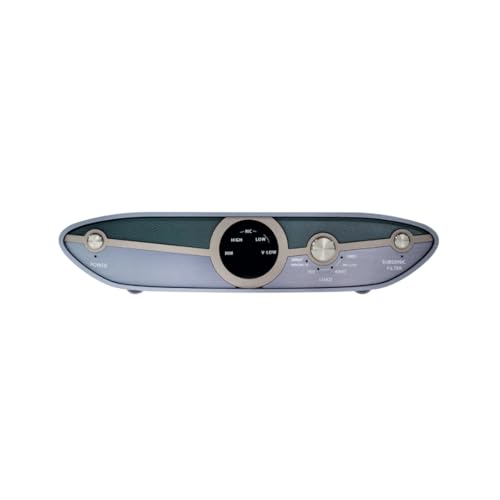
- MM/MC support with 36–72 dB gain
- Independent gain and loading adjustment
- Subsonic filter and precise RIAA equalization
Best For: Audiophile setups with varied MM or MC cartridges
Low-Noise MM Pick

- RIAA-equalized MM phono amplification
- Selectable filter below 20 Hz
- Shielded enclosure and separate channel op amps
Best For: MM turntable systems needing a clean line-level feed
Simple Setup Pick
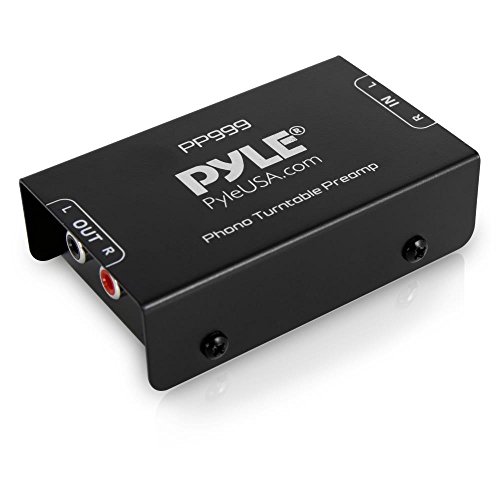
- Converts phono signals to line level
- Low-noise operation with RCA I/O
- Compact plug-and-play design
Best For: Basic turntable-to-receiver or computer connections
Tube Feature Pick
Douk Audio P7 Tube Phono Preamp
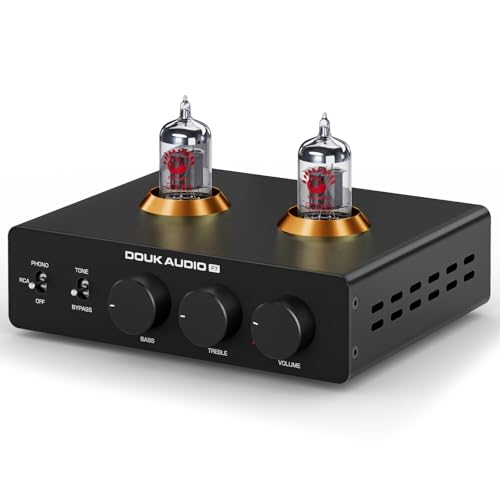
- PSVANE ECC83 tube amplification
- Balanced XLR and RCA outputs
- High-pass filter and tone controls
Best For: MM vinyl setups needing warmth and flexible outputs
Cartridge-Matching Pick
Fosi Audio BOX X5 Phono Preamp

- Works with MM and MC cartridges
- Four adjustable gain levels
- Precise RIAA equalization and RCA output
Best For: Flexible vinyl systems and home recording setups
Simple Signal Conversion

- Converts magnetic-cartridge phono signals to line level
- Low-noise stereo RCA input and output
- Includes 12V adapter and one-year warranty
Best For: Basic turntable-to-audio-system connections
Tube-Tuned Flexibility
Fosi Audio Box X2 Phono Preamp

- Three selectable gain modes: 39, 42, and 45 dB
- Tube design with included vacuum tubes
- Supports MM turntables and includes a grounding post
Best For: MM vinyl systems with adjustable gain and tube experimentation
Headphone-Friendly Monitoring
Fosi Audio Box X1 Phono Preamp

- MM phono input with RIAA-compliant circuitry
- RCA line output plus 3.5mm headphone output
- Low-noise design with 12V adapter included
Best For: Compact MM vinyl setups requiring headphone monitoring
USB Vinyl Capture Pick – Behringer UFO202-BK
The Behringer UFO202-BK is a practical phono preamp for recording vinyl or cassette audio to a computer. Its switchable phono/line input and USB connection make it a straightforward choice for basic transfers, restoration, and editing.
Best For: Beginners digitizing vinyl or cassette collections on Windows or macOS.
Pros:
- Connects a turntable or cassette source to a computer over USB.
- Phono input can be switched to line input.
- Includes Audacity, vinyl-restoration tools, podcasting software, virtual instruments, and effects.
Cons:
- Maximum sample rate is 48 kHz.
- Its two-channel design is focused on basic stereo transfers rather than advanced studio routing.
Choose this model when convenient computer capture and bundled software matter more than extensive hardware controls. It combines the phono stage and USB interface in one compact recording solution.
Simple Analog Recording Pick – ART DJPREII
The ART DJPREII is a compact phono preamp for recording setups that already have a separate audio interface or line-level recorder. It provides RCA inputs and outputs, plus a ground terminal for connecting a compatible turntable system.
Best For: Users who want a dedicated, uncomplicated phono stage between a turntable and recording equipment.
Pros:
- Provides RCA-type left/right input and output connections.
- Includes a ground terminal for turntable setups.
- Comes with a power adapter and has a compact footprint.
Cons:
- Does not provide USB connectivity according to the supplied specifications.
- The notes do not specify MM/MC support or adjustable gain and loading.
This is a sensible choice for a straightforward analog signal chain. Pair it with a separate line-level recording interface if you need to capture records on a computer.
Flexible Audiophile Pick – iFi ZEN Phono 3
The iFi ZEN Phono 3 is a versatile phono preamp for recording when cartridge matching and low-noise performance are priorities. It supports MM and MC cartridges, with independently adjustable gain and loading to help accommodate a wide range of turntable cartridges.
Best For: Audiophile recordists using varied MM or MC cartridges and seeking detailed control over the analog signal.
Pros:
- Supports MM and MC cartridges with gain from 36 dB to 72 dB.
- Offers independent gain and loading controls.
- Includes precise RIAA equalization and an intelligent subsonic filter.
- Uses a metal enclosure and lists a 91 dB signal-to-noise ratio.
Cons:
- Requires separate recording equipment because the supplied details describe a line-level output rather than USB recording.
- Its advanced cartridge controls may be more than a simple MM setup requires.
The ZEN Phono 3 is the strongest fit here for a configurable, low-noise analog front end. Its broad gain and loading range also gives a growing vinyl system room to expand.
Low-Noise MM Pick – Fluance PA10
The Fluance PA10 is a focused phono preamp for recording with MM turntables and vinyl record players. It converts the phono signal to line level using RIAA equalization, while its shielding, separate channel amplifiers, and selectable rumble filter support a clean stereo feed.
Best For: MM turntable owners who want a dedicated, shielded phono stage with low-frequency rumble control.
Pros:
- Designed for MM turntables and precise RIAA equalization.
- Separate left and right channel op amps support channel separation.
- Selectable high-pass filtering rolls off frequencies below 20 Hz.
- Metal shielding helps protect against electronic interference and noise.
Cons:
- Supports MM turntables rather than a stated MM/MC cartridge range.
- The supplied details do not list USB connectivity.
The PA10 suits a conventional analog recording chain where the interface or recorder accepts line-level input. It is especially appealing when subsonic rumble and electronic interference are concerns.
Simple Setup Pick – Pyle PP999 Phono Preamp
If you need a straightforward phono preamp for recording or connecting a turntable to modern audio equipment, the Pyle PP999 converts phono-level signals to line level through stereo RCA connections. Its compact design and low-noise operation make it a practical basic option for setups involving receivers, computers, laptops, or speakers.
Best For: Turntable owners who need an affordable, plug-and-play phono-to-line conversion stage.
Pros:
- Converts magnetic phono signals to line-level output.
- Offers stereo RCA inputs and outputs with a ground connection.
- Compact design and low-noise audio operational amplifiers.
- Includes a 12-volt DC power adapter.
Cons:
- Supports magnetic pickups but does not list MM/MC gain adjustment.
- Provides basic RCA connectivity rather than balanced outputs.
The PP999 is best suited to simple systems where you need reliable signal conversion without extra tone controls or advanced cartridge matching. Positioning it close to the turntable can help reduce unwanted noise and interference.
Tube Feature Pick – Douk Audio P7 Tube Phono Preamp
The Douk Audio P7 is a versatile phono preamp for recording and home audio setups that want tube coloration plus flexible connectivity. It accepts MM phono input, adds a high-pass filter for subsonic noise, and provides both RCA and balanced XLR outputs.
Best For: Listeners and recording setups seeking tube warmth, balanced output, and adjustable tone controls.
Pros:
- Uses PSVANE ECC83 tubes for a warm, harmonically rich presentation.
- Provides true balanced XLR output alongside standard RCA output.
- High-pass filter cuts subsonic noise below 20Hz when using phono input.
- Includes bass, treble, and bypass controls for sound customization.
Cons:
- The supplied notes specify MM phono support, not MC cartridge compatibility.
- Tube operation and multiple controls may be more than a basic setup requires.
Choose the P7 when output flexibility and tone shaping matter as much as phono amplification. Its XLR connection can be useful with compatible amplifiers or active speakers, while bypass mode offers a more direct signal path.
Cartridge-Matching Pick – Fosi Audio BOX X5 Phono Preamp
For a phono preamp for recording that can accommodate different cartridge types, the Fosi Audio BOX X5 supports both MM and MC turntables. Four selectable gain levels, precise RIAA equalization, and a dedicated grounding port give it useful flexibility for building a clean vinyl signal chain.
Best For: Users who want adjustable gain and MM/MC compatibility in a compact RCA phono stage.
Pros:
- Supports both MM and MC cartridges.
- Offers four gain settings: 38, 48, 56, and 66dB.
- Uses precise RIAA equalization and audiophile-grade components.
- Includes gold-plated RCA jacks, a cartridge toggle, and grounding port.
Cons:
- Connectivity is RCA-based, with no balanced XLR output listed.
- Its gain controls may be unnecessary for users with a fixed MM setup.
The BOX X5 is the most adaptable choice here for switching between MM and MC cartridges or fine-tuning signal level. Its compact aluminum chassis and simple controls keep the feature set practical for home recording and playback systems.
Simple Signal Conversion – AU223 Phono Preamp
If you need a straightforward phono preamp for recording or connecting a turntable to modern audio equipment, the AU223 converts a magnetic-cartridge phono signal to line level. Its low-noise circuitry, stereo RCA connections, and included 12V adapter make it a practical plug-and-play option.
Best For: Turntables with magnetic pickups and audio systems without a built-in phono input.
Pros:
- Converts phono signals to line level for connection to receivers, computers, and laptops.
- Uses low-noise operational amplifiers and supports stereo RCA input and output.
- Includes a 12V DC adapter and a one-year manufacturer warranty.
Cons:
- Not suitable for use with a turntable that already has a built-in preamp.
- Does not offer adjustable gain modes or a dedicated headphone output.
The AU223 is focused on essential phono-to-line conversion rather than extra controls. Positioning it close to the turntable can help reduce unwanted noise and interference.
Tube-Tuned Flexibility – Fosi Audio Box X2 Phono Preamp
For a phono preamp for recording with more control over gain and tonal character, the Fosi Audio Box X2 supports MM turntables and offers three switchable gain modes. Its tube-based design and 3.5mm AUX input add flexibility for listeners who want to experiment with their stereo setup.
Best For: MM turntable owners who want adjustable gain and a warm, tube-style presentation.
Pros:
- Provides selectable 39, 42, and 45 dB gain modes.
- Uses low-noise integrated circuitry and includes a grounding post for the turntable.
- Includes two vacuum tubes, an RCA cable, power adapter, and user manual.
- Compatible with several replacement tube models for system experimentation.
Cons:
- Designed for MM turntables rather than other cartridge types.
- Tube replacement and selection add complexity compared with a basic solid-state preamp.
The Box X2 stands out when gain adjustment and tube swapping matter as much as basic signal conversion. It is a more hands-on choice for shaping and customizing an analog setup.
Headphone-Friendly Monitoring – Fosi Audio Box X1 Phono Preamp
The Fosi Audio Box X1 is a useful phono preamp for recording setups that need both speaker and headphone monitoring. It converts an MM turntable signal to line level, provides RCA output for powered speakers, and adds a 3.5mm headphone output in a compact metal case.
Best For: MM turntable users who want RCA speaker output and convenient headphone listening from one preamp.
Pros:
- Provides RIAA-compliant phono preamp circuitry for accurate signal reproduction.
- Offers RCA line output and a 3.5mm headphone output, with simultaneous use supported.
- Features low-noise performance, a grounding post, and a durable anodized steel case.
- Includes a 12V power adapter and an 18-month manufacturer warranty.
Cons:
- Designed for MM turntables and does not list adjustable gain modes.
- Has a single-channel specification, unlike the stereo RCA output configuration suggested by its intended use.
The Box X1 is the most convenient choice here for direct headphone monitoring. Its combination of RIAA accuracy, RCA connectivity, and headphone output suits compact vinyl and recording workstations.
How We Picked the Best Phono Preamp for Recording
We focused on the features that matter most when converting a turntable’s low-level cartridge signal into a recordable line-level output. Each model was assessed for cartridge compatibility, RIAA equalization, connection options, noise considerations, adjustability, size, and overall suitability for home recording.
Models with USB connectivity can simplify direct transfers to a computer, while conventional RCA, TRS, or XLR outputs may work better with an audio interface, mixer, or studio monitors. We also considered whether each preamp is best suited to basic MM cartridges, higher-flexibility MM/MC setups, or listening systems that benefit from tone controls and headphone outputs.
Quick Comparison
| Best For | What to Look For |
|---|---|
| Direct computer transfers | USB output and compatible recording software |
| Basic MM turntables | Accurate RIAA EQ, RCA output, and low noise |
| MM and MC flexibility | Selectable cartridge mode and adjustable gain or loading |
| Audio interfaces | Line-level RCA, TRS, or balanced XLR connections |
| Headphone listening | Built-in headphone output and convenient volume control |
Key Buying Factors for a Phono Preamp for Recording
Cartridge Compatibility
Confirm whether your turntable uses a moving-magnet (MM) or moving-coil (MC) cartridge. MM support is common and usually sufficient for entry-level systems, while MC support adds flexibility but may require selectable gain, impedance, or capacitance settings.
RIAA Equalization and Noise
Vinyl records are cut with RIAA equalization and require the inverse curve during playback. A well-designed phono stage should restore tonal balance while keeping hum, hiss, and interference low. Grounding also matters: connect the turntable’s ground wire when the preamp provides a ground terminal.
Outputs and Recording Workflow
Choose outputs that match the rest of your setup. USB is convenient for direct computer recording; RCA is standard for receivers and interfaces; TRS or balanced XLR can be useful in longer studio runs. Avoid connecting a phono-level output directly to a line input unless the signal has already been amplified and equalized.
Controls and Convenience
Gain adjustment, filtering, bypass switches, tone controls, and headphone outputs can be valuable, but extra features are not automatically better for archival transfers. For the cleanest workflow, prioritize accurate conversion and appropriate gain over unnecessary processing.
Who Should Buy Which Phono Preamp for Recording?
Choose a USB-equipped model if you want the simplest path from vinyl to a computer. A compact MM phono stage is a sensible choice for a straightforward turntable-and-interface setup. Buyers with MC cartridges or plans to upgrade should select an adjustable MM/MC preamp. If you need balanced connectivity, tone shaping, or headphone monitoring, a more feature-rich unit may justify its larger size and higher cost.
Before buying, verify your cartridge type, available inputs, power requirements, and recording device connections. The best Phono Preamp for Recording is the one that matches those details while providing clean RIAA-corrected output with enough headroom for your recording levels.