The best multitrack recorders make it easier to capture ideas, rehearse without a computer, record live performances, or build complete productions on the move. The right choice depends on your track count, inputs, portability needs, and preferred workflow.
This roundup compares 10 options ranging from compact handheld and field recorders to full tabletop studios with mixing, effects, and computer connectivity.
Best 10 Multitrack Recorders Picks for 2026
Best All-in-One Studio

- 12-in/10-out USB interface
- MIDI and tap-tempo click
- Compressor and three-band EQ per input
Best For: Home studios wanting mixer controls and DAW connectivity
Best Touchscreen Workflow
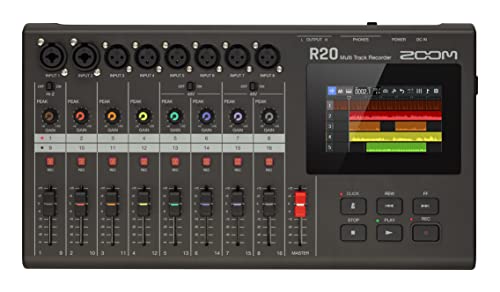
- Up to 16 tracks, eight simultaneously
- Six XLR and two combo inputs
- Touchscreen editing with effects and rhythms
Best For: Computer-free demos and complete music projects
Best High-Track-Capacity Portastudio

- 24-track recording capacity
- Eight XLR inputs
- Effects, mastering, and color screen
Best For: Project studios recording complex multi-microphone sessions
Best Portable Recorder

- Eight tracks with touchscreen editing
- Battery-powered for up to five hours
- Drum loops, synths, MIDI, and USB-C
Best For: Mobile songwriting and portable music production
Best for DSLR Filmmakers
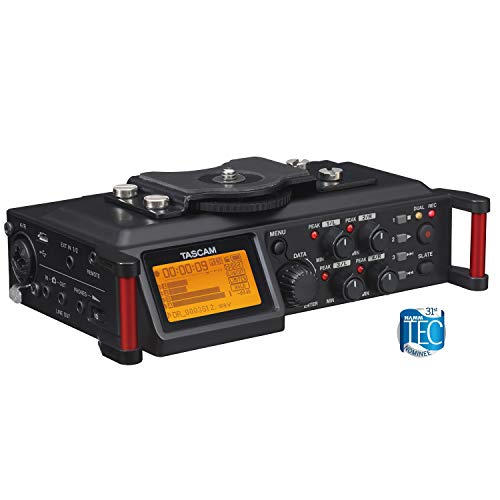
- Four balanced XLR/TRS inputs with phantom power
- Dual Recording adds a lower-level safety copy
- Camera-mountable design with built-in microphones
Best For: DSLR filmmaking and location production audio
Best Live Mixing Choice

- 12-channel mixer with 14-track recording
- Records at up to 24-bit/96kHz
- Physical faders and optional wireless control
Best For: Live performance recording and hands-on mixing
Best All-in-One Recorder

- Eight simultaneous inputs with 16-track playback
- Includes 135 built-in recording and mixing effects
- Built-in stereo microphones and USB interface
Best For: Home recording, songwriting, and flexible tabletop setups
Best All-Around

- Six-track 32-bit float recording
- 19.4mm mics handle up to 140 dB SPL
- Up to 15 hours on four AA batteries
Best For: Filmmakers and musicians needing flexible multitrack capture
Best for Layering

- Four-track recording with stereo bouncing
- Over 80 built-in rhythm patterns
- 32-bit float USB audio interface
Best For: Portable songwriting and layered music production
Best for Field Reliability
Zoom F3 Professional Field Recorder

- 32-bit float capture for unpredictable levels
- Dual locking XLR inputs
- Ultra-low-noise preamps
Best For: Run-and-gun filmmaking and demanding field recording
Best All-in-One Studio – Tascam Model 12
The Tascam Model 12 is a versatile choice among multitrack recorders for musicians who want recording, mixing, USB connectivity, and DAW control in one corded-electric unit. Its 12-channel layout combines hands-on mixer controls with computer-based production features.
Best For: Home studios and musicians who want a mixer-style multitrack recorder with DAW connectivity.
Pros:
- 12-in/10-out USB audio interface supports DAW connectivity.
- Onboard MIDI functionality and tap-tempo click output support structured recording sessions.
- Each input module includes a one-knob compressor and three-band EQ.
- Dual headphone outputs offer individual volume and source selection.
Cons:
- At 13.3 pounds and 18 by 16 by 6 inches, it is better suited to a stationary setup than frequent travel.
- It requires corded power.
The Model 12 stands out when hands-on mixing and broad computer connectivity matter more than portability. It is a practical centerpiece for a fixed recording workspace.
Best Touchscreen Workflow – Zoom R20
The Zoom R20 is a strong option among multitrack recorders for users who want to record, edit, and mix without a computer. Its touchscreen interface supports up to 16 tracks, while its inputs, effects, rhythms, and onboard sounds are geared toward complete music projects.
Best For: Musicians creating demos or full projects with a computer-free, touchscreen workflow.
Pros:
- Records up to 16 tracks, with up to eight tracks simultaneously.
- Six XLR inputs plus two XLR/TRS combo inputs provide flexible input options.
- Touch controls support drag, drop, swipe, and pinch editing.
- Includes EQ, compression, 150 rhythm patterns, and an 18-sound onboard synth.
Cons:
- Its maximum sample rate is 44.1 kHz.
- At 8 by 15 by 2 inches and 4.3 pounds, it is portable but still requires a separate setup space.
The R20 is especially appealing for hands-on production without relying on external software. It balances substantial track capacity with an interface designed for quick touchscreen editing.
Best High-Track-Capacity Portastudio – Tascam DP-24SD
The Tascam DP-24SD is designed for recording setups that need substantial track capacity in a dedicated Portastudio format. With 24 tracks, eight XLR inputs, onboard effects, mastering features, and a color screen, it is built around a comprehensive standalone recording workflow.
Best For: Project studios needing 24-track recording and multiple microphone inputs in a dedicated unit.
Pros:
- Provides up to 24 tracks for complex recording projects.
- Eight XLR inputs accommodate multiple microphones or sources.
- Includes onboard effects, mastering functions, and a color screen.
- Offers USB 2.0 hardware connectivity and up to 32 GB of listed storage capacity.
Cons:
- At 13.7 pounds and 13.4 by 20.2 by 4.1 inches, it is relatively bulky for mobile recording.
- The supplied specifications list a 3.5-inch screen, which may feel limited for users accustomed to larger displays.
The DP-24SD makes the most sense when track count and input quantity take priority over compact dimensions. Its effects and mastering tools also support a more self-contained production process.
Best Portable Recorder – Zoom R12
The Zoom R12 is a compact choice among multitrack recorders for musicians who want to capture ideas away from a desk. It combines eight-track recording, touchscreen editing, effects, drum loops, synths, MIDI, and USB-C connectivity in a battery-powered design.
Best For: Mobile musicians who want a portable recorder for songwriting, practice, and on-the-go production.
Pros:
- Records up to eight tracks with a full-color touchscreen and onboard editing.
- Two XLR/TRS inputs include 48V phantom power, while input 1 adds Hi-Z support for guitar and bass.
- Includes 150 drum loops, 18 FM synth instruments, MIDI, and built-in effects.
- Runs for up to five hours on four AA batteries and functions as a USB-C interface and DAW controller.
Cons:
- Its two physical inputs and eight-track capacity are more limited than larger multitrack recorders.
- Battery operation is rated for up to five hours, so longer sessions may require replacements or another power plan.
The R12 is a practical fit for portable songwriting and quick production. Its battery operation and built-in creative tools make it easier to work without a computer or fixed studio setup.
Best for DSLR Filmmakers – TASCAM DR-70D
The TASCAM DR-70D is one of the most purpose-built multitrack recorders for camera-based production. It combines four balanced XLR/TRS inputs, built-in microphones, level-control tools, and flexible camera mounting in a compact recorder designed for film, television, advertising, and documentary work.
Best For: DSLR shooters, indie filmmakers, documentarians, and production crews recording multiple microphones on location.
Pros:
- Four balanced XLR inputs with phantom power and individual gain controls.
- Compact design mounts above or below a camera.
- Dual Recording creates a lower-level safety copy to help prevent distorted takes.
- Supports WAV recording to SD, SDHC, or SDXC cards up to 128GB.
Cons:
- Uses four AA batteries, which may require spares during extended shoots.
- The 1.5-inch screen is relatively small for detailed setup and monitoring.
- Its feature set is focused on production sound rather than hands-on mixing.
Choose the DR-70D when camera mounting, multiple balanced inputs, and recording safeguards matter more than mixer-style control. Its four-input layout and safety recording mode make it a practical location tool for capturing dialogue and ambient sound.
Best Live Mixing Choice – Zoom LiveTrak L12next
The Zoom LiveTrak L12next combines a 12-channel digital mixer with a multitrack recorder, making it a strong option for musicians who need to record performances while managing a live mix. It records up to 14 tracks at 24-bit/96kHz and supports a 32-bit-float mixdown for additional headroom.
Best For: Bands, live performers, rehearsal spaces, and musicians who want physical mixing controls alongside multitrack recording.
Pros:
- Records up to 14 tracks at 24-bit/96kHz.
- High-gain, low-noise preamps include Hi-Z, PAD, and +48V phantom power.
- 60mm faders and channel encoders provide hands-on control.
- Supports wireless control through the L12next Control App with the optional BTA-1 adapter.
Cons:
- The wireless control app requires a separately specified BTA-1 adapter.
- It uses corded electric power rather than batteries.
- The larger mixer-style feature set may be more than simple recording setups require.
The L12next stands out among multitrack recorders when live control is part of the job. Its physical faders, flexible input features, and high-resolution recording make it particularly suited to tracking and mixing full performances.
Best All-in-One Recorder – Zoom R16 Multitrack Recorder
The Zoom R16 is a versatile tabletop choice among multitrack recorders, combining an eight-input recorder, 16-track playback, USB audio interface functionality, and controller features. Built-in stereo condenser microphones and 135 effects make it useful for songwriting, rehearsal capture, and computer-based recording.
Best For: Home musicians, songwriters, and creators who want recording, effects, built-in microphones, and USB connectivity in one unit.
Pros:
- Records up to eight channels simultaneously and provides 16-channel playback.
- Eight balanced XLR-1/4-inch combination inputs accommodate varied sources.
- Includes 135 built-in effects for recording, mixing, and mastering.
- Built-in stereo condenser microphones support quick standalone recording.
Cons:
- Recording is limited to 48V phantom power on two tracks.
- Supports SDHC cards up to 32GB, less than some newer storage options.
- Its 2.9-pound tabletop design is less compact than a camera-oriented recorder.
The R16 is a good fit when flexibility matters more than the newest recording specifications. Its combination of eight inputs, built-in microphones, effects, and USB connectivity lets one device cover tracking, basic production, and computer-based workflows.
Best All-Around – Zoom H6 Studio
For musicians, filmmakers, and field recordists who need flexible multitrack recorders, the Zoom H6 Studio combines six-track recording with 32-bit float capture. Its high-SPL microphones, look-ahead limiters, broad sample-rate range, and long battery life make it a versatile choice for controlled sessions and unpredictable locations.
Best For: Filmmakers and musicians needing up to six individual tracks with dependable portable recording.
Pros:
- Records up to six individual tracks plus a stereo mix in 32-bit float.
- 19.4mm microphones handle sound levels up to 140 dB SPL.
- Supports sample rates from 44.1 to 192 kHz.
- Provides up to 15 hours of operation on four AA batteries.
Cons:
- Its 1.05-pound body is less compact than smaller field recorders.
- The feature set may be more than needed for simple stereo recording.
The H6 Studio is a strong general-purpose option when track count, recording headroom, and microphone capability matter more than minimizing size.
Best for Layering – Zoom R4 Multi-Track Recorder
The Zoom R4 is one of the more approachable multitrack recorders for building songs and ideas in layers. It supports four tracks, stereo bouncing, 32-bit float recording, built-in effects, and more than 80 rhythm patterns, while its combo inputs accommodate microphones and instruments.
Best For: Musicians who want a portable songwriting recorder with layering, bouncing, rhythms, and USB interface functions.
Pros:
- Records, layers, and bounces up to four tracks with undo support.
- Two XLR/TS combo inputs connect microphones, instruments, and keyboards.
- Includes more than 80 built-in drum and rhythm patterns.
- Works as a 32-bit float 2-in/2-out USB audio interface.
Cons:
- Its four-track capacity is lower than the H6 Studio’s six-track design.
- The two-input USB interface is limited for larger simultaneous recording setups.
Choose the R4 when creative layering and portable beat-driven writing are priorities; it is especially useful for capturing complete musical ideas without a computer.
Best for Field Reliability – Zoom F3 Professional Field Recorder
The Zoom F3 is a focused choice among multitrack recorders for professional field work, especially when recording conditions can change quickly. Its 32-bit float workflow avoids constant level adjustments, while dual locking XLR inputs and ultra-low-noise preamps support dependable connections and clean capture.
Best For: Run-and-gun filmmakers and recordists working with microphones, complex rigs, or unpredictable sound levels.
Pros:
- 32-bit float recording captures quiet dialogue and sudden peaks without stopping to adjust levels.
- Dual locking XLR inputs help secure connections in field setups.
- Ultra-low-noise preamps support clean recordings in uncontrolled environments.
- Flexible power options support long days on set or location.
Cons:
- Its two-input design is less suitable for larger multitrack sessions.
- The notes do not indicate built-in microphones, rhythms, or effects.
The F3 is best viewed as a professional, streamlined field recorder: a solid fit when reliable XLR connections and level protection matter more than built-in creative features.
How We Picked the Best Multitrack Recorders
We focused on recording flexibility, input quality, track capacity, portability, ease of use, and practical workflow features. The lineup includes standalone Portastudio-style units, mixer-recorders, compact songwriting tools, and field recorders designed for film or location work.
We also considered whether each model supports useful extras such as built-in microphones, effects, drum patterns, overdubbing, USB audio interfacing, remote control, and multitrack computer integration. Because recording needs vary widely, no single model is ideal for every buyer.
Quick Comparison
| Best For | What to Prioritize | Recommended Types |
|---|---|---|
| Home recording | Track count, editing, effects, and USB connectivity | Tabletop recorders and mixer-recorders |
| Live sessions | Multiple inputs, reliable monitoring, and fast setup | Multichannel mixer-recorders |
| Songwriting | Portability, overdubbing, effects, and rhythm tools | Compact portable recorders |
| Film and video | Clean preamps, low noise, safety recording, and time-saving controls | Field recorders |
Key Buying Factors for Multitrack Recorders
Inputs and Track Capacity
Count the microphones, instruments, and stereo sources you expect to record simultaneously. XLR or combo inputs are essential for microphones, while line and instrument inputs suit keyboards, mixers, guitars, and other sources. More tracks provide flexibility for overdubs and live arrangements, but they may increase size and complexity.
Standalone Workflow and Computer Connectivity
Standalone recorders are useful when you want to work without a laptop. Look for intuitive controls, physical faders, clear displays, reliable storage, and straightforward file transfer. USB audio interface support is valuable if you also plan to record or mix in a DAW.
Portability and Power
For mobile sessions, compare weight, battery options, microphone configuration, and protection against handling noise. Compact models are easier to carry, while larger tabletop units generally offer more inputs and hands-on control.
Sound, Monitoring, and Safety Features
Check preamp quality, phantom power, headphone monitoring, limiters, high-pass filters, and available recording formats. Field users should pay particular attention to low-noise operation and safeguards against clipping, including floating-point recording where supported.
Who Should Buy Which Multitrack Recorders?
Choose a Tabletop Studio Recorder If…
You want a central recording and mixing hub for a home studio, rehearsal room, or live setup. These models suit users who value physical controls, numerous inputs, and a workflow that can operate independently of a computer.
Choose a Compact Portable Recorder If…
You mainly write songs, capture rehearsals, or build arrangements while traveling. A smaller unit with built-in effects, drum loops, or microphones can be more convenient than carrying a full studio.
Choose a Field Recorder If…
You record dialogue, ambience, instruments, or video on location. Prioritize clean preamps, durable construction, dependable battery operation, input protection, and fast access to monitoring and level controls.
Choose a Mixer-Recorder If…
You regularly record bands, worship services, podcasts, or live events and want hands-on channel control. These units can streamline both multitrack capture and monitoring, but confirm that the input count and routing options match your setup.