Choosing the right headphone amplifier can make podcast sessions cleaner, faster, and easier to manage. The best units give every host and guest enough volume without adding noise or confusion.
Below, we focus on practical options for small home setups, multi-person recording, and studio workflows, so you can match the right amp to your recording needs.
Best 10 Headphone Amplifier for Podcast Studio Picks for 2026
4-Way Desktop Splitter
Mackie HM-4 4-Channel Headphone Amp

- Feeds one stereo source to four headphones
- Individual level control on each output
- Metal build with included 12V AC adapter
Best For: Small podcast studios needing a rugged, simple headphone split
Ultra-Compact Quartet Amp
Fosi Audio PH04 4-Channel Headphone Amplifier
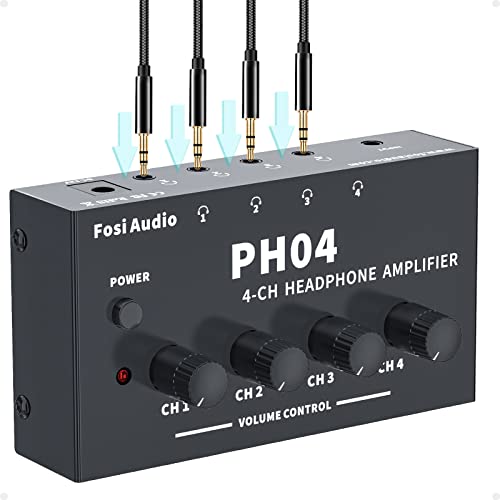
- Four stereo amplifier sections with individual volume control
- Ultra-compact body for studio or stage use
- Includes 12V adapter and power switch
Best For: Compact podcast setups that need four independent headphone outputs
Portable Monitoring Hub
Zoom ZHA-4 Battery-Powered Headphone Amp

- Four 3.5 mm outputs with individual volume knobs
- Per-channel mute buttons for fast control
- Battery or USB-C powered for portability
Best For: Mobile podcasting and portable monitoring sessions
Metal Quad Splitter
FIFINE N6 4-Channel Headphone Amplifier
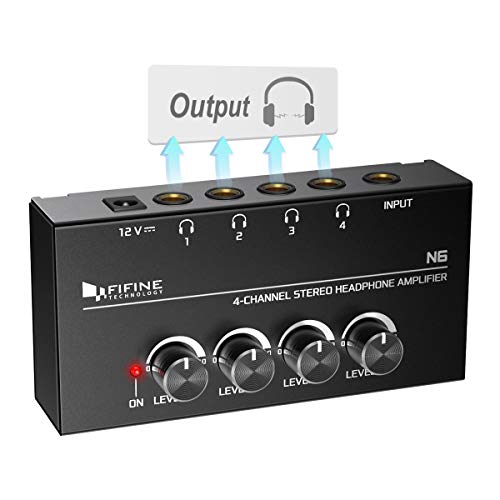
- Four quarter-inch TRS headphone outputs
- Separate volume knob for each channel
- Metal build with included 12V adapter
Best For: Podcast studios using quarter-inch headphone monitoring
PROAR Multi-Listener Monitoring
4-Channel Headphone Amp with RGB

- Supports 8 headphones across 4 channels
- Independent volume knobs for each listener
- RCA, 3.5mm, and 6.35mm inputs
Best For: Podcast teams and small studios needing flexible shared monitoring
Pyle Portable Splitter Amp
4-Channel Studio Headphone Hub

- Powers up to 4 headphones at once
- Independent volume control for each listener
- Compact design for portable studio use
Best For: Budget-conscious podcast and recording setups
Rockville Podcast Monitor Hub

- Supports 8 headphones with dual outputs per channel
- USB-powered for laptop or wall-adapter use
- Metal housing with stereo/mono switching
Best For: Portable podcast studios needing flexible headphone connections
Compact 4-Channel Choice
HA400 4-Channel Metal Headphone Amp

- Four independent headphone volume controls
- Compact metal build for easy portability
- Low-noise JRC4580 chip for monitoring
Best For: Small podcast sessions and portable multi-listener monitoring
Podcast Monitoring Pick
Superlux HA4D 4-Channel USB-C Amp

- USB-C powered headphone amplifier
- Four channels with volume and mute control
- Built for up to four-person monitoring
Best For: Podcast and streaming teams needing compact real-time monitoring
Rack-Mount Studio Upgrade
8-Channel Headphone Mixing Distribution Amp

- Eight channels and up to 16 headphone outputs
- Mono/stereo routing with per-channel control
- 1U rack-mount build with LED metering
Best For: Larger podcast studios and rack-based monitoring systems
4-Way Desktop Splitter – Mackie HM-4 4-Channel Headphone Amp
If you need a headphone amplifier for podcast studio use that simply shares one stereo source with multiple listeners, the Mackie HM-4 keeps things straightforward. It’s designed to feed up to four pairs of headphones with individual level control on each output, making it easy for hosts and guests to monitor the same mix at different volumes.
Best For: Small podcast rooms that need a rugged, no-frills way to split one stereo feed to four headphones.
Pros:
- Shares a single stereo source with up to four pairs of headphones.
- Each output has its own level control for simple monitoring adjustments.
- Metal enclosure and “built-like-a-tank” construction for durable everyday use.
- Includes a 12V AC adapter for powered operation.
Cons:
- Works as a headphone splitter/amp rather than a full mixer.
- Only one input source is supported.
For podcasts with a small cast, the HM-4 is a practical studio utility: compact, sturdy, and focused on clean multi-headphone monitoring without extra complexity. It’s a good fit when reliability matters more than features.
Ultra-Compact Quartet Amp – Fosi Audio PH04 4-Channel Headphone Amplifier
The Fosi Audio PH04 is a compact headphone amplifier for podcast studio setups where you want four listeners to monitor the same stereo mix with independent volume control. Its small footprint and included power adapter make it easy to add to a desk or portable recording rig, while the four amplifier sections are built to keep the sound clean at high levels.
Best For: Podcasters and small studios that want a tiny, affordable four-output monitoring solution with separate volume controls.
Pros:
- Powers up to four pairs of headphones with independent volume control for each channel.
- Ultra-compact design fits easily into studio and stage setups.
- Uses low-noise op amps for strong audio performance, even at higher volume levels.
- Includes a 12V DC power adapter and a power switch.
Cons:
- 3.5mm headphone use may require a 3.5mm to 6.35mm adapter.
- Designed for headphone monitoring, not for mixing multiple sources.
Overall, the PH04 is a space-saving option when you need four-way headphone distribution without a lot of rack bulk. It’s especially appealing if you value simple controls and a small footprint over extra routing features.
Portable Monitoring Hub – Zoom ZHA-4 Battery-Powered Headphone Amp
If your headphone amplifier for podcast studio work needs to move between rooms, the Zoom ZHA-4 stands out for portability. It offers four independent 3.5 mm headphone outputs, each with its own volume knob and mute button, plus flexible power options that let you run it from batteries, USB-C, or a USB power source.
Best For: Mobile podcasters and production teams that need battery-powered headphone monitoring with quick mute control.
Pros:
- Four independent 3.5 mm headphone outputs with dedicated volume controls.
- Independent mute buttons let you silence each channel instantly.
- Can run on two AA batteries or via USB-C from multiple power sources.
- Portable design is well suited to podcasting and critical monitoring.
Cons:
- Uses 3.5 mm outputs rather than quarter-inch headphone jacks.
- Requires AA batteries or USB power, so it’s not a simple passive desktop unit.
The ZHA-4 is the most flexible choice here if your monitoring setup needs to travel or stay untethered. The combination of volume and mute controls on each output makes it especially useful when quick communication matters during a session.
Metal Quad Splitter – FIFINE N6 4-Channel Headphone Amplifier
The FIFINE N6 is a straightforward headphone amplifier for podcast studio setups that need four balanced TRS headphone outputs from a single stereo source. It’s built for clean monitoring, with separate volume knobs for each output and a metal housing that should hold up well in regular studio use.
Best For: Studios that want a compact, durable four-output amp with quarter-inch headphone connections.
Pros:
- Provides four quarter-inch TRS headphone outputs with separate volume control for each.
- Metal construction and tight connections support rugged daily use.
- Designed for low-noise audio with minimal distortion at higher volume.
- Includes a 12V DC power adapter and power indicator light.
Cons:
- Requires the correct TRS/TS input cable; no cable is included.
- Not a mixer, so it only splits one input to four outputs.
For podcasters who already use quarter-inch monitoring gear, the N6 is a practical and durable distribution amp. It stays focused on clean, simple headphone sharing without adding unnecessary complexity.
PROAR Multi-Listener Monitoring – 4-Channel Headphone Amp with RGB
If you need a headphone amplifier for podcast studio monitoring, this PROAR 4-channel unit is built for shared listening with flexible input options and independent level control. It supports up to 8 headphones, offers mono/stereo switching, and uses a compact metal body designed to keep the signal clean in recording setups.
Best For: Podcast teams, small studios, and creators who need multiple listeners to monitor from one source with flexible connections.
Pros:
- Supports up to 8 headphones through 4 x 6.35mm and 4 x 3.5mm outputs.
- Independent volume knobs for each channel make it easier to balance listeners.
- RCA, 3.5mm, and 6.35mm inputs add useful connection flexibility.
- Mono/stereo switching and mute buttons help with content-creation workflows.
Cons:
- RGB lighting may not suit buyers who prefer a plain studio look.
- Best suited to wired monitoring setups rather than simple single-user use.
This is a practical choice if your podcast studio needs shared monitoring with straightforward controls and broad input compatibility. The metal construction and per-channel volume control make it especially useful in compact recording spaces.
Pyle Portable Splitter Amp – 4-Channel Studio Headphone Hub
This headphone amplifier for podcast studio use keeps monitoring simple by powering up to four pairs of headphones from one source. The Pyle PHA40 focuses on the essentials: independent volume control, four TRS outputs, and a compact format that is easy to carry between sessions.
Best For: Budget-minded studios and mobile recording setups that only need basic multi-listener headphone distribution.
Pros:
- Powers up to four headphones at the same time.
- Each listener gets an independent rotary volume control.
- Compact body makes it easy to transport for on-the-road use.
- Designed to maintain low-noise audio performance at higher volumes.
Cons:
- Only four headphone outputs, so it is less flexible than 8-output models.
- Fewer connection options than units with multiple input formats.
For straightforward monitoring duties, the PHA40 covers the basics without adding complexity. It is a solid fit if your podcast setup values portability and individual listener volume control over extra features.
Rockville Podcast Monitor Hub – USB-Powered 4-Channel Amp
The Rockville RHPA4 is a headphone amplifier for podcast studio monitoring that emphasizes practical setup flexibility. It supports up to 8 headphones, offers stereo/mono switching, and runs on USB power, which makes it convenient for home recording rigs and portable sessions.
Best For: Creators who want a compact, USB-powered monitoring amp with dual output formats per channel.
Pros:
- Each channel includes both 1/4″ and 3.5mm outputs for broader compatibility.
- Supports up to 8 headphones across 4 channels.
- USB-A powered design works well with laptops and USB wall adapters.
- Metal housing and rubber feet add durability and stability.
Cons:
- USB power is convenient, but it may not suit every studio layout.
- More compact feature set than larger monitoring units with extra controls.
If you want a clean, portable monitoring solution for podcast tracking, this model delivers a useful mix of flexibility and simplicity. The dual outputs per channel make it easier to handle different headphone types in one setup.
Compact 4-Channel Choice – HA400 4-Channel Metal Headphone Amp
If you need a simple headphone amplifier for podcast studio use, the HA400 is built for small group monitoring with up to four independent headphone volumes. It uses a 1/4" TRS input and is aimed at studio, stage, and other multi-listener setups where each person wants their own level control.
Best For: Small podcast sessions, group monitoring, and portable studio setups that need four headphone feeds.
Pros:
- Supports up to four headphones with independent volume control
- Compact metal design makes it easy to move between setups
- Uses a low-noise JRC4580 op-amp for cleaner monitoring
- Suitable for studio, stage, karaoke, and conference use
Cons:
- Requires a 1/4" TRS source connection
- Designed for headphones in the 32-100 Ω range
- No built-in USB power option; uses the included 12V adapter
The HA400 keeps the formula straightforward: multiple headphone outputs, basic level control, and a compact footprint. For creators who want a no-frills monitoring hub for podcast recording, it covers the core job well.
Podcast Monitoring Pick – Superlux HA4D 4-Channel USB-C Amp
The Superlux HA4D is a practical headphone amplifier for podcast studio workflows that need real-time monitoring for up to four people. With USB-C power, independent volume knobs, and individual mute switches, it is designed for creators who want quick control without a bulky power brick.
Best For: Podcasts, streaming sessions, and mobile recording setups with up to four listeners.
Pros:
- Handles real-time monitoring for up to four users
- Each channel has its own volume knob and mute switch
- USB-C powered for cleaner, more flexible setup options
- Compact and lightweight for travel or gig bags
Cons:
- Best noise performance may require a separate power source from the audio device
- Uses 3.5mm real-time monitoring, which may not fit every studio chain
- Focused on four-user setups rather than larger production teams
For podcasters and streamers, the HA4D stands out because it combines simple user-level control with modern USB-C powering. It is a strong fit when you want straightforward headphone monitoring without overcomplicating the session.
Rack-Mount Studio Upgrade – 8-Channel Headphone Mixing Distribution Amp
If your podcast studio needs a more serious headphone amplifier for larger sessions, this 8-channel rack-mount unit is built for distributed monitoring with flexible routing. It supports mono and stereo modes, offers 16 headphone outputs, and includes LED metering for keeping levels visible during recording or live sound work.
Best For: Larger podcast studios, live monitoring rigs, and rack-based production setups.
Pros:
- Eight channels with up to 16 headphone outputs
- Mono and stereo mode support for flexible routing
- Independent volume control plus master input volume
- 1U rack-mount design with LED metering on all channels
Cons:
- More hardware than most small podcast setups need
- Designed for rack integration rather than portable use
- Uses 1/4" headphone connections, so compatibility may vary
This model is the most scalable option in the group, especially if you regularly monitor multiple guests or need a permanent studio installation. It is best viewed as a production hub rather than a lightweight desk accessory.
How We Picked the Best Headphone Amplifier for Podcast Studio
For this roundup, we prioritized models that make a Headphone Amplifier for Podcast Studio setup simple and dependable. Key factors included number of outputs, independent volume control, signal clarity, mono/stereo flexibility, power options, and overall ease of use in real recording sessions.
We also favored units that suit common podcast workflows, such as guest monitoring, splitter use with interfaces, compact desktop placement, and straightforward operation for non-technical users.
Quick Comparison
If you mainly record solo or with one guest, a compact 4-channel amp is usually enough. For panel shows, roundtables, or studio control rooms, look for more outputs and better channel separation. Battery-powered or USB-powered models are helpful for portable rigs, while AC-powered units are better for fixed studios that stay connected day after day.
Key Buying Factors for a Headphone Amplifier for Podcast Studio
Output Count and Channel Control
Match the number of headphone outputs to your typical session size, then leave a little room for growth. Independent level knobs are especially useful when guests wear different headphones or prefer different monitoring volumes.
Connection Types
Check whether your setup needs 1/4-inch TRS, 3.5mm, RCA, or mixed inputs and outputs. The more flexible the routing, the easier it is to connect interfaces, mixers, recorders, and laptops without adapters.
Power and Portability
USB-C, USB, battery, and wall-adapter power each fit different environments. A portable amp helps for travel podcasts and remote sessions, while a dedicated AC unit is often the safer choice for a permanent podcast studio.
Monitoring Features
Mute controls, mono/stereo switches, and balanced outputs can make monitoring more precise. These features are especially helpful when you need to isolate talent, troubleshoot signal issues, or keep dialogue centered and clear.
Who Should Buy Which Headphone Amplifier for Podcast Studio?
Solo creators and two-person shows can usually choose the most compact model with basic volume control. Small teams and interview podcasts should look for a 4-channel option with individual level knobs. If you regularly host several guests or run a production room, a higher-output distribution amp is the better long-term fit.
In short, the best choice depends on your session size, cabling needs, and whether you value portability or a fixed studio workflow more. If you match those priorities first, it becomes much easier to pick the right amp the first time.