Moving beyond a beginner instrument is an exciting step, but the right flute should support better technique without creating unnecessary maintenance or playability challenges.
We’ve selected 10 flutes for intermediate players with different configurations, including closed- and open-hole designs, offset and inline G keys, and C- and B-foot joints.
Best 10 Flutes for Intermediate Players Picks for 2026
Reliable Yamaha Foundation
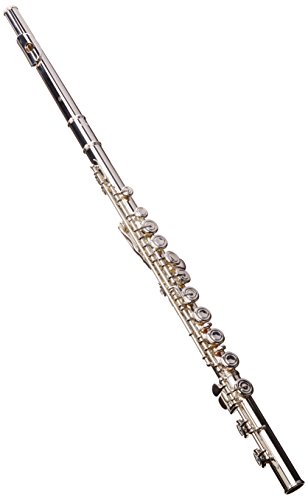
- Offset G system with silver-plated keys
- Warm, rich sound profile
- Case and cleaning supplies included
Best For: Advancing students seeking a dependable Yamaha setup
Full-Service Intermediate Value

- Split E mechanism and nickel-silver construction
- One-year maintenance plan included
- Three-year manufacturer warranty
Best For: Intermediate players wanting features and support
Professional-Inspired Student Build

- Sterling silver lip plate and riser
- Hand-cut headjoint with Pisoni pads
- Five-year limited warranty
Best For: Advancing students prioritizing tone and response
Easy-Playing Progression Pick
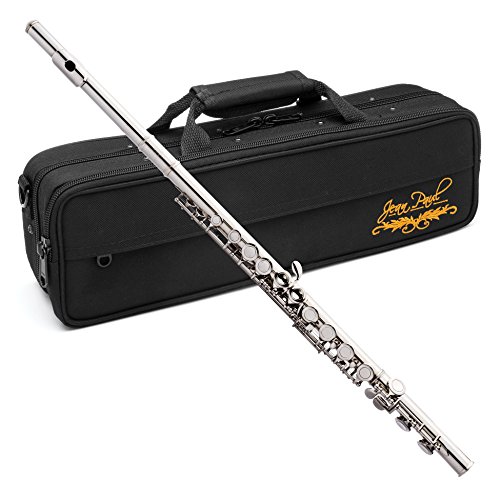
- Closed-hole design for accessible fingering
- Offset G and split E mechanism
- Technician setup and case included
Best For: Developing players wanting comfortable playability
Affordable Student Pick

- Closed-hole C flute with offset G and split E keys
- Includes case, stand, cleaning kit, and gloves
- Affordable nickel/silver-plated student setup
Best For: Students wanting a complete, budget-conscious closed-hole flute
Advancing Player Choice
Jean Paul FL-430 Open-Hole Flute

- Open-hole design includes removable plugs
- Offset G and split E improve playability
- Technician setup and one-year warranty included
Best For: Advancing students ready for open-hole flexibility
Value Closed-Hole Option

- Closed-hole C flute with 16 keys
- Cupronickel body and leather pads
- Case and essential maintenance accessories included
Best For: Budget-minded players wanting a basic closed-hole setup
Value Open-Hole Pick
Glory 16-Key Silver-Plated C Flute

- Open-hole 16-key C flute
- Silver-plated cupronickel construction
- Leather pads and included case
Best For: Intermediate players seeking an affordable open-hole flute
Flexible Upgrade Option

- Closed-hole 16-key C flute
- Nickel- and silver-plated options
- Includes cleaning and tuning accessories
Best For: Players wanting an accessible closed-hole setup with upgrade choices
Expanded-Range Choice

- 17-key open/closed-hole design
- B foot joint and offset G
- Includes case and maintenance accessories
Best For: Intermediate players wanting a B-foot flute with an offset G
Reliable Yamaha Foundation – Yamaha YFL-222
For players comparing flutes for intermediate players, the Yamaha YFL-222 offers a familiar student-focused configuration with an offset G system, silver-plated keys, and a C footjoint. Its warm, rich sound profile and included case and cleaning supplies make it a practical option for continued study.
Best For: Students moving beyond the basics who want a straightforward Yamaha flute with a warm tone and essential accessories.
Pros:
- Offset G key system supports comfortable hand positioning.
- Silver-plated keys and a nickel-silver body provide a polished student design.
- Includes a flute case and cleaning supplies.
- Comes with a listed two-year warranty.
Cons:
- The supplied details identify it as a student model rather than a professional-level instrument.
- The C footjoint may offer less range than a B-foot model.
The YFL-222 is a sensible choice for an advancing student who values a recognized brand, comfortable offset keys, and a complete basic setup. Its specifications make it best suited to lessons, school ensembles, and regular practice.
Full-Service Intermediate Value – Herche Superior Flute M2
The Herche Superior Flute M2 stands out among flutes for intermediate players with its nickel-and-silver construction, split E mechanism, and accessory package. It is designed for a clear, resonant sound and includes unusually extensive repair, maintenance, and warranty coverage.
Best For: Intermediate and semi-professional players who want a feature-rich flute with strong included support.
Pros:
- Split E mechanism can make the third-octave E easier to play.
- Includes a one-year repair and maintenance plan plus a three-year manufacturer warranty.
- Features treated pads, stainless-steel springs, and ribbed construction.
- Includes a lined case, cleaning swab, tenon protectors, and polish cloth.
Cons:
- The supplied specifications do not state whether the keys are open- or closed-hole.
- The extensive feature list may be more than a player seeking a basic student setup needs.
With its split E mechanism, professional-grade component claims, and bundled maintenance plan, the M2 offers a particularly comprehensive package. It is worth considering when ongoing support and accessories matter as much as the initial instrument specification.
Professional-Inspired Student Build – Di Zhao DZ-301
For flutes for intermediate players with an emphasis on tone and response, the Di Zhao DZ-301 combines a silver-plated body and headjoint with a sterling silver lip plate and riser. Its hand-cut headjoint, Pisoni pads, offset G keys, and closed-hole design give it a student-friendly layout with upgraded components.
Best For: Students and advancing players seeking a warm, resonant, free-blowing flute with professional-inspired construction.
Pros:
- Sterling silver lip plate and riser are designed for a richer, more responsive sound.
- Hand-cut headjoint is intended to support a powerful, free-blowing tone.
- Hand-padded Pisoni pads and Y-arms target reliable sealing and key stability.
- Includes a case, cleaning rod, cleaning cloth, and five-year limited warranty.
Cons:
- Its closed-hole design may be less suitable for players specifically seeking open-hole technique.
- The C footjoint provides a more student-oriented range than a B-foot configuration.
The DZ-301 is compelling for players ready to prioritize tonal response without moving to a fully professional instrument. Its sterling silver contact points and hand-cut headjoint are the main reasons to consider it over a more basic student flute.
Easy-Playing Progression Pick – Jean Paul USA FL-220
The Jean Paul USA FL-220 is a practical entry in the flutes for intermediate players category, particularly for musicians who still value easy fingering and setup. Its closed-hole design, offset G keys, split E mechanism, and technician play-testing support a comfortable transition through lessons and ensemble playing.
Best For: Beginners and developing players who want comfortable ergonomics, accessible fingering, and a ready-to-play setup.
Pros:
- Closed-hole keys simplify fundamental fingering technique.
- Offset G system is designed for improved hand alignment and comfort.
- Split E mechanism can help with the third-octave E note.
- Set up and play-tested by NAPBIRT-certified technicians; case included.
Cons:
- The one-year manufacturer warranty is shorter than the coverage listed for several alternatives.
- Its student-focused closed-hole design may not suit players specifically seeking open-hole development.
The FL-220 makes the most sense when playability and straightforward setup take priority. It offers useful comfort and response features while retaining the accessible design of a closed-hole student flute.
Affordable Student Pick – Cecilio Closed-Hole C Flute
For players moving beyond the basics, this Cecilio model is a practical option among flutes for intermediate players who still want a student-friendly setup. Its closed-hole design, offset G key, and split E key provide familiar handling, while the included accessories make it convenient for lessons, practice, and storage.
Best For: Students who want an affordable closed-hole flute with a complete accessory package.
Pros:
- Closed-hole C flute with offset G and split E keys.
- Includes a case, gloves, cleaning supplies, joint grease, and a foldable stand.
- Undercut beveled embouchure and double bladder pads support a student-oriented setup.
Cons:
- Its beginner-focused design may offer less flexibility than an open-hole intermediate flute.
- The nickel/silver-plated construction is positioned as an affordable student option rather than a premium instrument.
This is a sensible choice when value and convenience matter most. The closed-hole layout can feel approachable, and the included stand and maintenance items help reduce the need for separate purchases.
Advancing Player Choice – Jean Paul FL-430 Open-Hole Flute
The Jean Paul FL-430 is a strong fit for flutes for intermediate players who are ready to explore open-hole technique. Its silver-plated body, offset G system, split E mechanism, and included plugs provide a flexible setup for players developing control and comfort.
Best For: Advancing students who want open-hole versatility with beginner-friendly plugs.
Pros:
- Open-hole keys offer added tonal control and can be used with removable plugs.
- Offset G key supports more comfortable hand alignment.
- Split E mechanism helps simplify the third-octave E note.
- Play-tested and set up by NAPBIRT-certified technicians before shipping.
Cons:
- Open-hole keys may require an adjustment period for players coming from a closed-hole flute.
- It weighs more than the Cecilio model at 1.2 pounds.
With precise-intonation claims, a ready-to-play setup, and a one-year manufacturer’s warranty, the FL-430 is the most progression-focused option in this group. The included plugs also let players adapt the open-hole configuration as their technique develops.
Value Closed-Hole Option – Glory C Flute With Case
Glory Closed Hole C Flute With Case, Tuning Rod,Joint Grease and Cloth, Gloves, Nickel Silver
Check Price On AmazonThe Glory closed-hole C flute is a straightforward option among flutes for intermediate players who prefer a traditional 16-key layout and a cost-conscious instrument. Its cupronickel construction, leather pads, and included maintenance accessories make it suitable for regular practice and basic upkeep.
Best For: Players seeking a simple closed-hole flute with essential care accessories.
Pros:
- Closed-hole C flute with a 16-key design.
- Real cupronickel construction is described as durable and tone-focused.
- Leather pads provide water resistance and air tightness.
- Includes a case, tuning rod, joint grease, cloth, and gloves.
Cons:
- The supplied notes do not mention an offset G key or split E mechanism.
- Its closed-hole layout provides less open-hole flexibility for advancing technique.
This model emphasizes basic functionality and value rather than specialized intermediate features. It can make sense for players who want a manageable closed-hole instrument and the essentials for cleaning, transport, and maintenance in one package.
Value Open-Hole Pick – Glory 16-Key Silver-Plated C Flute
For shoppers comparing flutes for intermediate players, this 16-key C flute offers an open-hole design, silver-plated cupronickel construction, and a case at a cost-conscious price. Its leather pads are designed for water resistance and airtightness, while the needle springs are intended for long-term use.
Best For: Intermediate players seeking an affordable open-hole flute for practice and continued development.
Pros:
- Open-hole 16-key design supports more advanced playing techniques.
- Silver-plated cupronickel body and keys offer durability and a polished finish.
- Leather pads provide water resistance and airtightness.
- Includes a case for storage and transport.
Cons:
- Open-hole keys may require more precise finger placement than closed-hole keys.
- The supplied notes do not list cleaning accessories beyond the case.
This Glory model is a practical value option when an intermediate player wants an open-hole instrument without moving to a more elaborate configuration. The 16-key layout keeps the design straightforward while retaining useful durability features.
Flexible Upgrade Option – 16-Key Closed-Hole C Flute
This closed-hole C flute is worth considering among flutes for intermediate players because it combines a standard 16-key layout with a choice of nickel-plated or silver-plated versions. The closed-hole keys are designed for easier finger positioning, and the set includes a case, cleaning kit, and tuning rod.
Best For: Players who want an easy-to-position closed-hole flute with accessories and the option to upgrade materials.
Pros:
- Closed-hole design is easier for finger placement.
- Available in nickel-plated and silver-plated versions for different playing needs.
- Includes a cleaning rod, cloth, tuning rod, case, and gloves.
- Factory pre-tuned with pitch calibration and hand-assembly inspection noted by the manufacturer.
Cons:
- The supplied listing details identify the included model as nickel plated; the silver-plated version may be a separate option.
- Closed holes may offer less flexibility than an open-hole design for players specifically seeking that configuration.
Its accessory package and closed-hole layout make this a convenient choice for practice, school-band use, and performance. Intermediate players can also consider the silver-plated option if they prefer the warmer sound profile described in the listing.
Expanded-Range Choice – Glory 17-Key B-Foot C Flute
For flutes for intermediate players with more advanced configuration needs, this Glory model adds a 17-key open/closed-hole design, B foot joint, and offset G. It uses silver-plated cupronickel, leather pads, and long-life needle springs, and comes with several maintenance accessories.
Best For: Intermediate players looking for a B-foot flute with an offset G and a more fully equipped package.
Pros:
- 17-key configuration includes a B foot joint and offset G.
- Open/closed-hole design offers a versatile key configuration.
- Silver-plated cupronickel construction is designed for durability and tone.
- Includes a case, cleaning rod, joint grease, cloth, and gloves.
Cons:
- The more specialized B-foot configuration may be more than needed for players seeking a basic C flute.
- Open-hole keys can demand more accurate finger coverage than fully closed-hole keys.
This is the most feature-focused option in the group, pairing an expanded 17-key setup with a B foot joint and offset G. The included care accessories also make it convenient for players who want a more complete intermediate package.
How We Picked the Best Flutes for Intermediate Players
We compared these instruments by the features that matter most as a player develops: construction materials, key configuration, headjoint design, response, ergonomics, included accessories, and upgrade potential. We also considered whether each flute suits a student progressing through school ensembles, a returning musician, or an advancing player preparing for more demanding repertoire.
Specifications can vary by production run and seller, so verify the exact configuration, warranty, return policy, and included case or cleaning tools before ordering. A qualified teacher or repair technician can also help assess setup and condition, particularly for used or budget instruments.
Quick Comparison
| Feature | What It Generally Means | Best For |
|---|---|---|
| Closed holes | Easier finger placement and fewer technique adjustments | Developing players and school ensembles |
| Open holes | More demanding hand position and finger coverage | Players ready to build advanced technique |
| C foot joint | Standard range ending at low C | Most students and general performers |
| B foot joint | Extends the low register by one semitone | Players needing additional low-range flexibility |
| Silver-plated body | Durable, familiar construction with manageable upkeep | Everyday practice and performance |
| Sterling-silver components | May provide a different tonal response and premium feel | Players seeking a more advanced specification |
Key Buying Factors for Flutes for Intermediate Players
Hole Configuration and Key Layout
Closed-hole flutes are usually the most forgiving choice when a player is still refining finger coverage. Open-hole models can encourage more precise technique, but they require properly positioned fingers and may need plugs during the transition. An offset G key can feel more comfortable for smaller hands, while an inline G layout may suit players accustomed to a more traditional configuration.
Headjoint, Response, and Intonation
The headjoint has a major effect on articulation, projection, and ease of response. Hand-cut or better-fitted headjoints may offer useful refinement, but setup quality matters just as much as the advertised material. The flute should speak cleanly across registers and maintain stable intonation with the player’s ensemble or teacher’s reference pitch.
Foot Joint and Build Quality
A C foot is sufficient for most advancing students. Choose a B foot when the extra low-B range is genuinely useful, rather than treating it as an automatic upgrade. Smooth key action, secure posts, properly seating pads, and a reliable mechanism are more important than a long feature list.
Maintenance and Support
Plan for regular swabbing, careful case storage, and periodic professional adjustments. Confirm that replacement pads, adjustment services, and warranty support are available. Included rods, cloths, grease, and cases are helpful, but they do not replace proper maintenance.
Who Should Buy Which Flutes for Intermediate Players?
Choose a closed-hole C-foot flute if you want a straightforward step up from a beginner model or need dependable performance for lessons, band, and orchestra. This is the safest general-purpose category for many intermediate students.
Choose an open-hole model if your teacher recommends the transition and your finger technique is consistent. These instruments are better suited to players actively building advanced control rather than those still struggling with basic coverage.
Choose an offset-G configuration if hand comfort is a priority, especially for younger players or musicians with smaller hands. Choose a B-foot flute when your repertoire or ensemble work regularly uses the extended low register.
Finally, prioritize a well-set-up instrument from a seller with a clear return policy over impressive specifications alone. For Flutes for Intermediate Players, dependable response, comfortable ergonomics, and serviceability usually matter more than adding features you may never use.