Drum machines with sampling give you the speed of classic rhythm programming with the flexibility to shape your own sounds. That makes them ideal for producers, live performers, and beatmakers who want more than fixed factory kits.
Whether you want portable sketching, deep sequencing, or hands-on performance control, the best options in this roundup cover a wide range of workflows and budgets.
Best 10 Drum Machines with Sampling Picks for 2026
Hybrid TR Performance
Roland TR-8S Advanced Drum Machine

- Circuit-modeled TR-808/909-era sounds
- Import mono or stereo samples via SD card
- Edit decay, tuning, start point, speed, and direction
Best For: performance-driven producers who want classic TR drums plus custom sampling
Portable MPC Sampling
Akai Professional MPC Sample Portable Sampler

- Standalone, battery-powered sampler with built-in speaker
- 16 pads and quick chop workflow for fast beatmaking
- 60 onboard effects plus resampling and timestretch/repitch
Best For: portable beatmakers, beginners, and DAWless creators
Hybrid Drum Lab
Behringer LM Hybrid Drum Machine
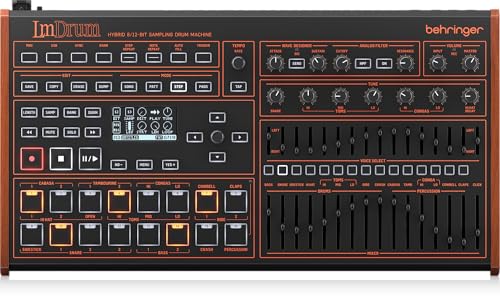
- Explicitly described as a hybrid sampling drum machine
- Large bass-wood body for a substantial hardware feel
- Positioned for studio-focused hardware users
Best For: buyers who want a hybrid sampling drum machine in a larger studio format
Performance Sampler Classic
Roland SP-404MKII Creative Sampler and Effector

- Fast sample editing with chop, resample, and BPM detect
- 17 velocity-sensitive RGB pads with OLED display
- Wide effects suite including lo-fi and DJFX-style tools
Best For: performance beatmakers who want a portable sampler with expressive effects
Compact Sample Sequencer
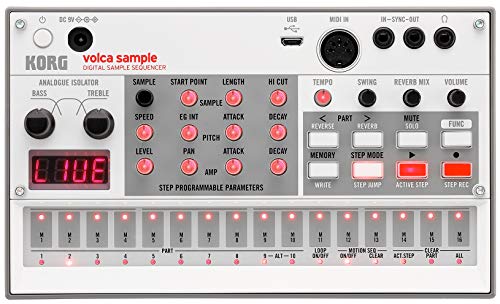
- 8-voice sample-based drum machine
- 16-step sequencer with pattern chain
- Battery-powered with built-in speaker
Best For: Portable beatmaking and quick sample-based sketches
Standalone Production Hub

- Standalone sampling and full-song workflow
- 7-inch touchscreen with velocity pads
- USB-C audio, MIDI, and studio integration
Best For: Producers who want a hardware production center
Portable Performance Sampler
teenage engineering EP-133 K.O. II
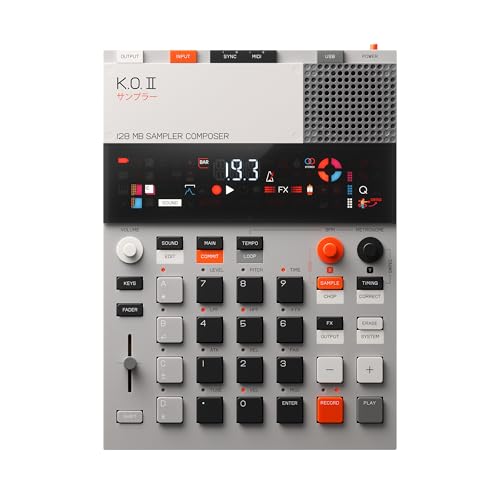
- Built-in mic and line-in sampling
- 4 groups x 99 patterns with song mode
- 12 punch-in effects and portable power
Best For: Live-focused beatmakers who want fast sampling and performance control
Pattern-Driven Sampling Performer
Korg electribe Sampler ESX Red

- Pattern chaining for long arrangements
- One-level undo for quick fixes
- Includes Ableton Live 9 Lite
Best For: Producers who want a compact sampler for chaining patterns into complete songs.
Hybrid Sampling Drum Box
Behringer LmDrum Hybrid Sampling Drum Machine

- 109 sounds for quick beat building
- 64-step sequencer for pattern programming
- Dual-mode filter and Wave Designer
Best For: Beatmakers who want a hybrid drum machine with sequencing and sound-shaping controls.
Portable Sample Capture Station
Sonicware SmplTrek Portable Sampler

- One-touch recording with auto-slicing
- Built-in mic, speaker, and battery power
- 1,000+ samples plus 30 DSP effects
Best For: Mobile creators who want a compact sampler for recording and arranging on the go.
Hybrid TR Performance – Roland TR-8S Advanced Drum Machine
If you want drum machines with sampling that still feel like classic hardware, the Roland TR-8S stands out for blending iconic TR sounds with flexible sample import and kit design. It’s built for producers who want authentic 808/909-style drums, but also need the freedom to load their own mono or stereo samples and shape them on the fly.
Best For: Producers who want a performance-ready drum machine that mixes classic TR sounds with custom samples.
Pros:
- Includes detailed circuit-modeled TR sounds from the 808, 606, 909, 707, 727, and more.
- Supports importing your own mono or stereo samples via SD card.
- Lets you change decay, tuning, sample start points, speed, and direction.
- Kit-level storage saves instrument and master effects settings for live use.
Cons:
- More focused on performance and sound design than simple one-touch sampling.
- Depends on SD card workflow for bringing in your own sounds.
Overall, the TR-8S is a strong choice if you want sampling flexibility without giving up the immediacy of a modern TR-style groovebox. Its mix of heritage sounds, sample handling, and onboard effects makes it especially appealing for expressive beatmaking and live sets.
Portable MPC Sampling – Akai Professional MPC Sample Portable Sampler
For drum machines with sampling in a compact, standalone format, the Akai Professional MPC Sample is built to make beatmaking fast and approachable. It combines the MPC workflow with battery power, a built-in speaker and microphone, and a simple chopping setup, so you can capture ideas and turn them into grooves without needing a computer.
Best For: Beatmakers and DAWless creators who want a portable sampler with an easy MPC-style workflow.
Pros:
- Standalone, battery-powered design with built-in speaker and internal microphone.
- Includes 16 MPC pads, a color display, and intuitive chopping tools.
- Offers internal resampling, timestretch/repitch, and 60 effect types.
- Supports microSD storage, USB-C connectivity, and MIDI integration.
Cons:
- Portable format means it is less of a traditional drum machine than a dedicated groovebox.
- MIDI adapter for DIN connections is not included.
The MPC Sample is a practical pick if you want sampling first and foremost, with enough onboard sequencing and effects to sketch full tracks anywhere. It is especially useful for creators who value quick chopping, hands-on pads, and total standalone operation.
Hybrid Drum Lab – Behringer LM Hybrid Drum Machine
The Behringer LM Hybrid Drum Machine is positioned as a hybrid sampling drum machine for producers who want a straightforward hardware approach. If you are comparing drum machines with sampling and want something clearly built around hybrid sound creation, this model fits that lane.
Best For: Producers looking for a hybrid sampling drum machine in a larger hardware format.
Pros:
- Designated as a hybrid sampling drum machine.
- Large physical footprint may suit a dedicated studio setup.
- Wood construction gives it a distinctive hardware build.
Cons:
- Supplied notes provide very limited details about workflow and sound features.
- Lacks listed information on effects, sample management, or sequencing depth.
Because the available product information is sparse, the LM is best evaluated as a hybrid sampling option rather than a feature-rich, fully specified groovebox. It may appeal most to buyers who prioritize the concept and format of the instrument over a long list of documented functions.
Performance Sampler Classic – Roland SP-404MKII Creative Sampler and Effector
For players comparing drum machines with sampling, the Roland SP-404MKII is a performance-first sampler with fast editing, expressive pads, and a deep effects engine. It is designed for beatmakers who want to sample, chop, resample, and build patterns quickly, whether in the studio or on the move.
Best For: Performance beatmakers and sample-based producers who want fast workflow and portable creativity.
Pros:
- Vivid OLED display and 17 velocity-sensitive RGB pads improve hands-on control.
- Fast sample editing with real-time or auto-chop, auto BPM detect, and resampling.
- Strong onboard effects, including Vinyl Simulator, DJFX Looper, Lo-fi, Cassette Simulator, and Resonator.
- Portable power options include USB-C, six AA batteries, or AC adaptor.
Cons:
- More focused on sample-based performance than on traditional drum machine sequencing.
- Internal storage is 16 GB, so larger libraries may require careful management.
The SP-404MKII is one of the most flexible choices if your workflow centers on sampling, resampling, and performance effects. It is especially compelling for artists who want a compact box that can move from idea capture to finished beat without slowing down.
Compact Sample Sequencer – Korg Volca Sample 2
Korg Volca Sample 2 Digital Sample Sequencer Drum Machine w/Pattern Chain Mode and 16-step Sequencer
Check Price On AmazonIf you want drum machines with sampling in a tiny, battery-friendly format, the Korg Volca Sample 2 is built for fast beat making and portable sound design. It gives you 8-voice polyphony, a 16-step sequencer with pattern chain mode, and enough sample memory to build flexible grooves without taking up much space.
Best For: Portable producers, lo-fi beatmakers, and anyone who wants a lightweight sampler for sketching patterns on the go.
Pros:
- 8-voice polyphony with a 16-step sequencer and pattern chain mode
- Double the memory of the previous model for more samples and longer recordings
- Digital reverb and a rich double filter help shape the sound
- Integrated speaker, headphone output, and battery or AC power options
Cons:
- Compact size means it is geared more toward quick sequencing than deep production
- Micro USB connectivity is less modern than USB-C workflows
Overall, this is a practical choice if you want a simple, highly portable sampler for building rhythms and textures quickly. The librarian software and pattern tools make it easier to manage ideas, while the tiny footprint keeps it travel-ready.
Standalone Production Hub – Akai MPC One G2
For buyers comparing drum machines with sampling that can also handle full-track production, the Akai Professional MPC One G2 is the most workstation-like option here. It combines classic MPC pads, standalone sampling and sequencing, a 7-inch touchscreen, and a track-based workflow so you can chop samples, build drum patterns, and arrange songs without relying on a computer.
Best For: Producers who want a standalone sampler, sequencer, and song-building hub in one desktop unit.
Pros:
- Standalone operation for sampling, sequencing, arranging, and performance
- 7-inch touchscreen and 16 velocity- and pressure-sensitive pads
- USB-C connectivity with multichannel audio and expanded MIDI support
- Large factory library plus bundled plugins and Ableton Live Control Mode
Cons:
- Larger and less portable than pocket-size or battery-powered alternatives
- Workflow is deeper, so it may feel more complex for very basic beat sketches
This model stands out if you want a serious hardware center for sampling and full song creation. It is especially compelling for hybrid studio setups, but its real strength is how much you can do without opening a laptop.
Portable Performance Sampler – teenage engineering EP-133 K.O. II
The teenage engineering EP-133 K.O. II is a strong pick if you want drum machines with sampling that lean toward speed, performance, and hands-on workflow. It offers built-in mic sampling, a reworked sequencer, 12 punch-in 2.0 effects, and portable battery operation, making it easy to capture ideas and turn them into beats quickly.
Best For: Live performers and fast-moving beatmakers who want an expressive sampler they can carry anywhere.
Pros:
- Built-in microphone plus line-in sampling for quick capture
- Reworked sequencer with 4 groups x 99 patterns and song mode
- 12 punch-in 2.0 effects and 6 built-in effects for live performance
- Portable design with built-in speaker and USB-C or battery power
Cons:
- Fewer details here suggest a workflow centered on immediacy rather than deep studio editing
- Best suited to short, hands-on sessions instead of a full traditional production setup
In practice, the K.O. II is about capturing ideas fast and shaping them in real time. If you value portability, performance control, and quick sampling, it offers a very focused and creative approach.
Pattern-Driven Sampling Performer – Korg electribe Sampler ESX Red
If you want drum machines with sampling that lean toward fast pattern building, the Korg electribe Sampler is built for hands-on electronic music creation. It combines onboard sampling with pattern chaining, so you can string ideas together into longer songs or even full sets without stopping the flow.
Best For: Producers and performers who want a compact sampler for building and chaining electronic patterns live.
Pros:
- Pattern chaining lets you link patterns together with nearly no limitation.
- One-level undo makes it easier to recover from a bad recording or edit.
- Original value indicators help you track knob positions on-screen.
- Includes Ableton Live 9 Lite and bonus patterns for extra starting material.
Cons:
- Uses an optional SD card for the 400+ bonus patterns.
- Accessory-based setup includes MIDI adapter cables and an AC adapter.
This is a good fit if your workflow depends on quick sequencing, sample-based sketching, and performance-friendly song arrangement. It feels especially practical for players who want a compact box that can move from ideas to longer arrangements efficiently.
Hybrid Sampling Drum Box – Behringer LmDrum Hybrid Sampling Drum Machine
For buyers comparing drum machines with sampling, the Behringer LmDrum is a straightforward hybrid option with a focus on sound shaping and sequencing. It comes with 109 sounds, a 64-step sequencer, a dual-mode filter, and Wave Designer, making it a practical pick for building programmed beats with some tonal control.
Best For: Beatmakers who want a sampling-capable drum machine with simple sequencing and sound-shaping tools.
Pros:
- Includes 109 sounds for immediate beat creation.
- 64-step sequencer supports structured programming.
- Dual-mode filter and Wave Designer add extra sound-shaping options.
- Metal and plastic construction gives it a solid desktop feel.
Cons:
- No onboard sample-count details are provided in the notes.
- At 10.1 pounds, it is less portable than compact battery-powered units.
The LmDrum makes sense if you want a hardware drum machine that emphasizes sequencing and processing without unnecessary complexity. Its feature set is practical for beat construction, though it looks better suited to a fixed studio setup than travel use.
Portable Sample Capture Station – Sonicware SmplTrek Portable Sampler
If portability matters in your search for drum machines with sampling, the Sonicware SmplTrek is designed to keep the whole workflow small and self-contained. It offers one-touch sample recording, auto-slicing, time-stretching, pitch-changing, a built-in mic and speaker, and battery-powered operation for creating on the move.
Best For: Mobile creators who want a compact sampler/drum machine for recording, slicing, and arranging anywhere.
Pros:
- One-touch sample recording makes capture quick and simple.
- Auto-slicing, time-stretching, and pitch-changing support flexible sample editing.
- Built-in mic, built-in speaker, and battery power improve portability.
- Includes 1,000+ samples, 30 internal DSP effects, and SD card import support.
Cons:
- Its compact size may not suit users who want a larger pad-based layout.
- Advanced routing and recording options are limited to the features listed in the notes.
SmplTrek is a strong fit for song sketching, field-style capture, and lightweight production setups. Its combination of sampling tools and portable hardware makes it especially useful when you want to build ideas without relying on a full studio.
How We Picked These Drum Machines with Sampling
We focused on devices that combine reliable drum sequencing with practical sampling features, including built-in sample recording, sample playback, resampling, performance controls, and workflow tools that make beat creation faster. We also weighed portability, onboard storage, pad quality, sequencing depth, and how easy each unit is to use in real-world music making.
Quick Comparison
Some Drum Machines with Sampling are built for live performance and hands-on tweaking, while others behave more like compact production studios. Grooveboxes such as the Roland TR-8S and Korg electribe Sampler suit players who want immediate control. Standalone systems like the Akai MPC models offer a broader production workflow. Smaller options such as the Volca Sample 2 or EP-133 K.O. II are better for fast ideas, travel, and limited-space setups.
Key Buying Factors for Drum Machines with Sampling
Sampling Workflow
Look at how samples are captured, edited, and assigned. Some units emphasize quick one-shot loading and trigger-based sequencing, while others offer deeper chopping, time-stretching, or resampling. If you plan to build full tracks, choose a model that makes sample management simple.
Sequencing and Performance
A good sequencer matters as much as the sample engine. Pattern chaining, per-step automation, swing, mute functions, and performance effects can dramatically improve how useful the machine feels in practice.
Portability and Power
If you want to write on the move, battery power, a compact footprint, and built-in microphones or speakers can be a major advantage. Studio users may prefer larger pads, more outputs, and a sturdier interface over maximum portability.
Connectivity and Expansion
Check MIDI, audio inputs and outputs, USB support, and any software integration. These features determine how well the machine fits into a larger setup with synths, controllers, or a DAW.
Who Should Buy Which Drum Machines with Sampling?
If you want a performance-focused drum machine with sampling, look at options that prioritize live control and immediate sound shaping. If you want an all-in-one production center, standalone MPC-style units are the strongest fit. For portable beat making, choose compact samplers with simple sequencing and quick capture tools. For experimental sound design or sketching ideas fast, smaller sampler-drum machine hybrids are often the most satisfying choice.
In short, the best choice depends on whether you value hands-on performance, deep production features, or grab-and-go creativity. Narrow your shortlist by workflow first, then compare editing depth, portability, and how naturally the machine fits your studio or stage setup.