Chromatic kalimbas give thumb-piano players more notes than standard diatonic models, making them better suited to accidentals, richer chords, and a wider range of songs.
This roundup compares 10 options across key counts, layouts, woods, electronics, portability, and beginner-friendly accessories so you can choose an instrument that matches your playing style.
Best 10 Chromatic Kalimbas Picks for 2026
Natural-Wood Chromatic Pick
LingTing 42-Key Padauk Kalimba

- 42-key chromatic range
- Solid African Padauk body
- Secure tines and EVA case
Best For: Players wanting a full-range kalimba with distinctive natural wood
Pickup-Ready Chromatic Pick

- 34-note double-row range
- Included pickup and tuning hammer
- Solid walnut Life Tree body
Best For: Developing players exploring amplified chromatic playing
Wide-Range Acacia Pick
42-Key Three-Layer Acacia Kalimba

- 42-key chromatic scale
- Organized three-layer layout
- Complete case and learning accessories
Best For: Players wanting an extended range with a structured layout
Portable Double-Row Pick
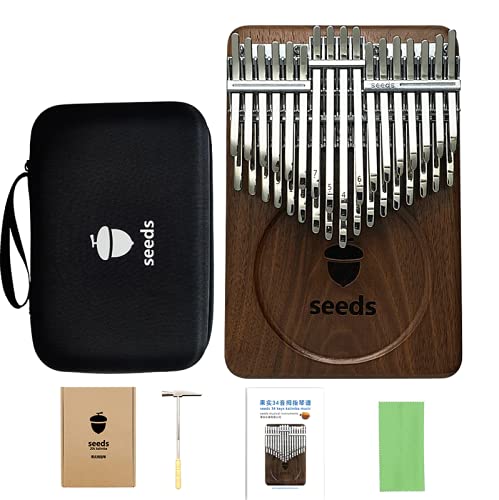
- Familiar C-tuned 17-key bottom row
- 34 keys with added accidentals
- Compact walnut flatboard design
Best For: Standard-kalimba players seeking portable chromatic flexibility
Extended-Range Pick
LingTing 34-Key Violetwood Kalimba

- 34 adjustable carbon-steel tines
- Violetwood body with unique grain
- Includes EVA case and learning accessories
Best For: Players seeking expanded range in a portable kalimba
Advanced Chromatic Choice
HLURU 42-Key Life Tree Kalimba
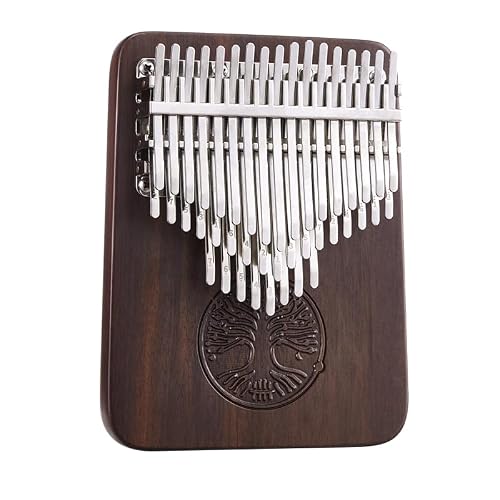
- 42-note triple-row chromatic layout
- Walnut body with Life Tree relief
- Includes case, song book, and tuning hammer
Best For: Experienced players and arrangers needing broad chromatic range
Beginner-Friendly Value
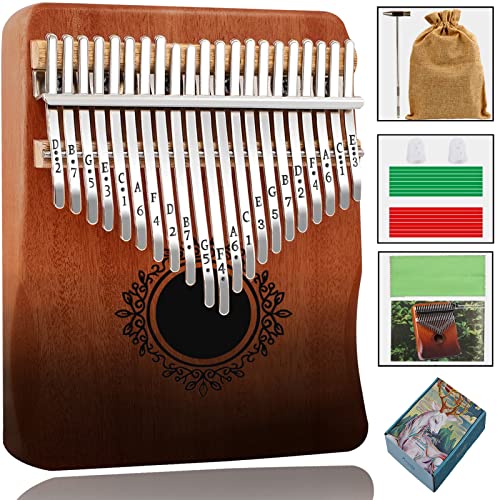
- Engraved notes aid learning
- Curved hand rest supports comfortable playing
- Includes tuning and care accessories
Best For: Adults and beginners wanting a complete portable starter set
Best Walnut Chromatic Kalimba

- 42-key chromatic range for flexible arrangements
- Solid natural walnut body with secure keys
- Includes EVA case and gift-ready accessories
Best For: Players wanting a broad-range walnut instrument
Best Lightweight Chromatic Kalimba

- Three octaves from F3 to F6
- Lightweight 450g Okoume body
- Expandable design with hard case included
Best For: Portable advanced practice and arrangements
Best Beginner Alternative
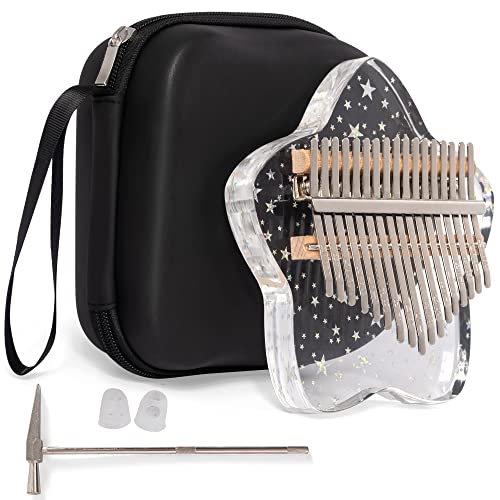
- Distinctive transparent star-shaped acrylic body
- Standard C tuning with marked tines
- Complete beginner accessory and learning set
Best For: Casual beginners and gift buyers
Natural-Wood Chromatic Pick – LingTing 42-Key Padauk Kalimba
For shoppers seeking chromatic kalimbas with a distinctive natural finish, the LingTing LT-K42A combines 42 keys with solid African Padauk wood. Its broad range suits players who want more notes than a standard 17-key instrument, while the secured tines are designed for stable, consistent playing.
Best For: Beginners and professionals who want a full-range chromatic kalimba with an attractive solid-wood body and included protection.
Pros:
- 42-key chromatic layout offers a versatile playing range.
- Solid African Padauk has a naturally reddish grain that can deepen with age.
- Patented tine fastening is designed to prevent slipping or shifting.
- Includes an EVA case, cleaning cloth, and gift box.
Cons:
- Its 570 g weight may feel less compact than smaller kalimbas.
- The large 42-key layout may require an adjustment period for standard-kalimba players.
This is a strong choice when natural wood character and a wide chromatic range matter most. The secure tine design and included case add practical value for regular practice and storage.
Pickup-Ready Chromatic Pick – HLURU 34-Key Walnut Kalimba
The HLURU 34-key model is one of the more versatile chromatic kalimbas for players moving beyond a single row. Its double-row layout adds bass notes and semitones, while the included pickup supports lessons, rehearsals, small performances, and recording setups.
Best For: Developing players who want a double-row chromatic instrument with amplification options and a refined walnut design.
Pros:
- 34-note range expands melody, harmony, and key-change options.
- Solid African walnut body features a Life Tree relief and waxed surface.
- Included pickup provides acoustic or connected playing options.
- Set includes a carrying bag, song book, and tuning hammer.
Cons:
- The double-row arrangement may take time to learn.
- At 1.6 pounds, it is heavier than many basic kalimbas.
With its pickup and broader 34-note layout, this HLURU is suited to musicians who want to practice acoustically but retain a path into amplified playing. The walnut construction also gives it a distinctive presentation for gifting.
Wide-Range Acacia Pick – 42-Key Three-Layer Acacia Kalimba
This 42-key acacia instrument is designed for shoppers who want chromatic kalimbas with an extended range and a clearly organized layout. Its three-layer scale places the bass zone in the last row and uses two 17-key rows with a half-step difference, making the added semitones easier to follow.
Best For: Beginners and experienced players seeking a broad-range kalimba with a structured three-row layout and a complete accessory package.
Pros:
- 42 keys support a wider variety of music.
- Three-layer arrangement makes the bass and semitone zones distinct.
- Acacia body, manganese-steel keys, and stainless-steel brackets are designed for fuller sound and sustain.
- Includes an EVA case, tuning hammer, cleaning cloth, stickers, tutorial music, and badge.
Cons:
- At 1.36 kg, it is relatively heavy for a portable thumb piano.
- The three-row layout is more complex than a conventional 17-key design.
This model stands out for its combination of range, layout logic, and generous accessories. It is particularly practical for learners who appreciate visual guidance while expanding beyond standard kalimba arrangements.
Portable Double-Row Pick – Seeds Pisces 34-Key Kalimba
The Seeds Pisces offers a compact option among chromatic kalimbas, pairing a 34-key double-layer design with a familiar 17-key C-tuned bottom row. Its closely sized walnut body is intended for portability, while the added accidental keys expand the music you can play without changing the basic technique.
Best For: Standard 17-key players who want extra semitones in a compact, familiar-feeling instrument.
Pros:
- Bottom row follows the standard C-tuned 17-key kalimba layout.
- 34 keys add sharps and other accidental notes for broader song choices.
- 6.7 mm tine spacing supports single-note playing and glissando.
- Compact walnut body measures about 18.3 by 12.5 cm and 2.5 cm thick.
Cons:
- The double-layer arrangement may require learning the added upper notes.
- Only a music book is listed among the included components.
For portability and familiarity, the Pisces is an appealing alternative to larger chromatic designs. Its standard lower row helps ease the transition, while the extra keys provide more flexibility for melodies in different keys.
Extended-Range Pick – LingTing 34-Key Violetwood Kalimba
For shoppers comparing chromatic kalimbas and extended-range thumb pianos, the LingTing K34V offers 34 adjustable carbon-steel tines in a compact violetwood body. It includes a case and learning accessories, but tuning requires the included wrench rather than a standard tuning hammer.
Best For: Players who want more range than a standard kalimba and are comfortable tuning with a wrench.
Pros:
- 34 adjustable carbon-steel tines provide an expanded playing range.
- Handmade violetwood body gives each instrument distinctive wood grain.
- Includes an EVA case, song-learning materials, syllable stickers, and cleaning cloth.
- Compact design suits school, outdoor, party, and travel use.
Cons:
- Does not include a tuning hammer; it uses a wrench for tuning.
- The larger 34-key layout may be less straightforward for complete beginners than smaller models.
This is a practical choice when range and portability matter more than the simplest tuning setup. Its included case and learning accessories also make it suitable as a gift for developing players.
Advanced Chromatic Choice – HLURU 42-Key Life Tree Kalimba
The HLURU Life Tree is the most advanced option here for shoppers comparing chromatic kalimbas. Its triple-row, 42-note layout combines a C-major arrangement with additional chromatic tones, while walnut construction, copper supports, and a split bridge are designed for a broad, organized playing range.
Best For: Experienced players, arrangers, and musicians who need chromatic capability for melodies, harmonies, and key changes.
Pros:
- 42-note symmetric chromatic scale supports advanced arrangements and key changes.
- Triple-row design includes reinforced copper pillars and a split bridge.
- Walnut body features rounded contours and a dimensional Life Tree relief.
- Includes a carrying case, scale stickers, song book, and tuning hammer.
Cons:
- At 2.5 pounds, it is substantially less lightweight than a compact beginner kalimba.
- The complex three-row layout is intended for experienced players rather than first-time users.
- Its 42-note size may be more instrument than casual players need.
Choose this model when musical flexibility is the priority. The extensive note range and supportive multi-row construction make it a strong fit for serious practice, arranging, and chromatic playing.
Beginner-Friendly Value – 21-Key Mahogany Kalimba
This 21-key mahogany thumb piano is a practical starting point for shoppers exploring chromatic kalimbas and portable finger pianos. Engraved note names, a curved hand rest, and a full accessory bundle make it approachable for adults and beginners, while professional tuning is intended to support a balanced, resonant sound.
Best For: Beginners and adults who want an affordable, portable kalimba with learning and maintenance accessories included.
Pros:
- Engraved note names help new players identify keys.
- Ergonomic hand-rest curve is designed for a comfortable thumb position.
- Includes a tuning hammer, stickers, finger protectors, cloth bag, instructions, and cleaning fabric.
- Suitable for home practice, outdoor use, parties, performances, and gifting.
Cons:
- The 21-key range is less extensive than the 34- and 42-key alternatives.
- Mahogany construction and the supplied design may appeal less to shoppers seeking a premium multi-row chromatic instrument.
For a first kalimba, this model emphasizes ease of learning and a complete setup rather than maximum range. It is a sensible pick for casual playing, gifts, and players upgrading from smaller mini kalimbas.
Best Walnut Chromatic Kalimba – Moon Whisperer 42-Key
The LingTing Moon Whisperer is a premium choice among chromatic kalimbas, pairing an expanded 42-key range with solid walnut construction. Its natural unfinished body, secure key design, and included case make it suitable for players who want broad musical flexibility in a gift-ready instrument.
Best For: Beginners and experienced musicians seeking a full-range walnut chromatic kalimba for varied arrangements and compositions.
Pros:
- 42 keys provide a wider note range for more flexible playing.
- Solid walnut construction showcases natural wood character without artificial paint or varnish.
- Patented key fastening system helps keep the keys secure for consistent sound.
- Includes an EVA case, cleaning cloth, tuning stickers, and gift box.
Cons:
- The expanded key layout may take more time for beginners to learn.
- The supplied details list both 42 keys and model number K34V, so buyers may want to confirm the exact configuration.
Choose this model if solid walnut, a broad chromatic range, and a complete presentation matter more than a compact beginner format. It is a versatile option for players ready to explore more complex music.
Best Lightweight Chromatic Kalimba – Seeds 41-Key
The Seeds 41-key chromatic kalimba is designed for players who want extensive range without the weight of a larger hardwood instrument. Its three-octave F3-to-F6 layout, lightweight Okoume body, engraved notes, and included hard case make it especially practical for portable practice and advanced arrangements.
Best For: Musicians who need a portable 3-octave chromatic kalimba with clearly marked keys and room for future expansion.
Pros:
- 41 keys cover three full octaves from F3 to F6, including sharps and flats.
- Solid Okoume flat-board design weighs about 450g for easier portability.
- Three-layer construction is designed to support sustain and clear high notes.
- Includes an EVA hard case, hammer, sheet music, and display stand; ten slots allow expansion up to 51 keys.
Cons:
- The advanced 41-key layout may be more instrument than a casual beginner needs.
- Its 30-day warranty is shorter than some buyers may expect.
- Flat-board construction may feel less familiar to players used to traditional resonant-body kalimbas.
For maximum range in a relatively light package, this Seeds model is one of the most practical chromatic kalimbas in the group. The engraved layout and expansion slots add useful convenience for developing players.
Best Beginner Alternative – Star Crystal 17-Key
The Star Crystal 17-key kalimba is a compact acrylic option for beginners who prioritize appearance, portability, and a straightforward learning experience. While it is a standard C-tuned 17-key instrument rather than an expanded chromatic model, its marked tines, crisp sound, and complete accessory set make it an accessible entry point for kalimba players.
Best For: Beginners, casual players, and gift buyers looking for a visually distinctive portable kalimba with learning accessories.
Pros:
- Star-shaped transparent acrylic body offers a distinctive look.
- 17 carbon-steel keys use standard C tuning and have carved symbols for easier learning.
- Acrylic body is designed to provide full, lasting resonance and is not affected by humidity.
- Includes an EVA case, tuning hammer, thumb covers, instructions, stickers, and cleaning cloth.
Cons:
- With 17 keys, it has a narrower range than dedicated chromatic kalimbas.
- Acrylic construction may not appeal to buyers specifically seeking a traditional wood body.
- No warranty is listed in the supplied details.
This model makes the most sense for accessible learning and gifting rather than complex chromatic arrangements. Its clear markings, compact design, and attractive crystal styling keep the first step into kalimba playing approachable.
How We Picked These Chromatic Kalimbas
We focused on the features that most affect playability and long-term usefulness: the number of tines, chromatic range, layout, tuning format, body material, portability, and included accessories. We also considered whether each instrument appears better suited to beginners, experienced players, performance, recording, or casual gifting.
Key count is an important starting point, but more tines do not automatically mean a better instrument. A compact 21-key model may be easier to learn, while 34-, 41-, or 42-key Chromatic Kalimbas offer more flexibility for arrangements that use sharps and flats. Pickup-equipped models can also be useful when you want amplification or direct recording.
Quick Comparison
| Best For | Look For | Why It Matters |
|---|---|---|
| First-time players | 21–34 keys, included hammer, guide, and bag | Simpler learning and easier transport |
| Broad song coverage | 41–42 keys with a chromatic range | More notes for complex melodies and chords |
| Recording or amplification | Built-in pickup | Connects more easily to an amplifier or audio setup |
| Portable practice | Flat-board or lightweight construction | Convenient for travel and storage |
| Visual appeal or gifting | Acrylic, patterned, or decorative designs | Provides a distinctive presentation |
Key Buying Factors for Chromatic Kalimbas
Key Count and Range
Choose the smallest range that covers the music you want to play. Higher-key models provide more options, but they can require more precise thumb positioning and a longer adjustment period.
Layout and Learning Curve
Chromatic layouts vary. Some use multiple rows or double-layer arrangements, while others place the tines on a flatter board. Check photos and tuning diagrams carefully, especially if you already play another kalimba and want a familiar note arrangement.
Wood, Acrylic, and Resonance
Walnut, padauk, okoume, and other woods can differ in weight, appearance, and tonal character. Solid wood bodies often provide a traditional feel, while acrylic designs prioritize appearance and portability. Construction quality, tine alignment, and comfortable edges matter as much as the material name.
Tuning and Accessories
A tuning hammer is essential because tines can shift during shipping or use. A protective bag, instruction book, stickers, and spare parts are useful extras, but verify what is actually included. A chromatic kalimba should also arrive with a clear tuning reference or enough information to maintain its intended key.
Pickup and Performance Features
If you plan to perform, loop, or record, a built-in pickup can be more valuable than decorative detailing. Confirm whether the pickup requires a cable, battery, or external preamp, and expect amplified sound to benefit from careful gain and noise control.
Who Should Buy Which Chromatic Kalimbas?
Beginners should generally start with a manageable 21- or 34-key instrument that includes a tuning hammer and learning materials. Players who want to cover more songs or arrange melodies with accidentals should consider a 41- or 42-key model. Choose a triple-row or double-layer design when expanded range is the priority and you are comfortable learning a less familiar layout.
For recording and amplified playing, prioritize the pickup-equipped option. Travelers and casual players may prefer a lightweight flat-board model with a case. If appearance is central to the purchase, an acrylic or decorative kalimba can make a memorable gift, but check its range and tuning before choosing it over a more versatile wooden model.