When you’re carrying gear on the trail, every ounce matters. The best camera tripods for hiking are compact, stable, and easy to deploy without slowing you down.
This roundup focuses on lightweight options that make sense for travel, day hikes, and landscape shooting—so you can choose the right tripod without overpacking.
Best 10 Camera Tripods for Hiking Picks for 2026
Lightweight Travel Pick
Amazon Basics 50-inch Portable Tripod

- 1.23 lbs with included storage bag
- Extends from 16.1 to 50 inches
- 4.4 lb max load for lighter gear
Best For: Casual hikers carrying lightweight cameras
All-Purpose Field Tripod
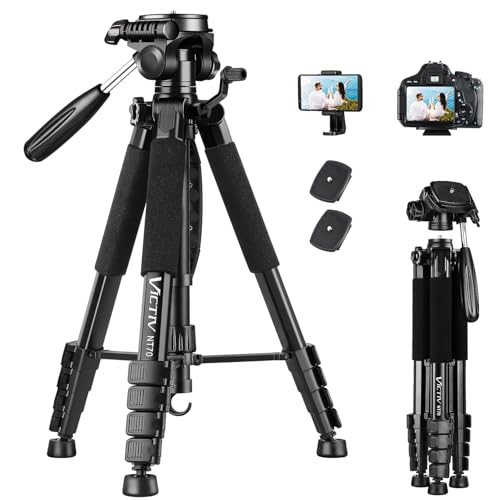
- Adjusts from 19 to 74 inches
- Includes phone holder and carry bag
- Weight hook and non-slip pads improve stability
Best For: Hikers needing a versatile camera-and-phone tripod
Compact Premium Pick
K&F Concept 64-inch Travel Tripod

- 2.53 lbs and folds to 15.5 inches
- Supports up to 17.6 lbs
- 360-degree ball head for flexible framing
Best For: Hikers wanting compact carry with stronger load support
Tripod-Monopod Hybrid
VICTIV 72-inch Tripod with Remote

- Tripod converts to a 55-inch monopod
- Adjusts from 21 to 72 inches
- Includes a strapped carrying bag
Best For: Hikers who want tripod and monopod functions in one
Trail-Ready All-Rounder
JOILCAN 74" Lightweight Travel Tripod

- 19" to 74" height range
- 3.15 lb with carry bag
- 3-way pan head and phone mount
Best For: Hikers needing a tall, versatile tripod
Compact Mono-Tripod Pick
NEEWER Basics TP14B Travel Tripod
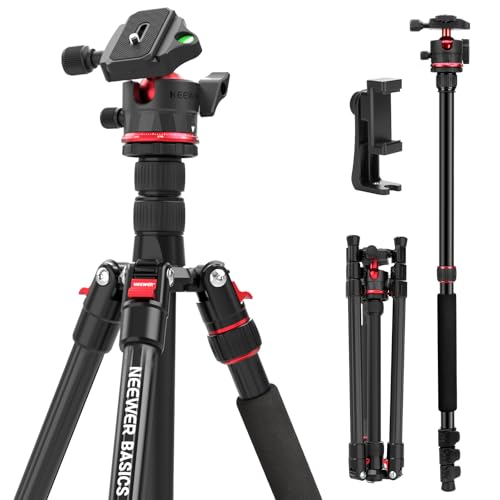
- Folds to 17" and weighs 2.9 lb
- Converts to a monopod
- 72" max height with ball head
Best For: Hikers who want compact storage and monopod flexibility
Budget-Friendly Trail Tripod

- 20" to 74" height range
- 2.8 lb with carry bag
- Quick release plate and phone mount
Best For: Hikers wanting a light, versatile tripod with phone support
Ultralight 2-in-1 Pick
SmallRig 71" Aluminum Tripod/Monopod

- Tripod converts to monopod for trail use
- Folds to 16.9 inches for packing
- Supports up to 33 lb vertical load
Best For: Hikers who want a versatile tripod with monopod flexibility
Compact Carry Pick

- Weighs 2.6 lb for easier hiking carry
- Folds to a very short packed length
- 22 lb load rating with included carry bag
Best For: Hikers who want a lightweight, compact travel tripod
Rugged Terrain Pick

- Three-angle legs suit uneven ground
- Detachable center column adds monopod use
- Folds to 14.17 inches and weighs 2.18 lb
Best For: Hikers shooting on rocky or uneven terrain
Lightweight Travel Pick – Amazon Basics 50-inch Portable Tripod
If you want camera tripods for hiking that stay simple and light, this Amazon Basics model is built for easy carry. It folds down small, weighs just 1.23 lbs, and extends from a low shooting position up to 50 inches, making it a practical choice for casual trail photos and travel use.
Best For: Hikers who want a very light tripod for casual cameras, travel shots, and quick setup on the trail.
Pros:
- Very lightweight at 1.23 lbs and comes with a zippered storage bag.
- Adjustable from 16.1 inches to 50 inches with 3-section lever-lock legs.
- Quick-release plate makes it easier to move between shots.
- 3-way head includes tilt, swivel, and a built-in bubble level.
Cons:
- Not recommended for heavy DSLR setups or long lenses.
- Weight limit is only 4.4 lbs, so equipment choices are limited.
- Less suited to demanding, professional field use.
This is a good budget-friendly hiking tripod if you prioritize portability over load capacity. It covers the basics well, but the low weight limit means it works best with lighter camera gear.
All-Purpose Field Tripod – VICTIV 74-inch Camera Tripod
For hikers who want one of the more versatile camera tripods for hiking, this VICTIV model offers tall reach and a carry bag without giving up much convenience. It adjusts from 19 to 74 inches, includes a phone holder and quick-release plate, and has a 3-way pan head that works well for both landscape and portrait framing.
Best For: Travelers and hikers who want a taller, feature-packed tripod for cameras, phones, and mixed shooting needs.
Pros:
- Height range from 19 to 74 inches gives you plenty of framing options.
- Includes a phone holder, quick-release plate, and carrying bag.
- 3-way pan head supports panoramic, vertical, and portrait shooting.
- Weight hook and non-slip pads add extra stability outdoors.
Cons:
- At 3.14 lbs, it is not the lightest option for long hikes.
- Folded size is less compact than ultra-light travel tripods.
- Best for light to moderate gear rather than heavy rigs.
This is a strong all-around hiking tripod if you want more height and flexibility than an ultra-compact model can offer. It is especially useful when you also plan to use a phone or need a bit more stability in the field.
Compact Premium Pick – K&F Concept 64-inch Travel Tripod
If you are comparing camera tripods for hiking and want a lighter premium-style option, the K&F Concept travel tripod stands out for its compact folded size and strong ball head. It weighs 2.53 lbs with the head included, folds to 15.5 inches, and supports up to 17.6 lbs, which gives it more headroom for a wider range of camera setups.
Best For: Hikers who want a compact tripod with a strong ball head and higher load capacity.
Pros:
- Lightweight at 2.53 lbs with the ball head included.
- Folds to 15.5 inches for easier packing in a hiking bag.
- Supports up to 17.6 lbs, which is high for a travel tripod.
- Ball head and quick flip leg locks make positioning efficient.
Cons:
- Maximum height tops out at 64.1 inches, which may be limiting for some users.
- Short center-column setup is specialized rather than universal.
- More of a travel tripod than an ultra-minimal hiking option.
Overall, this is a strong choice if you want a hiking tripod that stays compact but offers better capacity and control than many lightweight models. It is well suited to travelers who value easy packing and flexible shooting angles.
Tripod-Monopod Hybrid – VICTIV 72-inch Tripod with Remote
Among camera tripods for hiking, this VICTIV model is a flexible option because it doubles as a monopod and still packs into a strapped carrying bag. It weighs 3.3 lbs, adjusts from 21 to 72 inches, and uses a 3-way swivel head with a quick Arca Swiss-style plate for faster camera swaps.
Best For: Hikers and travelers who want a tripod that can also convert into a monopod.
Pros:
- Converts from tripod to 55-inch monopod in about 5 seconds.
- Height range from 21 to 72 inches offers good flexibility.
- Flip leg locks are designed for fast setup in the field.
- Includes a strapped carrying bag and extra universal mounting plate.
Cons:
- At 3.3 lbs, it is relatively heavy for long-distance hiking.
- Weight limit is listed at 3.3 lbs, so gear choices are narrow.
- Less compact than the lightest travel-focused tripods.
This hybrid design makes sense if you want more than a standard tripod for trail shooting. The monopod conversion adds versatility, but the weight means it is better for shorter hikes or users who value function over minimal carry weight.
Trail-Ready All-Rounder – JOILCAN 74" Lightweight Travel Tripod
If you want camera tripods for hiking that are still tall enough for portraits, vlogs, and landscape shots, the JOILCAN 74″ tripod is a practical all-around option. It folds down to 18 inches with the pan head removed and weighs 3.15 lb, so it’s easier to pack than many full-height models while still offering useful stability outdoors.
Best For: Hikers who want a full-height travel tripod with broad camera and phone compatibility.
Pros:
- Extends from 19″ to 74″ for a wide range of shooting angles.
- Non-slip rubber feet, double sponge pads, and a stability hook help it grip uneven terrain.
- Includes a 3-way pan head with 360° rotation plus quick-release plates and a phone mount.
- Compatible with DSLRs, mirrorless cameras, phones, webcams, projectors, and more.
Cons:
- At 3.15 lb, it is still more of a carry-along tripod than an ultralight hiking choice.
- Its 74″ size may be more than some hikers need for simple trail photos.
Overall, this is a versatile pick if you want one tripod that can handle hiking, travel, and general video work without giving up full-height capability.
Compact Mono-Tripod Pick – NEEWER Basics TP14B Travel Tripod
For camera tripods for hiking, the NEEWER Basics TP14B stands out as a compact, practical travel choice. It folds to 17 inches, weighs 2.9 lb, and can convert into a monopod, which gives it extra flexibility when you want fewer legs in the way on the trail.
Best For: Hikers who value compact storage and the option to switch into a monopod.
Pros:
- Reversely folds to 17″ for easier packing.
- Transforms into a monopod for video recording and content creation.
- 2-section center column reaches up to 72″, with inverted use for macro shots.
- 360° ball head, leveling scale, weight hook, and non-slip feet add useful field features.
Cons:
- At 3.2 lb, it is compact but not especially light for long backcountry hikes.
- The Basics line is built around essential functions, so it lacks extra premium features.
This is a sensible pick if you want a backpack-friendly tripod with a simple feature set and the added versatility of monopod mode.
Budget-Friendly Trail Tripod – CAMBOFOTO 74" Camera Tripod
If you’re comparing camera tripods for hiking and want something lightweight without giving up full height, the CAMBOFOTO 74″ tripod is easy to consider. It weighs 2.8 lb, folds compactly, and includes a carry bag, which makes it straightforward to pack for hikes, road trips, and general travel use.
Best For: Hikers who want a lightweight, affordable-feeling tripod for mixed camera and phone use.
Pros:
- Extends from 20″ to 74″ for tabletop shots or full-height framing.
- Supports up to 8.8 lb, suitable for DSLRs, mirrorless cameras, GoPros, ring lights, and smartphones.
- Includes a quick release plate and phone mount for easy switching.
- Pan-and-tilt head, slip-resistant features, and carry bag make it trail-friendly.
Cons:
- 8.8 lb load capacity is lower than the stronger options in this group.
- The folded size is compact, but not the smallest here for minimalist hikers.
It’s a strong value-oriented option if your hiking setup is light gear, simple framing, and a tripod you can carry without much fuss.
Ultralight 2-in-1 Pick – SmallRig 71" Aluminum Tripod/Monopod
If you want camera tripods for hiking that can do more than just stand still, this SmallRig model is a strong all-around option. It folds down to a compact size, converts to a monopod, and still reaches a tall 71 inches for more flexible framing on the trail.
Best For: Hikers and traveling creators who want a versatile tripod/monopod with strong load capacity.
Pros:
- 2-in-1 design converts from tripod to monopod for more hiking-friendly carry options.
- 16.9-inch folded size makes it easier to pack for outdoor photography.
- 4-section legs and flip locks adjust height from 16 to 71 inches quickly.
- Magnesium aluminum alloy build supports up to 33 lb vertical load.
Cons:
- At 3.4 lb, it is heavier than some compact travel-focused tripods.
- Telephoto zoom lenses may need an additional mount ring for better balance.
Overall, this is a practical choice if you want one tripod that can cover hiking, travel, low-angle shots, and monopod use without giving up much stability.
Compact Carry Pick – K&F CONCEPT 63" Travel Tripod
For camera tripods for hiking, compact size matters as much as height, and this K&F CONCEPT model is built around portability. It weighs 2.6 pounds, folds to a short length, and includes a carry bag, making it easy to stash in a pack or carry on longer walks.
Best For: Hikers and travelers who prioritize a small packed size and easy carry.
Pros:
- 2.6-pound weight keeps it manageable on longer hikes.
- Short folded length and compact hexagon-shaped design save pack space.
- Arca-compatible 40mm ball head supports smooth 360° panning.
- Supports up to 22 lb and includes a hook for extra stability.
Cons:
- Maximum height tops out at 63 inches, shorter than some full-size tripods.
- Non-reversible design may be less flexible than some competitors for certain setups.
If your priority is easy transport without sacrificing basic stability and useful shooting angles, this is a very hike-friendly travel tripod.
Rugged Terrain Pick – XXZU 75" Tripod with Remote
If you need camera tripods for hiking on uneven ground, this XXZU model focuses on reach, terrain adjustment, and convenience. The legs offer three angle settings, the center column can detach for monopod or selfie-stick use, and the included remote adds flexibility for hands-free shooting.
Best For: Outdoor photographers and hikers shooting on stairs, rocks, or uneven terrain.
Pros:
- Three-leg-angle adjustment helps it stand more securely on uneven trails.
- Detachable center column works as a monopod or selfie stick.
- Folds to 14.17 inches and weighs 2.18 pounds for easier carrying.
- Includes a remote control with up to 10m range and a built-in leveling system.
Cons:
- Max load is 17.64 lb vertical, which is lower than some heavier-duty tripods.
- Maximum stability depends on using the hook and anti-slip feet properly outdoors.
This is a solid pick if your hikes involve uneven terrain and you want a lightweight tripod with added shooting convenience.
How We Picked These Camera Tripods for Hiking
We prioritized portability first, then looked at usable working height, folded size, weight, and build quality. For Camera Tripods for Hiking, the ideal model balances a low carry burden with enough stability for real-world outdoor use. We also favored designs that include quick-release plates, adjustable legs, and conversion features that improve trail versatility.
Quick Comparison
In general, smaller tripods are easier to carry but may be less stable in wind, while taller models give more framing flexibility at the cost of extra bulk. Aluminum builds usually offer a good mix of durability and affordability, and tripod-monopod designs can be appealing if you want one tool that does more than one job. If you hike with a phone as often as a camera, built-in phone support can also be a useful bonus.
Key Buying Factors for Camera Tripods for Hiking
Weight and Packed Size
A tripod that feels light in the store can still be awkward on the trail if it folds long or rides poorly on a pack. Look for a model that matches your hike length and how much other gear you carry.
Stability in Outdoor Conditions
Wind, uneven ground, and extended center columns can affect sharpness. A sturdier leg design and a secure head matter more outdoors than maximum height alone.
Height Range
Taller tripods are more comfortable for eye-level framing, but they can add weight. Shorter tripods are easier to pack, though you may need to crouch more for composition.
Head Type and Features
Ball heads are popular for quick adjustments, while pan-and-tilt styles can feel more controlled for video or precise framing. Quick-release plates save time when switching between setups.
Versatility
Some Camera Tripods for Hiking convert into monopods or support phones as well as cameras. Those features are worth considering if you travel light and want fewer accessories.
Who Should Buy Which Camera Tripods for Hiking?
If you want the lightest possible setup for casual hikes, choose a compact travel tripod. If you shoot landscapes, wildlife, or self-timed portraits and want more framing flexibility, step up to a taller model with stronger stability. If you use both a camera and a phone, a hybrid tripod with a phone mount may be the most practical choice. For hikers who value multi-use gear, a tripod-monopod combo can offer the best overall efficiency.
Whichever model you choose, the best option is the one you’ll actually carry and set up quickly on the trail. That’s the real advantage of well-chosen Camera Tripods for Hiking.