Camera sliders with vertical movement can add a polished, cinematic feel to product videos, interviews, and social content. They help you combine sideways motion with lift and drop changes for more dynamic framing.
Below, we focus on options that balance stability, load capacity, ease of control, and real-world usability so you can choose the right slider for your setup.
Best 10 Camera Sliders with Vertical Movement Picks for 2026
5-Axis Motorized Pick
IFOOTAGE Shark Slider Nano II-860

- 24.9-inch travel with 5-axis motion control
- Supports vertical load use up to 2.5 kg
- Quiet brushless motor with DJI RS compatibility
Best For: Advanced filmmakers using compatible DJI gimbals
Carbon Fiber App Slider
GVM 48" Motorized Camera Slider

- Supports vertical, horizontal, and 45-degree shooting
- APP control for iOS and Android devices
- Multiple modes including time lapse and panoramic
Best For: Shoots that need app-based control and angle flexibility
Compact Phone Slider

- Works with DJI Pocket 3/4 and smartphones
- 4-axis motion control with Pocket 3
- Lightweight 1.9 lb body and 7-hour battery
Best For: Mobile creators wanting a tiny motorized motion rig
Budget Travel Rail

- Manual slider with vertical, horizontal, and diagonal use
- Lightweight 654 g build with carrying bag
- Supports cameras, smartphones, and action cameras
Best For: Light gear and travel shooters on a budget
Motorized Multi-Mode Slider
GVM 48" Carbon Fiber Motorized Slider
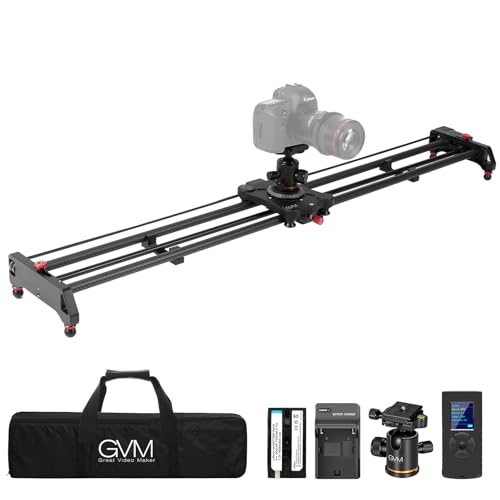
- Motorized rail with video and time-lapse modes
- Supports tracking, horizontal, and 120° panoramic shooting
- Remote controls speed, start/end points, dwell, and loop settings
Best For: Filmmakers and time-lapse shooters needing programmable motion
Vertical-Friendly Stabilizer
Fotodiox SlideCam 1000-39 Video Slider

- Ball-bearing rail works horizontally or vertically
- Adjustable legs and non-skid feet support stable setup
- Bubble level and multiple mounting holes improve alignment
Best For: DSLR and heavy-duty camera users needing vertical orientation
Portable Vertical Slider

- Supports horizontal, vertical, and slanting positioning
- Lightweight 16-inch carbon fiber build with carry bag
- Adjustable legs, spirit level, and multiple mounting holes
Best For: Travelers and small-rig shooters needing a compact manual slider
Motorized Long-Run Pick

- 47.2-inch slider with 45° tilt support
- App control plus 2.4G remote compatibility
- Silent motor and carbon fiber build
Best For: Longer cinematic moves, time lapse, and angled shooting
Compact Travel Pick
NEEWER 31.5" Carbon Fiber ER1-80

- 31.5-inch rail with 45° tilt support
- App control plus 2.4G remote compatibility
- Lightweight carbon fiber build for travel
Best For: Portable video and time lapse setups with angled shots
Full-Size Motion Pick

- 47.2-inch rail for longer camera travel
- 45° tilt support for angled movement
- App control and quiet stepper motor
Best For: Longer shots, time lapse, and controlled video movement
5-Axis Motorized Pick – IFOOTAGE Shark Slider Nano II-860
If you want camera sliders with vertical movement that can also stay in sync with a gimbal, the Shark Slider Nano II-860 is built for more advanced motion work. It offers a 24.9-inch sliding range, 5-axis control, and support for vertical load use, making it a strong fit for cinematic tracking shots and compact on-location setups.
Best For: Filmmakers who need synchronized slider and gimbal motion for polished multi-axis shots.
Pros:
- 24.9-inch travel gives you room for sweeping, deliberate moves.
- Supports vertical load use up to 2.5 kg (5.5 lbs) according to the notes.
- Works with DJI RS2, RS2 Pro, RS3 Pro, RS4, and RS4 Pro gimbals.
- Brushless motor is described as near-silent for interviews and quiet environments.
Cons:
- Max horizontal payload is 5 kg (11 lbs), so it is not for heavier camera builds.
- It is a more specialized system than a basic manual slider.
- Best value is for users already working with compatible DJI gimbals.
This is a niche but capable choice if you need smooth slide motion plus coordinated 5-axis control. It is less about simple portability and more about precision, quiet operation, and advanced motion control.
Carbon Fiber App Slider – GVM 48" Motorized Camera Slider
This GVM model is a practical option if you want camera sliders with vertical movement plus app-controlled motion for video, time lapse, and panoramic shots. The carbon fiber rail, adjustable legs, and multiple mounting threads make it more flexible than a basic straight-line slider, especially when you need to set it up on different surfaces.
Best For: Creators who want a motorized slider with app control and flexible shooting angles.
Pros:
- Supports vertical, horizontal, and 45-degree shooting through its mounting setup.
- APP control lets you manage motion from an iOS or Android device.
- Includes multiple shooting modes such as tracking, panoramic, time lapse, and video capture.
- Carbon fiber construction and adjustable legs help with stability and leveling.
Cons:
- At 48 inches, it is less compact than shorter travel sliders.
- Battery life is listed at about 2 hours, so longer shoots may need power planning.
- It is more feature-heavy than a simple manual rail.
Overall, this is a versatile motorized slider for creators who want more control over motion and angle options. The combination of app control and multi-mode shooting makes it useful for repeatable, polished results.
Compact Phone Slider – iFootage Shark Slider PICO
If you are looking for camera sliders with vertical movement in a compact travel-friendly format, the Shark Slider PICO focuses on lightweight motion work for DJI Pocket and smartphone setups. It is designed for quick setup, quiet operation, and programmable moves, which makes it a strong fit for creators who need portable motion control rather than a full-size rail.
Best For: Mobile creators and DJI Pocket users who need a small motorized slider for cinematic shots.
Pros:
- Works with DJI Pocket 3/4, Action 5/6, and smartphones.
- Supports 4-axis motion control when paired with Pocket 3.
- Quick-Mark system and app support allow up to 8 programmable points.
- Lightweight 1.9 lb build and 7-hour battery suit travel shooting.
Cons:
- 2.4 lb payload is relatively limited for heavier camera rigs.
- Its 15.8-inch size is better for small moves than long tracking shots.
- Most compelling for DJI Pocket and phone users, not larger cinema setups.
The PICO is a compact motion tool that prioritizes portability and simple control. It is best viewed as a small, quiet slider for creators who shoot on the go and want repeatable camera moves.
Budget Travel Rail – Zecti 24" Carbon Fiber Slider
The Zecti 24-inch rail is a straightforward choice for camera sliders with vertical movement when you want a lightweight, manual setup for travel or smaller rigs. Its carbon fiber rail, adjustable legs, and multiple mounting holes make it flexible enough for vertical, horizontal, diagonal, and sideways use, while staying simple to pack and carry.
Best For: Budget-minded shooters who need a compact manual slider for small cameras and phones.
Pros:
- Supports vertical, horizontal, diagonal, and sideways operation.
- Lightweight at 654 g and includes a carrying bag for travel.
- Four precision bearings and double carbon fiber rails help stability.
- Compatible with cameras, smartphones, and action cameras.
Cons:
- Manual design means no motorized motion control.
- Manufacturer note says it can be noisy if screws are overtightened.
- Maximum weight recommendation is 4.4 lbs, so it is for lighter gear.
For basic sliding shots and flexible positioning, this Zecti model keeps things practical and affordable. It is best when you want a portable rail for light kits rather than a powered cinematic system.
Motorized Multi-Mode Slider – GVM 48" Carbon Fiber Motorized Slider
If you need camera sliders with vertical movement-style flexibility for complex motion shots, this GVM motorized rail is built for controlled tracking, panoramic, horizontal, and time-lapse work. The remote lets you set key motion parameters, while the rail supports automatic back-and-forth operation for video or time-lapse workflows.
Best For: Filmmakers and time-lapse shooters who want a motorized slider with programmable motion and panoramic options.
Pros:
- Supports tracking shooting, 120° panorama, and horizontal movement
- Offers both video shooting and time-lapse shooting modes
- Remote control adjusts start/end points, speed, dwell time, pause time, shots, and loop settings
- Includes multiple 1/4-inch and 3/8-inch screw ports plus shutter cables
Cons:
- Heavier than a compact manual slider
- Designed around camera workflows rather than ultra-portable travel use
- Best suited to users who want motorized control, not simple manual sliding
This is the most feature-rich pick in the group if you want repeatable, automated camera movement and a slider that can handle both motion control and panoramic shooting. It’s aimed at users who value precision and remote setup over minimal carry weight.
Vertical-Friendly Stabilizer – Fotodiox SlideCam 1000-39 Video Slider
For buyers comparing camera sliders with vertical movement support, the Fotodiox SlideCam stands out because its ball-bearing slide can be used horizontally or vertically. It is designed as a professional stabilization rail with adjustable legs, a bubble level, and multiple mounting points for flexible setup on a tripod or flat surface.
Best For: DSLR and heavy-duty camera users who need a smooth slider that can be oriented horizontally or vertically.
Pros:
- Ball-bearing slide mechanism supports horizontal or vertical use
- Includes removable adjustable legs with non-skid rubber feet
- Bubble level in the sliding plate helps with alignment
- Multiple 1/4-20 and 3/8-inch mounting holes add versatility
Cons:
- Larger and heavier than ultra-compact travel sliders
- Assembly is quick, but it is still a more substantial rig
- Best suited to users who want stability over minimal size
This is a strong choice if vertical positioning matters and you want a steadier, more studio-style slider. It focuses on smooth support and flexible mounting rather than motorized automation.
Portable Vertical Slider – Zecti 16" Carbon Fiber Slider
If you want camera sliders with vertical movement support in a compact form, this Zecti manual slider is easy to pack and flexible to position. It can be used horizontally, vertically, or slantingly on a tripod, and it includes adjustable legs, a bubble level, and multiple mounting holes for different setups.
Best For: Travelers and small-rig shooters who want a lightweight manual slider with flexible positioning.
Pros:
- Supports horizontal, vertical, and slanting shooting positions
- Lightweight 16-inch carbon fiber design is easy to carry
- Includes removable adjustable legs and a spirit level
- Compatible with DSLR cameras, mirrorless cameras, camcorders, and smartphones
Cons:
- Manual operation means no motorized movement
- Notes mention it can be noisy or less smooth if screws are overtightened
- Shorter 16-inch rail limits travel compared with larger sliders
This is a practical pick for creators who need portability and flexible mounting more than long travel distance. Its vertical-capable setup makes it useful for small productions, backpack kits, and simple on-location shoots.
Motorized Long-Run Pick – NEEWER 47.2" Carbon Fiber ER1
If you want camera sliders with vertical movement for more flexible framing, this 47.2-inch NEEWER ER1 gives you that option with 45° tilt shooting alongside smooth horizontal motion. It’s built for controlled video work, time lapse, and product shots, with app-based settings and a silent stepper motor for quiet operation.
Best For: Creators who want a longer motorized slider for video, time lapse, and angled shots.
Pros:
- 47.2-inch rail offers more travel for wide, cinematic moves
- Supports app control plus 2.4G remote control compatibility
- Silent stepper motor helps keep motion smooth and quiet
- Carbon fiber body and roller bearings add stability and anti-shake support
Cons:
- Remote control is not included
- Charger is not included
- Notes mention minor shake may occur in macro use
For buyers prioritizing reach, this is the more expansive option in the lineup. The 45° tilt support and tripod-mounting threads make it a practical pick when you need more than basic straight-line motion.
Compact Travel Pick – NEEWER 31.5" Carbon Fiber ER1-80
For camera sliders with vertical movement in a more compact package, the 31.5-inch NEEWER ER1-80 adds 45° tilt shooting to the usual horizontal motion. It’s a strong fit for video and time lapse work when you want app control, quiet operation, and a lighter rail to carry outdoors.
Best For: Shooters who want a shorter motorized slider that still supports angled movement.
Pros:
- Compact 31.5-inch length is easier to transport
- Supports app control and 2.4G RT-08 remote compatibility
- Silent stepper motor is designed for smooth, noiseless motion
- Carbon fiber construction keeps it sturdy but lighter for outdoor use
Cons:
- Remote control is not included
- Charger is not included
- Shorter rail gives you less travel than the 47.2-inch model
This is the easier carry option if your shoots move around a lot. You still get the same core slider controls and tilt capability, just in a size that’s more manageable for smaller setups.
Full-Size Motion Pick – NEEWER 47.2" Carbon Fiber ER1
This 47.2-inch NEEWER ER1 is built for creators looking for camera sliders with vertical movement features like 45° tilt shooting, plus smooth motorized travel for video and time lapse. App control and quiet motor performance make it a practical choice when you want precise motion without adding much setup noise.
Best For: Video creators who want the longer rail and angled shooting support in one slider.
Pros:
- 47.2-inch length gives you more room for tracking shots
- Supports app control and 2.4G RT-08 remote compatibility
- Silent stepper motor is designed for precise, noiseless movement
- Carbon fiber build and roller bearings improve stability and balance
Cons:
- Remote control is not included
- Charger is not included
- Primarily designed for manual, video, and time lapse modes rather than complex automation
If you want the longer rail from this series, this model delivers the same core shooting features as the smaller version with more range for movement. The tilt support and tripod-mounting options make it a versatile pick for controlled production work.
How We Picked the Best Camera Sliders with Vertical Movement
We prioritized sliders that offer reliable motion, solid build quality, and practical vertical-control potential through motorized movement, multi-axis compatibility, or strong support for angled and elevated setups. We also looked at portability, load rating, battery or power options, and how well each model fits common creator workflows.
Quick Comparison
Some buyers will want compact, lightweight tools for phones or small cameras, while others need longer rails and motorized control for professional shoots. In general, shorter manual sliders are easier to travel with, while longer motorized units offer more control for time-lapse, repeatable movement, and complex framing changes.
Key Buying Factors for Camera Sliders with Vertical Movement
Motion Type
Decide whether you need manual slide movement, motorized movement, or multi-axis motion. Motorized options are usually better for repeatable shots and smooth speed control, while manual sliders can be simpler and more affordable.
Load Capacity and Camera Size
Check the stated payload carefully. If you use a mirrorless body, cinema rig, gimbal, or heavier lens, make sure the slider can handle the total setup without flex or jerky motion.
Rail Length and Framing Flexibility
Longer rails create more dramatic moves and give you more room to adjust vertical composition during a shot. Shorter rails are easier to pack and can still work well for close-up product work.
Control and Automation
App control, remote operation, and time-lapse features can save time and improve consistency. If vertical movement is part of a repeatable workflow, these features become especially valuable.
Stability and Build Materials
Carbon fiber and rigid bearing systems can improve smoothness while keeping weight manageable. For Camera Sliders with Vertical Movement, stiffness matters because any wobble becomes more noticeable when the framing changes height.
Who Should Buy Which Camera Sliders with Vertical Movement?
Content creators and mobile shooters should lean toward compact sliders that are easy to set up and transport. Solo filmmakers and product videographers may prefer motorized models with app control and time-lapse support. If you shoot heavier rigs or need the most flexibility, choose a longer, sturdier slider with a higher load rating and reliable motion control.
For most buyers, the best choice comes down to matching the slider’s weight capacity, length, and control features to the type of movement you actually use most often.