Unexpected rain can turn a productive shoot into an expensive equipment-risking situation. The best camera rain covers help you keep shooting while protecting the camera body, lens, controls, and viewfinder from changing weather.
This roundup compares clear sleeves, reusable nylon raincoats, and purpose-built covers for standard and super-telephoto lenses, so you can choose protection that matches your camera setup and shooting style.
Best 10 Camera Rain Covers Picks for 2026
Best Overall
Altura Photo Nylon Camera Rain Cover

- Durable waterproof nylon construction
- Hand sleeves and full-length zipper
- Fits lenses up to 8 inches
Best For: Active outdoor shooting with DSLR or mirrorless cameras
Best Emergency Option

- Velcro lens-hood fastening
- Hot-shoe attachment adds stability
- Oversized window for controls
Best For: Medium DSLR or mirrorless setups with 70-200mm lenses
Best Budget Pack
OP/TECH USA Rainsleeve Camera Cover

- Two clear reusable sleeves
- Viewfinder and control access
- Fits compact setups up to 8 inches long
Best For: Portable backup protection for compact camera kits
Best for Super-Telephoto Lenses

- 27.6-inch length for long lenses
- Seam-sealed nylon construction
- Tripod or monopod compatible
Best For: 300-600mm f/4 super-telephoto setups
Best Clear 2-Pack

- Two reusable clear polyethylene covers
- Fits lenses up to 11 inches (28 cm)
- Lightweight with drawstring closures
Best For: Basic weather protection and backup coverage
Best for Long Lenses

- Accommodates 300mm–800mm lenses
- Hand sleeves and clear viewing window
- Foldable nylon design with storage bag
Best For: Wildlife and outdoor photographers with telephoto lenses
Best Nylon Access
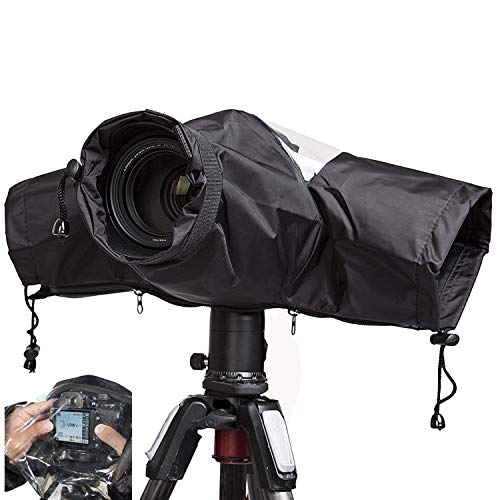
- Waterproof nylon construction
- Clear viewing window for camera controls
- Adjustable sleeves and double zipper
Best For: DSLR users needing handheld or tripod access
Compact Hot-Shoe Protection

- Hot-shoe design fits many DSLR and mirrorless cameras
- 360° swivel and 90° tilt adjustment
- Waterproof construction with carrying pouch
Best For: Light outdoor shooting in rain or bright sun
Transparent Coverage

- Fits lenses up to 18 inches long and 7 inches wide
- See-through PE design maintains control access
- Works with tripods and lens hoods
Best For: Lightweight DSLR rain, dust, and mud protection
Bulk Weather Backup

- Includes four transparent DSLR rain sleeves
- Fits lenses up to 18 inches long and 7 inches wide
- Compatible with tripods and lens hoods
Best For: Frequent outdoor shooting and keeping spare covers available
Best Overall – Altura Photo Nylon Camera Rain Cover
For photographers who need dependable camera rain covers during active outdoor shooting, the Altura Photo stands out with a durable waterproof nylon construction rather than a thin disposable sleeve. Its hand sleeves, clear rear panel, and full-length zipper support camera operation in changing weather.
Best For: DSLR and mirrorless photographers shooting in rain, snow, dust, or salt spray with lenses up to 8 inches.
Pros:
- Waterproof nylon holds its shape while shooting.
- Two hand sleeves and a double zipper provide broad access to controls.
- Anti-slip interior and exterior hook-and-loop strap help stabilize the cover.
- Folds flat and supports tripod mounting.
Cons:
- Requires checking lens length and camera fit before ordering.
- Not recommended for smaller cameras with pancake lenses.
This is a strong all-around choice when you want reusable weather protection with better handling than a basic plastic sleeve. Its compatibility range and hands-on access make it particularly practical for sports, wildlife, travel, and event photography.
Best Emergency Option – Think Tank Medium Rain Cover
Think Tank Emergency Rain Covers for DSLR and Mirrorless Cameras with 70-200mm Lens - Medium (Black)
Check Price On AmazonThe Think Tank Emergency Rain Cover is a compact option for photographers who want quick protection for a DSLR or mirrorless camera with a 70-200mm lens. It fastens to the lens hood with non-slip Velcro, while a hot-shoe attachment helps keep the cover secure during use.
Best For: Emergency weather protection for medium-size camera and 70-200mm lens setups.
Pros:
- Non-slip Velcro fastening attaches to the lens hood.
- Hot-shoe attachment helps secure the cover while shooting.
- Oversized window keeps LCD displays and controls visible.
- Adjustable opening allows access to camera and lens functions.
Cons:
- Designed as an emergency cover rather than a structured active-shooting shell.
- Maximum compatible device size is listed as 7.9 inches.
Choose this Think Tank model when quick deployment and secure attachment matter most. The clear viewing area and adjustable access opening provide useful control in wet conditions without suggesting the bulk of a heavier rain jacket.
Best Budget Pack – OP/TECH USA Rainsleeve Camera Cover
The OP/TECH USA Rainsleeve offers simple, portable protection for photographers and videographers who need camera rain covers ready for sudden weather. This clear, foldable sleeve preserves visibility of the controls and includes two covers for backup or repeated outings.
Best For: Compact camera and kit-lens setups up to 4.5 inches in diameter and 8 inches long.
Pros:
- Two sleeves provide a spare for additional shooting occasions.
- Clear material allows visibility of controls and the viewfinder opening.
- Lightweight, foldable design fits easily in a pocket or camera bag.
- Supports handheld or tripod shooting.
Cons:
- Small size is limited to compatible setups within the stated dimensions.
- Plastic construction is less structured than a nylon camera jacket.
For occasional rain, dust, or snow protection, this two-pack is an easy kit addition. Its compact format and fast deployment are useful when portability matters more than extensive hand-access features.
Best for Super-Telephoto Lenses – Think Tank Large Rain Cover
Built for unusually long lens combinations, this large Think Tank cover measures 27.6 inches long and accommodates 300-600mm f/4 lens setups. Its seam-sealed nylon construction is intended for heavy rain and dusty conditions, while the oversized window keeps the camera controls visible.
Best For: Photographers using large 300-600mm f/4 super-telephoto lenses in downpours or dusty environments.
Pros:
- 27.6-inch length suits extended telephoto configurations.
- Seam-sealed construction provides waterproof protection.
- Oversized window allows viewing of LCD and controls.
- Mounts to a tripod or monopod and packs into an included pouch.
Cons:
- Large dimensions make it less suitable for compact camera setups.
- Compatibility should be checked against the listed 5.1- to 7.9-inch diameter range.
This is the specialized choice for long-lens photographers who need more coverage than standard camera rain covers provide. The generous length, seam sealing, and tripod or monopod compatibility align well with wildlife and other long-range shooting situations.
Best Clear 2-Pack – Compact Camera Rain Sleeves
For photographers seeking practical camera rain covers, this two-pack offers a lightweight, see-through polyethylene sleeve for cameras with lenses up to 11 inches (28 cm). The drawstring closure helps secure the lens opening while the cover protects against rain, snow, salt spray, dust, and sand.
Best For: Casual outdoor photographers who want a simple backup-friendly cover for standard DSLR or mirrorless setups.
Pros:
- Includes two reusable covers.
- Clear material keeps the camera and lens visible.
- Compact and easy to fold, store, and carry.
- Drawstring closure helps fit the sleeve closely around the lens.
Cons:
- Limited to cameras and lenses up to 28 cm.
- Polyethylene construction is less rugged than a heavy-duty nylon cover.
This is a straightforward, portable option when you want a spare camera rain cover or basic weather protection without adding much bulk to your bag.
Best for Long Lenses – NEEWER PB004 Large Rain Cover
Among camera rain covers, the NEEWER PB004 stands out for larger camera-and-lens combinations. Its nylon cover measures 35.4 by 21.7 inches and is designed to accommodate lenses from 300mm through 800mm, while the transparent viewing window keeps controls, the LCD, and viewfinder visible.
Best For: Outdoor and wildlife photographers using large DSLR or mirrorless cameras and long telephoto lenses.
Pros:
- Designed for lenses up to 800mm.
- Two hand sleeves provide direct access to camera controls.
- Strap holes and tripod compatibility support handheld or stabilized shooting.
- Folds into the included storage bag and weighs 7.4 ounces (210 g).
Cons:
- Its large format may be excessive for compact camera setups.
- Single-cover design provides no spare.
The PB004 is the most capable choice here for demanding long-lens work, especially when access, viewing visibility, and tripod use matter as much as rain protection.
Best Nylon Access – Adjustable DSLR Rain Cover
This WANBY camera rain cover combines waterproof nylon with an ultra-clear viewing window and adjustable access points. The dual sleeves and full-length double zipper are intended to let photographers reach camera controls while shooting handheld or mounted on a tripod.
Best For: DSLR and SLR users who want adjustable control access and coverage for cameras with lenses up to 35 cm.
Pros:
- Waterproof nylon helps shield against rain, snow, and salt spray.
- Ultra-clear window supports visibility of the camera controls.
- Dual adjustable sleeves allow access while shooting.
- Full-length double zipper supports handheld and tripod use.
Cons:
- Only one cover is included.
- Maximum compatible device size is listed as 35 cm.
- Black material may offer less overall visibility than a fully clear sleeve.
With its adjustable sleeves and zipper access, this cover is a useful middle-ground option for photographers who need more control access than a basic pull-on sleeve provides.
Compact Hot-Shoe Protection – Camera Umbrella Rain Cover
This hot-shoe-mounted umbrella offers a compact way to shield a compatible DSLR or mirrorless camera from rain, snow, sun, and other overhead elements. Its 19.7-inch diameter, adjustable joint, and included storage pouch make it a convenient option for outdoor shooting, though it is not recommended for windy weather.
Best For: Outdoor photographers who want lightweight overhead protection for a camera with a hot-shoe mount.
Pros:
- Fits almost all cameras and shooting equipment with hot-shoe mounts.
- 360-degree swivel control and up to 90-degree tilt help position the umbrella.
- Waterproof polyester and stainless-steel construction includes a drawstring storage pouch.
Cons:
- Not recommended for strong winds or heavy rain.
- Requires a compatible hot-shoe mount rather than enclosing the camera and lens.
This is a space-saving choice for light outdoor protection and sun shading. For more severe weather or enclosed lens coverage, a sleeve-style camera rain cover is likely more suitable.
Transparent Coverage – JJC DSLR Rain Cover 2-Pack
This two-pack of JJC camera rain covers is designed for DSLRs with lenses up to 18 inches long and 7 inches wide. The see-through PE sleeves help protect against rain, dust, and mud while preserving access to the camera’s controls and viewfinder.
Best For: DSLR photographers who want lightweight, disposable-style weather protection with a spare cover included.
Pros:
- Fits DSLR and lens combinations up to 18 inches long and 7 inches wide.
- Completely see-through for access to controls and the viewfinder.
- Supports tripod use and lens-hood mounting.
Cons:
- PE sleeve construction is less substantial than a reusable, structured cover.
- Compatibility is specified for DSLR setups within the stated size limits.
With two lightweight sleeves in the package, this model is a practical backup-friendly option for photographers who need straightforward camera rain covers that install quickly and maintain visibility.
Bulk Weather Backup – JJC DSLR Rain Cover 4-Pack
The four-pack JJC camera rain cover sleeves gives DSLR users multiple lightweight covers for outdoor assignments, travel, or backup storage. Each transparent PE cover accommodates a lens up to 18 inches long and 7 inches wide while allowing access to camera controls, the viewfinder, a tripod, and a lens hood.
Best For: Photographers who want several lightweight DSLR covers available for repeated shoots or shared camera kits.
Pros:
- Four-cover pack provides useful spares for outdoor work.
- Transparent material helps preserve visibility and access to controls.
- Drawstring lens sleeve fits closely and supports tripod use.
Cons:
- Designed around DSLR and lens combinations within the 18-inch-by-7-inch size limit.
- Lightweight PE construction may offer less durability than a heavier reusable cover.
This pack stands out when quantity matters. It offers simple, portable protection against rain, dust, and mud, making it a practical addition to a camera bag for photographers who prefer to keep spares on hand.
How We Picked These Camera Rain Covers
We focused on practical protection, fit, handling, and value across common DSLR and mirrorless setups. The selection includes lightweight disposable-style sleeves, reusable covers, and models sized for lenses ranging from compact zooms to large 300–600mm f/4 telephotos.
We also considered whether each cover allows access to essential controls, viewfinders, screens, and lens movements. A rain cover is only useful if it can be fitted quickly and operated comfortably when weather changes suddenly.
Quick Comparison
| Cover type | Best suited for | Main advantage | Potential limitation |
|---|---|---|---|
| Clear sleeve | Travel, occasional rain, video | Lightweight and easy to pack | Less durable for repeated use |
| Reusable nylon cover | Frequent outdoor shooting | More structured, durable protection | Bulkier and slower to fit |
| Long-lens cover | Wildlife and sports photography | Accommodates large telephoto lenses | Requires careful sizing |
| Multi-pack sleeve | Backups or team use | Convenient replacement supply | May offer fewer handling features |
Key Buying Factors for Camera Rain Covers
Lens and Camera Size
Check the stated maximum lens length and diameter before buying. A cover designed for a 70–200mm lens may not provide enough room for a longer zoom, lens hood, battery grip, or external flash. Leave enough space for normal zooming and focusing without pulling the cover tight.
Material and Weather Protection
Clear plastic sleeves are compact and let you see the camera, but they can be less resistant to tearing and repeated folding. Nylon covers generally offer better durability and handling, especially when paired with adjustable closures. Look for sealed or overlapping openings around the lens and camera controls.
Handling and Visibility
Viewfinder access, touchscreen usability, grip openings, and adjustable hand sleeves can make a major difference. For video or long sessions, prioritize a design that lets you monitor the screen and operate key controls without exposing the camera.
Packability and Reuse
If you hike or travel, weight and packed size matter. Disposable or multipack sleeves are useful emergency backups, while reusable covers are better for photographers who regularly work in wet, dusty, or windy conditions.
Who Should Buy Which Camera Rain Covers?
- For occasional showers: Choose a lightweight clear sleeve that stays in your camera bag and deploys quickly.
- For regular outdoor work: Choose a reusable nylon raincoat with adjustable openings and better control access.
- For wildlife and sports: Select a cover specifically sized for your longest telephoto lens, such as a 300–600mm setup.
- For travel or backup protection: A two- or four-pack provides convenient spares for unexpected weather or shared equipment.
- For video shooters: Prioritize viewfinder or screen visibility, comfortable hand access, and enough room for microphones or other accessories.
Before shooting, test the cover indoors with your camera and lens attached. Confirm that the lens hood, zoom ring, tripod plate, and controls remain usable, then pack the cover where it can be reached without opening your entire bag.