Finding the right support matters when you need a low, stable shooting position without adding bulk to your kit. The best options balance height range, compact storage, and reliable footing.
This roundup of camera monopods for low angle shots highlights versatile picks for travel, video, and stills, so you can choose the right mix of portability and control.
Best 10 Camera Monopods for Low Angle Shots Picks for 2026
Compact Travel Tripod/Monopod Combo
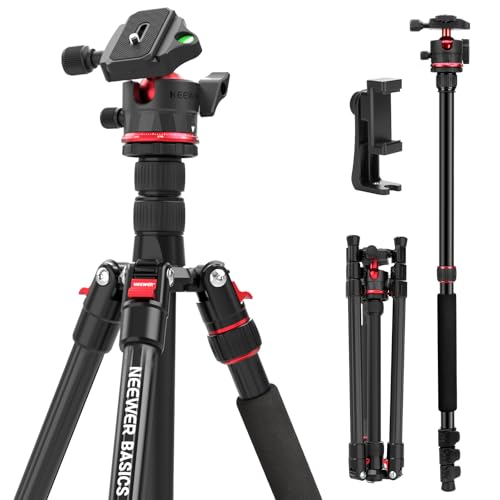
- Tripod converts to monopod
- Inverted column supports low shots
- Includes ball head and phone holder
Best For: Travel creators needing low-angle flexibility and phone/camera compatibility
Ultra-Light Travel Monopod

- Weighs just 0.59 lb
- Collapses to 16.75 inches
- Rubber foot plus spike improve footing
Best For: Travel and hiking shooters who prioritize portability
Professional Monopod With Low Tripod Base

- 3-in-1 monopod, trekking pole, low tripod
- Low tripod mode has three angles
- 17.6 lb load capacity
Best For: Videographers needing a versatile support with stronger payload support
Budget Extendable Monopod
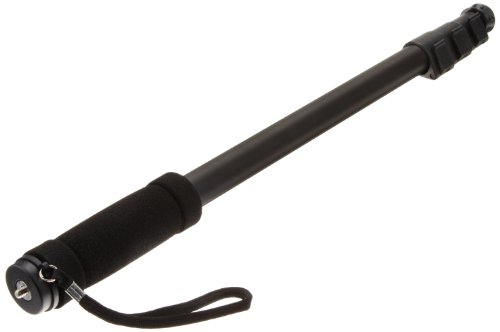
- Under 1 lb lightweight aluminum
- Extends to 67 inches
- Includes rubber foot, spikes, and bag
Best For: Budget buyers wanting a simple portable camera monopod
Portable Travel Pick
NEEWER TP41 Lightweight Monopod

- Folds to 17.3 inches and weighs 0.88 lb
- Quick flip locks adjust from 67.5cm to 155cm
- Rubber and spike feet suit indoor or outdoor use
Best For: Traveling shooters who want a light monopod for low-angle shots
Compact Stability Pick
Manfrotto Element MII Lightweight Monopod

- Weighs 0.5 kg and folds to 43 cm
- Supports up to 15 kg for heavier setups
- Twist locks make height changes quick and secure
Best For: Travel photographers wanting a compact monopod with strong load support
Convertible Low-Angle Option

- Detachable base enables low-angle tripod mode
- 3-in-1 design works as monopod, extension rod, or base support
- Quick-release mounting helps speed setup
Best For: Creators who want a monopod that converts into a low-angle support
Portable Travel Monopod
ULANZI TB12 61-Inch Camera Monopod

- Weighs 0.83 lbs and folds to 16.9 inches
- Adjusts down to 16.9 inches for low shots
- Supports up to 11.02 lbs with 5-section aluminum build
Best For: Travelers and hikers who need a lightweight low-angle monopod
Video Monopod Base System
SIRUI 74" Carbon Fiber Video Monopod

- Base swivels 360° and tilts 36° for easier low-angle framing
- Fluid head supports smooth 360° panning and -60°/+90° tilt
- 8 kg load capacity with a compact 24.8-inch folded size
Best For: Creators who need smooth video motion and stable low-angle control
Low-Angle Tripod Base Monopod
COMAN KX3232Q6 Low-Angle Video Monopod

- Converts into a low-angle camera tripod with base
- Q6 fluid head handles 360° pan and +90°/-60° tilt
- Supports up to 22 lbs with a 5-section aluminum body
Best For: Users who want the most capable low-angle support and higher load capacity
Compact Travel Tripod/Monopod Combo – NEEWER BASICS TP14B
If you want camera monopods for low angle shots with a little more flexibility, the NEEWER BASICS TP14B is built as a travel tripod that also converts into a monopod. Its reversible folding design, adjustable leg angles, and invertible center column make it practical when you need to get close to the ground or switch quickly between angles.
Best For: Creators who want one lightweight support that can handle low-angle framing, travel use, and phone-or-camera setups.
Pros:
- Converts from tripod to monopod for more shooting options
- Center column can be inverted for macro-style low shots
- 3 leg angle quick adjustments help set a lower stance
- Includes a 360° ball head and phone holder for broader use
Cons:
- At 3.2 lb, it is heavier than a basic monopod
- Max load is 13.2 lb, so it is not ideal for heavier rigs
This is a strong pick if you want a compact, multi-purpose option rather than a dedicated monopod. It gives you the low-angle flexibility of a tripod plus the portability of a folding travel design.
Ultra-Light Travel Monopod – Altura Photo 62-Inch Monopod
The Altura Photo 62-Inch Monopod is a straightforward option for camera monopods for low angle shots when you want a simple, lightweight support you can carry anywhere. It collapses to 16.75 inches and uses a retractable spike plus rubber foot, which helps with placement on different surfaces during outdoor or indoor use.
Best For: Photographers who want an extremely lightweight, no-frills monopod for cameras, scopes, and casual travel.
Pros:
- Very light at 0.59 lb and compact when folded
- Extends to 62 inches for flexible framing
- Includes a foam grip and wrist strap for easier handling
- Rubber foot and retractable spike add stability on varied ground
Cons:
- 5 lb weight limit is modest for heavier gear
- No built-in tripod base for extra low-angle support
This monopod keeps things simple and portable, which is the main reason to choose it. If your low-angle work is paired with travel or hiking, the lightweight build is the standout feature.
Professional Monopod With Low Tripod Base – IFOOTAGE Cobra 3 A180F
The IFOOTAGE Cobra 3 A180F is one of the most versatile camera monopods for low angle shots because it combines a monopod, trekking pole, and low tripod in one design. Its low tripod mode uses three angles, and the quick-disassembly build is aimed at faster setup when you need to shift positions on the fly.
Best For: Videographers and camera users who want a higher-capacity monopod with a built-in low-tripod option.
Pros:
- 3-in-1 design functions as monopod, trekking pole, and low tripod
- Low tripod can be used in three angles for more shooting positions
- 17.6 lb load capacity supports more demanding setups
- Quick disassembly and one-second opening/closing improve convenience
Cons:
- Heavier than basic monopods at 2.8 lb net weight
- Folded length of 27.1 inches is less compact for packing
If low-angle flexibility is a priority, this model stands out because the base actually changes how you can shoot. It is a better fit for users who want more function and load support than a basic walking-style monopod.
Budget Extendable Monopod – Amazon Basics 67-Inch Monopod
The Amazon Basics 67-Inch Monopod is a simple, budget-friendly choice if you are shopping camera monopods for low angle shots and want basic height adjustment without extra complexity. It extends to 67 inches, folds down compactly, and adds a non-skid rubber foot with retractable spikes for more secure placement.
Best For: Budget-minded shooters who want a lightweight monopod for cameras, stills, and video support.
Pros:
- Lightweight aluminum build weighs under 1 lb
- Extends to 67 inches for flexible framing
- Rubber foot and retractable spikes help on different surfaces
- Includes a carrying bag for transport and storage
Cons:
- 6.6 lb weight limit is best for lighter setups
- No tripod base for extra low-angle stability
This is the most straightforward option in the group, which can be a plus if you just need a reliable monopod at a low cost. It is best viewed as a compact support tool rather than a specialty low-angle rig.
Portable Travel Pick – NEEWER TP41 Lightweight Monopod
If you want camera monopods for low angle shots that are easy to carry, the NEEWER TP41 is built for travel and quick setup. Its aluminum alloy body keeps weight down, while the flip locks let you move through the 67.5cm to 155cm range fast enough to react to changing framing.
Best For: Creators who need a lightweight, compact monopod for travel, handheld support, and low-angle framing.
Pros:
- Weighs only 0.88 lb and folds to 17.3 inches for easy transport.
- Quick-lock adjustment makes it simple to drop to low shooting heights.
- Supports up to 17.6 lb, which works for many DSLRs and accessories.
- Includes rubber feet and spike feet for indoor and outdoor use.
Cons:
- The lowest height is still above ground-level tripod-style shooting.
- It is not water resistant.
- Best for support and flexibility rather than ultra-heavy rigs.
Overall, this is a practical pick if portability matters as much as low-angle versatility. The interchangeable feet and broad device compatibility make it a flexible option for content creators moving between locations.
Compact Stability Pick – Manfrotto Element MII Lightweight Monopod
For camera monopods for low angle shots with a small footprint, the Manfrotto Element MII is a strong travel-friendly option. It reaches 159 cm, folds down to 43 cm, and uses twist locks for fast height changes when you need to work close to the ground or move quickly between compositions.
Best For: Photographers who want a compact, lightweight monopod with strong payload support for travel and low-angle framing.
Pros:
- Light aluminum build weighs just 0.5 kg and packs down to 43 cm.
- Supports up to 15 kg, making it suitable for heavier zoom lenses.
- Twist locks offer quick setup and secure section locking.
- Comes with a 1/4″ to 3/8″ convertible screw for flexible mounting.
Cons:
- No feet or base system is included for extra support.
- Not water resistant.
- Maximum height is 159 cm, so it is not the tallest option here.
This is the simplest, most travel-ready option in the group if you value low weight and a minimal footprint. It is especially appealing for users who want dependable support without extra bulk.
Convertible Low-Angle Option – SIRUI AM-404FL 3-in-1 Monopod
If low-angle versatility is your priority, this SIRUI model stands out among camera monopods for low angle shots because it can convert into a low angle camera tripod with its detachable base. The 3-in-1 design also lets you use it as a fixed monopod with feet or as an extension rod, while the 360° panning collar adds framing flexibility.
Best For: Shooters who want a monopod that can also function as a low-angle base and compact tripod alternative.
Pros:
- Detachable base gives you a low-angle camera tripod mode.
- 3-in-1 design offers fixed monopod, extension rod, and low-angle base use.
- Supports up to 26.4 lb and remains relatively lightweight.
- Quick-release system speeds up mounting and device swaps.
Cons:
- At 1.4 kg, it is heavier than the more travel-focused options here.
- Folded size is 61 cm, so it packs larger than compact monopods.
- It is not water resistant.
This is the most versatile choice if you specifically want low-angle shooting capability built into the support itself. It trades some portability for added stability, conversion options, and easier panning control.
Portable Travel Monopod – ULANZI TB12 61-Inch Camera Monopod
If you want camera monopods for low angle shots that are easy to carry, the ULANZI TB12 is built for travel and quick repositioning. Its 5-section aluminum design extends from a very low 16.9 inches up to 61 inches, so you can drop the camera close to the ground and still have enough height for everyday shooting.
Best For: Travelers, hikers, and hobbyists who want a lightweight monopod that can also handle casual low-angle framing.
Pros:
- Very portable at 0.83 lbs with a folded length of 16.9 inches
- 5 adjustable height levels, starting low at 16.9 inches
- Supports up to 11.02 lbs for compact cameras, CSCs, and DSLRs
- Switches between monopod, selfie stick, walking stick, hiking stick, and trekking pole modes
Cons:
- Not designed for water resistance
- No tripod feet or base for extra ground stability
- Light-duty weight capacity compared with heavier video-focused models
The TB12 makes sense if your priority is portability and flexible framing over maximum stability. For low-angle shooting, its compact minimum height and simple setup are the main advantages.
Video Monopod Base System – SIRUI 74" Carbon Fiber Video Monopod
For camera monopods for low angle shots, the SIRUI 74-inch carbon fiber model stands out because it combines a fluid head with a base that can swivel and tilt. That makes it easier to work close to the ground while still keeping movements smooth for video, sports, and event coverage.
Best For: Video creators and photographers who want smooth pan-and-tilt control plus a stable base for low-angle work.
Pros:
- Monopod base enables 360° swiveling and 36° tilting
- Damped fluid head offers 360° panning and -60°/+90° tilting
- Extends to 74 inches while collapsing to 24.8 inches for transport
- 8 kg / 17.6 lb load capacity with lightweight aluminum construction
Cons:
- Heavier than ultra-compact travel monopods at 4.4 lbs
- More complex than a basic single-leg monopod
- Aluminum build is not as light as carbon fiber branding may suggest from the product type alone
This is the most versatile option here if low-angle shooting is only one part of a broader video workflow. The stabilized base and fluid head are the big reasons to choose it.
Low-Angle Tripod Base Monopod – COMAN KX3232Q6 Low-Angle Video Monopod
If your priority is camera monopods for low angle shots, the COMAN KX3232Q6 is the most direct fit in this group. Its removable tripod base, Q6 fluid head, and 3-in-1 design give you more ways to shoot near the ground while still keeping the camera supported and easy to adjust.
Best For: Shooters who want a monopod that can convert into a low-angle support setup with stronger load handling.
Pros:
- 3-in-1 design works as a fixed monopod, portable stand, or low-angle camera tripod with base
- Q6 fluid head supports 360° panoramic movement and +90°/-60° tilt
- Rated for up to 22 lbs, making it the strongest load capacity in this set
- Adjustable 5-section aluminum build extends to 73.2 inches and folds to 26 inches
Cons:
- Heavier than the most travel-friendly monopod options at 3.9 lbs
- Folded length is longer than the most compact models
- Not water resistant
This model is the best match when low-angle flexibility matters as much as support strength. The detachable base and fluid head make it a practical choice for video, panoramic shots, and ground-level framing.
How We Picked These Camera Monopods for Low Angle Shots
We focused on models that can get close to the ground while still offering enough extension for standing-height use. Key factors included minimum usable height, build quality, base design, load capacity, and how quickly the monopod can be repositioned during a shoot.
We also favored practical features that matter in real-world use, such as rubber feet, removable bases, twist-lock or quick-release sections, and travel-friendly weight.
Quick Comparison
In general, taller and more modular designs are better if you want maximum framing flexibility, while lighter travel models are easier to carry for long days. Monopods with feet or a tripod-style base usually give more confidence for low angle shots, especially when using heavier cameras or longer lenses.
Key Buying Factors for Camera Monopods for Low Angle Shots
Base Stability
A flat rubber foot is fine for light setups, but a wider base or fold-out feet can improve balance when you are working low to the ground. If you shoot video, this extra support can make framing smoother and reduce small bumps.
Height Range and Section Count
Look for a monopod that extends high enough for comfortable eye-level work but also collapses small enough for easy transport. More sections usually improve packability, though they can add setup time and slightly reduce rigidity.
Load Capacity
Match the monopod to your camera body, lens, and any accessories. Heavy telephoto lenses or cine rigs need a stronger shaft and a sturdier base than a compact mirrorless setup.
Material and Weight
Aluminum offers a strong value balance, while carbon fiber is lighter and often easier to handle for long sessions. If you travel often, a lighter model can make a noticeable difference.
Locking Mechanism
Twist locks are common and compact, while other designs may favor faster section changes. Choose the style that feels secure and easy to operate with your workflow.
Who Should Buy Which Camera Monopods for Low Angle Shots?
Travel photographers and casual creators should prioritize lightweight, compact models that pack easily. Video shooters and users of heavier cameras should lean toward monopods with feet or a removable base for better low-angle support. If you want one support for both stills and video, choose an adjustable, multi-section design with a stable foot and a reasonable load rating.
For the best results, think about where you shoot most often. The right Camera Monopods for Low Angle Shots should feel stable, set up fast, and stay out of the way when you need to move quickly between frames.