Choosing the right recorder can improve both image capture and workflow on DSLR shoots. The best options balance clean HDMI recording, dependable monitoring, and storage that fits your project demands.
Below, we compare standout camera external recorders for DSLR cameras across pro-grade, portable, and budget-friendly use cases so you can match the right tool to your setup.
Best 10 Camera External Recorders for Dslr Cameras Picks for 2026
All-in-one recorder monitor
Atomos Ninja 5.2" 4K HDMI Recording Monitor

- Records up to 4Kp60 and 6Kp30 ProRes RAW
- Works with many HDMI-output DSLR and mirrorless cameras
- Includes 240GB SSD plus AtomOS 11 workflow tools
Best For: Shooter who wants a recorder, monitor, and SSD bundle in one
Compact audio backup recorder
Zoom F3 Professional Field Recorder

- 32-bit float recording helps avoid clipping
- Dual locking XLR inputs suit secure field rigs
- Ultra-low-noise preamps support clean dialogue
Best For: Run-and-gun filmmakers who need dependable external audio
Entry-level recording monitor
RH35 Unlimited Recording Camera Monitor
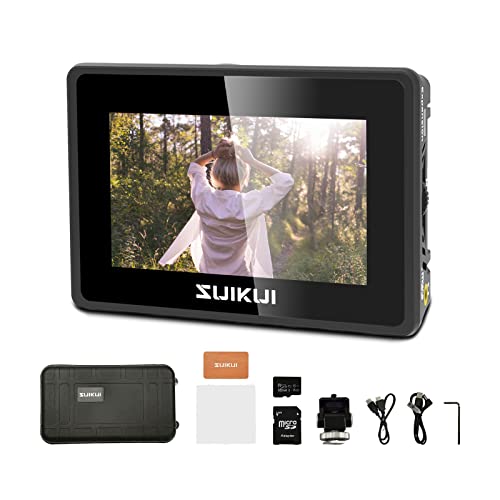
- Records 1080p30 H.264 to micro SD or USB
- Includes peaking, zebra, waveform, and focus tools
- Compact 3.5-inch monitor with HDMI I/O
Best For: Budget users who need basic HDMI recording and monitoring
Pro multi-track field recorder
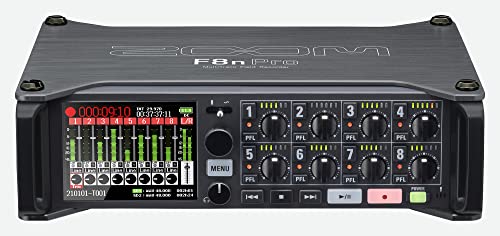
- 8 inputs and 10 tracks for complex shoots
- 32-bit float with dual AD converters
- Dual SD slots plus accurate timecode
Best For: Production crews needing multi-channel audio and sync precision
Pro Monitor-Recorder
Atomos Ninja RAW ProRes/ProRes RAW HDMI Monitor

- ProRes and ProRes RAW recording support
- 1500-nit 5-inch HDR touchscreen
- Camera control and pro monitoring tools
Best For: DSLR and mirrorless shooters needing a bright monitor-recorder
Audio Sync Recorder
TASCAM DR-10L Pro Lavalier Field Recorder

- 32-bit float recording for wide dynamic range
- Includes lavalier mic for personal audio capture
- LTC Jam Sync support for easier syncing
Best For: Filmmakers needing compact, sync-friendly dialogue recording
Compact HDMI Monitor Bundle
FEELWORLD S55 V3 6-inch DSLR Field Monitor Kit
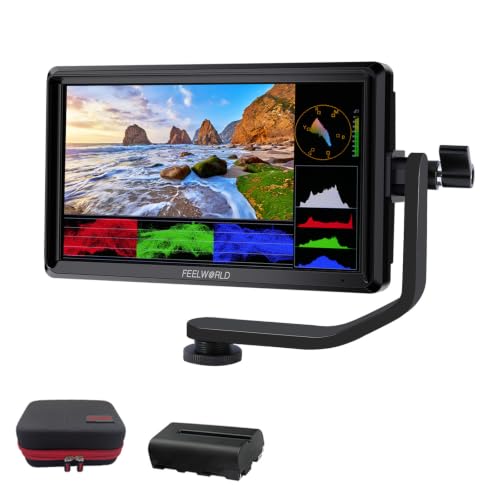
- 6-inch FHD monitor with 4K HDMI input
- Includes battery, carry case, sunshade, and tilt arm
- Focus assist, false color, zebra, and more
Best For: Users wanting a lightweight monitor bundle with core tools
SDI Capture Option
Blackmagic UltraStudio Mini Recorder 12G

- SDI input with loop output
- Up to 12G SDI support
- 16 embedded audio channels
Best For: SDI-based capture in a compact Blackmagic workflow
Best All-in-One
Atomos Ninja TX GO 5-inch Monitor-Recorder

- 1500-nit 5-inch touchscreen
- Records ProRes, ProRes RAW, DNx, H.265/H.264
- HDMI 2.0 and Wi-Fi 6E support
Best For: DSLR shooters who want a bright external monitor-recorder
Monitoring and Scopes
Blackmagic Video Assist 5'' 3G

- 2500-nit 5-inch touchscreen
- 1080p display with HDR and 3D LUTs
- Professional scopes and focus assist
Best For: DSLR users who need a bright monitoring screen with recording
All-in-one recorder monitor – Atomos Ninja 5.2" 4K HDMI Recording Monitor
If you’re comparing camera external recorders for dslr cameras, the Atomos Ninja stands out as a combined on-camera monitor and recorder built for HDMI-output setups. It supports up to 4Kp60 in Apple ProRes, Avid DNxHD, and H.265, with up to 6Kp30 in Apple ProRes RAW, making it a flexible choice for shooters who want both monitoring and high-quality recording in one unit.
Best For: DSLR, mirrorless, and cinema shooters who want a lightweight HDMI recorder-monitor with modern workflow features.
Pros:
- Records up to 4Kp60 and up to 6Kp30 in ProRes RAW.
- Compatible with a wide range of HDMI-output DSLR, cinema, and mirrorless cameras.
- New AtomOS 11 improves responsiveness and memory management.
- Includes useful workflow tools like RecordAssist, PlayBackAssist, and RemoteView support.
Cons:
- Requires an HDMI-output camera to get the most from it.
- On-camera use may add bulk compared with a simple monitor.
For buyers who want a premium external recording setup with monitoring, codec flexibility, and wireless sharing features, this bundle offers a strong all-in-one option. The included 240GB SSD also gives you a ready-to-record starting point.
Compact audio backup recorder – Zoom F3 Professional Field Recorder
Among camera external recorders for dslr cameras, the Zoom F3 is a compact field recorder focused on dependable audio capture rather than video monitoring. Its 32-bit float recording is designed to handle quiet dialogue and sudden peaks without constant level riding, which makes it especially useful for run-and-gun filmmaking and unpredictable locations.
Best For: Filmmakers who need clip-free, set-and-forget audio from a compact standalone recorder.
Pros:
- 32-bit float recording helps prevent clipping on fast-moving shoots.
- Dual locking XLR inputs keep connections secure in larger rigs.
- Ultra-low-noise preamps are built for clean dialogue capture.
- Flexible power and USB workflows support long days on location.
Cons:
- Built around audio recording, not camera monitoring.
- Only two XLR inputs, so it is less suited to multi-source setups than larger recorders.
If your priority is reliable production sound for DSLR-based video work, the F3 is a practical grab-and-go recorder. It is a good fit when you want clean audio with minimal fuss and no need to babysit levels.
Entry-level recording monitor – RH35 Unlimited Recording Camera Monitor
If you want camera external recorders for dslr cameras without stepping into a larger pro recorder, the RH35 focuses on simple HDMI recording and monitoring. It captures 1080p30 H.264 recordings to micro SD card or USB flash drive while also offering practical assist tools like peaking, zebra, waveform, focus assist, exposure assist, and false color.
Best For: Budget-conscious users who want basic HDMI recording plus on-screen exposure and focus tools.
Pros:
- Records 1080p30 H.264 without limit according to the supplied notes.
- Includes peaking, zebra, waveform, focus assist, and false color.
- Supports recording to micro SD card or USB flash drive.
- Small 3.5-inch screen keeps it compact and portable.
Cons:
- Limited to 1080p recording rather than 4K or RAW capture.
- Display resolution is modest at 800 x 480.
For straightforward camera recording and monitoring tasks, this model covers the basics at a lower-complexity level. It makes the most sense for users who value functionality and portability over advanced recording formats.
Pro multi-track field recorder – Zoom F8n Pro Field Recorder
For larger camera external recorders for dslr cameras workflows, the Zoom F8n Pro is aimed at serious production audio. It offers 8 inputs and 10 tracks, 32-bit float recording, dual AD converters, and accurate timecode, making it well suited to multi-person shoots where clean sync and redundant recording matter.
Best For: Film crews and field recordists who need multiple inputs, timecode, and redundant storage.
Pros:
- 8-in/10-track design handles complex production audio.
- 32-bit float and dual AD converters help capture clip-free sound.
- Timecode accuracy down to 0.2ppm supports sync-heavy workflows.
- Dual SD slots allow redundant recording up to 1TB each.
Cons:
- Bulkier and heavier than compact field recorders.
- Geared more toward pro audio workflows than simple DSLR setups.
When a DSLR or mirrorless camera is part of a larger production, the F8n Pro brings the scale and flexibility needed for professional sound capture. Its combination of multi-track recording, timecode, and redundancy makes it a strong center of a field audio rig.
Pro Monitor-Recorder – Atomos Ninja RAW ProRes/ProRes RAW HDMI Monitor
If you want one of the more capable camera external recorders for dslr cameras, the Atomos Ninja RAW is built for creators who need monitor, recorder, and camera-control functions in one unit. It records ProRes or ProRes RAW directly from compatible cameras, while the 5-inch 1500-nit HDR touchscreen gives you a bright, practical view for daylight shooting and on-set monitoring.
Best For: DSLR and mirrorless shooters who want a bright monitor-recorder with ProRes RAW support and camera control.
Pros:
- Records in Apple ProRes and ProRes RAW, including ProRes RAW HQ and LT
- 1500-nit 5-inch HDR touchscreen is built for brighter shooting environments
- Camera control can manage start/stop, ISO, shutter, aperture, and white balance
- Includes professional monitoring tools like false color, focus peaking, and waveform
Cons:
- USB-C external storage and network adaptor are sold separately
- Primarily aimed at HDMI/USB-C workflows, so it is best matched to supported cameras
- More advanced than a basic field monitor if you only need simple viewing
Overall, this is a strong choice if you want serious recording and monitoring in a single compact unit. The Ninja RAW focuses on production-grade features rather than basic convenience, which makes it especially useful for users building a more efficient DSLR or mirrorless video rig.
Audio Sync Recorder – TASCAM DR-10L Pro Lavalier Field Recorder
For creators building a practical audio kit around camera external recorders for dslr cameras, the TASCAM DR-10L Pro is a compact way to capture clean personal audio at the source. Its included lavalier mic, 32-bit float recording, and LTC Jam Sync support make it especially appealing when you need reliable dialogue capture and smoother post-production sync.
Best For: Filmmakers and content creators who need a small body-worn recorder for clean dialogue and timecode-friendly workflows.
Pros:
- 32-bit float recording helps capture a wide range from whisper-quiet to loud audio
- Includes a clip-on lavalier microphone for a complete personal recording setup
- LTC Jam Sync support helps streamline synchronization in multi-device workflows
- Supports up to 512GB microSDXC cards for extended recording sessions
Cons:
- Designed for personal audio rather than camera-mounted video monitoring
- Uses a mono lavalier recording format, so it is specialized rather than all-purpose
- Wireless timecode support requires the separately sold AK-BT1 adapter
This recorder makes sense if your biggest challenge is getting dependable dialogue without fuss. It is less about the camera side of the workflow and more about making spoken audio easier to capture, sync, and manage in the edit.
Compact HDMI Monitor Bundle – FEELWORLD S55 V3 6-inch DSLR Field Monitor Kit
If you want a straightforward addition to your camera external recorders for dslr cameras setup, the FEELWORLD S55 V3 is a practical on-camera monitor bundle with the basics covered. It offers a 6-inch FHD display, 4K HDMI input and loop-out, and a battery bundle that helps get you shooting without having to piece together every accessory separately.
Best For: DSLR and mirrorless users who want an affordable, lightweight HDMI field monitor bundle.
Pros:
- 6-inch 1920×1080 display with a 160-degree viewing angle
- 4K HDMI input and loop-out for passing the signal to another display
- Includes a battery, charging cable, carry case, sunshade, and tilt arm
- Monitoring tools include histogram, focus assist, false color, zebra, zoom, and image flip
Cons:
- 500 cd/m brightness is lower than higher-end daylight-focused monitors
- Dummy battery or coupler for powering the camera is not included
- More of a monitor bundle than a recorder-focused device
This bundle is a sensible choice if you mainly need a dependable external viewing screen with useful monitoring tools. It is not the most advanced option here, but it covers the essentials well for simple DSLR and mirrorless shooting setups.
SDI Capture Option – Blackmagic UltraStudio Mini Recorder 12G
If your DSLR workflow involves SDI rather than HDMI, the Blackmagic Design UltraStudio Mini Recorder 12G is a compact camera external recorder option built for professional capture paths. It supports SDI rates from 270Mbit up to 12G and carries 16 embedded audio channels on the SDI input, making it a straightforward choice for monitoring and ingest in a serious video setup.
Best For: Users who need SDI-based capture from a camera or video source in a compact Blackmagic workflow.
Pros:
- Supports SDI rates from 270Mbit through 12G
- Includes 1 SDI input and 1 SDI loop output
- Handles 16 embedded audio channels on SDI input
- Compact hardware with a small footprint
Cons:
- SDI-only input means it is not a direct HDMI recorder
- Not a monitor-recorder, so it is more capture-focused
- Designed around a wired studio workflow rather than on-camera use
For buyers comparing camera external recorders for DSLR cameras, this model makes the most sense when your rig already uses SDI conversion or SDI-native gear. It is less of an all-in-one field solution and more of a focused capture tool for professional setups.
Best All-in-One – Atomos Ninja TX GO 5-inch Monitor-Recorder
Atomos Ninja TX GO 5-inch Camera Monitor-Recorder, HDMI CFexpress Wi-Fi HDR Touchscreen ProRes RAW
Check Price On AmazonThe Atomos Ninja TX GO is a strong camera external recorder pick for DSLR cameras if you want monitoring and recording in one unit. It pairs a 5-inch, 1500-nit touchscreen with HDMI 2.0 input and output, and it records in ProRes, ProRes RAW, Avid DNx, H.265, or H.264 with support for up to 6K RAW to CFexpress Type B or USB-C storage.
Best For: DSLR shooters who want a bright external monitor-recorder with flexible codec and storage options.
Pros:
- 1500-nit 5-inch touchscreen for outdoor viewing
- Records ProRes, ProRes RAW, Avid DNx, H.265, and H.264
- Supports up to 6K RAW recording to CFexpress Type B or USB-C storage
- Includes HDMI 2.0 input/output and Wi-Fi 6E
Cons:
- Storage compatibility depends on supported drives
- Some accessories and network or calibration add-ons are sold separately
- More feature-rich than a basic recorder, so it may be more than some users need
For creators comparing camera external recorders for DSLR cameras, this is the most versatile option in the group. It combines serious monitoring tools, modern codec support, and multiple power and storage paths in a single portable package.
Monitoring and Scopes – Blackmagic Video Assist 5'' 3G
Blackmagic Design Video Assist 5'' 3G Portable Monitor, Recorder, Scope, and Viewfinder
Check Price On AmazonThe Blackmagic Design Video Assist 5″ 3G is a practical camera external recorder for DSLR cameras when you want a monitor, recorder, and viewing tool in one display. It offers a 5-inch 1080p touchscreen with 2500 nits of brightness, plus 3D LUTs, HDR, professional scopes, and focus assist for on-set monitoring.
Best For: DSLR users who need a bright monitoring screen with recording and scope tools for field work.
Pros:
- Very bright 2500-nit 5-inch touchscreen
- FHD 1080p display with 3D LUTs and HDR
- Includes professional scopes and focus assist
- Two HDMI ports support flexible camera connections
Cons:
- 3G model is more limited than newer high-bandwidth recorders
- Storage and codec details are not as expansive in the supplied notes
- Best suited to monitoring-centered workflows rather than advanced codec flexibility
This model is a smart fit if your priority is seeing the image clearly while also adding recording and analysis tools. Among camera external recorders for DSLR cameras, it stands out for its brightness and built-in monitoring aids more than for raw recording specs.
How We Picked These Camera External Recorders for Dslr Cameras
We focused on recording format support, HDMI reliability, monitoring quality, power options, portability, and how well each unit fits real DSLR workflows. For video shooters, the biggest wins usually come from cleaner external capture, better exposure control, and fewer card limits.
We also favored models that solve specific problems: higher-end recorders for ProRes and RAW workflows, field recorders for better audio capture, and monitor-recorder combos for users who want one device to do more than one job.
Quick Comparison
If you want an all-in-one on-camera solution, a monitor-recorder is usually the easiest choice. If your main pain point is audio, a dedicated field recorder can be more valuable than a video recorder. And if you need a simple workflow for live output or capture, a compact HDMI recorder may be the better fit.
In short, Camera External Recorders for Dslr Cameras fall into three practical buckets: monitor-recorders for shooting and framing, standalone audio recorders for sync sound, and interface-style devices for specific capture workflows.
Key Buying Factors for Camera External Recorders for Dslr Cameras
Recording Format and Codec Support
Look for support that matches your editing workflow. ProRes is a common sweet spot for easier post-production, while ProRes RAW or RAW-capable systems make more sense if you need maximum flexibility and your camera supports it.
Input and Output Compatibility
Check whether your DSLR outputs clean HDMI, and confirm that the recorder accepts the resolution and frame rate you actually shoot. If you also need monitoring, make sure the screen size, brightness, and touch controls are workable outdoors.
Audio Handling
Many DSLR setups struggle more with sound than video. If dialogue matters, prioritize recorders with strong metering, timecode support, low-noise inputs, or separate lavalier recording options.
Media, Power, and Runtime
Fast storage and stable power matter more than many buyers expect. SSDs, CFexpress, or high-capacity microSD support can prevent interruptions, while flexible battery support helps on long shoots.
Who Should Buy Which Camera External Recorders for Dslr Cameras?
Choose a monitor-recorder if you want a practical upgrade for framing, focus, and external video capture in one unit. Choose a dedicated field recorder if audio quality is your priority, especially for interviews, documentaries, or run-and-gun production.
Choose a compact budget recorder or monitor if you need a lighter setup for travel or occasional work. And if your DSLR is part of a larger production pipeline, invest in a higher-end recorder with better format support and stronger I/O to avoid bottlenecks later.
For most buyers, the best Camera External Recorders for Dslr Cameras are the ones that remove friction from your exact workflow rather than simply offering the most features on paper.