Choosing the right mixer can make studio recording simpler, cleaner, and far more flexible. The best models help you manage microphones, instruments, and playback without adding noise or confusion.
In this roundup of the best audio mixers for studio use in 2026, we focus on practical features, real-world usability, and the type of setup each mixer fits best.
Best 10 Audio Mixers for Studio Picks for 2026
Studio Workhorse
Yamaha MG10XU 10-Channel Analog Mixer

- D-PRE preamps for clean, transparent sound
- 3-band EQ and 1-knob compressors on mono channels
- USB 2.0 recording/playback plus 24 SPX effects
Best For: Small studios needing clean analog control with built-in effects
Streaming-Ready Desk
Mackie ProFX10v3+ 10-Channel Mixer

- Bluetooth playback and USB-C multi-mode recording
- Onyx preamps on every mic channel
- 24 GigFX+ effects with tap tempo
Best For: Creators who need studio mixing plus streaming and recording
Compact Minimalist
Mackie Mix5 5-Channel Compact Mixer

- 5-channel compact format for small spaces
- Phantom power and studio-level mic/line input
- 2-band EQ with RCA playback/recording I/O
Best For: Tiny studios that need a simple, low-noise mixer
Budget Feature Pack
Pyle PMXU63BT 6-Channel Bluetooth Mixer
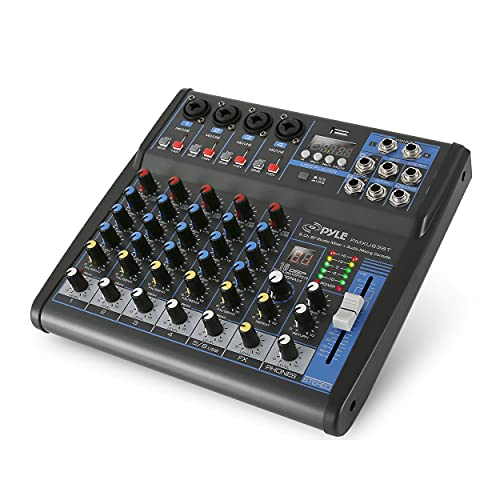
- Bluetooth streaming plus USB/flash/MP3 support
- 48V phantom power and XLR mic inputs
- 3-band EQ on all channels for tone control
Best For: Budget studios needing lots of built-in playback and input options
Studio-Ready USB Recording Bundle
Mackie ProFX10v3 10-Channel Mixer Bundle

- 4 Onyx mic preamps with up to 60dB gain
- 24-bit/192kHz USB recording with 2x4 USB I/O
- Includes software, cables, and accessories bundle
Best For: Creators and home recordists needing flexible USB mixing
Budget Bluetooth DJ Mixer

- Bluetooth streaming plus USB and DSP effects
- XLR and 1/4" inputs with +48V phantom power
- Rugged steel chassis with sealed controls
Best For: Budget users needing simple mixing and playback features
Compact USB-C Creator Mixer
Mackie ProFX6v3+ Bundle with Headphones
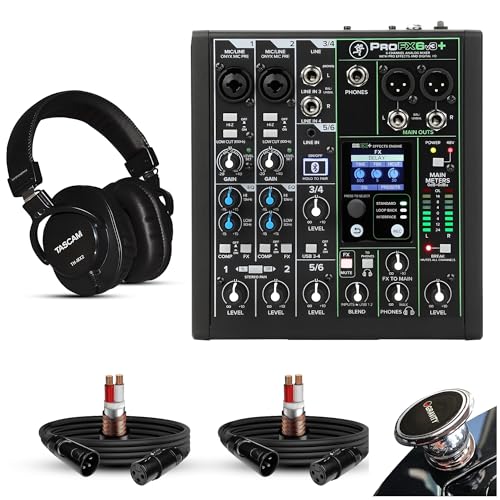
- 6-channel analog mixer with 2 mic preamps
- USB-C, Bluetooth, and built-in effects
- Includes studio headphones and two 25ft XLR cables
Best For: Solo creators and small studios needing a compact bundle
Compact Bluetooth Mixer

- USB audio interface for Mac or PC recording
- Bluetooth wireless streaming input
- 4 channels with XLR/1/4-inch combo inputs
Best For: Beginners and small studio setups
Ultra-Thin 8-Channel Board

- 8 channels with 48V phantom power
- Bluetooth 5.0 plus MP3/USB playback
- Slim 1.57-inch chassis
Best For: Compact studios needing more input channels
Low-Noise 8-Channel Mixer

- USB/flash/MP3/Bluetooth device support
- XLR and 1/4-inch mic/line inputs
- 3-band EQ with LED peak indicators
Best For: Studio and live users needing flexible connectivity
Studio Workhorse – Yamaha MG10XU 10-Channel Analog Mixer
If you need audio mixers for studio tracking, the Yamaha MG10XU is a straightforward analog option that focuses on clean signal flow and practical control. Its D-PRE preamps, 3-band EQ on mono channels, one-knob compressors, and built-in SPX effects make it easy to shape vocals, instruments, and monitor mixes without adding extra gear.
Best For: Small studios that want clean preamps, simple hands-on control, and built-in effects.
Pros:
- D-PRE mic preamps aim for clean, transparent, natural sound.
- 3-band EQ on all mono channels helps with quick tone shaping.
- 1-knob compressors simplify dynamics control during recording or mixing.
- Class-compliant USB 2.0 supports recording and playback with computers and tablets.
Cons:
- Only 10 channels, so it is not built for larger studio setups.
- USB 2.0 is functional, but not the most modern connection standard.
Overall, the MG10XU is a solid pick if you want a reliable analog desk with useful processing built in. It suits compact studio environments where clarity and simple operation matter more than advanced routing.
Streaming-Ready Desk – Mackie ProFX10v3+ 10-Channel Mixer
For audio mixers for studio work that also need streaming and playback flexibility, the Mackie ProFX10v3+ stands out with Bluetooth, USB-C recording, and built-in effects. It is designed to work out of the box with mics, instruments, phones, and computers, so it fits well in a small production room that doubles as a content or podcast setup.
Best For: Studio creators who want one mixer for recording, streaming, and Bluetooth playback.
Pros:
- Bluetooth plus USB-C supports wireless playback and multi-mode USB recording.
- Onyx preamps on every mic channel provide consistent front-end handling.
- GigFX+ offers 24 effects with tap tempo for quick processing.
- Works with mics, instruments, phones, and computers right away.
Cons:
- It is a 10-channel mixer, so input count is still modest.
- Best suited to compact setups rather than full-scale studio routing.
The ProFX10v3+ is a practical choice when you want a studio mixer that also handles modern content workflows. Its mix of analog channels, USB recording, and Bluetooth playback makes it versatile without becoming complicated.
Compact Minimalist – Mackie Mix5 5-Channel Compact Mixer
If you are shopping for audio mixers for studio spaces with very limited room, the Mackie Mix5 keeps things simple and compact. It offers one mic/line input with studio-level audio quality, phantom power for condenser mics, and basic EQ, making it a good fit for small recording or playback tasks.
Best For: Tiny studios, home desks, and simple recording or playback setups.
Pros:
- Compact 5-channel design is easy to fit on a crowded desk.
- 1 mic/line input includes phantom power for studio condenser mics.
- 2-band EQ gives clean, precise tone shaping.
- Dedicated stereo RCA inputs/outputs support playback or recording.
Cons:
- Only one mic/line input limits multi-mic recording.
- Lacks the extra processing and connectivity found on larger mixers.
The Mix5 is best viewed as a no-frills utility mixer for very small studio needs. It is a practical choice if you value a low-noise footprint and simple connections over advanced features.
Budget Feature Pack – Pyle PMXU63BT 6-Channel Bluetooth Mixer
For buyers comparing audio mixers for studio use on a tighter budget, the Pyle PMXU63BT packs in a lot of features. It includes Bluetooth streaming, USB/computer input, an MP3 player, 48V phantom power, and 3-band EQ on all channels, so it can cover basic studio recording and playback tasks with minimal add-ons.
Best For: Budget-conscious studios that want wireless playback and built-in media features.
Pros:
- Bluetooth wireless streaming makes playback cable-free.
- USB/flash reader/MP3 compatibility adds flexible media input options.
- 48V phantom power and XLR inputs support condenser mics.
- 3-band EQ on all channels gives broad tone control.
Cons:
- The feature set is broad, but it is still a compact 6-channel mixer.
- Built-in extras may matter more than deep studio routing options.
The PMXU63BT is attractive when you want lots of functionality in a single affordable mixer. It is especially useful in small studio environments where Bluetooth playback and simple recording access matter.
Studio-Ready USB Recording Bundle – Mackie ProFX10v3 10-Channel Mixer Bundle
If you want audio mixers for studio work that also handle streaming and live recording, this Mackie ProFX10v3 bundle is built around flexibility. It combines a 10-channel analog mixer, USB recording, and a generous cable bundle, so you can set up a practical home studio without hunting for extras.
Best For: Creators, home recordists, and streamers who want a versatile mixer with strong mic gain and USB integration.
Pros:
- 4 Onyx mic preamps with up to 60dB of gain for demanding microphones
- 24-bit/192kHz USB recording for clean capture
- 2×4 USB I/O supports custom monitor mixes and overdub workflows
- Includes Waveform OEM DAW, DAW Essentials plugins, and a 21-piece cable/accessory bundle
Cons:
- It is an unpowered mixer, so it does not drive passive speakers directly
- More feature-rich than a basic mixer, which may be more than some simple setups need
This is a strong pick if you want a studio mixer that can grow with recording and content-creation needs. The included software and accessories add value, while the high-gain preamps and USB routing make it especially useful for vocal and overdub-focused setups.
Budget Bluetooth DJ Mixer – Pyle 8-Channel Audio Mixer
For buyers comparing audio mixers for studio use on a tighter budget, this Pyle 8-channel model offers a simple feature mix of Bluetooth, USB, and DSP effects. It is aimed more at flexible small setups than dedicated recording rigs, but it covers the basics for mixing microphones and stereo sources.
Best For: Budget-conscious users who want Bluetooth streaming and a straightforward mixer for small gigs or casual studio setups.
Pros:
- Bluetooth wireless streaming for cable-free playback
- XLR and 1/4″ mic/stereo line inputs with +48V phantom power
- 16-bit DSP processor and 3-band EQ on all channels
- Rugged steel chassis and sealed rotary controls for added durability
Cons:
- 8 channels may be limiting for larger studio routing needs
- USB-A MP3 player and basic interface features are less studio-focused than dedicated recording mixers
This mixer makes sense if you value convenience and low-friction operation over advanced studio routing. Its feature set is useful for compact setups, but serious recording workflows may outgrow it faster than a more recording-centric mixer.
Compact USB-C Creator Mixer – Mackie ProFX6v3+ Bundle with Headphones
This Mackie bundle is a compact option among audio mixers for studio creators who want a smaller footprint without losing modern connectivity. With USB-C, Bluetooth, built-in effects, and included studio headphones plus XLR cables, it is designed as an all-in-one starter or desktop recording solution.
Best For: Solo creators and small home studios that want a compact mixer with USB-C, Bluetooth, and monitoring gear included.
Pros:
- 6-channel analog mixer with 2 mic preamps
- USB-C audio interface and Bluetooth support for flexible connectivity
- Built-in effects for straightforward processing
- Includes closed-back studio headphones and two 25ft XLR cables
Cons:
- Only 6 channels, so it is less expandable than larger mixers
- Bundle details mention a digital mixer in the notes, but the core mixer is listed as analog
If your studio setup is small and you want fewer separate purchases, this bundle is easy to justify. It focuses on convenience and essential connectivity rather than deep channel count, making it a practical desk-friendly choice.
Compact Bluetooth Mixer – 4-Channel USB Recording Mixer
If you want audio mixers for studio use that also handle casual streaming and small-session recording, the Pyle PMXU46BT keeps the setup simple. It combines 4 channels, USB recording to Mac or PC, Bluetooth streaming, and XLR/1/4-inch connectivity in a compact format.
Best For: Beginners or home-studio users who need an easy-to-connect mixer with USB recording and Bluetooth input.
Pros:
- USB soundcard and audio interface support recording to Mac or PC.
- Bluetooth lets you stream audio wirelessly from phones, tablets, and MP3 players.
- Includes 4 channels with XLR/1/4-inch combo inputs, main outputs, and headphone jack.
- Built-in +48V phantom power supports compatible microphones.
Cons:
- Only 4 channels, so it is better suited to smaller setups.
- Wireless range is listed at 15 ft, which may limit placement.
- Designed for straightforward use rather than a large-scale studio workflow.
Overall, this is a practical entry-level mixer for simple studio recording and playback needs. It covers the key connections most small setups require without adding unnecessary complexity.
Ultra-Thin 8-Channel Board – Reverb USB Studio Mixer
Among audio mixers for studio projects, the FULUODE CT-80S stands out if you want more inputs in a slim footprint. It offers 8 channels, USB recording, Bluetooth 5.0, MP3 input, reverb, and 48V phantom power for flexible home or project-studio use.
Best For: Users who need an 8-channel mixer with wireless playback, reverb, and a thin design for compact spaces.
Pros:
- 8-channel layout gives more input capacity than smaller mixers.
- Bluetooth 5.0, MP3/USB input, and LED display add convenient playback options.
- 48V phantom power supports microphones that need it.
- Ultra-thin 1.57-inch design helps save desk space.
Cons:
- USB connectivity is listed, but the notes do not spell out detailed recording workflow.
- It is corded and uses a 110V American plug, so power setup is fixed.
- Best suited to small-to-mid setups rather than a full-scale studio console.
This mixer makes sense when you need a lot of channel count without a bulky board. It leans toward practical versatility for karaoke, live music, and compact studio environments.
Low-Noise 8-Channel Mixer – Bluetooth Studio Interface
If you are comparing audio mixers for studio recording and live playback, the Depusheng DX8 offers a flexible 8-channel layout with USB/flash reader/MP3 support and Bluetooth streaming. Its thin chassis, XLR and 1/4-inch mic/line support, and 48V phantom power make it a solid fit for practical mixing tasks.
Best For: Studio, karaoke, or live-music users who want an 8-channel mixer with wireless playback and broad input compatibility.
Pros:
- USB, flash reader, MP3, and Bluetooth connections make device pairing easy.
- XLR and 1/4-inch mic/line inputs with +48V phantom power support different sources.
- Ultra-thin sealed chassis is designed to resist dust.
- Includes LED peak level indicators and 3-band EQ on all channels.
Cons:
- Analog design may be less feature-rich than more advanced studio mixers.
- The product notes do not list extensive recording software features.
- At over 4 kg, it is less portable than smaller lightweight boards.
This model is a strong all-around option if you want clear routing, straightforward controls, and multiple ways to feed audio into the board. It is especially appealing for users who value flexibility over a highly specialized studio feature set.
How We Picked the Best Audio Mixers for Studio
We looked for Audio Mixers for Studio workflows that balance sound quality, input count, connectivity, and ease of use. Priority went to models with reliable preamps, usable EQ or effects, phantom power for condenser mics, and monitoring features that support recording sessions.
We also considered whether a mixer makes sense for a solo creator, a small project studio, or a more flexible multi-source setup.
Quick Comparison
At a glance, the 10-channel options are usually the best fit for growing home studios because they offer enough headroom for mics and stereo sources without becoming bulky. Smaller 4- to 6-channel mixers suit compact desks, podcasting, and straightforward vocal tracking. More feature-heavy mixers with Bluetooth, USB, and built-in effects are appealing if you want one device to handle recording and casual playback.
Key Buying Factors for Audio Mixers for Studio
Input Count and Channel Layout
Match the mixer to your current setup, then leave room for growth. If you record a vocal plus instruments or multiple guests, 6 to 10 channels is often the sweet spot. Pay attention to how many mic inputs are truly available, not just total channels.
Preamps, Phantom Power, and EQ
Clean preamps matter if you want low noise and consistent vocal capture. 48V phantom power is important for condenser microphones, while EQ can help shape tone during tracking or monitoring. Simple one-knob compression can be useful for taming peaks without a steep learning curve.
USB, Bluetooth, and Recording Workflow
USB audio can simplify connection to a computer, but not every mixer is equally strong as an interface. Bluetooth can be convenient for playback, reference tracks, or casual streaming, though it is less important than dependable wired monitoring. If you record regularly, confirm the mixer’s compatibility with your DAW and operating system.
Effects, Monitoring, and Physical Size
Built-in effects are handy for live monitoring and quick content creation, but they should not replace good recording technique. Also consider desk space, knob spacing, and whether the mixer feels easy to operate during a session.
Who Should Buy Which Audio Mixers for Studio?
If you need a compact solution for a single mic, basic podcasting, or a small desktop setup, a 4- or 5-channel model is usually enough. If you want a more versatile home studio hub with room for multiple microphones and stereo sources, look closely at 6- to 10-channel mixers.
For creators who want the simplest all-in-one workflow, choose a mixer with USB recording and straightforward controls. If your priorities are live control, expandability, and stronger session flexibility, a larger analog mixer is often the better long-term choice.