Choosing the right acoustic measurement microphone can make a bigger difference than most people expect. A calibrated, flat-response mic helps you see what your room and speakers are really doing.
Below, we focus on practical options for home theater tuning, studio calibration, speaker testing, and portable measurement setups so you can choose with confidence.
Best 10 Acoustic Measurement Microphone Picks for 2026
Plug-and-Play Room Tuning
miniDSP UMIK-1 USB Measurement Calibrated Microphone

- USB plug-and-play setup
- Unique per-unit calibration file
- Works with REW, Smaart, Dirac Live
Best For: easy room correction and SPL monitoring with USB convenience
Budget XLR Reference Mic

- Flat-response omnidirectional design
- Runs on +15 to +48 V phantom power
- Useful for room equalization and measurement
Best For: buyers with XLR gear who want a basic measurement mic
Calibrated Analyzer Pick
Dayton Audio EMM-6 Precision Omnidirectional Electret Condenser Microphone

- Includes a unique calibration response graph
- Bundled with stand mount, windscreen, and case
- Low-noise FET input for measurement use
Best For: room analysis setups that benefit from calibration data
DriveRack Matching Mic
dbx RTA-M Driverack Series Reference Microphone

- Tailored for dbx DriveRack systems
- Flat 20 Hz to 20 kHz response
- Includes clip and case
Best For: DriveRack owners doing real-time room analysis
Studio-Grade XLR Classic

- Precision-focused omnidirectional measurement mic
- XLR connection for pro audio systems
- Made in the USA with brass enclosure
Best For: Room analysis and sound system calibration
Mobile Calibration Pick
Phone and Tablet Measurement Mic
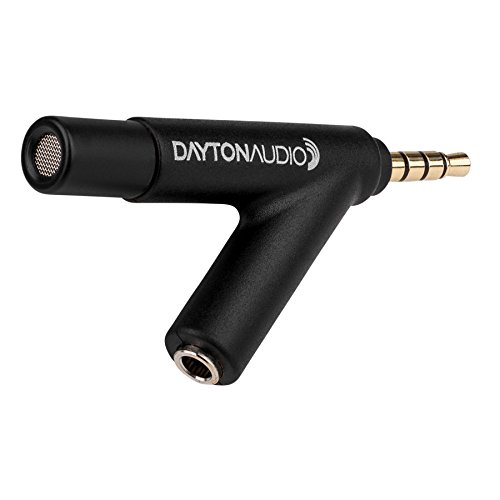
- Calibrated condenser design for critical measurement
- TRRS support for iPhone, iPad, and Android
- Pass-through jack and kickstand for testing
Best For: Portable measurements with phones and tablets
USB-C measurement mic set
Superlux ECM999U USB Measurement Microphone Set

- USB-C plug-and-play for direct setup
- 24-bit/48kHz with 10Hz–20kHz response
- Includes stand, clip, windscreen, and cable
Best For: Users who want quick USB-based room and speaker measurements
XLR room calibration mic
Superlux ECM999 XLR Measurement Microphone

- XLR condenser mic with 20Hz–20kHz response
- Supports 12V–52V phantom power
- Includes case, clip, and windscreen
Best For: Existing XLR measurement setups for room calibration and sound analysis
Plug-and-Play Room Tuning – miniDSP UMIK-1 USB Measurement Calibrated Microphone
If you want an acoustic measurement microphone that makes setup easy, the miniDSP UMIK-1 is built for driverless use on Windows, Mac, Linux, and iDevices. Its unique calibration file for each unit and USB connectivity make it a practical choice for room correction, SPL monitoring, and software-based analysis with tools like REW, Smaart, and Dirac Live.
Best For: Users who want a USB measurement mic with simple setup and included calibration data.
Pros:
- USB plug-and-play installation with no driver setup on supported systems
- Includes a unique calibration file for each microphone
- Compatible with common acoustic software, including REW, Smaart, and Dirac Live
- Comes with a mini tripod, USB cable, windscreen, and padded case
Cons:
- Uses a USB connection rather than XLR
- Single-channel design
- Built for measurement use, not general vocal recording
Overall, the UMIK-1 is a straightforward option for buyers who value convenience and calibration data over traditional analog mic workflows. It is especially appealing if you want a compact acoustic measurement microphone for room tuning and analysis across multiple devices.
Budget XLR Reference Mic – BEHRINGER ECM8000
The BEHRINGER ECM8000 is a classic acoustic measurement microphone for users who want an XLR condenser with a true omnidirectional pattern and flat response. It is suited to room equalization and other measurement tasks, while still being usable for high-resolution studio recording and live applications when phantom power is available.
Best For: XLR users who need a flat, omnidirectional measurement mic with phantom power support.
Pros:
- Ultra-linear design with exceptionally flat frequency response
- True omnidirectional pattern for measurement use
- Works with phantom power from +15 to +48 V
- Also described as suitable for room equalization, studio, and live applications
Cons:
- Requires XLR and phantom power
- No calibration file is mentioned in the supplied notes
- Accessory bundle is not as extensive as some competing kits
The ECM8000 is a no-frills choice for buyers who already have an interface or processor that provides phantom power. If your priority is a straightforward acoustic measurement microphone with an established flat-response design, this model keeps the workflow simple.
Calibrated Analyzer Pick – Dayton Audio EMM-6 Precision Omnidirectional Electret Condenser Microphone
The Dayton Audio EMM-6 is an acoustic measurement microphone aimed at room acoustic analyzers and audio measurement systems, and it includes a unique calibration response graph. With its omnidirectional pickup, low-noise FET input, and included stand mount, foam windscreen, and transport case, it is built for buyers who want a more complete measurement kit.
Best For: Room analysis users who want calibration data and a bundled accessory kit.
Pros:
- Includes its own unique calibration response graph
- Designed for room acoustic analyzers and audio measurement systems
- Comes with stand mount, foam windscreen, and transport case
- Low-noise FET input helps reduce low-frequency distortion
Cons:
- Requires XLR connection and corded power
- Single-channel microphone only
- Heavier than some compact USB measurement options
The EMM-6 stands out when you want calibration info and practical accessories included in the box. For anyone building a measurement setup around an acoustic measurement microphone, it offers a balanced mix of utility and convenience.
DriveRack Matching Mic – dbx RTA-M Driverack Series Reference Microphone
dbx RTA-M Driverack Series Reference Microphone black 7.00 x 3.50 x 12.00 inches
Check Price On AmazonThe dbx RTA-M is an acoustic measurement microphone designed specifically for the dbx DriveRack series, making it a focused tool for real-time analysis and system tuning. Its omnidirectional pattern, flat frequency response from 20 Hz to 20 kHz, and phantom-power operation make it a practical match for optimizing difficult acoustic environments.
Best For: DriveRack users who want a mic tailored for real-time analysis and system tuning.
Pros:
- Designed for the dbx Driverack series
- Flat frequency response from 20 Hz to 20 kHz
- Omnidirectional pickup for measurement and pinking tasks
- Includes a clip and case
Cons:
- Best suited to DriveRack workflows
- Requires phantom power supplied by compatible units
- Less flexible if you are not using dbx hardware
If your setup already centers on a DriveRack processor, the RTA-M is a logical companion. It is a purpose-built acoustic measurement microphone for users who want a simple, matched solution for real-time room analysis.
Professional USB-C Calibrated Pick – Calibration-File Accuracy for Tuning
If you want an acoustic measurement microphone that’s ready for serious room correction, speaker design, or SPL monitoring, this calibrated USB-C model is built around precision. Each unit includes an individual calibration file tied to its serial number, and the driverless setup makes it straightforward to use with REW and miniDSP-based workflows.
Best For: Home theater, studio monitor tuning, and users who want a plug-and-play calibrated USB measurement mic.
Pros:
- Individual calibration file for each serial number
- Driverless compatibility with Windows, Mac, and Linux
- Works with REW and miniDSP processors
- Includes USB-C cable, tripod, windscreen, and carrying case
Cons:
- USB-only design may not suit XLR-based setups
- Built for measurement work, not general vocal recording
Overall, this is a practical choice if your priority is calibrated measurement rather than multi-purpose microphone use. The included accessories and bundled calibration file make it especially appealing for users who want a complete tuning kit out of the box.
Studio-Grade XLR Classic – Accurate RTA Reference Mic
AUDIX TM1 Condenser Room Measurement Microphone/Flat-Response RTA Microphone - Nickel
Check Price On AmazonThe AUDIX TM1 is a straightforward acoustic measurement microphone for users who want an XLR test mic with a reputation for precision and linearity. Its omnidirectional pickup pattern and flat-response design make it a dependable fit for room analysis, sound system calibration, and other measurement-focused workflows.
Best For: Professionals and serious hobbyists who want a reliable XLR measurement mic for calibration and analysis.
Pros:
- Known for accuracy and linearity in measurement work
- Omnidirectional pickup supports room analysis
- XLR connection fits pro audio setups
- Made in the USA with a durable brass enclosure
Cons:
- Requires an XLR-based audio interface or preamp
- Microphone-only package means fewer included accessories
For users already working in an XLR signal chain, the TM1 is a solid no-nonsense option. It focuses on the core traits that matter in measurement: consistency, linear response, and compatibility with analysis tools.
Mobile Calibration Pick – Phone and Tablet Measurement Mic
Dayton Audio iMM-6 Calibrated Measurement Microphone for iPhone, iPad Tablet and Android,Black
Check Price On AmazonIf you need an acoustic measurement microphone for phones or tablets, the Dayton Audio iMM-6 is designed for quick critical measurements with portable devices. Its calibrated condenser design, TRRS connection, and pass-through headphone jack make it useful for on-the-go testing with compatible mobile hardware.
Best For: Mobile users who want a calibrated measurement mic for iPhone, iPad, Android, or other TRRS-compatible devices.
Pros:
- Calibrated condenser mic for critical measurement
- Works with iPhone, iPad, and other TRRS devices
- Headphone/line out pass-through supports test signals
- Kickstand helps position the device and capsule
Cons:
- Limited to devices with a 3.5mm TRRS jack
- Less suited to desktop XLR or USB measurement workflows
This is a handy pick when portability matters more than a full desktop setup. It keeps the measurement process simple for mobile-compatible devices, making it a practical option for quick acoustic checks and basic analysis.
USB-C measurement mic set – Superlux ECM999U USB Measurement Microphone Set
If you want an acoustic measurement microphone that is quick to deploy, the Superlux ECM999U is built for direct USB-C use. It skips phantom power and an external interface, making it a practical choice for room analysis, speaker testing, and other verification work where setup speed matters.
Best For: Fast USB-based acoustic measurements on Windows or Mac without needing an audio interface.
Pros:
- USB-C plug-and-play connection simplifies measurement setup
- 24-bit/48kHz digital operation supports high-resolution testing
- Omnidirectional free-field design suits room and speaker measurements
- Includes mic clip, table stand, windscreen, and 2-meter USB cable
Cons:
- Limited to USB-based workflows rather than XLR measurement chains
- Calibration file details are referenced on the outer packaging slip
Overall, the ECM999U is a straightforward pick for users who value convenience and bundled accessories in a measurement mic. Its 10Hz–20kHz response and 133dB max SPL make it suitable for a wide range of acoustic analysis tasks.
Mobile USB-C calibrated mic – Dayton Audio iMM-6C Calibrated USB-C Measurement Mic
The Dayton Audio iMM-6C is an acoustic measurement microphone made for phones and tablets with USB-C ports. Its calibrated flat frequency response and true omnidirectional pattern make it a practical tool for critical measurement work on mobile devices, especially when you want a portable setup.
Best For: Mobile acoustic testing with a USB-C smartphone or tablet.
Pros:
- Works with any smartphone or tablet that has a USB-C port
- Calibrated flat response supports more precise measurement use
- True omnidirectional pattern is suited to acoustic capture
- Headphone/line out pass-through helps with test signals or listening
Cons:
- Designed around mobile USB-C devices rather than full-size interfaces
- Best suited to measurement workflows, not general recording flexibility
For on-the-go testing, the iMM-6C keeps the workflow compact while still focusing on measurement accuracy. The kickstand and rugged build add convenience and durability for repeated field or home use.
XLR room calibration mic – Superlux ECM999 XLR Measurement Microphone
The Superlux ECM999 is an acoustic measurement microphone designed for room calibration, audio testing, and sound analysis. With XLR connectivity and phantom-power support, it fits into more traditional measurement setups and works well when you already have an interface or calibration system in place.
Best For: XLR-based room calibration and acoustic testing with existing audio gear.
Pros:
- Omnidirectional condenser design with flat 20 Hz to 20 kHz response
- Handles up to 132 dB SPL for louder measurement tasks
- Works with 12V–52V phantom power and many audio interfaces
- Includes carrying case, mic clip, and windscreen
Cons:
- XLR cable is required but not included
- Needs phantom power, so it is less convenient than USB models
For users building a more traditional measurement chain, this mic offers the familiar XLR workflow and strong compatibility with calibration software and AV gear. It is a solid option when you want a dedicated measurement microphone rather than a USB-powered all-in-one kit.
How We Picked These Acoustic Measurement Microphones
We prioritized models that are known for measurement-focused design, calibration support, consistent polar patterns, and compatibility with common tools such as REW, MiniDSP, and room correction workflows. USB, analog XLR, and mobile-friendly options were all considered so the list covers both desktop and portable use.
Quick Comparison
If you want the simplest setup, a USB Acoustic Measurement Microphone with an included calibration file is usually the easiest path. If you already use an audio interface, an XLR measurement mic may give you more flexibility. For mobile tuning, iPhone, iPad, Android, and USB-C-compatible models are the most convenient.
Key Buying Factors for an Acoustic Measurement Microphone
Calibration
Calibration files matter because they correct small frequency-response deviations. For room EQ and speaker analysis, a mic with an individual calibration file is preferable to a generic model.
Connection Type
USB models simplify plug-and-play use, while XLR mics require an interface or preamp but can integrate better into larger measurement rigs. Mobile measurement mics are useful if you want a fast, portable workflow.
Polar Pattern and Response
Most measurement tasks benefit from omnidirectional, flat-response designs. That helps capture the sound field more evenly and makes readings more useful for acoustic analysis.
Software Compatibility
Make sure the Acoustic Measurement Microphone works with your measurement software and device platform. Some models are built specifically for REW and MiniDSP users, while others are more universal.
Build and Practical Use
Consider the included stand, cable type, portability, and whether you need a compact mic for travel or a more permanent setup for home theater or studio work.
Who Should Buy Which Acoustic Measurement Microphone?
For beginners, a USB model with calibration is usually the easiest choice. For enthusiasts using an audio interface, an XLR mic can be a smarter long-term option. If you measure on the go, a smartphone- or tablet-compatible mic is the most practical. For dedicated room tuning and professional work, choose the most accurate calibrated Acoustic Measurement Microphone you can match to your workflow and software.