The best desktop computers for programming combine responsive multitasking, fast storage, dependable connectivity, and enough upgrade room for the tools you use every day. Whether you build software, manage databases, run containers, or work across multiple displays, the right desktop can make development faster and more comfortable.
This roundup covers compact small-form-factor systems, practical business desktops, and powerful towers with modern Intel processors, generous memory, and support for high-resolution monitors.
Best 10 Desktop Computers for Programming Picks for 2026
Best for Heavy Development Workloads
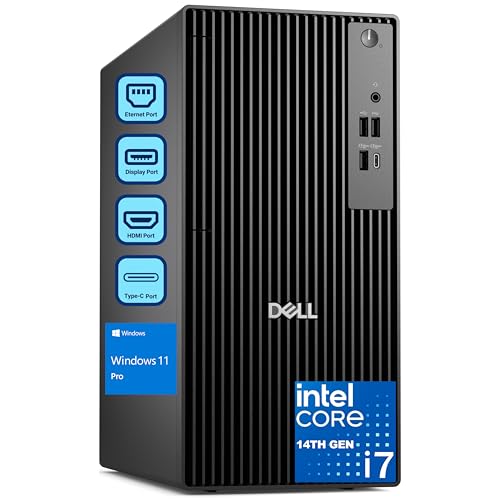
- 20-core/28-thread CPU for demanding multitasking
- DDR5 RAM and 512GB PCIe SSD
- Windows 11 Pro with dual 4K support
Best For: Developers running IDEs, containers, virtual machines, and large builds
Best Budget-Friendly Starter

- 32GB RAM for comfortable multitasking
- Spacious 1TB SSD
- Keyboard, mouse, and USB Wi-Fi included
Best For: Students, beginner programmers, and everyday development
Best Compact Workstation

- 20-core/28-thread i7 processor
- Compact small-form-factor chassis
- 1.5TB storage and business connectivity
Best For: Professional developers needing strong performance in a smaller workspace
Best Slim Modern Desktop
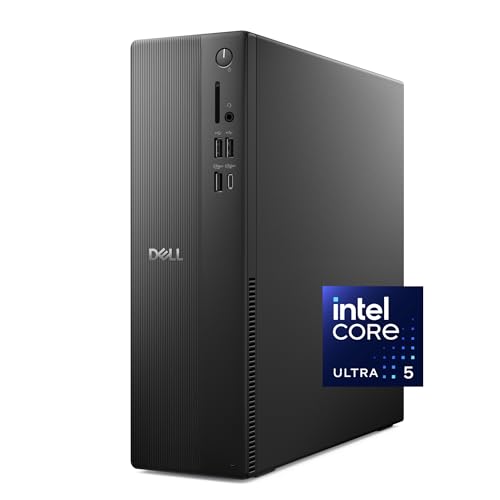
- Slim design for compact workspaces
- Supports two 4K or four FHD monitors
- Wi-Fi, Bluetooth, TPM, and upgrade access
Best For: Students and home-office developers prioritizing a compact setup
Best Overall
HP OmniDesk M03 Core Ultra 7 Desktop

- 20-core Core Ultra 7 processor and 32GB DDR5 RAM
- 1TB NVMe SSD with Windows 11 Pro
- Supports up to four 4K monitors
Best For: Multitasking programmers and professional workflows
Best Value
Dell OptiPlex 7060 Refurbished i7 Desktop

- Six-core Intel Core i7-8700 processor
- 32GB RAM and 512GB NVMe SSD
- Dual DisplayPort outputs and Windows 11 Pro
Best For: Budget-focused coding and office work
Best Modern Windows Home Pick

- 20-core processor with up to 5.3GHz performance
- 32GB DDR5 RAM and 1TB PCIe SSD
- Dual 4K display support with HDMI and DisplayPort
Best For: Home developers wanting a current, connected desktop
Compact Everyday Coding Pick

- 32GB RAM and 1TB SSD
- Dual 4K display support
- Compact Windows 11 Pro setup
Best For: Students, beginner programmers, and light development
Modern Multitasking Choice

- Intel Core Ultra 5-235 processor
- 32GB DDR5 and 1TB PCIe SSD
- Dual-monitor and USB-C support
Best For: Professional coding and multitasking
Heavy Multitasking Powerhouse

- 16 cores and 24 threads
- 32GB DDR5 and 1TB NVMe SSD
- Dual 4K monitor support
Best For: Large builds, data work, and intensive multitasking
Best for Heavy Development Workloads – Dell Pro Tower i7-14700
For demanding desktop computers for programming workloads, this Dell Pro Tower combines the 20-core Intel Core i7-14700 with 16GB of DDR5 memory and a 512GB PCIe SSD. It is well suited to developers who run several IDEs, containers, virtual machines, or large builds at once.
Best For: Multitasking developers, data analysis, business applications, and users who need dual 4K display support.
Pros:
- 20 cores and 28 threads support demanding multitasking, compiling, Docker, and virtual machines.
- DDR5 memory and a PCIe SSD provide responsive application launches and project access.
- Windows 11 Pro includes BitLocker, remote desktop, and other professional security features.
- HDMI and DisplayPort outputs support dual 4K monitors.
Cons:
- 16GB of RAM may be limiting for especially large virtual-machine workloads.
- 512GB of storage can fill quickly with development environments and source repositories.
- Built-in Wi-Fi is not included.
This is a strong productivity-focused tower for programmers who prioritize CPU headroom and business features. Plan for wired networking or an adapter, and consider a memory or storage upgrade if your projects are unusually large.
Best Budget-Friendly Starter – HP Business Tower i5
This HP Business Tower is a practical entry point among desktop computers for programming, especially for students and developers working on everyday projects. Its 32GB of RAM and 1TB SSD emphasize smooth multitasking and generous file space, while the Intel Core i5-10400 handles routine development and office work.
Best For: Students, beginner programmers, web development, education, and general productivity.
Pros:
- 32GB of RAM supports many browser tabs, editors, and applications at once.
- 1TB SSD provides ample space for software, documents, and project files.
- Includes a keyboard, mouse, and USB Wi-Fi adapter for a convenient setup.
- Eight USB ports and HDMI, VGA, and DVI outputs offer flexible connectivity.
Cons:
- The older six-core Core i5-10400 is less suited to heavy compiling or multiple virtual machines.
- DDR4 memory and integrated graphics are functional but not aimed at demanding visual workloads.
- Windows 11 Home lacks the professional management features of Windows 11 Pro.
Choose this HP when memory capacity and storage matter more than maximum processor performance. It is a sensible option for learning programming and handling moderate projects, but demanding development environments may benefit from a newer CPU.
Best Compact Workstation – HP ProDesk SFF i7-14700
The HP ProDesk SFF G9 delivers high-end processor performance in a space-saving business chassis. For desktop computers for programming, its 20-core Intel Core i7-14700, DDR5 memory, and 1.5TB storage provide a capable foundation for compiling, multitasking, and managing sizeable development projects.
Best For: Professional developers who need strong CPU performance and a compact office-friendly design.
Pros:
- 20 cores and 28 threads provide substantial performance for demanding development work.
- DDR5 memory and 1.5TB of storage support large applications and project libraries.
- Small form factor design saves desk space while retaining business-oriented features.
- Windows 11 Pro, Wi-Fi, HDMI, DisplayPort, and Type-C connectivity support flexible setups.
Cons:
- The supplied specifications conflict on memory, listing both 16GB and 32GB DDR5; verify the configuration before buying.
- Integrated Intel UHD Graphics 770 is intended for productivity rather than graphics-intensive work.
- The compact chassis may provide less expansion flexibility than a full-size tower.
This is an attractive choice when processing power and a smaller footprint are both important. Confirm the exact RAM configuration with the seller, then consider it for professional coding, business applications, and multi-display workflows.
Best Slim Modern Desktop – Dell Slim Core Ultra 5
This Dell Slim Desktop is a streamlined option among desktop computers for programming, pairing an Intel Core Ultra 5-225 processor with a 512GB SSD and integrated graphics. Its slim design, Wi-Fi, tool-less access, and multi-monitor support make it convenient for home offices, study areas, and compact workstations.
Best For: Students, home-office developers, and programmers who value a slim chassis and modern connectivity.
Pros:
- Intel Core Ultra processing includes built-in AI capabilities for compatible productivity tasks.
- Supports up to four FHD monitors or two 4K displays through HDMI and DisplayPort.
- Built-in Wi-Fi, Bluetooth, TPM security, and a lock slot suit modern office setups.
- Tool-less entry and a removable side panel make access and upgrades more convenient.
Cons:
- The supplied notes do not specify the installed RAM amount, which is important for development workloads.
- 512GB of storage may be restrictive for large SDKs, virtual machines, and repositories.
- Windows 11 Home is less suited to enterprise management than Windows 11 Pro.
This Dell makes sense for programmers who want a compact, polished computer with strong display flexibility and wireless networking. Check the memory configuration before purchase, particularly if you plan to use virtual machines or resource-heavy IDEs.
Best Overall – HP OmniDesk M03 Core Ultra 7 Desktop
For shoppers comparing desktop computers for programming, the HP OmniDesk M03 stands out with a current-generation 20-core Intel Core Ultra 7 265 processor, 32GB of DDR5 memory, and a 1TB PCIe NVMe SSD. It is well suited to coding workflows that involve multiple applications, browser tabs, and external displays.
Best For: Programmers who want strong multitasking performance, Windows 11 Pro, and extensive monitor and port support.
Pros:
- 20-core Core Ultra 7 265 processor with speeds up to 5.3GHz.
- 32GB DDR5 RAM and a fast 1TB NVMe SSD support demanding development workflows.
- Supports up to four 4K monitors and includes Wi-Fi 6, USB-C, HDMI, and DisplayPort.
- Includes Windows 11 Pro, wired keyboard and mouse, and a 64GB flash drive.
Cons:
- The listing identifies the graphics as integrated Intel Graphics, so it is not primarily a dedicated-GPU workstation.
- The original seal was opened for upgrades, so coverage is split between PCOnline US and the original manufacturer warranty.
With ample memory, current processor technology, and unusually broad display support, this HP tower is a strong all-around choice for programming and professional productivity. Verify the graphics configuration if your development work also includes GPU-heavy applications.
Best Value – Dell OptiPlex 7060 Refurbished i7 Desktop
If you need desktop computers for programming at a lower-cost configuration, this renewed Dell OptiPlex 7060 offers a capable six-core Intel Core i7-8700, 32GB DDR4 RAM, and a 512GB NVMe SSD. Its business-oriented design provides practical performance for coding, office work, and everyday development tools.
Best For: Budget-conscious programmers who need a Windows 11 Pro desktop with solid multitasking and dual-monitor capability.
Pros:
- Six-core Intel Core i7-8700 reaches up to 4.6GHz for responsive general-purpose performance.
- 32GB DDR4 RAM and a 512GB NVMe SSD provide useful capacity for development software and projects.
- Two DisplayPort outputs support a dual-monitor setup.
- Includes built-in Wi-Fi and Bluetooth plus a wireless keyboard and mouse.
Cons:
- Its 8th-generation processor and DDR4 memory are older than the newer Core Ultra systems in this roundup.
- Integrated Intel UHD Graphics 630 is intended for standard display work rather than graphics-intensive workloads.
- The renewed unit lists a 90-day limited warranty.
This OptiPlex is a sensible entry point for programming, especially when value and a compact business setup matter more than the latest platform. Its dual DisplayPort outputs and generous memory are particularly useful for code, documentation, and browser windows side by side.
Best Modern Windows Home Pick – Dell Core Ultra 7 265 Tower
This Dell tower is a strong option among desktop computers for programming when you want a modern Intel platform, fast DDR5 memory, and straightforward connectivity. Its Core Ultra 7 265 processor, 32GB RAM, and 1TB PCIe SSD are configured for coding, content creation, and demanding multitasking.
Best For: Home programmers and developers who want a current desktop with dual 4K display support and convenient connectivity.
Pros:
- 20-core Intel Core Ultra 7 265 processor reaches up to 5.3GHz and includes Intel AI Boost NPU.
- 32GB DDR5-5600 RAM and a 1TB PCIe SSD support responsive application loading and multitasking.
- HDMI and DisplayPort outputs support two external 4K displays.
- Includes USB-C, SD card reader, Ethernet, Wi-Fi, Bluetooth, and a wired keyboard and mouse.
Cons:
- Windows 11 Home is included rather than Windows 11 Pro.
- The supplied details list integrated graphics, and the maximum installed memory is listed as 32GB.
- It carries a one-year seller warranty rather than a stated manufacturer warranty.
For a developer who prefers a clean, current Windows 11 setup, this Dell combines strong processor headroom with useful dual-display and peripheral connectivity. It is best suited to CPU-focused programming and productivity rather than workloads that require a dedicated graphics card.
Compact Everyday Coding Pick – HP ProDesk SFF
For shoppers comparing desktop computers for programming, the HP ProDesk SFF is a compact Windows 11 Pro option with 32GB of RAM, a 1TB SSD, and support for dual 4K displays. Its Intel Celeron G6900 processor is best suited to everyday development, web work, office applications, and lighter coding environments rather than demanding builds or virtual machines.
Best For: Students, beginner programmers, web developers, and home-office users who value a small footprint and generous memory.
Pros:
- 32GB DDR4 RAM and a 1TB SSD provide practical multitasking and storage.
- HDMI and DisplayPort support dual-display setups.
- Compact SFF chassis fits space-limited desks.
- Includes Windows 11 Pro, keyboard, and mouse.
Cons:
- Intel Celeron G6900 is less suited to intensive compilation or resource-heavy development tools.
- Integrated graphics are intended for everyday display use, not graphics-intensive workloads.
The HP ProDesk makes sense when desk space, included peripherals, and ample RAM matter more than maximum processor performance. Developers working with large projects, containers, or multiple virtual machines may want a stronger CPU.
Modern Multitasking Choice – Dell Pro Slim QCS1250
The Dell Pro Slim QCS1250 is a strong middle-ground choice among desktop computers for programming, pairing an Intel Core Ultra 5-235 processor with 32GB of DDR5 memory and a 1TB PCIe SSD. It is designed for responsive professional multitasking while keeping the small-form-factor design convenient for compact workspaces.
Best For: Professional developers, office-based coding, and users who run multiple applications while working across two monitors.
Pros:
- Intel Core Ultra 5-235 processor offers up to 5GHz speeds and 10 processing cores.
- Fast 5200MHz DDR5 memory supports smooth multitasking.
- HDMI and DisplayPort enable dual-monitor workflows.
- Wi-Fi 6, USB-C, Bluetooth, keyboard, and mouse are included.
Cons:
- Integrated graphics are better suited to development and productivity than demanding visual workloads.
- Memory and storage expansion limits should be checked against future project needs.
With current-generation DDR5 memory, a capable Core Ultra processor, and useful connectivity, this Dell is a balanced programming workstation for everyday professional use. It is especially appealing when performance and a slim footprint are both priorities.
Heavy Multitasking Powerhouse – Dell Core i9 Tower
For demanding programming workloads, this Dell tower combines an Intel Core i9-12900K with 16 cores, 24 threads, 32GB of DDR5 RAM, and a 1TB NVMe SSD. Among these desktop computers for programming, it is the strongest fit for intensive multitasking, data-heavy applications, and projects that benefit from substantial CPU headroom.
Best For: Developers compiling larger projects, running several tools simultaneously, analyzing data, or using demanding professional applications.
Pros:
- 16-core, 24-thread Core i9 processor reaches speeds up to 5.2GHz.
- 32GB DDR5-5600 memory supports demanding multitasking.
- 1TB NVMe SSD provides fast application loading and project storage.
- HDMI 2.1 and DisplayPort 1.4a support dual-display setups.
Cons:
- Integrated Intel UHD Graphics 770 is not intended for graphics-heavy development or gaming.
- The larger tower design may need more desk space than an SFF desktop.
This Dell offers the most substantial processing capability in the group and leaves room for demanding development workflows. Its integrated graphics make it a CPU-focused choice, so users needing GPU acceleration should consider a system with dedicated graphics.
How We Picked the Best Desktop Computers for Programming
We focused on the specifications that have the greatest effect on real development work: processor performance, memory capacity, SSD storage, monitor support, connectivity, and upgrade potential. The selection includes current Intel Core and Core Ultra systems alongside older business-class desktops that may offer strong value when their condition and configuration are suitable.
Because programming workloads vary, we did not treat one specification as universally best. A web developer may prioritize a compact, quiet system, while an Android developer, data scientist, or engineer working with virtual machines may need more cores, memory, and expansion space.
Quick Comparison
- Best overall performance: The Dell tower with the Core Ultra 7 265 offers a modern 20-core platform, 32GB of DDR5 memory, and dual 4K display support.
- Best for demanding multitasking: The Dell tower with the Core i9-12900K pairs 16 cores with 32GB of RAM and a fast NVMe SSD.
- Best compact workstation: The HP ProDesk SFF and Dell Pro Slim QCS1250 provide capable processors and business-friendly designs in smaller cases.
- Best budget-conscious option: The refurbished OptiPlex 7060 SFF can handle everyday coding with 32GB of RAM and an NVMe drive, though its older platform has less long-term headroom.
- Best for multiple monitors: The HP OmniDesk M03 and several Dell and HP business desktops support dual or up to four high-resolution displays.
Key Buying Factors for Desktop Computers for Programming
Processor and Core Count
Choose a modern Core Ultra 5 or Core Ultra 7 system for a balance of speed, efficiency, and longevity. Core i7 and i9 processors can still be excellent, particularly when compiling large projects or running virtual machines. More cores help with parallel builds, containers, emulators, and multitasking, while strong single-core performance benefits editors and everyday interaction.
Memory and Storage
16GB is workable for basic development, but 32GB is a better target for professional use, especially with Docker, virtual machines, databases, or large IDEs. A 512GB SSD is adequate for a focused setup; 1TB or more is preferable for source repositories, SDKs, local environments, and project assets. Confirm whether the RAM and storage can be upgraded.
Size, Ports, and Displays
Small-form-factor desktops fit easily under or beside a desk but may limit graphics-card and storage upgrades. Towers generally provide better airflow and expansion. Check the exact video outputs before buying, particularly if you need two or more 4K monitors, USB-C peripherals, wired networking, or built-in Wi-Fi.
Operating System and Condition
Windows 11 is convenient for broad software compatibility, while developers may also use WSL, virtual machines, or dual-boot configurations. For refurbished systems, verify the warranty, included accessories, drive health, and seller’s return policy.
Who Should Buy Which Desktop Computers for Programming?
Choose a tower if you compile frequently, run several development environments, need expansion room, or expect to add storage and graphics hardware. Choose an SFF or slim desktop if desk space, lower power use, and a clean office setup matter more than maximum expandability. Choose 32GB of RAM if your work includes containers, emulators, local databases, or virtual machines. For lightweight web, scripting, and educational development, a well-priced 16GB model with an SSD may be sufficient.