The best channel strip with de-esser can streamline vocal recording by combining essential tone-shaping and dynamics tools in one signal path. Instead of stacking separate hardware processors, you can manage preamp gain, equalization, compression, and sibilance before the signal reaches your interface.
This roundup compares 10 channel strips suited to different needs, from tube coloration and classic analog character to compact studio control and USB-friendly workflows. Use the buying guide below to narrow your options by sound, connectivity, controls, and budget.
Best 10 Channel Strip with De Esser Picks for 2026
Flexible Digital Front End
ART VoiceChannel Tube Channel Strip

- Tube preamp with warmth and definition
- Built-in compressor, expander, de-esser, and gate
- USB plus multiple digital output formats
Best For: Studios needing a versatile single-channel recording input
Classic Preamp and Dynamics Path
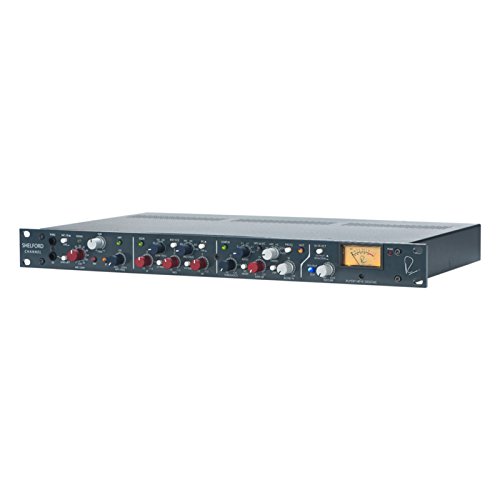
- Transformer-gain microphone preamp
- Diode-bridge compressor and inductor EQ
- Sidechain stereo-link sends and returns
Best For: Analog vocal and instrument tracking chains
Complete Vocal Processing

- Dedicated de-esser included
- Compressor/limiter and three-band EQ
- Mic/instrument preamp with output metering
Best For: Mono vocal and instrument tracking
Tube Compression Classic

- Vacuum-tube mic, instrument, and line preamp
- EQ and optical compressor included
- Single-channel XLR input and output
Best For: Tube-colored recording and optical compression
Flexible Tube Control

- Mono tube channel strip
- Opto/FET compression voicings
- Four-band semi-parametric EQ
Best For: Flexible vocal and instrument shaping
Class A Tube Boutique
Avalon VT-737sp Tube Channel Strip

- Four Sovtek 6922 tubes
- Discrete Class A topology
- Mic, line, and instrument inputs
Best For: Dedicated tube-based studio recording
Integrated Vocal Processing

- Dedicated de-esser included
- USB audio interface built in
- Compressor and gate/expander
Best For: Computer-based vocal recording and streaming
Tube Tone Control

- Class A 12AX7 tube preamp
- VCA compressor with auto attack/release
- Three-band EQ with variable-Q mids
Best For: Studios wanting tube character and comprehensive channel shaping
Transformer Character

- Class A mic/line preamp
- Custom transformer outputs
- Silk enhancement and compressor
Best For: Mono tracking with transformer tone and simple dynamics control
Tube Dynamics Rack
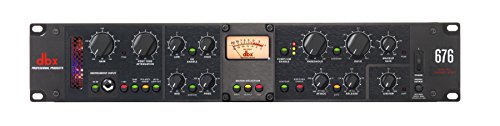
- 250-volt Class A tube preamp
- Compressor/limiter with side-chain insert
- Sweepable-mid three-band parametric EQ
Best For: Detailed tube processing for studio or live rack systems
Flexible Digital Front End – ART VoiceChannel Tube Channel Strip
The ART VoiceChannel is a versatile channel strip with de esser for recording setups that need tube warmth, dynamics control, and broad connectivity. Its single-channel design combines an ART tube preamp with compressor, expander, de-esser, and gate functions, plus digital outputs and USB connectivity.
Best For: Home studios and project studios needing one adaptable vocal, instrument, or general recording input with digital-routing options.
Pros:
- Includes compressor, expander, de-esser, and gate processing.
- Tube preamp design aims to provide warmth and definition.
- Supports USB, ADAT, AES/EBU, S/PDIF, and TOSLink connectivity.
- Handles sample rates up to 192 kHz.
Cons:
- Provides only one channel.
- Its extensive connectivity may be more than a basic setup requires.
Choose the VoiceChannel when integrated dynamics processing and flexible digital output options matter as much as the preamp itself. It is especially practical for users who want de-essing available before the signal reaches their recording software.
Classic Preamp and Dynamics Path – Shelford Channel
Rupert Neve Designs Shelford Channel Microphone Preamp, Inductor EQ & Diode Bridge Compressor
Check Price On AmazonThe Shelford Channel is a mono channel strip built around a transformer-gain microphone preamp, diode-bridge compressor, and inductor EQ. For shoppers comparing a channel strip with de esser options, note that the supplied specifications emphasize compression and EQ rather than a dedicated de-esser.
Best For: Engineers seeking an analog mono vocal or instrument chain with transformer-based gain, musical compression, and inductor EQ.
Pros:
- Combines transformer-gain mic preamp, compressor, and inductor EQ.
- Includes sidechain stereo-link sends and returns.
- Uses a double-voltage power supply and transformer output stage.
Cons:
- No dedicated de-esser is listed in the supplied features.
- It is a mono channel strip.
- Analog connectivity may be less convenient for users seeking direct USB operation.
The Shelford Channel is a focused choice for analog signal shaping rather than an all-in-one digital interface. Consider it when preamp character, EQ, and compression are higher priorities than integrated sibilance control.
Complete Vocal Processing – SPL Track One MK3
The SPL Track One MK3 is a practical mono channel strip with de esser functionality alongside a mic/instrument preamp, compressor/limiter, three-band EQ, and output metering. Its feature set is well suited to shaping a signal before recording or mixing.
Best For: Vocal and instrument tracking where preamp, sibilance control, dynamics, EQ, and metering are needed in one mono unit.
Pros:
- Includes a dedicated de-esser.
- Combines compressor/limiter, three-band EQ, and output metering.
- Supports both microphone and instrument preamp applications.
Cons:
- Provides one mono channel.
- The supplied notes do not specify digital or USB connectivity.
The Track One MK3 stands out for a straightforward recording workflow: gain the source, control dynamics, reduce sibilance, shape tone, and monitor output. It is a strong fit when integrated vocal processing is more important than extensive routing features.
Tube Compression Classic – Universal Audio LA-610 Mk II
The Universal Audio LA-610 Mk II is a tube channel strip combining a vacuum-tube microphone, instrument, and line preamp with EQ and an optical compressor. For buyers specifically searching for a channel strip with de esser, the supplied feature list does not identify a dedicated de-esser.
Best For: Engineers wanting tube-based preamp character and optical compression for microphone, instrument, or line-level sources.
Pros:
- Accepts microphone, instrument, and line-level sources.
- Uses a vacuum-tube preamp design.
- Includes EQ and optical compression in the same unit.
Cons:
- No dedicated de-esser is listed in the supplied notes.
- It provides one channel.
- The supplied specifications list XLR input and output connectivity without USB.
The LA-610 Mk II is best considered a character-focused tube preamp and compressor rather than a de-essing solution. Add separate sibilance control if vocal cleanup is an essential part of your recording chain.
Flexible Tube Control – ART Pro Channel III
The ART Pro Channel III is a practical channel strip with de esser potential for users who want tube-based mono processing, selectable compression character, and hands-on EQ control. Its opto/FET compression voicings and four-band semi-parametric EQ provide a flexible front end for shaping a vocal or instrument signal.
Best For: Home studios and project setups needing a versatile mono tube channel strip with multiple compression options.
Pros:
- Mono tube channel strip design.
- Switchable microphone impedance selection.
- Selectable opto and FET compression voicings.
- Four-band semi-parametric EQ.
Cons:
- The supplied notes do not list a dedicated de-esser.
- Its 10.61-pound weight may matter for compact setups.
The ART Pro Channel III is a strong choice when compression flexibility and EQ shaping matter more than an explicitly documented de-esser. Confirm the processing layout fits your intended vocal workflow before buying.
Class A Tube Boutique – Avalon VT-737sp Tube Channel Strip
The Avalon VT-737sp is a premium-style tube channel strip for users prioritizing a high-voltage, discrete Class A signal path. It uses four dual-triode Sovtek 6922 tubes and provides microphone, line, and instrument connectivity, but the supplied specifications do not identify a dedicated de-esser.
Best For: Studio users seeking a tube-based Class A channel strip with broad input and output connectivity.
Pros:
- Four dual-triode Sovtek 6922 vacuum tubes.
- High-voltage discrete Class A topology.
- Transformer-balanced microphone input with up to +58 dB gain.
- Supports microphone, line, and front-panel instrument connections.
Cons:
- The supplied notes do not list a dedicated de-esser.
- At 28.3 pounds, it is relatively heavy.
- The listed configuration has one channel.
The VT-737sp is best viewed as a tube-focused studio channel strip rather than a confirmed channel strip with de esser. Its Class A architecture and varied I/O make it compelling for dedicated recording environments where external de-essing is acceptable.
Integrated Vocal Processing – Behringer Ultravoice UV1
The Behringer Ultravoice UV1 is the most direct match for shoppers seeking a channel strip with de esser. This one-channel mic/line preamp combines compression, gate/expander, and de-esser processing with a USB audio interface, making it a practical option for computer-based recording.
Best For: Vocalists, streamers, and home-recording users who want de-essing and USB connectivity in one compact unit.
Pros:
- Includes a dedicated de-esser.
- Combines mic/line preamp and USB audio interface functions.
- Provides compressor and gate/expander processing.
- Supports sample rates up to 192 kHz.
Cons:
- It is limited to one channel.
- The supplied notes list Windows and Mac compatibility but do not detail other operating systems.
For buyers specifically searching for a channel strip with de esser, the UV1 offers the clearest feature match in this group. Its USB interface and vocal-oriented dynamics make it especially convenient when minimizing extra equipment is a priority.
Tube Tone Control – PreSonus StudioChannel
The PreSonus StudioChannel is a flexible channel strip with de esser-style vocal processing potential, although the supplied features do not list a dedicated de-esser. Its Class A 12AX7 tube preamp, VCA compressor, and three-band EQ provide a practical signal-shaping setup for vocals, instruments, and keyboards.
Best For: Project and professional studios needing tube preamp character, compression, and flexible EQ in one rack unit.
Pros:
- High-voltage Class A 12AX7 tube preamp with tube-drive control
- VCA compressor includes automatic attack/release and soft/hard-knee options
- Three-band EQ offers a variable-Q parametric mid band plus shelving or peak high and low bands
- Includes mic, line, and instrument inputs, plus phantom power, polarity reverse, and a high-pass filter
Cons:
- No dedicated de-esser is listed in the supplied specifications
- Its extensive controls may require more setup than a simpler preamp
The StudioChannel is a strong all-in-one choice when tonal shaping and dynamics control matter more than having a built-in de-esser. Its 1U rack format and broad input support suit varied studio sources.
Transformer Character – Newton Channel Strip
The Newton Channel Strip is a mono channel strip aimed at clean, characterful tracking. While a dedicated de-esser is not included in the supplied notes, its Class A mic/line preamp, custom transformer outputs, Silk harmonic enhancement, metering, and compressor provide a focused front end for recording.
Best For: Engineers seeking a straightforward mono recording channel with transformer tone and basic compression.
Pros:
- Class A mic/line preamp for a dedicated recording front end
- Custom transformer outputs add an analog-oriented signal path
- Silk harmonic enhancement offers additional tonal shaping
- Eight-segment LED meters provide input or output monitoring information
Cons:
- No dedicated de-esser is listed in the supplied specifications
- The notes mention a compressor but do not specify its controls or operating modes
- It is a mono channel strip, limiting simultaneous channel count
The Newton is best considered a focused tracking channel rather than a fully documented vocal-processing suite. Choose it for Class A amplification, transformer output character, and a compact control set.
Tube Dynamics Rack – dbx 676FX Tube Channel Strip
The dbx 676FX combines a high-voltage Class A tube preamp with compression, limiting, and a sweepable three-band parametric EQ. It is not described as a channel strip with de esser functionality—the supplied notes do not list a dedicated de-esser—but its side-chain insert can support more specialized external processing in an appropriate setup.
Best For: Studio and live users who need tube tone, detailed EQ, and compressor/limiter control in a rackmount channel strip.
Pros:
- 250-volt high-voltage Class A tube preamp supports warm, clear, or driven tones
- Integrated compressor/limiter is based on the dbx 266sx design
- Three-band parametric EQ includes sweepable mids for precise frequency work
- Side-chain insert, front-panel instrument input, XLR, and 1/4-inch connectivity add flexibility
Cons:
- No dedicated de-esser is listed in the supplied specifications
- Its 2U rack size is less compact than a 1U channel strip
- The unit weighs 13 pounds, which may matter for portable rigs
The 676FX is a capable choice when dynamics control and EQ precision are priorities. Its side-chain insert may help integrate external frequency-conscious processing, but buyers specifically needing onboard de-essing should plan for an additional processor.
How We Picked the Best Channel Strip with De Esser
We evaluated these units as complete recording front ends rather than judging preamp quality alone. Key considerations included the usefulness of the de-esser, compressor and EQ controls, preamp headroom, noise performance, metering, connectivity, build quality, and how easily each unit fits into a vocal, instrument, broadcast, or home-studio setup.
Because the products vary widely, some emphasize tube saturation and analog character while others prioritize clean control, flexible routing, or accessible pricing. A strong choice should match your microphones, room, recording style, and tolerance for manual setup.
Quick Comparison
- For tube character: Look at models built around tube preamps and opto-style or vintage-inspired compression.
- For precise vocal control: Choose a unit with adjustable threshold, ratio, attack, release, EQ, and de-esser frequency controls.
- For home studios: Prioritize simple routing, clear metering, reliable phantom power, and outputs compatible with your interface.
- For broadcast or streaming: Look for fast access to compression, limiting, de-essing, and dependable line-level connectivity.
- For flexible integration: Digital outputs, USB connectivity, inserts, and balanced outputs can reduce cabling and simplify expansion.
Key Buying Factors for a Channel Strip with De-Essers
De-Esser Control
Check whether the processor offers adjustable frequency, threshold, bandwidth, or reduction controls. A basic de-esser may be sufficient for occasional vocal work, while detailed controls are more useful when treating different microphones and voices.
Preamp and Tonal Design
Tube circuits can add warmth, harmonics, and saturation, but they may also introduce coloration and require more gain staging. Solid-state or hybrid designs often provide a cleaner, more predictable signal. Consider whether you want character at the source or maximum flexibility for later processing.
Compression and EQ
Useful compression controls help even out vocals before conversion, while a sweepable mid band or parametric EQ provides more precise shaping than fixed shelving alone. A limiter can add protection, but it should not replace careful recording levels.
Connections and Workflow
Confirm the microphone input, line or instrument inputs, balanced outputs, inserts, digital connections, and USB features you actually need. A channel strip with de-esser is most valuable when its controls are easy to reach and its output level integrates cleanly with your interface.
Who Should Buy Which Channel Strip with De Esser?
Vocalists and project studios should favor a versatile unit with straightforward compression, EQ, and de-essing. Engineers seeking analog color may prefer a tube-based design with richer saturation and a more distinctive response. Podcasters, streamers, and presenters should prioritize fast operation, limiting, clear metering, and reliable vocal control over extensive tone sculpting. Experienced mixers may benefit from premium components, flexible routing, and more precise processing controls.
Before buying, compare the strip’s maximum input and output levels with your interface, leave enough headroom for strong performances, and confirm that the de-esser targets the sibilance range you commonly encounter. The best option is the one that improves your recording chain without adding unnecessary complexity.