The right desktop microphone preamp can give a quiet dynamic microphone more usable gain, add tube coloration, or provide cleaner signal conditioning before your recorder or interface.
This roundup compares 10 options, from compact inline boosters and budget preamps to tube units and USB audio interfaces, so you can match features to your microphone, workflow, and recording setup.
Best 10 Desktop Microphone Preamps Picks for 2026
Clean Desktop Gain
Auteur DT Single-Channel Preamp

- One mic or instrument channel
- Ultra-high-speed input stage
- Transformer-balanced output
Best For: Single-channel home and desktop recording
Flexible Tube Tones

- Two-channel tube preamp
- Variable impedance and valve voicing
- LED and analog output metering
Best For: Flexible mic and instrument recording
Inline Signal Boost
- Low-noise Class-A JFET amplifier
- Shielded enclosure
- Four matched JFETs
Best For: In-line microphone gain boosting
Hybrid Recording Control

- Two-channel hybrid design
- 12AX7 tube and solid-state paths
- Filter, pad, polarity, and phantom power
Best For: Flexible mic and instrument recording
Best All-Around Interface
Focusrite Scarlett Solo 3rd Gen

- 56dB mic preamp gain with switchable Air mode
- 24-bit/192kHz recording and low-noise outputs
- Includes instrument input and recording software
Best For: Solo vocals, podcasts, and home recording
Best High-Gain Standalone Preamp

- Up to 75dB gain with stated -120dB EIN
- 48V phantom power for condenser microphones
- Balanced XLR and dual 3.5mm outputs
Best For: Low-output dynamic microphones and flexible desktop setups
Best Tube Character

- One-channel tube preamp and DI
- Acme Audio/Triad and CineMag transformers
- Compatible with guitar and major DAWs
Best For: Single-channel tube recording and guitar DI applications
Compact Dynamic-Mic Booster

- +25 dB clean gain for dynamic and ribbon microphones
- Balanced XLR input/output with phantom-power compatibility
- Compact, shielded metal housing for desktop use
Best For: Dynamic microphones needing a simple desktop signal boost
Variable-Gain DI Preamp

- 19–66 dB adjustable gain with claimed -120 dBV EIN
- Three simultaneous outputs for flexible routing
- 1MΩ instrument input can function as a DI box
Best For: Low-noise microphone and instrument recording with flexible routing
Universal XLR Mic Booster

- 20 dB balanced gain with transparent amplification
- Compatible with dynamic and condenser microphones
- Compact black metal case designed for low-noise operation
Best For: Simple home-studio, podcast, and streaming microphone setups
Clean Desktop Gain – Auteur DT Single-Channel Preamp
The Black Lion Audio Auteur DT is a straightforward desktop microphone preamp for setups that need one channel of mic or instrument amplification. Its ultra-high-speed input stage and transformer-balanced output suit recording chains where clean, focused signal handling is a priority.
Best For: Home studios and desktop recording setups that need a single mic or instrument channel.
Pros:
- Supports microphone and instrument sources
- Ultra-high-speed input stage
- Transformer-balanced output
Cons:
- Only one channel
- Supplied notes do not indicate tube coloration or additional metering
The Auteur DT keeps its feature set focused, making it a practical option when you want a dedicated one-channel desktop microphone preamp without unnecessary complexity.
Flexible Tube Tones – ART TPS II Tube Preamplifier
The ART TPS II is a two-channel tube preamplifier for desktop or rack-based recording systems. Variable input impedance, variable valve voicing, mic and instrument switching, and broad 5 Hz–50 kHz frequency response give this desktop microphone preamp a flexible range of tonal and source-matching options.
Best For: Recordists who want two channels, adjustable tube voicing, and compatibility with both microphones and instruments.
Pros:
- Two output channels
- Variable input impedance and valve voicing
- LED input and analog output metering
- Includes enhanced OPL output protection limiter and toroidal transformer
Cons:
- Tube-based design may be less suited to buyers seeking a strictly solid-state sound
- The supplied dimensions list a 19-inch width, so it may require more space than compact desktop units
With two channels and multiple tone-shaping and monitoring features, the TPS II is a versatile choice for users who want more control than a basic single-channel preamp provides.
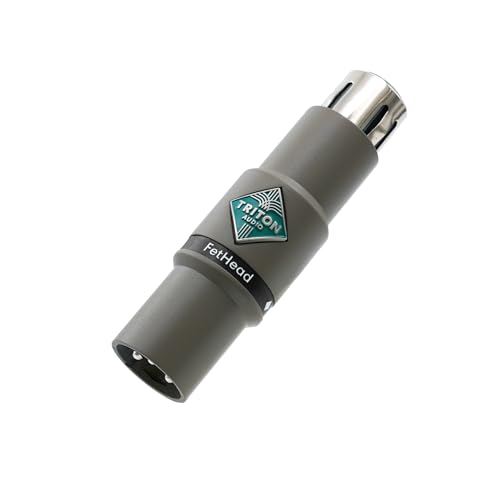
Inline Signal Boost – Triton Audio FetHead
The Triton Audio FetHead is an in-line microphone preamp designed to add low-noise Class-A gain within a compact signal path. Its double single-ended amplifier topology, shielded enclosure, and four matched JFETs make it a focused option for users looking for a simple desktop microphone preamp accessory.
Best For: Recording setups that need an in-line, low-noise Class-A microphone gain stage.
Pros:
- Low-noise Class-A JFET amplifier
- Double single-ended amplifier topology
- Shielded enclosure
- Uses four matched JFETs
Cons:
- In-line design is less feature-rich than a full desktop preamp
- The supplied notes do not list metering, tone controls, or instrument-input features
The FetHead is best viewed as a specialized gain solution rather than a complete control-panel preamp, particularly when low-noise Class-A amplification is the main requirement.
Hybrid Recording Control – PreSonus BlueTube DP v2
The PreSonus BlueTube DP v2 combines 12AX7 tube and solid-state gain stages across two channels. With combo mic/instrument inputs, Class A XMAX mic preamps, 48V phantom power, tube-drive control, and practical signal-shaping switches, it is a versatile desktop microphone preamp for recording sources from warm to distorted.
Best For: Home and project studios that want two channels with selectable solid-state or tube-driven character.
Pros:
- Dual-path 12AX7 tube and solid-state gain stages
- Combo mic/instrument inputs with 48V phantom power
- Tube drive control and illuminated analog VU meter
- Includes 80 Hz high-pass filter, -20 dB pad, and polarity reverse
Cons:
- Its 1/2U rack-mount chassis may need suitable rack or shelf space
- Tube-driven sounds may not suit users seeking only clean solid-state gain
The BlueTube DP v2 stands out when flexibility matters: it offers two channels, useful recording controls, and a choice between solid-state clarity and adjustable tube saturation.
Best All-Around Interface – Focusrite Scarlett Solo 3rd Gen
For desktop microphone preamps, the Focusrite Scarlett Solo 3rd Gen combines a dedicated XLR mic preamp with a USB-C recording interface. Its 56dB gain range, switchable Air mode, and 24-bit/192kHz converters make it a practical choice for vocals, podcasts, and home recording.
Best For: Solo vocalists, podcasters, and musicians who also need an instrument input and computer connectivity.
Pros:
- High-performing mic preamp with switchable Air mode for added clarity.
- Records at up to 24-bit/192kHz with low-noise balanced outputs.
- Includes a Hi-Z instrument input, headphones connection, recording software, and Hitmaker Expansion.
- Compatible with Mac, Windows, and iPadOS, with a three-year warranty noted in the product details.
Cons:
- Provides one XLR mic preamp, limiting simultaneous microphone recording.
- Requires a computer or compatible device for USB-based recording.
The Scarlett Solo is a strong general-purpose option when you want a desktop mic preamp integrated into a compact interface rather than a standalone preamp.
Best High-Gain Standalone Preamp – JCANOL MIC-1 Mic Preamp
This compact desktop microphone preamp offers up to 75dB of gain and a stated -120dB EIN noise performance. With 48V phantom power, balanced XLR output, and additional 3.5mm outputs, it is designed to connect microphones or instruments to a variety of recording setups.
Best For: Users needing substantial clean gain for low-output dynamic microphones, including microphones such as the SM7B, or flexible output options for portable devices.
Pros:
- Up to +75dB of stated clean, transparent gain for quiet sources.
- 48V phantom power supports condenser microphones.
- Balanced XLR output plus independent 3.5mm mic and line outputs.
- Compact metal design and a three-year warranty.
Cons:
- The XLR and instrument input ports cannot work simultaneously.
- It is a preamp rather than a complete USB audio interface, so the supplied outputs may require additional equipment for computer recording.
The MIC-1 is a useful fit when gain and connection flexibility matter most, particularly for dynamic microphones that need more input level.
Best Tube Character – Acme Audio MTP-66 Tube Preamp
Among desktop microphone preamps, the Acme Audio MTP-66 stands out as a dedicated one-channel tube preamp and DI. Its Acme Audio/Triad input transformer and CineMag output transformer make it a specialized choice for users seeking a transformer-equipped recording front end.
Best For: Engineers and musicians who want a single-channel tube preamp/DI for microphone or guitar recording.
Pros:
- Dedicated one-channel tube preamp/DI design.
- Uses Acme Audio/Triad and CineMag transformers.
- Supports guitar-compatible applications and common DAWs including Pro Tools, Logic Pro, Ableton Live, FL Studio, and Cubase.
- Includes a two-year warranty.
Cons:
- One channel limits multi-microphone recording.
- At 13.8 pounds, it is substantially heavier than compact desktop options.
- Its supplied connectivity is listed as 1/4-inch TS, so users should confirm their complete cable and input requirements.
The MTP-66 is best approached as a focused tube preamp/DI for a specific recording chain, rather than an all-in-one USB interface.
Compact Dynamic-Mic Booster – StudioMan CL-100
For desktop microphone preamps used with dynamic or passive ribbon microphones, the StudioMan CL-100 is a straightforward way to add usable gain before an interface or mixer. Its +25 dB circuit, balanced XLR connections, and compact metal housing suit home studios, podcasts, streaming, and live setups.
Best For: Dynamic microphones and passive ribbon mics that need a clean signal boost in a compact desktop setup.
Pros:
- Adds up to 25 dB of gain for low-output microphones.
- Balanced XLR input and output integrate with interfaces and mixers.
- Compact metal chassis provides EMI/RFI shielding and portable durability.
- Supports 48V phantom power and covers a 10Hz–20kHz frequency range.
Cons:
- Designed specifically for dynamic and passive ribbon microphones, rather than a universal preamp solution.
- Provides a fixed 25 dB gain specification rather than variable gain control.
The CL-100 is a practical choice when your main goal is adding clean, balanced gain without taking much desk space. Its simple XLR signal path makes it easy to place between a microphone and existing recording equipment.
Variable-Gain DI Preamp – Rodyweil RO03
Among desktop microphone preamps, the Rodyweil RO03 stands out for its adjustable 19–66 dB gain and claimed -120 dBV EIN noise performance. It accepts one active microphone or instrument input, offers three outputs, and uses USB Type-C 5V/1A power for flexible home, mobile, and streaming rigs.
Best For: Creators and musicians who need variable gain, low-noise operation, multiple outputs, or DI functionality for high-impedance instruments.
Pros:
- Variable 19–66 dB gain accommodates a range of source levels.
- Claimed -120 dBV EIN supports a low-noise signal path.
- Three outputs can feed compatible interfaces, mixers, amplifiers, or PA equipment.
- Approximately 1MΩ TS input impedance preserves the tone of high-impedance instruments.
Cons:
- Only one input type should be active at a time for full signal fidelity.
- Requires a suitable 5V/1A Type-C power source and appropriate connection cables.
The RO03 is the most flexible option here for users who want more control than a fixed-gain booster provides. Its instrument-friendly impedance and DI capability also make it useful beyond microphone recording.
Universal XLR Mic Booster – 48V Microphone Preamp
This compact microphone preamplifier is a simple choice for desktop microphone preamps when you need a modest gain increase for vocal, podcast, streaming, or recording work. It provides 20 dB of balanced gain, 48V power compatibility, and an XLR output in a lightweight black metal case.
Best For: Home-studio and content-creation setups using either dynamic or condenser microphones.
Pros:
- Provides 20 dB of clean, transparent gain.
- Works with both dynamic and condenser microphones through 48V power compatibility.
- Fully balanced circuitry is designed for low-noise operation.
- Lightweight metal housing helps limit EMC interference.
Cons:
- Offers less stated gain than the 25 dB StudioMan CL-100 and the variable-gain RO03.
- The supplied details specify an XLR output but do not describe multiple outputs or gain adjustment.
This unit is best suited to buyers who want a small, uncomplicated booster for a mixed microphone collection. Its 48V compatibility broadens its use beyond dynamic-only preamps, while the metal enclosure keeps the desktop footprint manageable.
How We Picked These Desktop Microphone Preamps
We selected products across the main categories buyers encounter: single-channel desktop preamps, tube-equipped models, inline gain boosters, compact XLR units, and USB interfaces with built-in microphone preamps. We considered gain range, noise performance, phantom-power support, input and output flexibility, power requirements, controls, portability, and suitability for dynamic or condenser microphones.
Because these products serve different purposes, the best choice is not necessarily the most expensive model. A passive dynamic microphone may need substantially more clean gain than a sensitive condenser, while a user seeking character may prefer tube circuitry over maximum transparency.
Quick Comparison
| Best For | Look For |
|---|---|
| Clean gain for a dynamic mic | High gain, low EIN, and balanced XLR connections |
| Tube coloration | Tube circuitry, drive controls, and output-level adjustment |
| Simple microphone boosting | Inline design, phantom-power compatibility, and short signal path |
| Recording directly to a computer | USB connectivity, headphone monitoring, and interface controls |
| Multiple microphones | Two or more inputs and independent gain controls |
Key Buying Factors for Desktop Microphone Preamps
Gain and Noise
Check the maximum gain before buying, especially if you use a low-output dynamic or ribbon microphone. More gain is useful only when the preamp remains quiet; a low equivalent input noise specification, often shown as EIN, is a helpful indicator. Keep some headroom so normal vocal or instrument peaks do not overload the next device.
Phantom Power and Compatibility
Condenser microphones usually require 48V phantom power, while many dynamic microphones do not. If you use an inline booster with a passive dynamic microphone, confirm that the connected interface or preamp can supply phantom power. Follow the microphone manufacturer’s guidance when using phantom power with ribbon microphones.
Connectivity and Power
Match the output to the rest of your chain. XLR outputs suit mixers, interfaces, and recorders; USB models can connect directly to a computer. Also check whether the unit uses an external adapter, USB power, or phantom power, and whether it provides balanced connections for longer cable runs.
Clean Versus Colored Tone
Transparent preamps aim to preserve the microphone’s natural sound. Tube models may add warmth, saturation, or harmonic character, which can be useful for vocals and instruments but less appropriate when you need an accurate, neutral recording. Gain and output controls are valuable when you want to dial in coloration without clipping the following input.
Who Should Buy Which Desktop Microphone Preamps?
Choose an inline preamp if you already own an audio interface and mainly need more gain from a passive dynamic microphone. Choose a compact single-channel model for voiceover, podcasting, or a simple vocal chain. A two-channel preamp is more practical for stereo recording or users who regularly switch between microphones and instruments.
Tube-oriented buyers should prioritize models with controllable drive and output levels, while beginners recording straight into a computer may be better served by a USB audio interface with built-in preamps, monitoring, and conversion. Before ordering, verify connector type, input count, phantom-power needs, gain requirements, and available space on your desk.