Electronic drum kits make it easy to capture performances, but the right recorder determines how much control you have over separate drum sounds, backing tracks, vocals, and effects.
We compared 10 portable and tabletop options—from compact recorders for quick ideas to larger multitrack studios—so you can choose a setup that fits your workflow, input needs, and budget.
Best 10 Multitrack Recorder for Electronic Drums Picks for 2026
Best All-in-One Pick
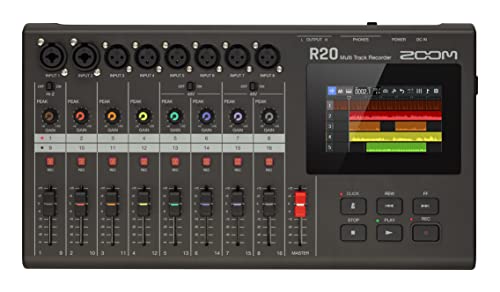
- 16 tracks with up to eight simultaneous inputs
- Six XLR inputs plus touchscreen editing
- Built-in effects, rhythms, and synth sounds
Best For: Complete drum-driven projects without a computer
Best Mixer-Style Studio

- 12-channel recording and 12-in/10-out USB
- MIDI, tap-tempo click, and DAW control
- Compression and three-band EQ on inputs
Best For: Hands-on home-studio mixing and DAW integration
Best Portable Option

- Eight tracks with two XLR/TRS inputs
- Five hours on four AA batteries
- Touchscreen editing, loops, synths, and MIDI
Best For: Portable drum idea capture and computer-free arranging
Best High-Track-Capacity Portastudio

- 24-track standalone recording
- Eight XLR inputs for multi-source setups
- Effects, mastering, color screen, and 32 GB storage
Best For: Large studio projects with many recorded sources
Flexible 4-Track Choice

- Four-track recording with 32-bit-float audio
- Two XLR/TRS inputs for drums, mics, or mixers
- USB recording plus SD-card backup
Best For: Portable electronic-drum recording with flexible connections
Practice-Focused Multitracker
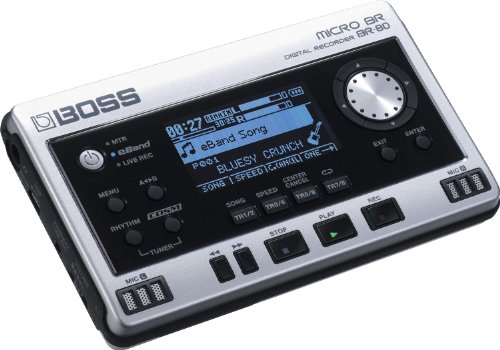
- Eight simultaneous playback tracks and 64 V-Tracks
- Built-in rhythms, backing tracks, and COSM effects
- MTR, eBand, and Live Recorder modes
Best For: Practice, play-along sessions, and compact songwriting
Eight-Input Workstation

- Up to eight tracks recorded simultaneously
- Two XLR combo inputs and 16-track playback
- Built-in sampler, rhythm machine, and USB interface
Best For: Larger electronic-drum recording setups and tabletop production
Portable Classic
Boss BR-600 Digital Multitrack Recorder

- Eight simultaneous playback tracks and 64 V-Tracks
- Velocity-sensitive built-in drum machine
- Stereo mic and battery-powered portability
Best For: Portable, self-contained recording with onboard rhythms and effects
Clip-Free Flexibility
Zoom R4 32-Bit Float Multitrack Recorder

- Four-track record, layer, bounce, and repeat workflow
- 32-bit float recording helps avoid clipping
- Over 80 built-in rhythm patterns and USB interface mode
Best For: Portable electronic-music recording with simple level management
Ready-to-Record Bundle
Zoom R4 with 64GB microSD Card
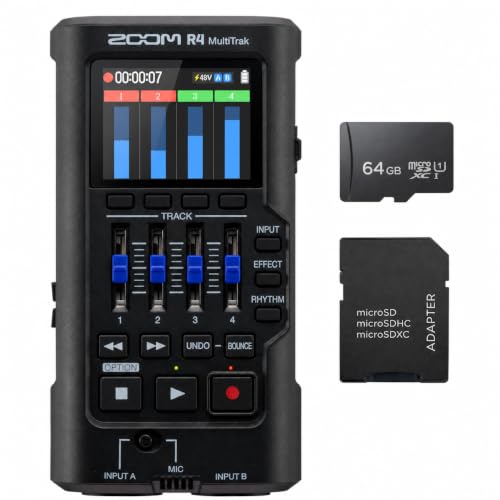
- Zoom R4 bundled with 64GB microSD card and adapter
- Two XLR/TRS combo inputs plus built-in stereo microphones
- Compact USB-connected recorder for portable setups
Best For: Buyers who want the R4 with storage included
Best All-in-One Pick – Zoom R20
The Zoom R20 is a strong multitrack recorder for electronic drums when you want to record, edit, and mix without a computer. Its 16-track capacity, eight-track simultaneous recording, six XLR inputs, and touchscreen workflow suit detailed music projects.
Best For: Musicians building complete drum-driven projects with hands-on, computer-free editing.
Pros:
- Records up to 16 tracks, with up to eight tracks simultaneously.
- Six XLR inputs and two XLR/TRS combo inputs support multiple sources.
- Touchscreen editing, onboard effects, drum patterns, and synth sounds are built in.
- Can function as a USB interface with Windows and macOS systems.
Cons:
- Its 4.3-pound body is less portable than the battery-powered R12.
- Maximum sample rate is listed as 44.1 kHz.
The R20 offers the most expansive standalone workflow in this group, particularly for electronic drum setups that need several inputs and room for layered arrangements.
Best Mixer-Style Studio – Tascam Model 12
The Tascam Model 12 is a practical multitrack recorder for electronic drums if you prefer a traditional mixer-style setup. It combines a 12-track recording studio, USB audio interface, DAW controller, MIDI functionality, and hands-on channel controls.
Best For: Home studios that want mixer controls, computer connectivity, and MIDI features in one tabletop unit.
Pros:
- Provides 12 channels with a 12-in/10-out USB audio interface.
- Includes MIDI functionality and a tap-tempo click output.
- One-knob compression and three-band EQ are available on all input modules.
- Dual headphone outputs offer individual volume and source selection.
Cons:
- At 13.3 pounds, it is substantially less portable than the Zoom R12.
- The supplied notes emphasize USB and mixer functionality rather than onboard touchscreen editing.
Choose the Model 12 when tactile mixing and integration with a DAW matter more than a compact, battery-powered design.
Best Portable Option – Zoom R12
The Zoom R12 is a convenient multitrack recorder for electronic drums when portability is a priority. It records up to eight tracks, includes two XLR/TRS inputs, and offers touchscreen editing, effects, drum loops, and USB-C connectivity in a compact recorder.
Best For: Mobile musicians capturing drum ideas and arranging tracks away from a computer.
Pros:
- Compact 16-ounce design runs for up to five hours on four AA batteries.
- Touchscreen supports cutting, copying, looping, and mixing without a computer.
- Includes 150 drum loops, 18 FM synth instruments, and MIDI support.
- Both inputs provide 48V phantom power, while input 1 includes Hi-Z.
Cons:
- Eight-track capacity and two inputs provide less expansion than the R20.
- USB-C operation is described as a stereo interface rather than a multichannel interface.
The R12 is the easiest choice for portability, offering a capable idea-capture workflow with useful rhythm tools and battery operation.
Best High-Track-Capacity Portastudio – Tascam DP-24SD
The Tascam DP-24SD is worth considering as a multitrack recorder for electronic drums when you want a large track count in a dedicated Portastudio format. It provides 24-track recording, eight XLR inputs, onboard effects, mastering, and a color screen.
Best For: Larger standalone recording projects requiring many tracks and multiple microphone or line sources.
Pros:
- Offers up to 24 tracks for expansive arrangements.
- Eight XLR inputs support multi-source recording setups.
- Includes effects, mastering features, and a color screen.
- Lists 32 GB of storage and up to 32 hours of digital recording time.
Cons:
- Its 13.7-pound weight and larger dimensions make it less convenient to move.
- The supplied notes do not specify a touchscreen or battery-powered operation.
- USB connectivity is listed as USB 2.0.
The DP-24SD stands out for track capacity and input count, making it a better fit for a permanent or semi-permanent studio than mobile recording.
Flexible 4-Track Choice – Zoom H4 Essential
The Zoom H4 Essential is a practical multitrack recorder for electronic drums when you want to capture a stereo kit, external instruments, or a mixer feed. Its two XLR/TRS inputs, built-in stereo microphones, and 32-bit-float recording support make it adaptable for rehearsals, demos, and live audio.
Best For: Electronic drummers who need portable recording with microphone, line, and USB connectivity.
Pros:
- Records four tracks and supports clip-free 32-bit-float audio.
- Accepts external microphones, instruments, mixers, or soundboards through two XLR/TRS inputs.
- Works as a USB audio device while also saving recordings to an SD card.
- Built-in stereo microphones and spoken menu guidance broaden its usability.
Cons:
- Four-track capacity may be limiting for larger multichannel drum setups.
- Uses two AA batteries, which adds a power-management consideration for mobile sessions.
Choose the H4 Essential if you value flexible routing and forgiving recording levels more than a high track count. It is especially useful when an electronic drum setup needs to share inputs with other instruments or a mixer.
Practice-Focused Multitracker – BOSS BR-80
The BOSS BR-80 is a compact multitrack recorder for electronic drums that combines MTR recording with backing tracks, rhythm patterns, and onboard effects. It records to SD or SDHC cards and can also function as a USB audio interface, making it suited to practice and portable songwriting.
Best For: Electronic drummers who want multitrack recording alongside play-along tracks, rhythms, and effects.
Pros:
- Provides 64 V-Tracks and eight simultaneous playback tracks for organized projects.
- Includes built-in backing and rhythm patterns for practice and arrangement work.
- Offers COSM amps and effects plus three operating modes: MTR, eBand, and Live Recorder.
- Includes a built-in stereo condenser microphone and USB audio-interface capability.
Cons:
- The supplied notes do not specify dedicated XLR or line inputs for directly connecting an electronic drum module.
- SD/SDHC storage is limited to cards up to 32 GB.
- Its older USB and included software workflow may be less streamlined than newer recorders.
The BR-80 makes the most sense when your electronic-drum setup is part of a practice-oriented workflow. Its rhythm library, eBand features, and effects can be more valuable than a simple track-count comparison.
Eight-Input Workstation – Zoom R8
The Zoom R8 is a strong multitrack recorder for electronic drums when you need several channels captured at once. It supports up to eight-track simultaneous recording, offers two XLR combo inputs, and adds built-in stereo microphones, a pad sampler, and a rhythm machine for a more complete tabletop production setup.
Best For: Electronic drummers who need higher simultaneous track capacity for a module, microphones, or additional instruments.
Pros:
- Records up to eight tracks simultaneously and provides 16-track playback.
- Includes two XLR combo inputs for connecting compatible microphones or audio sources.
- Combines recorder, USB audio interface, pad sampler, and rhythm machine functions.
- Records WAV files to SD or SDHC cards up to 32 GB.
Cons:
- Recording is limited to 16-bit or 24-bit at 44.1 kHz.
- Only two XLR combo inputs are specified, so additional sources may require an appropriate routing setup.
- At 2.7 pounds, it is less pocketable than a handheld recorder.
The R8 is the best fit of these options when simultaneous track capacity is the priority. Its tabletop format and production features make it a better choice for building fuller arrangements around electronic drums than for quick one-mic recordings.
Portable Classic – Boss BR-600 Digital Multitrack Recorder
If you want a multitrack recorder for electronic drums with a built-in rhythm section and portable recording options, the Boss BR-600 is a feature-rich older-style choice. It provides eight simultaneous playback tracks, a built-in drum machine with velocity-sensitive pads, and a stereo microphone for capturing ideas away from a studio.
Best For: Musicians who want portable, self-contained recording with drum-machine support, onboard effects, and battery operation.
Pros:
- Eight simultaneous playback tracks with 64 V-Tracks for arranging and storing takes.
- Built-in drum machine includes velocity-sensitive pads.
- Built-in stereo microphone and battery power support recording on the go.
- Includes guitar, vocal, and pitch-correction effects.
Cons:
- Uses CompactFlash media, with a 128MB card included.
- Digital recording time is listed at 2 hours and 16 minutes.
- Requires four 9V batteries for battery-powered use.
The BR-600 stands out for its combination of multitrack playback, onboard rhythms, effects, and portability. Its CompactFlash workflow and limited included storage are worth considering if you prefer a newer, more streamlined recorder.
Clip-Free Flexibility – Zoom R4 32-Bit Float Multitrack Recorder
The Zoom R4 is a practical multitrack recorder for electronic drums when you want flexible inputs, built-in rhythms, and simple level management. Its 32-bit float recording is designed to avoid clipping without manual gain adjustments, while two XLR/TS combo inputs accommodate microphones, instruments, keyboards, and other sources.
Best For: Electronic musicians who want a compact recorder, rhythm patterns, combo inputs, and USB interface functionality.
Pros:
- Records, layers, and bounces up to four tracks with undo support.
- 32-bit float recording helps prevent clipping without constant gain adjustments.
- Includes more than 80 built-in drum patterns across multiple styles.
- Works as a 2-in/2-out USB audio interface and runs on four AA batteries or USB-C.
Cons:
- Supports up to four tracks rather than the BR-600’s eight simultaneous playback tracks.
- Only two XLR/TS combo inputs are provided.
- Its rhythm patterns are built in rather than described as user-programmable.
With clip-resistant recording, combo inputs, stereo microphones, effects, and USB connectivity, the R4 is a versatile option for quick electronic-drum sessions. Its four-track limit is the main trade-off for its straightforward workflow and portability.
Ready-to-Record Bundle – Zoom R4 with 64GB microSD Card
This Zoom R4 bundle is a convenient multitrack recorder for electronic drums when you want the recorder and additional storage together. It combines the R4 with a 64GB Ultra microSD card and adapter, making it a practical starting package for mobile recording with the R4’s built-in microphones, USB connection, and multitrack workflow.
Best For: Buyers who want a Zoom R4 package with included expandable storage for recording with a computer, smartphone, tablet, or other compatible device.
Pros:
- Includes the Zoom R4 plus a 64GB microSD card and adapter.
- Two XLR/TRS combo inputs support varied recording sources.
- Built-in stereo microphones and USB hardware connectivity support flexible setups.
- Compact dimensions make it convenient for portable recording.
Cons:
- The supplied notes do not specify the R4’s full rhythm-pattern or 32-bit-float features for this bundle listing.
- Only two combo inputs are listed.
- The bundle details list two AAA batteries, so battery requirements should be checked before purchase.
The main appeal is convenience: this package pairs the R4 recorder with a 64GB card and adapter instead of requiring a separate storage purchase. Confirm the included accessories and battery specifications if you are comparing it directly with the standalone R4 listing.
How We Picked the Best Multitrack Recorder for Electronic Drums
We focused on the features that matter when recording an electronic kit: available inputs, simultaneous recording capability, track count, monitoring, portability, editing workflow, and connectivity. We also considered whether each model works well as a standalone recorder, USB audio interface, mixer, or songwriting tool.
Electronic drums commonly connect through stereo audio outputs, individual outputs, or MIDI. A recorder does not need dozens of inputs if you only record a stereo kit mix, but separate outputs require more available channels. Models with XLR/TRS combo inputs offer greater flexibility for microphones, instruments, and external drum modules.
Quick Comparison
| Best For | What to Prioritize |
|---|---|
| Simple stereo drum recording | Clean line inputs, easy monitoring, and dependable storage |
| Separate drum-channel mixing | Multiple simultaneous inputs and higher track counts |
| Portable songwriting | Battery operation, built-in microphones, and compact controls |
| Home-studio production | USB connectivity, effects, editing, and DAW integration |
| Live rehearsal capture | Fast setup, reliable recording, and straightforward playback |
Key Buying Factors for a Multitrack Recorder for Electronic Drums
Inputs and Recording Method
First, determine how your drum module outputs audio. Stereo recording needs two inputs, while individual kick, snare, tom, and cymbal channels may require several. Check whether inputs accept line-level signals and whether you need balanced connections to reduce noise. MIDI connectivity is useful when you want to trigger software instruments or edit drum performances later, but it is not a substitute for audio inputs.
Track Count and Expansion
More tracks provide room for layered drums, bass, guitars, vocals, and effects returns. Track count alone is not enough: confirm how many sources can be recorded simultaneously. Some compact recorders offer many virtual tracks but only a small number of physical inputs at once.
Workflow, Monitoring, and Connectivity
Dedicated controls and a screen can make recording faster than using a computer, especially during rehearsals. Look for low-latency monitoring, headphone output, metronome functions, punch-in recording, and easy file transfer. USB audio-interface support is valuable if you want to move projects into a DAW for detailed editing and mixing.
Portability and Power
Choose a tabletop unit for a permanent studio or a battery-friendly handheld model for rehearsals and mobile sessions. Built-in microphones are convenient for capturing room sound, but line inputs are usually the priority for direct electronic-drum recording.
Who Should Buy Which Multitrack Recorder for Electronic Drums?
Choose a larger tabletop recorder if you want individual drum channels, multiple musicians, or a computer-free mixing setup. A mid-size portable multitrack recorder suits players who need drum inputs, overdubs, effects, and quick song sketches. Compact handheld and entry-level units are better for stereo drum capture, rehearsal recordings, demos, and highly portable workflows.
Before buying, map your complete signal chain: drum module outputs, microphones or instruments, headphones, monitors, storage, and any computer connection. The best choice is the model that supports your current setup while leaving enough inputs and tracks for the next project.