The best wireless in-ear monitor systems with earbuds give performers clearer personal mixes, fewer stage cables, and more freedom to move. The right setup depends on channel count, transmission range, stereo support, and how many musicians need monitoring.
We compare 10 systems ranging from compact plug-and-play kits to multi-bodypack solutions for full bands, worship teams, rehearsal spaces, and recording environments.
Best 10 Wireless in Ear Monitor Systems with Earbuds Picks for 2026
Best Multi-Performer Pick
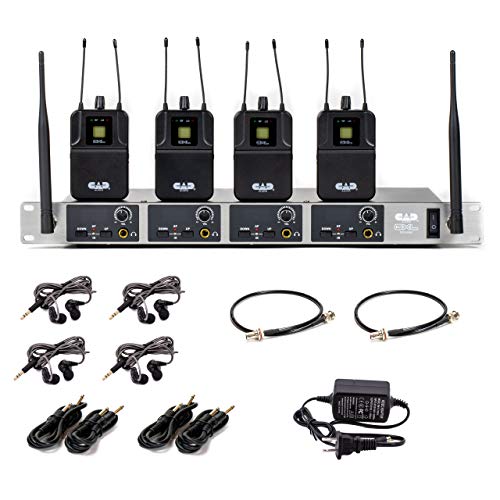
- Four independent monitor channels
- Includes four earbuds and receivers
- Over 10 hours of receiver battery life
Best For: Bands and productions needing four separate monitor mixes
Best High-Resolution Wireless Pick

- 24-bit/48 kHz audio
- Less than 5 ms latency
- Channel scan and six-channel support
Best For: Performers seeking detailed, responsive wireless monitoring
Best Eight-Receiver Value

- Eight bodypack receivers included
- 40 preset UHF frequencies
- Claimed range beyond 300 feet
Best For: Large groups needing multiple wireless bodypacks
Best Compact Single-Performer Pick
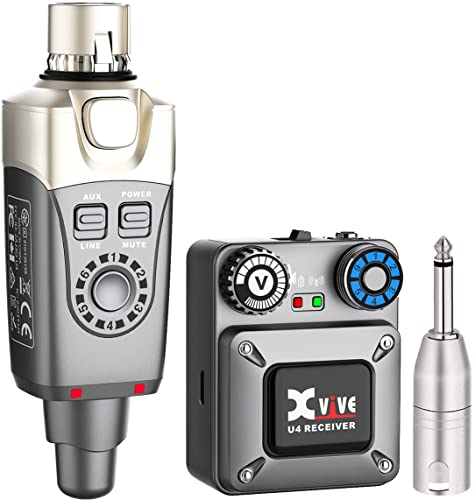
- Compact 2.4 GHz system
- Six channels and under 5 ms latency
- Up to 90 feet of range
Best For: Solo performers and small venues
Focused Mono Monitoring

- Clear mono audio with phase-resistant monitoring
- 50 selectable UHF frequencies
- Includes rackmount kit, case, and earphone
Best For: Performers and presenters needing dependable mono monitoring
Multi-User Stage Coverage
XTUGA RW2080 4-Bodypack UHF IEM

- Includes four bodypack receivers and earphones
- Advertised range up to 300 feet
- 2×40 adjustable frequencies for multi-system use
Best For: Bands and teams monitoring several performers at once
Portable Practice Monitoring
JOYO JW-07 2.4GHz Wireless IEM

- Under 5ms latency for real-time monitoring
- Over eight hours of battery life
- Compact system with automatic pairing
Best For: Guitar practice and single-player personal monitoring
Best for Multi-Performer Stages
Phenyx Pro PTM-22B Wireless IEM
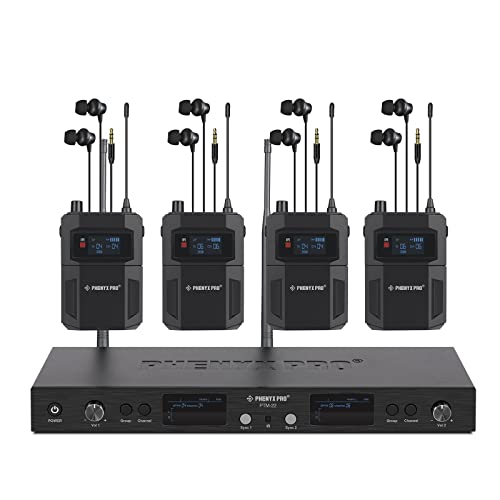
- Four bodypacks and earbuds included
- UHF operation with 2x50 frequencies
- Daisy-chain loop outputs
Best For: Churches, bands, and production teams sharing one monitor system
Best for Portable Stereo Practice
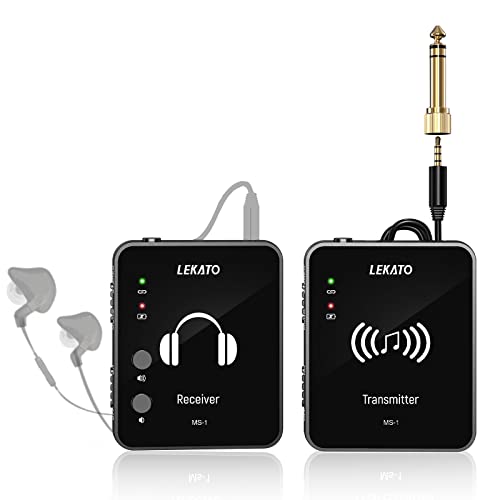
- Stereo or mono transmission
- Automatic pairing for quick setup
- Five-plus hours of rechargeable use
Best For: Small bands, rehearsals, studios, and compact gigs
Best for Expandable UHF Monitoring
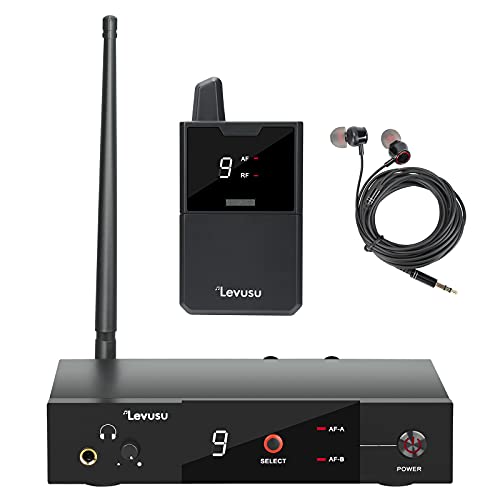
- 16-channel UHF transmission
- 150–180-foot stated outdoor range
- Expandable with additional bodypacks
Best For: Performers and studios building a scalable monitoring system
Best Multi-Performer Pick – CAD Audio GXLIEM4 Quad Mix
For bands or production teams comparing wireless in ear monitor systems with earbuds, the CAD Audio GXLIEM4 stands out by supplying four independent monitor mixes from one rack-mounted transmitter. It includes four MEB1 earbuds and four bodypack receivers, making it a ready-to-deploy multi-performer setup.
Best For: Bands, churches, and live productions needing four separate monitor mixes.
Pros:
- Four independent monitor channels from one 1U rack unit
- Includes four earbuds and four bodypack receivers
- All-metal transmitter chassis with rack ears and antenna relocation hardware
- Receivers provide more than 10 hours of battery life
Cons:
- Designed around a four-receiver setup rather than a compact single-performer kit
- Its 7.3-pound system weight is less portable than smaller systems
The GXLIEM4 is a practical choice when multiple performers need individual mixes and the system will live in a rack or fixed stage setup. Its included accessories and extended receiver runtime reduce the need for extra purchases.
Best High-Resolution Wireless Pick – Xvive U45
The Xvive U45 is a strong option among wireless in ear monitor systems with earbuds when low latency and detailed audio matter. Its 5.8 GHz True Diversity design, 24-bit/48 kHz audio, channel scanning, and charging case make it suited to flexible stage use.
Best For: Performers who want high-resolution audio, quick channel selection, and a compact rechargeable setup.
Pros:
- 24-bit/48 kHz audio with less than 5 ms latency
- True Diversity reception with dual antennas for a stable RF connection
- Smart channel scan helps identify a suitable local channel
- Supports up to six channels for multi-system setups
Cons:
- Battery life is listed at approximately five hours
- It is not water resistant
With balanced XLR and 1/4-inch input options plus selectable line and aux modes, the U45 should integrate well with many mixers and interfaces. It is particularly compelling for performers who prioritize responsive monitoring and modern RF features.
Best Eight-Receiver Value – JM20508 8-Bodypack System
For larger groups evaluating wireless in ear monitor systems with earbuds, this JM20508 package provides eight bodypacks and a two-channel UHF transmitter system. Its 520–580 MHz coverage, 40 preset frequencies, and claimed range beyond 300 feet make it built for broad stage coverage.
Best For: Churches, schools, bands, and stage events needing multiple bodypack receivers.
Pros:
- Includes eight bodypack receivers for group monitoring
- Two-channel operation with 40 preset frequencies
- Dual-antenna reception and claimed range over 300 feet
- Built-in limiter helps reduce distortion from excessive input levels
Cons:
- Each receiver requires two AA batteries, which are not included
- The supplied earbuds use dynamic drivers rather than balanced armature drivers
- Operation is described as mono
This system emphasizes quantity, coverage, and straightforward frequency selection over advanced audio specifications. It is a sensible fit for organizations that need many receivers at once and can manage disposable battery replacement.
Best Compact Single-Performer Pick – Xvive U4
The Xvive U4 is a compact choice for shoppers seeking wireless in ear monitor systems with earbuds for personal or small-stage monitoring. This single-transmitter, single-receiver kit uses 2.4 GHz wireless, offers six channels, and delivers less than 5 ms of latency.
Best For: Solo performers and small venues that need a simple, portable monitor link.
Pros:
- Compact transmitter-and-receiver configuration
- Six channels with less than 5 ms latency
- Up to 90 feet of working range
- Rechargeable transmitter and receiver batteries provide up to five hours
Cons:
- Only one receiver is included
- Its stated range is shorter than the larger UHF system in this roundup
- Earbuds are not included in the listed package contents
The U4 keeps setup simple and travel-friendly, with an included 1/4-inch-to-XLR adapter and carrying bag. It is best suited to a single performer or compact monitoring application rather than a full multi-musician system.
Focused Mono Monitoring – Phenyx Pro PTM-11
For shoppers comparing wireless in ear monitor systems with earbuds, the Phenyx Pro PTM-11 emphasizes clear, focused mono monitoring for performers, presenters, and studio users. Its UHF connection offers 50 selectable frequencies and an advertised operating range of up to 164 feet.
Best For: Solo performers, pastors, conference hosts, broadcasters, and small studio setups needing reliable mono monitoring.
Pros:
- Mono design helps avoid phase-related blurring and distortion.
- Separate left/right inputs and line outputs support flexible soundboard routing.
- 50 selectable UHF frequencies and support for up to five systems.
- Includes a transmitter, bodypack, earphone, batteries, carrying case, and rackmount kit.
Cons:
- Mono monitoring may be less suitable for users who specifically want stereo audio.
- Its stated 164-foot range can be reduced by walls, glass, and metal obstacles.
- Only one bodypack receiver is included.
The PTM-11 is a practical choice when stable, uncomplicated mono monitoring matters more than stereo imaging. Separate outputs and the included rackmount hardware also make it convenient for installed or semi-professional audio setups.
Multi-User Stage Coverage – XTUGA RW2080 4-Bodypack UHF IEM
The XTUGA RW2080 stands out among wireless in ear monitor systems with earbuds by including four bodypack receivers in one UHF package. Its dual-channel design, adjustable frequencies, and claimed 300-foot range make it suited to group stage monitoring.
Best For: Bands, singers, churches, lecture teams, and production setups that need monitoring for multiple people.
Pros:
- Four bodypack receivers and four earphones are included.
- Up to 300 feet of stated wireless coverage in suitable conditions.
- Preset 2×40 adjustable frequencies support multi-system operation.
- Built-in limiter helps reduce distortion at excessive input levels.
Cons:
- The system uses mono dual-channel monitoring rather than stereo monitoring.
- Actual range may vary from the advertised figure.
- The package is larger and less portable than a single-receiver system.
For teams sharing one monitoring system, the RW2080 offers strong value through its four included receivers. Its metal transmitter, rackmount kit, and frequency flexibility make it a more production-oriented option than basic single-user kits.
Portable Practice Monitoring – JOYO JW-07 2.4GHz Wireless IEM
The JOYO JW-07 is a compact alternative for shoppers seeking wireless in ear monitor systems with earbuds for practice, guitar, DJ use, or live performance. Its 2.4GHz connection delivers 48kHz/16-bit audio, under 5ms latency, and automatic pairing between the transmitter and clip-on receiver.
Best For: Guitar players, beginners, and musicians who want a lightweight personal practice-monitoring system.
Pros:
- Under 5ms latency supports real-time playing and monitoring.
- Frequency hopping helps reduce interference from other wireless devices.
- Built-in battery provides over eight hours of use per charge.
- Offers 12 channels arranged across four groups.
Cons:
- Its stated operating range is approximately 40–60 feet in open space.
- One transmitter cannot connect to multiple receivers.
- It is primarily positioned for guitar practice and personal monitoring rather than larger multi-user systems.
The JW-07 is best viewed as a simple, portable practice solution rather than a full stage-monitoring network. Low latency, automatic pairing, and rechargeable operation make it convenient when one musician needs a compact wireless setup.
Best for Multi-Performer Stages – Phenyx Pro PTM-22B Wireless IEM
For bands, churches, and live production teams needing wireless in ear monitor systems with earbuds, the Phenyx Pro PTM-22B emphasizes reliable mono monitoring and flexible expansion. Its dual-channel transmitter includes four bodypacks and a rack-mount kit, making it a practical choice for shared stage monitoring.
Best For: Churches, conference hosts, broadcasters, and live groups that need several performers to monitor through one system.
Pros:
- Includes four UHF bodypack receivers and four in-ear earphones.
- Offers 2×50 selectable frequencies and a stated 164-foot operating range.
- Loop outputs support daisy-chaining to additional monitoring channels.
- Metal construction, rack-mount hardware, and a carry case suit regular stage use.
Cons:
- Provides mono monitoring rather than stereo audio.
- The larger multi-bodypack package may be more than a solo performer needs.
- Uses AA batteries in the bodypacks.
The PTM-22B is strongest when multiple people need consistent, straightforward monitoring from a shared transmitter. Its included accessories and expansion-oriented design make it a useful installation for recurring performances and worship setups.
Best for Portable Stereo Practice – LEKATO MS-1 Wireless IEM
The LEKATO MS-1 is a compact option for shoppers comparing wireless in ear monitor systems with earbuds for rehearsals, small gigs, and studio use. Its 2.4GHz transmitter and receiver offer automatic pairing, selectable stereo or mono input, and rechargeable operation.
Best For: Small or medium-sized bands and performers who prioritize simple setup, stereo monitoring, and portability.
Pros:
- Supports true stereo transmission as well as one-key stereo/mono switching.
- Auto-pairing simplifies setup without manual channel selection.
- One transmitter can support multiple receivers, with up to six sets working simultaneously.
- Rechargeable battery provides more than five hours of stated use.
Cons:
- Its stated 100-foot range is shorter than some UHF alternatives.
- Battery life may require recharging for longer events.
- Stereo performance depends on using a stereo audio source and cable.
Choose the MS-1 when convenience and stereo capability matter more than maximum range. The clip-on format and automatic pairing make it especially suitable for mobile rehearsal setups and smaller performance spaces.
Best for Expandable UHF Monitoring – I5 Professional Wireless IEM
The I5 Professional Wireless IEM is a straightforward choice among wireless in ear monitor systems with earbuds for performers who want UHF transmission and room to add bodypacks. It includes a transmitter, one receiver, in-ear headphones, rack-mount ears, and cables for connecting common audio equipment.
Best For: Solo performers, bands, studios, and teaching or speaking applications that may expand their monitoring setup over time.
Pros:
- UHF operation uses 16 channels with a stated 150- to 180-foot outdoor range.
- Uncompressed transmission, less than 4.5ms stated delay, and a 20Hz–20kHz response support detailed monitoring.
- A transmitter can support additional matching-frequency bodypacks.
- Metal transmitter housing and included rack-mount ears suit fixed installations.
Cons:
- Only one bodypack and one pair of earbuds are included.
- Additional bodypacks must use the same frequency to work with the transmitter.
- Setup is less compact than a rechargeable 2.4GHz clip-on system.
The I5 makes sense for buyers who want a traditional UHF monitor foundation rather than an all-in-one multi-receiver package. Its channel selection and expandable bodypack design leave room for a growing performance or studio setup.
How We Picked the Best Wireless in Ear Monitor Systems with Earbuds
We focused on practical features that affect live performance: included earbuds or headphone connectivity, transmitter and receiver design, channel capacity, frequency flexibility, transmission range, pairing simplicity, power options, and expandability. We also considered whether each system suits a solo performer, small ensemble, or larger stage setup.
Because wireless performance can vary with venue layout and interference, published specifications are useful starting points rather than guarantees. A clear line of sight, sensible frequency planning, and properly fitted earbuds remain important for reliable monitoring.
Quick Comparison
| Best For | Look For | Typical Advantage |
|---|---|---|
| Solo performers | Compact transmitter and receiver | Simple setup and portability |
| Small bands | Multiple bodypacks or expandable pairing | Shared monitoring from one transmitter |
| Churches and stages | Adjustable frequencies and rack mounting | Better venue integration |
| Recording and rehearsal | Stereo operation and charging case | Convenient repeatable monitoring |
Key Buying Factors for Wireless In-Ear Monitor Systems with Earbuds
Channel Count and Expandability
Start with the number of performers who need a receiver. Some kits include one bodypack, while others bundle four or eight. A multi-bodypack system can be more economical for a full group, but verify whether every receiver shares one mix or whether separate mixes are available.
Mono Versus Stereo
Mono monitoring is often sufficient for vocals, instruments, and basic stage cues. Stereo systems can provide a more natural mix and better separation, but they may require a compatible mixer output and more careful setup. Check the transmitter inputs and the receiver’s output format before buying.
Frequency Range and Interference
UHF systems may offer adjustable channels for venue coordination, while 2.4GHz and 5GHz systems often emphasize quick pairing. Wireless congestion, walls, nearby routers, and other stage equipment can affect reliability. Choose adjustable frequencies when you regularly work in crowded RF environments.
Range, Battery, and Fit
Published range assumes favorable conditions. For real use, prioritize stable performance through the distance you actually need. Check receiver battery life, charging method, spare-battery options, and whether the included earbuds seal comfortably. A poor seal reduces isolation and makes the mix harder to hear.
Connections and Installation
Confirm the transmitter’s input connectors match your mixer, audio interface, or monitor output. Rack-mount hardware is useful for permanent installations, while clip-on transmitters and charging cases are better for mobile performers.
Who Should Buy Which Wireless in Ear Monitor Systems with Earbuds?
Solo Musicians and Presenters
Choose a compact one-transmitter, one-receiver kit with automatic pairing and straightforward controls. Portability and fast setup matter more than a large bodypack count.
Small Bands and Worship Teams
Look for systems that include several receivers or support one-to-many operation. Adjustable frequencies and dependable battery management become increasingly valuable as more wireless equipment enters the room.
Professional Stages and Venues
Prioritize metal construction, rack compatibility, frequency selection, and separate mixes when performers need different monitor levels. Confirm local frequency requirements before deploying UHF equipment.
Studios and Rehearsal Spaces
Stereo capability, low setup complexity, and convenient charging can make a greater difference than maximum range. Select a system that works naturally with your interface or mixer and leaves room for future receivers.