Reusing DSLR lenses on a newer or different camera body can expand your shooting options without replacing an entire lens collection. The right adapter preserves the connection between mounts while offering the features your setup actually needs.
This roundup covers 10 options for Canon EF, Nikon F, M42, Leica R, Sony A, Micro Four Thirds, Fujifilm X, and Canon RF systems. Compare mount compatibility, autofocus, aperture control, and optical design before buying.
Best 10 Camera Lens Adapters for Dslr Lenses Picks for 2026
Best for Canon EOS-M Users

- Supports Canon EF/EF-S lenses on EOS-M cameras
- Retains autofocus, aperture, IS, and EXIF functions
- Includes detachable tripod support
Best For: Canon EOS-M users adapting EF or EF-S lenses
Best Manual Option
M42 to Micro Four Thirds Adapter

- Connects M42 lenses to Micro Four Thirds bodies
- Uses brass-and-aluminum construction
- Requires manual focus and exposure
Best For: Olympus or Panasonic users with vintage M42 lenses
Best for Canon EOS R Bodies

- Works with Canon EF/EF-S lenses on EOS R cameras
- Supports AF, IS, and EXIF data transfer
- Covers a wide range of EOS R bodies
Best For: Canon EOS R users retaining EF or EF-S lenses
Best Optical-Glass Adapter

- Mounts EF/EF-S lenses on Nikon F DSLRs
- Includes coated optical glass
- Requires manual focus and exposure
Best For: Nikon DSLR users adapting Canon EF or EF-S lenses
Best Native Fit

- Supports EF and EF-S lenses on select EOS R cameras
- Metal mounts with dust- and water-resistant exterior
- Designed for Canon EOS RP, R, R6, and R5 users
Best For: Canon EOS R-series owners using EF or EF-S lenses
Best Manual Control
Fotodiox Sony A to Fuji X Adapter
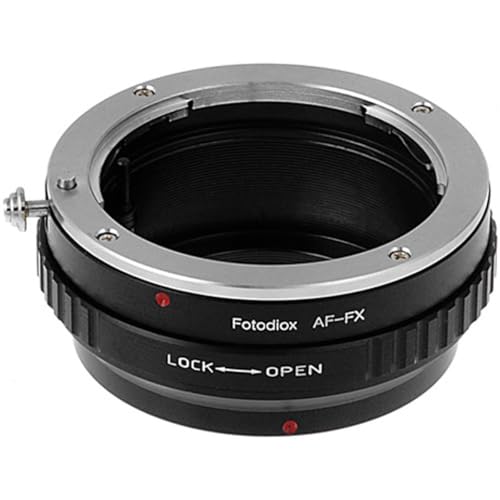
- Fits Sony A and Minolta AF lenses to Fuji X cameras
- Includes an integrated aperture control dial
- All-metal design with infinity-focus capability
Best For: Fuji X users adapting Sony A-mount lenses manually
Best for Leica R Lenses
Fotodiox Leica R to Canon EOS Adapter

- Adapts Leica R lenses to Canon EF and EF-S cameras
- All-metal construction with infinity-focus support
- Includes a limited 2-year manufacturer warranty
Best For: Canon EOS users adapting Leica R SLR lenses
Best Electronic Adapter
Canon EF/EF-S to EOS R Adapter

- Supports Canon EF and EF-S lenses on selected EOS R bodies
- Retains autofocus, aperture control, and EXIF transmission
- Metal, dust- and water-resistant construction
Best For: Canon EOS R-series users adapting EF or EF-S lenses
Best Budget Manual Adapter

- Adapts M42 screw-mount lenses to Canon EF/EF-S DSLRs
- Supports infinity focus
- Requires fully manual focus and exposure
Best For: Canon DSLR users exploring vintage M42 lenses
Best for Nikon Lenses

- Mounts Nikon F/Nikkor lenses on Canon EF/EF-S SLR bodies
- Manual operation with infinity-focus support
- Anodized aluminum construction and two-year warranty
Best For: Canon DSLR users adapting Nikon F-mount lenses
Best for Canon EOS-M Users – EF-EOS M Auto-Focus Adapter
If you need camera lens adapters for dslr lenses and use a Canon EOS-M body, this EF-EOS M adapter is designed to connect Canon EF and EF-S lenses while retaining several electronic functions. Its autofocus, aperture control, image stabilization support, and EXIF transmission make it more versatile than a fully manual adapter.
Best For: Canon EOS-M photographers adapting EF or EF-S lenses for autofocus-enabled everyday shooting.
Pros:
- Compatible with Canon EF and EF-S lenses and a broad range of EOS-M cameras.
- Supports autofocus, camera-side aperture control, image stabilization, and EXIF transmission.
- Includes a detachable tripod support and 1/4-inch tripod socket.
Cons:
- Compatibility is limited to Canon EF/EF-S lenses and Canon EF-M mount cameras.
- Not water resistant.
This is a practical choice when maintaining electronic lens communication matters. Confirm your exact EOS-M body and lens combination before buying, and use the tripod support when working with heavier setups.
Best Manual Option – M42 to Micro Four Thirds Adapter
For photographers comparing camera lens adapters for dslr lenses and vintage M42 glass, this K&F Concept adapter provides a straightforward mechanical connection to Micro Four Thirds cameras. Its brass-and-aluminum construction avoids plastic, but exposure and focusing remain entirely manual.
Best For: Olympus and Panasonic Micro Four Thirds users adapting manual M42 lenses for deliberate, hands-on shooting.
Pros:
- Fits M42 screw-mount lenses to Olympus and Panasonic Micro Four Thirds cameras.
- Made from brass and aluminum rather than plastic.
- Compatible with numerous Olympus PEN and OM-D models plus Panasonic Lumix cameras.
Cons:
- No electrical contacts, autofocus, or automatic exposure control.
- No image stabilization is provided by the adapter.
- Infinity-focus positioning may require careful viewfinder checking.
This adapter suits photographers who are comfortable setting focus and exposure themselves. It is a simple, durable-feeling route into M42 lenses, but it is less convenient for fast-moving subjects or fully automatic workflows.
Best for Canon EOS R Bodies – EF-EOS R Autofocus Adapter
This EF-EOS R adapter is aimed at Canon mirrorless owners who want to continue using EF or EF-S DSLR lenses. Among camera lens adapters for dslr lenses, it stands out for supporting autofocus, image stabilization, and EXIF data transfer across a wide selection of EOS R-series cameras.
Best For: Canon EOS R-series photographers who want electronic EF/EF-S lens integration without giving up core shooting functions.
Pros:
- Compatible with many EOS R bodies, including the R, RP, R5, R6, R7, R8, R10, R50, and R100.
- Supports autofocus, image stabilization, and EXIF data transfer.
- Uses gold-plated copper contacts for stable signal transmission.
Cons:
- Only supports Canon EF and EF-S lenses and EOS R-mount cameras.
- Exact camera and lens compatibility should be verified before purchase.
This is a strong fit for Canon users transitioning from DSLR to EOS R cameras. Its electronic support makes it more suitable for general-purpose shooting than a basic manual adapter, provided your specific equipment is on the compatibility list.
Best Optical-Glass Adapter – EF/EF-S to Nikon F AI Adapter
If you are looking at camera lens adapters for dslr lenses and need to mount Canon EF or EF-S lenses on a Nikon F DSLR, this FocusFoto adapter provides a physical connection with coated optical glass. It is a manual solution, so it is best suited to photographers willing to set focus and exposure themselves.
Best For: Nikon F DSLR owners experimenting with EF or EF-S lenses while retaining infinity-focus capability through a corrected optical design.
Pros:
- Allows EF and EF-S lenses to be used on Nikon SLR and DSLR bodies.
- Coated optical glass is designed to improve optical performance.
- Supports infinity focusing and use of the lens distance scale.
Cons:
- No electrical connection, autofocus, automatic diaphragm, or electronic lens functions.
- Manual focus and manual exposure are required; aperture priority may be used.
- Optical correction glass adds another element to the setup.
This adapter can be useful for adapting lenses across systems without permanently modifying them. However, the lack of electronic control means it is better for deliberate still photography than situations requiring fast autofocus or camera-controlled aperture.
Best Native Fit – Canon EF-EOS R Mount Adapter
Canon Mount Adapter EF-EOS R | Allows EF/EF-S Lens Compatibility with EOS R Cameras
Check Price On AmazonFor photographers looking for camera lens adapters for dslr lenses, the Canon EF-EOS R is the straightforward choice for using Canon EF and EF-S lenses on compatible EOS R-series cameras. Its Canon-made construction is designed to preserve a native-looking fit while adding rugged metal mounts and dust- and water-resistant exterior protection.
Best For: Canon EOS RP, EOS R, EOS R6, and EOS R5 owners who want to use EF or EF-S lenses.
Pros:
- Supports Canon EF and EF-S lenses on compatible EOS R cameras.
- Metal mounts on both the lens and camera sides provide a durable connection.
- Exterior design is matched to EF lenses.
- Dust- and water-resistant construction adds useful protection.
Cons:
- Compatibility is limited to the listed Canon EOS R-series cameras and EF/EF-S lenses.
- It does not add focal-length conversion or optical magnification.
This is the most direct option in the group for Canon users moving from an EF-based DSLR system to an EOS R camera. Its main advantage is system compatibility and robust construction rather than added creative features.
Best Manual Control – Fotodiox Sony A to Fuji X Adapter
This Fotodiox adapter is a practical pick for camera lens adapters for dslr lenses when you want to use Sony Alpha A-mount or Minolta AF DSLR lenses on a Fujifilm X-mount mirrorless camera. It uses an all-metal anodized aluminum body and includes an integrated aperture control dial for manual adjustment.
Best For: Fujifilm X-E1 and X-Pro1 users adapting Sony A-mount or Minolta AF lenses for manual-focus shooting.
Pros:
- Mounts Sony Alpha A-mount and Minolta AF lenses to Fujifilm X cameras.
- Built-in aperture control dial allows manual aperture adjustment.
- All-metal, hardened anodized aluminum construction.
- Designed to allow infinity focus or beyond.
Cons:
- Focus type is manual focus.
- Exposure control is manual, so automatic lens functions should not be expected.
- It is not water resistant.
The adapter suits photographers comfortable with a hands-on workflow. The aperture dial and infinity-focus capability make it more flexible than a basic mechanical ring, but the manual operation requires deliberate control while shooting.
Best for Leica R Lenses – Fotodiox Leica R to Canon EOS Adapter
For photographers seeking camera lens adapters for dslr lenses, this Fotodiox model opens a Canon EOS EF or EF-S camera system to Leica R SLR lenses. Its all-metal, hardened anodized aluminum construction is designed for a secure fit, while the adapter supports infinity focus and manual exposure control.
Best For: Canon EOS EF and EF-S camera owners who want to use Leica R lenses, including users of cameras such as the 7D, 60D, and 5D Mark III.
Pros:
- Mounts Leica R lenses to Canon EOS EF and EF-S cameras.
- All-metal, hardened anodized aluminum construction.
- Supports infinity focus or beyond.
- Backed by a limited 2-year manufacturer warranty.
Cons:
- Exposure control is manual.
- It is not water resistant.
- Manual focusing may require a slower, more deliberate shooting style.
This adapter is a sensible bridge for Canon users with Leica R glass. It prioritizes a durable mechanical connection and accurate flange distance, making it appropriate for photographers who are comfortable managing focus and exposure themselves.
Best Electronic Adapter – Canon EF/EF-S to EOS R Adapter
Lens Mount Adapter EF-EOS R for Canon EF/EF-S Lens to Canon EOS R RP R5 R6 R7 R10 Cameras
Check Price On AmazonFor photographers moving from Canon DSLRs to EOS R-series mirrorless bodies, this adapter is a practical option among camera lens adapters for dslr lenses. It supports Canon EF and EF-S lenses on selected EOS R cameras while retaining electronic communication for autofocus, aperture control, and camera data display.
Best For: Canon EOS R, RP, R5, R6, R7, and R10 owners adapting EF or EF-S lenses.
Pros:
- Supports autofocus and direct camera-side aperture control.
- Transmits shutter, aperture, and ISO information through gold-plated contacts.
- Metal construction with dust- and water-resistant design.
- Includes built-in IS stability support for more accurate focusing.
Cons:
- Compatibility is limited to the listed Canon EOS R-series bodies.
- It is not designed for Nikon, M42, or other lens mounts.
This is the most feature-focused choice of the three when maintaining electronic lens functions matters. Verify that both your camera body and EF/EF-S lens are supported before buying.
Best Budget Manual Adapter – M42 to Canon EF Adapter
This Fotasy adapter is a straightforward choice among camera lens adapters for dslr lenses when you want to use vintage M42 screw-mount glass on a Canon EF or EF-S DSLR. Its infinity-focus design and copper construction suit manual shooting rather than automated lens operation.
Best For: Canon DSLR users adapting M42 screw-mount lenses for fully manual photography.
Pros:
- Fits M42 lenses to Canon EF and EF-S mount DSLRs.
- Infinity focus is supported.
- Solid copper construction with a multi-coated finish.
- Compatible with a broad range of listed Canon DSLR bodies.
Cons:
- No electrical contacts, autofocus, or automatic diaphragm control.
- Exposure and focus must be adjusted manually.
- No image stabilization or water resistance is specified.
Choose this adapter if affordability and access to M42 lenses matter more than electronic convenience. It is best suited to photographers comfortable setting focus and exposure themselves.
Best for Nikon Lenses – Nikon F to Canon EF Adapter
Photographers with Nikon Nikkor F-mount lenses can use this Fotodiox Pro model as one of the more specialized camera lens adapters for dslr lenses. It mounts F-mount lenses to Canon EF and EF-S SLR bodies and uses a manual, all-metal design with infinity focus capability.
Best For: Canon DSLR owners who want to use Nikon F-mount or Nikkor lenses manually.
Pros:
- Adapts Nikon F-mount lenses to Canon EF and EF-S cameras.
- Supports infinity focus or beyond.
- Uses hardened anodized aluminum with precision craftsmanship.
- Includes a two-year limited manufacturer warranty.
Cons:
- This is a manual adapter, so automated lens functions are not retained.
- It is intended for the specified Canon EOS EF/EF-S SLR mount rather than EOS R bodies.
- The supplied notes do not specify electronic contacts or stabilization.
This adapter makes the most sense when you already own Nikon F-mount glass and a compatible Canon DSLR. Its durable metal build and infinity-focus support are useful, but expect a manual shooting workflow.
How We Picked These Camera Lens Adapters for Dslr Lenses
We selected adapters based on mount compatibility, stated camera and lens support, focusing behavior, construction, and the practical needs of photographers adapting older DSLR glass. The list includes both electronic adapters, which may support autofocus and camera-controlled aperture, and simpler mechanical rings designed for manual focusing.
Compatibility claims deserve careful checking. Even adapters with similar names can differ by camera generation, lens series, crop-sensor coverage, or electronic functionality. Always verify the exact lens mount and camera mount before ordering.
Quick Comparison
| Adapter type | Best suited to | Main consideration |
|---|---|---|
| Electronic EF to RF | Canon EOS R-series users | Autofocus and aperture support vary by model |
| EF to EF-M | Canon EOS M cameras | Confirm EF versus EF-S lens compatibility |
| M42 to Micro Four Thirds | Manual vintage lenses | Usually manual focus and manual aperture |
| M42 to Canon EF | Vintage screw-mount lenses on Canon DSLRs | Check infinity-focus performance |
| Nikon F or Leica R to Canon EF | Cross-system DSLR setups | Electronic functions may be unavailable |
| Sony A to Fujifilm X | Using Minolta or Sony A lenses | Adapter construction and control support matter |
Key Buying Factors for Camera Lens Adapters for Dslr Lenses
Mount Compatibility
Match the lens-side mount to the lens and the camera-side mount to the body. Names such as Canon EF, EF-S, EF-M, RF, Nikon F, M42, Leica R, Sony A, and Micro Four Thirds are not interchangeable. Also check whether the adapter is intended for full-frame or crop-sensor equipment.
Autofocus and Electronic Control
Mechanical adapters generally provide no autofocus, lens information, image stabilization communication, or electronic aperture control. Electronic versions can retain some of these functions, but performance depends on the lens, camera firmware, and adapter design. Treat “fast autofocus” as system-dependent rather than guaranteed.
Optical Glass and Infinity Focus
A plain adapter preserves the lens’s optical characteristics and is often preferred when the flange distance allows it. Adapters with optical correction may help achieve infinity focus in some mismatched systems, but they can affect image quality. Look for precise machining, secure locking, and a reliable release mechanism.
Build Quality and Handling
Metal construction, smooth mounting, minimal play, and a dependable aperture lever or electronic interface are important for heavier lenses. A loose adapter can cause alignment issues, while an overly tight one can be difficult to remove. Consider tripod collars or lens supports for large DSLR telephoto lenses.
Who Should Buy Which Camera Lens Adapters for Dslr Lenses?
Canon EOS R owners: Choose an EF-to-RF adapter when you want to continue using Canon EF or EF-S lenses, especially if autofocus and camera-controlled aperture are priorities.
Canon EOS M owners: An EF-to-EF-M adapter is the straightforward choice for adapting Canon DSLR lenses to the compact EOS M system.
Vintage-lens users: M42, Leica R, and similar mechanical adapters suit photographers comfortable with manual focus and manual exposure.
Cross-brand DSLR users: Nikon F-to-Canon EF, Sony A-to-Fujifilm X, and comparable adapters can be useful for accessing distinctive legacy lenses, but check control limitations before purchase.
For the best result, identify both mounts first, then decide whether preserving autofocus and electronic communication is worth paying for. That simple checklist will narrow the choices quickly and reduce the risk of buying an adapter that fits physically but does not support the way you shoot.