The right microphone can make voiceover recordings sound clearer, fuller, and more consistent without requiring an elaborate studio. This roundup compares 10 condenser microphones for voiceover, from plug-and-play USB models to flexible XLR options for a dedicated interface.
We focused on sound quality, connection options, recording flexibility, included accessories, and overall value so you can choose a microphone that fits your room, workflow, and upgrade plans.
Best 10 Condenser Microphones for Voiceover Picks for 2026
Best Hybrid Pick

- XLR and USB-C connectivity
- 32-bit float output helps prevent clipping
- Includes shock mount and pop filter
Best For: Flexible home voiceover recording
Best USB Monitoring

- 24-bit/96 kHz USB-C audio
- Built-in headphone monitoring
- Cardioid pickup helps minimize background noise
Best For: Desktop voiceover and podcast recording
Best Quiet XLR Value

- 4 dBA exceptionally low self-noise
- HF6 1-inch condenser capsule
- Includes shock mount, pop filter, and XLR cable
Best For: Quiet interface-based voiceover studios
Reliable Studio Standard
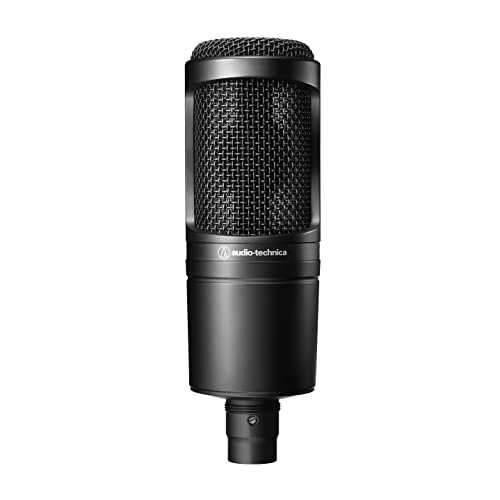
- Cardioid XLR condenser for home studios
- Wide dynamic range and high SPL handling
- Includes mount, adapter, and protective pouch
Best For: Straightforward home-studio voiceover recording
Flexible Vocal Workhorse

- Cardioid condenser for focused vocal recording
- Roll-off and -10 dB pad improve control
- Includes shock mount and carrying case
Best For: Voiceover plus podcasting, music, and streaming
Complete Recording Kit
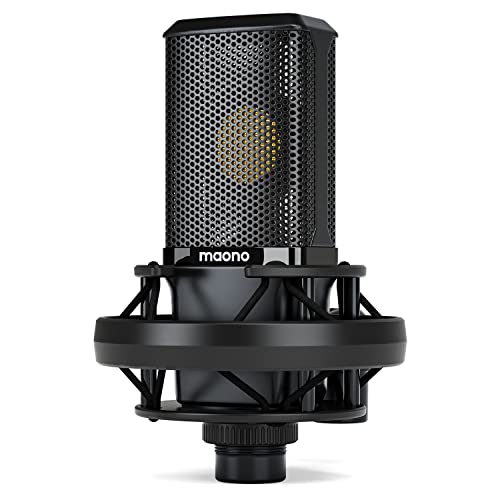
- 34 mm large-diaphragm XLR condenser
- Cardioid pattern with warm, detailed voicing
- Includes pop filter, shock mount, stand, and cable
Best For: Bundled voiceover and podcast recording setups
Best Complete XLR Kit

- Cardioid XLR condenser microphone
- Includes boom arm, shock mount, and pop filter
- Requires 48V phantom power
Best For: Home-studio voiceover setups using an audio interface or mixer
Best Flexible USB/XLR Option

- USB and XLR connectivity
- Software controls available in USB mode
- Includes arm stand and voiceover accessories
Best For: Beginners who want plug-and-play recording with an upgrade path
Best Detailed Traditional Studio Mic

- Large-diaphragm XLR condenser design
- Cardioid pattern for focused vocal pickup
- Includes shock mount and carrying case
Best For: Voiceover recording with a phantom-powered audio interface
Best Hybrid Pick – RØDE NT1 5th Gen
The RØDE NT1 5th Gen is a flexible choice among condenser microphones for voiceover, especially if you want both traditional XLR recording and direct USB-C connectivity. Its low-noise design and onboard 32-bit float digital output make it well suited to recording detailed takes while reducing concern about clipping.
Best For: Voiceover artists who want both interface-based XLR recording and convenient computer recording.
Pros:
- XLR and USB-C connectivity provide two recording workflows.
- 32-bit float digital output helps prevent distorted shouted takes.
- Low-noise large-diaphragm condenser captures vocal detail.
- Includes a shock mount, pop filter, XLR cable, and USB-C cable.
Cons:
- Its broad connectivity may be unnecessary if you only need a basic USB microphone.
- As a condenser microphone, it is intended for detailed recording rather than general-purpose room-noise rejection.
Choose the NT1 5th Gen if recording flexibility is a priority. The included accessories and clip-resistant digital output make it a practical starting point for home voiceover setups.
Best USB Monitoring – Audio-Technica AT2020USB-X
The Audio-Technica AT2020USB-X is a straightforward USB option among condenser microphones for voiceover. It combines a cardioid pickup pattern with 24-bit/96 kHz conversion, direct headphone monitoring, and a convenient mute control for recording, streaming, and calls.
Best For: USB voiceover users who want direct monitoring and simple desktop controls.
Pros:
- USB-C connection supports plug-and-play use with a computer.
- 24-bit/96 kHz conversion is designed for clear, natural sound reproduction.
- Built-in headphone jack enables direct monitoring.
- Includes a custom desk stand and USB cable with adapter.
Cons:
- USB connectivity does not provide the XLR upgrade path of an interface-based microphone.
- The included desk stand is convenient, but a separate mounting solution may be preferred for a more customized setup.
For a compact USB workflow, the AT2020USB-X offers useful monitoring and mute features without requiring a separate audio interface. Its cardioid design is also intended to minimize background pickup.
Best Quiet XLR Value – RØDE NT1 Signature Series
The RØDE NT1 Signature Series is a strong choice among condenser microphones for voiceover when you already use an audio interface. Its large-diaphragm cardioid capsule, 4 dBA self-noise rating, and included studio accessories are designed for detailed vocal recording through an XLR connection.
Best For: Interface-based voiceover setups focused on low self-noise and studio-style accessories.
Pros:
- Very low 4 dBA self-noise rating supports quiet recordings.
- HF6 1-inch true condenser capsule offers smooth response and high sensitivity.
- Handles extremely high sound pressure levels.
- Includes a shock mount, pop filter, and premium XLR cable.
Cons:
- Requires an audio interface because it uses XLR connectivity.
- It does not offer direct USB recording.
The NT1 Signature Series makes the most sense for a traditional studio chain. Its quiet operation, included mounting hardware, and 10-year warranty with registration add long-term appeal for dedicated voiceover work.
Best All-in-One USB Setup – RØDE NT-USB+
The RØDE NT-USB+ is an accessible option among condenser microphones for voiceover, offering studio-grade USB recording without a separate interface. It adds zero-latency headphone monitoring, a high-gain low-noise preamp, and software-based APHEX processing for users who want an integrated desktop setup.
Best For: Voiceover creators who want a complete USB microphone setup for computers, tablets, or smartphones.
Pros:
- USB-C connectivity works with computers, tablets, and smartphones.
- High-power headphone output supports zero-latency monitoring.
- Includes a detachable pop filter and desktop stand.
- RØDE Central provides APHEX processing such as Aural Exciter and Big Bottom.
Cons:
- USB-only connectivity does not support an XLR interface connection.
- Its 48 kHz/24-bit USB output offers less stated resolution than the AT2020USB-X.
If you want to record immediately with minimal extra equipment, the NT-USB+ is a practical fit. The included stand and pop filter keep the setup simple, while monitoring and software controls provide room for a more tailored workflow.
Reliable Studio Standard – Audio-Technica AT2020
The Audio-Technica AT2020 is a practical starting point for anyone comparing condenser microphones for voiceover. Its cardioid pattern helps reduce sound from the sides and rear, while the XLR connection makes it a fit for an audio interface and home-studio setup.
Best For: Home-studio voiceover recording and buyers seeking dependable price-to-performance value.
Pros:
- Cardioid pickup improves isolation of the desired voice source.
- Wide dynamic range and high SPL handling support versatile recording.
- Includes a stand mount, threaded adapter, and protective pouch.
Cons:
- Requires 48V phantom power and an XLR-compatible audio interface.
- The package does not list a pop filter or shock mount.
The AT2020 keeps the setup focused on core recording performance. It is a sensible choice when you already have the necessary interface and want a straightforward microphone for clear, isolated voiceover work.
Flexible Vocal Workhorse – MXL 770
The MXL 770 is a versatile option among condenser microphones for voiceover, with a cardioid pattern designed to focus on the speaker while minimizing background pickup. Its low-frequency roll-off and -10 dB pad also give you useful control when dealing with rumble or louder sources.
Best For: Voiceover creators who also record podcasts, singing, instruments, gaming, or streaming.
Pros:
- Balanced bass response and high-end clarity support detailed vocal capture.
- Low-frequency roll-off and -10 dB pad add recording flexibility.
- Includes a shock mount and carrying case.
Cons:
- Requires 48V phantom power and an XLR audio connection.
- The supplied notes do not list a desktop stand or pop filter.
With its added controls and included shock mount, the MXL 770 is built for more than one recording task. It makes particular sense for creators who want a voiceover microphone that can also cover broader home-studio needs.
Complete Recording Kit – MAONO PM500 XLR
The MAONO PM500 is a full-featured choice for condenser microphones for voiceover, pairing a 34 mm large-diaphragm capsule with a cardioid pattern and a warm, detailed sound profile. Its included accessories make it easier to build a basic recording station around an XLR interface or mixer.
Best For: New voiceover, podcast, livestream, and studio users who want a bundled XLR setup.
Pros:
- Large diaphragm and 20 Hz–20 kHz range target detailed vocal recording.
- Cardioid pickup helps suppress sound from the sides and rear.
- Includes a metal pop filter, shock mount, desktop stand, and XLR cable.
Cons:
- Requires 48V phantom power through an interface, mixer, or suitable sound card.
- Its included desktop stand may be less suitable for advanced boom-arm setups.
The PM500 stands out for the amount of setup hardware included in the box. If you have—or plan to add—a 48V phantom-power source, it offers a convenient path to recording voiceover without buying the main accessories separately.
Best Complete XLR Kit – TONOR TC20
For shoppers seeking condenser microphones for voiceover, the TONOR TC20 is a practical XLR studio kit with a cardioid pickup pattern, shock mount, pop filter, and adjustable boom arm. Its capsule is designed for smooth, natural sound with low-noise amplification, but it requires 48V phantom power through an audio interface, mixer, or preamp.
Best For: Voiceover creators building a home studio around an XLR interface or mixer.
Pros:
- Includes a boom arm, shock mount, pop filter, cable, and mic cover.
- Cardioid pickup helps reduce sound from the sides and rear.
- Steel boom arm supports microphones up to 4 pounds and clamps to desks up to 2.4 inches thick.
- Designed for recording, podcasting, streaming, and voiceover.
Cons:
- Requires 48V phantom power and is not a direct USB microphone.
- The included setup may be more equipment than casual users need.
The TC20 stands out as an all-in-one starting point for voiceover users who already have, or plan to add, compatible XLR equipment. Its included mounting accessories reduce the need for separate purchases.
Best Flexible USB/XLR Option – MAONO A04 Gen2
The MAONO A04 Gen2 is one of the more flexible condenser microphones for voiceover because it supports both USB and XLR connections. USB mode offers plug-and-play recording and access to MAONO Link controls, while XLR mode requires phantom power. The kit also includes a stand, shock mount, pop filter, and windscreen.
Best For: Voiceover users who want to start with USB and retain the option to move to an XLR setup.
Pros:
- Supports both USB and XLR connectivity.
- USB mode provides gain, noise-reduction, EQ, compressor, and limiter controls through MAONO Link.
- Includes an adjustable arm stand, shock mount, pop filter, and windscreen.
- Offers up to 192kHz/24-bit sampling in USB mode.
Cons:
- XLR use requires phantom power.
- An XLR cable is not included.
- Software controls are available only in USB mode.
Choose the A04 Gen2 if connection flexibility matters more than a strictly traditional studio setup. Its USB controls are useful for home recording, while the XLR output leaves room for future equipment upgrades.
Best Detailed Traditional Studio Mic – MXL 990
The MXL 990 is a traditional large-diaphragm XLR condenser microphone for shoppers comparing condenser microphones for voiceover. Its FET preamp and cardioid pattern are designed to deliver detailed vocals while reducing sound from the sides and rear. It requires +48V phantom power and includes a shock mount, stand adapter, and carrying case.
Best For: Voiceover and vocal recording with an existing phantom-powered interface or preamp.
Pros:
- Large-diaphragm design with a 20Hz–20kHz frequency response.
- Cardioid pattern helps focus pickup on the speaker and reject room noise.
- Includes a custom shock mount, stand adapter, and carrying case.
- Balanced output is designed to retain smooth lows, mids, and high frequencies.
Cons:
- Requires +48V phantom power.
- Uses XLR connectivity rather than USB plug-and-play.
- The package does not list a boom arm or pop filter.
The MXL 990 is a straightforward choice for users who already have the necessary recording chain and want a dedicated XLR microphone. Its included case and shock mount add useful value for studio storage and handling.
How We Picked These Condenser Microphones for Voiceover
We selected microphones that are practical for spoken-word recording, including narration, video voiceovers, podcasts, e-learning, and home-studio work. The lineup covers both USB microphones for simple computer recording and XLR models for users who want an audio interface, preamp, or more advanced signal control.
Our comparison emphasizes pickup pattern, connectivity, diaphragm design, included accessories, monitoring features, and reputation for clear vocal capture. Because room acoustics and microphone technique strongly affect results, we also considered how easy each model is to position and use in a typical home recording space.
Quick Comparison
| Best For | Recommended Type | What to Look For |
|---|---|---|
| Simple computer recording | USB condenser | USB-C connection, headphone monitoring, gain control |
| Upgradable studio setup | XLR condenser | Audio-interface compatibility and reliable phantom power |
| Flexible long-term use | USB/XLR hybrid | Both connection types in one microphone |
| Budget home recording | Entry-level XLR or USB | Cardioid pickup and useful included accessories |
Key Buying Factors for Condenser Microphones for Voiceover
USB Versus XLR
USB microphones connect directly to a computer and usually provide the simplest setup. They are a strong choice for beginners, remote work, streaming, and portable recording. XLR microphones require an audio interface and typically need 48V phantom power, but they offer more control and make it easier to upgrade other parts of your signal chain. Hybrid models provide both options.
Pickup Pattern and Room Sound
A cardioid pattern focuses primarily on sound from the front while reducing pickup from the rear. This is useful for voiceover, but it does not eliminate room reflections, computer fans, or outside noise. Position the microphone away from hard reflective surfaces and use soft furnishings or acoustic treatment where possible.
Voice Character and Sensitivity
Large-diaphragm condenser microphones generally capture detailed, sensitive recordings that can flatter narration and vocals. That sensitivity also means they reveal background noise and room echo. Test your speaking distance, use a pop filter, and leave enough headroom to prevent clipping on louder phrases.
Monitoring and Accessories
Direct headphone monitoring can help you catch noise, plosives, and uneven levels while recording. A shock mount, pop filter, stand, boom arm, and suitable cable can make a meaningful difference, especially if they are included. Check the package before buying additional equipment.
Who Should Buy Which Condenser Microphones for Voiceover?
Choose a USB model if you want fast setup with a laptop or desktop and do not already own recording hardware. USB options are convenient for podcasts, online content, and occasional voiceover work.
Choose an XLR model if you already have an interface or plan to build a more flexible recording chain. This route is better suited to users who expect to adjust preamps, add outboard equipment, or use multiple microphones.
Choose a hybrid microphone if you want immediate USB convenience without giving up the option to move to XLR later. It can be a practical compromise for creators whose recording needs may grow.
Choose a kit if you need a boom arm, shock mount, or pop filter at the same time. Bundles can reduce setup costs, but verify that the included hardware is sturdy enough for your microphone and workspace.