The best dynamic microphones for broadcasting help podcasters, streamers, announcers, and voice creators capture focused, intelligible audio while reducing room noise. USB/XLR flexibility, built-in controls, and proximity performance vary widely across this category.
We’ve selected 10 standout models for different budgets and workflows, including beginner-friendly microphones, broadcast workhorses, and versatile options for recording at home or on the move.
Best 10 Dynamic Microphones for Broadcasting Picks for 2026
Studio Broadcast Workhorse

- Cardioid XLR dynamic microphone
- Internal pop filter and shock mount
- Built for podcasting, radio, and voice-over
Best For: XLR-based broadcast and voice-over setups
Flexible Creator Control

- USB-C and XLR connectivity
- Real-time denoiser and Auto Level Mode
- Includes stand, pop filter, and LED mute control
Best For: Podcasting, streaming, and hybrid USB/XLR setups
Compact Analog Classic

- Cardioid XLR dynamic microphone
- Integrated yoke mount, shock mount, and pop filter
- All-metal build with flexible stand threads
Best For: XLR podcasting and RØDECaster-based broadcasting
USB/XLR Desktop Value

- USB-C and XLR outputs
- Includes stand and two pop-filter windscreens
- Headphone monitoring and touch mute control
Best For: Desktop streaming, mobile recording, and flexible broadcast setups
Classic Broadcast Authority
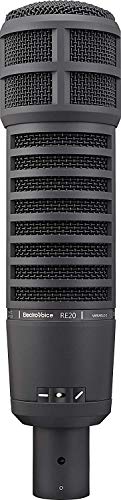
- Smooth, controlled announcer voicing
- Variable-D minimizes proximity effect
- True cardioid pattern with rear rejection
Best For: Radio, voiceover, and professional broadcast setups
Warm Studio Standard
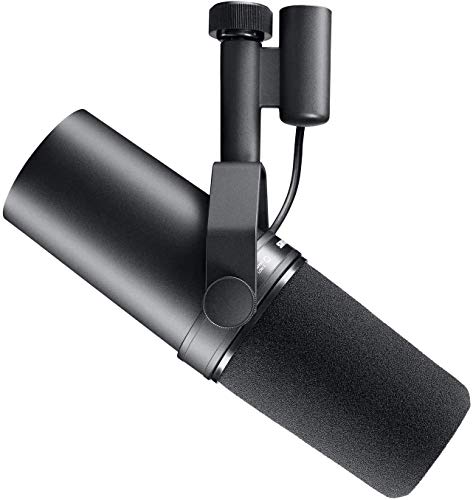
- Warm, balanced vocal sound
- Focused cardioid pickup and pop filtering
- Rugged, shielded XLR design
Best For: Podcasting, streaming, voiceover, and vocal recording
Accessible Podcast Workhorse

- Speech-focused broadcast capsule
- Internal pop filter and shock mounting
- Durable all-metal XLR construction
Best For: Podcasting and streaming with an XLR mixer or interface
Best Hybrid Starter

- USB-C and XLR outputs
- Includes stand, windscreen, and cables
- Unidirectional dynamic design
Best For: Flexible podcast and broadcast setups
Best Wireless Flexibility
MAONO PD200W Hybrid Wireless Microphone

- Wireless, USB, and XLR connectivity
- Up to 60m range and 60 hours of battery
- Supports two-mic wireless interviews
Best For: Portable podcasts and flexible broadcast rigs
Best Budget Wired Option
Amazon Basics Dynamic Vocal Microphone

- Cardioid pattern limits unwanted pickup
- Includes XLR-to-1/4-inch cable
- Zinc housing and steel mesh head
Best For: Basic wired vocals, live use, and karaoke
Studio Broadcast Workhorse – RØDE Procaster
The RØDE Procaster is a purpose-built option for anyone comparing dynamic microphones for broadcasting, podcasting, radio production, and voice-over work. Its cardioid pickup pattern, internal pop filter, and internal shock mounting are designed to keep spoken-word recordings focused while reducing plosives and handling noise.
Best For: Broadcasters, podcasters, and voice-over users with an XLR audio interface, mixer, or recorder.
Pros:
- Cardioid dynamic design helps focus on the speaker.
- Internal pop filter reduces plosive sounds.
- Internal shock mounting helps limit handling noise.
- Metal enclosure and balanced low-impedance output suit regular studio use.
Cons:
- Uses wired XLR connectivity rather than direct USB connection.
- Its broadcast-focused design may require a separate audio interface or mixer.
The Procaster is a straightforward choice when you want a durable XLR broadcast microphone with built-in measures for cleaner spoken-word capture. It is especially practical for established recording and radio setups.
Flexible Creator Control – Shure MV7+
The Shure MV7+ combines USB-C and XLR connectivity with voice-focused processing, making it a flexible pick among dynamic microphones for broadcasting. Its Voice Isolation Technology, real-time denoiser, Auto Level Mode, and digital pop filter are aimed at producing consistent speech for podcasts, streams, videos, and remote work.
Best For: Creators who want one microphone for computer-based USB recording and traditional XLR setups, with a desktop stand included.
Pros:
- USB-C and XLR outputs support beginner and pro workflows.
- Real-time denoiser helps reduce ambient, fan, and room noise.
- Auto Level Mode adjusts gain based on voice volume and distance.
- Includes a mute-enabled LED touch panel and adjustable desktop stand.
Cons:
- DSP and app-based features are most useful in USB mode.
- The included setup is relatively heavy at 3.6 pounds.
The MV7+ is a strong all-in-one option for users moving between streaming, podcasting, and studio recording. Its dual outputs and built-in processing reduce the need for additional accessories in a desktop setup.
Compact Analog Classic – RØDE PodMic White
The white RØDE PodMic is a focused XLR choice for buyers seeking dynamic microphones for broadcasting and podcasting. It pairs a cardioid pattern with an internal pop filter, shock mount, and integrated yoke mount to simplify positioning while helping reduce plosives, knocks, and vibration.
Best For: Podcasters and broadcasters using an XLR interface, mixer, recorder, or RØDECaster console.
Pros:
- Integrated yoke mount makes positioning straightforward.
- Dual 3/8-inch and 5/8-inch threads fit common stands and boom arms.
- Internal shock mount and pop filter support cleaner spoken-word audio.
- Solid all-metal construction is designed for durability.
Cons:
- XLR-only connectivity requires compatible external equipment.
- It does not include a USB output for direct computer recording.
The PodMic is a practical, durable microphone for a conventional XLR broadcast chain. Its built-in mounting and pop-filter features make it easy to integrate into a podcast or radio workspace without extra positioning hardware.
USB/XLR Desktop Value – Saramonic MV-Pod-D
The Saramonic MV-Pod-D is a versatile option among dynamic microphones for broadcasting, with USB-C and XLR outputs for computers, mobile devices, mixers, and interfaces. Its large-diaphragm dynamic capsule, included desktop stand, noise-cancellation control, and two pop-filter windscreens make it suited to speech-focused desktop recording.
Best For: Streamers, podcasters, and mobile creators who need USB-C convenience plus an XLR upgrade path.
Pros:
- USB-C and XLR outputs cover digital and analog workflows.
- 24-bit/48 kHz digital audio and headphone monitoring support computer recording.
- Silent touch controls provide mute and noise-cancellation functions.
- Includes a desktop stand and two different pop-filter windscreens.
Cons:
- The supplied details list the polar pattern as omnidirectional, which may capture more surrounding sound than a cardioid design.
- Its broader feature set may be more than needed for a simple XLR-only setup.
The MV-Pod-D stands out for flexible connectivity and included desktop accessories. It is a sensible choice for creators who want to start with USB-C recording while retaining compatibility with mixers and interfaces later.
Classic Broadcast Authority – Electro-Voice RE20
The Electro-Voice RE20 is a broadcast-focused choice for anyone comparing dynamic microphones for broadcasting. Its smooth, controlled voicing, true cardioid pattern, and Variable-D design help deliver a natural announcer sound while minimizing proximity-effect changes.
Best For: Radio announcers, voiceover work, and broadcast setups using an XLR connection.
Pros:
- Smooth, natural, controlled sonic character tailored to broadcast voices
- Variable-D design helps minimize proximity effect
- True cardioid pickup with no coloration at 180 degrees off-axis
- Durable metal enclosure and included stand compatibility
Cons:
- Requires an XLR-based setup
- At 2.9 pounds, it is relatively heavy for a microphone
- Its broadcast-oriented design may be more specialized than needed for casual use
The RE20 is a strong fit when consistent, natural announcer tone matters more than portability. Its controlled proximity response makes it especially practical for presenters who work close to the microphone.
Warm Studio Standard – Shure SM7B
The Shure SM7B remains a versatile option among dynamic microphones for broadcasting, offering warm, balanced vocals and focused cardioid pickup. Its built-in pop filtering, shielding, and rugged metal construction suit close-talk podcasting, streaming, and broadcast work.
Best For: Podcasters, streamers, voiceover artists, and vocalists who want an XLR microphone with room for gain and tone control.
Pros:
- Warm, balanced vocal character with a wide-range frequency response
- Cardioid pickup, air suspension, and shielding help reduce unwanted noise and interference
- Built-in pop filtering and included windscreens help control plosives
- Rugged all-metal build with integrated locking yoke mount
Cons:
- At least 60 dB of gain is recommended for its characteristic tone
- Requires an XLR interface or mixer rather than a direct USB connection
- Its 2.7-pound body may require a suitably sturdy boom or stand
The SM7B is a practical all-rounder for creators who want polished, close-mic speech and the flexibility to shape sound through an interface or mixer. Plan the signal chain carefully, particularly the available preamp gain.
Accessible Podcast Workhorse – RØDE PodMic
The RØDE PodMic is a compact, broadcast-tuned option among dynamic microphones for broadcasting. Its cardioid capsule is designed for speech and room-noise rejection, while the internal pop filter and shock mounting simplify podcast and desk-based setups.
Best For: Podcasters and streamers using an XLR interface, mixer, or RØDECaster in an untreated room.
Pros:
- Broadcast-quality dynamic capsule tuned for speech
- Cardioid pattern helps reject room noise in untreated spaces
- Internal pop filter and shock mounting reduce plosives and desk thumps
- Robust all-metal body with integrated swing mount
Cons:
- Requires an audio interface or mixer with an XLR input
- Not a USB microphone for direct computer connection
- Its table-oriented form factor may be less suitable for handheld use
The PodMic is a sensible choice for a straightforward XLR podcast station, especially when built-in vibration and pop control are priorities. It offers a durable, speech-focused design without requiring extra pop-filter or shock-mount accessories.
Best Hybrid Starter – Samson Q2U USB/XLR Microphone
If you want dynamic microphones for broadcasting that can adapt as your setup grows, the Samson Q2U is a practical starting point. Its unidirectional dynamic design offers both USB-C connection for direct computer recording and XLR for use with an audio interface or mixer.
Best For: Podcasting, voice recording, and broadcasters who want both computer-friendly USB-C and traditional XLR connectivity.
Pros:
- USB-C and XLR connectivity supports simple and advanced setups.
- Includes a tripod desktop stand, extension, mic clip, windscreen, and both USB-C and XLR cables.
- Metal enclosure and unidirectional polar pattern suit focused vocal recording.
Cons:
- It is a corded microphone rather than a wireless option.
- The listed 50Hz–15kHz frequency range is more focused than some broader-response microphones.
The Q2U stands out for flexibility: use USB-C for a quick computer setup today, then move to XLR hardware later. The included accessories also make it easy to begin recording without assembling a separate starter kit.
Best Wireless Flexibility – MAONO PD200W Hybrid Wireless Microphone
For creators comparing dynamic microphones for broadcasting, the MAONO PD200W offers unusually broad connectivity. It can run wirelessly, over USB, or through XLR, while its cardioid pickup pattern and three-stage noise cancellation are designed to keep spoken audio focused.
Best For: Mobile podcasters, streamers, and interview setups that need wireless freedom alongside USB and XLR options.
Pros:
- Supports wireless, USB, and XLR connections.
- Offers up to a 60m wireless range and up to 60 hours of battery life with RGB off.
- Supports two wireless microphones with one receiver and separate tracks for duo conversations.
- MaonoLink software provides preset modes and adjustments such as EQ and reverb.
Cons:
- At 1.32 kg, it is substantially heavier than the other listed microphones.
- Camera and Lightning accessories are sold separately.
- Its wireless operation requires battery management.
The PD200W is the most versatile choice in this group for changing recording environments. It is especially compelling when a broadcaster wants to move between a desk, a camera, and a conventional XLR interface without changing microphones.
Best Budget Wired Option – Amazon Basics Dynamic Vocal Microphone
If you need straightforward dynamic microphones for broadcasting, the Amazon Basics Dynamic Vocal Microphone keeps the setup simple. Its cardioid pattern is designed to isolate the main sound source, and the included XLR-to-1/4-inch cable connects it to amplifiers, mixers, and other compatible equipment.
Best For: Budget-conscious broadcasters, live performers, karaoke users, and basic vocal recording.
Pros:
- Cardioid pickup pattern helps reduce background noise and feedback.
- Includes a cable and microphone holder for a quick wired setup.
- Zinc die-cast housing and steel mesh head provide a durable build.
- Built-in spherical wind and pop filter helps reduce breath and pop noises.
Cons:
- It uses XLR connectivity and does not offer USB or wireless operation.
- The included cable terminates in 1/4 inch, which may require different cabling for some interfaces.
- Its listed frequency range is 70Hz–15kHz.
This microphone is a sensible low-complexity pick when you already have compatible audio equipment. It lacks the connectivity flexibility of the other options, but its included cable, cardioid pattern, and rugged housing make it well suited to basic vocal and live-use duties.
How We Picked the Best Dynamic Microphones for Broadcasting
We compared these microphones by looking at vocal clarity, background-noise rejection, connection options, ease of setup, durability, monitoring features, and overall value. Because broadcasting setups differ, the list includes both traditional XLR microphones for audio interfaces and hybrid models with USB connectivity for direct computer recording.
We also considered practical details such as mute controls, headphone monitoring, included accessories, mounting compatibility, and how forgiving each microphone is in an untreated room. A strong broadcast microphone should produce clear speech without requiring extensive processing or a perfect recording space.
Quick Comparison
| Best For | Recommended Type | Connection | What to Prioritize |
|---|---|---|---|
| Beginners | USB/XLR hybrid | USB and XLR | Simple setup and upgrade flexibility |
| Professional studios | Premium XLR dynamic | XLR | Natural voice reproduction and durability |
| Streaming and gaming | USB/XLR dynamic | USB and XLR | Headphone monitoring, mute, and gain control |
| Budget recording | Entry-level dynamic | USB, XLR, or both | Clear speech and useful accessories |
Key Buying Factors for Dynamic Microphones for Broadcasting
USB, XLR, or Hybrid Connectivity
USB microphones connect directly to a computer and are usually the easiest choice for podcasts, streaming, and remote work. XLR microphones require an audio interface or mixer but offer a more expandable setup and easier integration with professional broadcast equipment. Hybrid microphones provide both options, making them useful if you want to start simply and upgrade later.
Voice Clarity and Pickup Pattern
Most broadcast dynamics use a directional cardioid-style pattern that focuses on the speaker and reduces sound from behind. This can help in bedrooms, offices, and other imperfect rooms. Look for a balanced vocal presentation with clear consonants and controlled bass rather than choosing solely by maximum sensitivity or output volume.
Gain, Distance, and Room Noise
Dynamic microphones typically work best when positioned close to the speaker, often a few inches away and slightly off-axis. Some models need substantial preamp gain, so check whether your interface can drive them cleanly. A microphone with strong rear rejection can be more valuable than a highly detailed condenser in a noisy environment.
Controls, Monitoring, and Mounting
Headphone monitoring, a physical mute button, onboard gain controls, and a standard stand or boom-arm mount can make everyday broadcasting easier. Check whether a desk stand, shock mount, windscreen, or cable is included, since these accessories can affect the true cost of a setup.
Who Should Buy Which Dynamic Microphones for Broadcasting?
Choose a USB/XLR hybrid if you want the simplest computer setup today but may add an interface or mixer later. These models are especially practical for new podcasters and streamers.
Choose a premium XLR broadcast microphone if you already have suitable audio hardware and want a durable centerpiece for studio narration, radio-style announcing, or professional podcasting.
Choose a budget dynamic microphone if you are learning, recording occasional voice content, or need multiple microphones without a large upfront investment. Verify that your interface supplies enough gain when using XLR.
Choose a feature-rich model if you frequently stream live and value quick muting, direct headphone monitoring, wireless flexibility, or front-panel controls. Regardless of price, careful positioning and consistent mouth-to-mic distance will have a major effect on broadcast quality.