A good USB-C DAC can make a noticeable difference when a phone, tablet, or laptop has a weak headphone output—or no headphone jack at all. The best models combine clean conversion, enough amplification for your headphones, and a genuinely pocket-friendly design.
We compared 10 portable DACs with USB-C input across sound hardware, output options, power demands, compatibility, and everyday usability. Whether you use sensitive IEMs or harder-to-drive headphones, this roundup helps narrow the choices.
Best 10 Portable Dacs with USB C Input Picks for 2026
Balanced Detail

- Dual ESS Sabre DACs with PCM 384kHz and DSD256 support
- Balanced 4.4mm output delivers up to 241mW
- Flexible 15g USB-C design with 3.5mm and 4.4mm outputs
Best For: High-resolution listeners who want balanced output
Power on the Go

- Dual-chip design supports 32-bit/384kHz audio
- Up to 227mW output and stated 16–600 ohm support
- 3.5mm output, aluminum shell, and USB-A adapter included
Best For: Headphone users who need higher output power
Everyday Connectivity

- 32-bit DAC supports up to 384kHz audio
- TRRS connection supports headphones and microphones
- Driverless use across major desktop and mobile platforms
Best For: Headsets, conference calls, and mixed-device use
Customizable Compact Sound

- 3.5mm and 4.4mm outputs in a 10g aluminum body
- Web-based EQ tuning requires no extra software
- 2µV noise floor and PCM support up to 32-bit/384kHz
Best For: Sensitive IEMs and listeners who want adjustable sound
Best Value USB-C DAC
BZINK CX31993/MAX97220 Adapter

- Dual DAC/amplifier chips support up to 32-bit/384kHz audio
- USB-A adapter included for broader connectivity
- Compact aluminum design with 3.5mm headphone output
Best For: Everyday wired listening across USB-C and USB-A devices
Best for Balanced IEMs
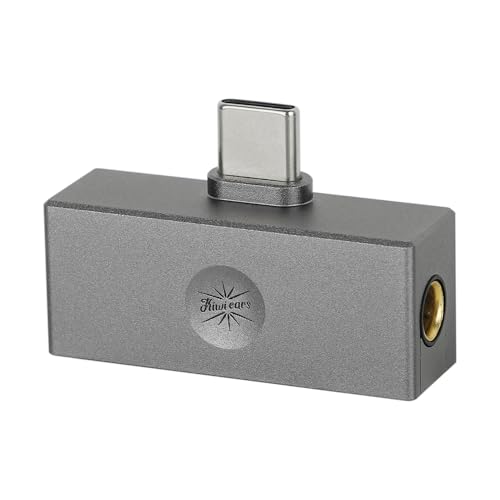
- 3.5mm and 4.4mm headphone outputs
- PCM 384kHz/32-bit and DSD128 support
- Compact all-aluminum portable body
Best For: IEM users who need both single-ended and balanced outputs
Best for Custom Tuning
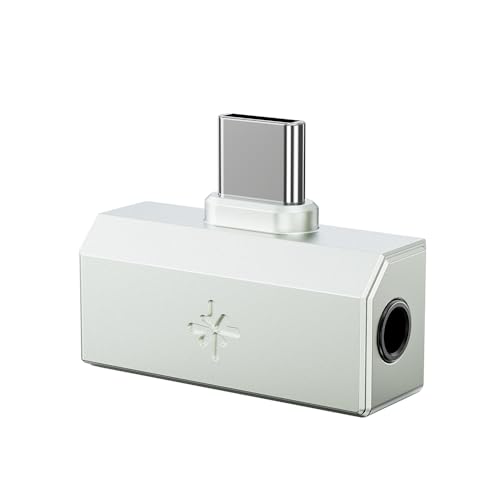
- 10-band PEQ with Android app and PC web control
- PCM 384kHz/32-bit and DSD256 decoding
- 7g direct-plug design with 3.5mm output
Best For: Android and PC users who want portable EQ control
Reference-Grade Choice

- ES9039Q2M and XMOS processing support DSD512
- 3.5mm and 4.4mm outputs with powerful balanced drive
- 32-band PEQ, filters, and spatial enhancement
Best For: Audiophiles and gamers wanting extensive control
Ultra-Compact Performer

- 32-bit/384 kHz decoding with a CS43131 DAC
- Up to 200 mW at 32 ohms
- Tiny 8.5 g body with 3.5mm output
Best For: Portable everyday listening and travel
Balanced Output Value

- Dual CS43131 DACs support DSD256
- 3.5mm and 4.4mm outputs with 170 mW per channel
- 60-step physical volume control with memory
Best For: Mobile listeners using balanced headphones
Balanced Detail – iFi Audio Go Link Max
The iFi Audio Go Link Max is a strong choice for shoppers comparing portable dacs with usb c input, especially if you want both 3.5mm and balanced 4.4mm headphone connectivity. Its dual ESS Sabre DAC design supports PCM up to 384kHz and native DSD256, while the flexible cable is suited to everyday travel.
Best For: Listeners who want a compact USB-C dongle with balanced 4.4mm output and high-resolution format support.
Pros:
- Dual ESS Sabre DAC chips and Dynamic Range Enhancement technology.
- Balanced 4.4mm output rated up to 241mW.
- Plug-and-play USB-C operation with included USB-A adapter.
- Lightweight 15g design with a flexible cable.
Cons:
- The 4.4mm balanced output may be unnecessary if you use standard 3.5mm headphones.
- Its USB-C connection is intended for compatible USB-C devices.
The Go Link Max stands out when output flexibility and balanced performance matter. It is a particularly capable pick for portable listeners using demanding headphones or high-resolution music files.
Power on the Go – BZINK BA36 USB-C DAC
The BZINK BA36 is aimed at buyers seeking portable dacs with usb c input and extra power for a broad range of headphones. Its dual CS43131 and SGM8262 chipset supports 32-bit/384kHz audio, while the amplifier is specified for headphones from 16 to 600 ohms.
Best For: Users who need a powerful USB-C headphone adapter for IEMs and higher-impedance headphones.
Pros:
- Supports up to 32-bit/384kHz decoding.
- Up to 227mW at 32 ohms with a stated 16–600 ohm range.
- Low-noise specifications with greater than 125dB SNR/DNR and -110dB THD+N.
- Includes a USB-A adapter and a 20-month warranty according to the product notes.
Cons:
- This model provides a 3.5mm output rather than a balanced 4.4mm connection.
- Its 37.65g weight is higher than some smaller dongles.
With its high output rating and wide stated impedance support, the BA36 is more focused on driving varied headphones than on being the smallest possible adapter. The aluminum shell and included adapter add everyday practicality.
Everyday Connectivity – StarTech USB-C Audio Adapter
The StarTech USBCAUDIO2 is a practical option among portable dacs with usb c input for wired headsets, speakers, and microphones. Its 5-inch cable design adds a 32-bit DAC, TRRS headset support, and driverless compatibility across major desktop and mobile operating systems.
Best For: Workstations, conference calls, and users who need microphone support alongside headphone audio.
Pros:
- 32-bit DAC supports sample rates from 44.1 to 384kHz.
- TRRS jack supports stereo audio and microphone input.
- Driverless operation across Windows, macOS, Linux, iOS, and Android.
- Compact 5-inch cable with flexible TPE jacket.
Cons:
- It uses a single 3.5mm TRRS output rather than separate balanced outputs.
- Its 105dBA output SNR is more modest than some audiophile-focused dongles.
The USBCAUDIO2 prioritizes broad compatibility and headset functionality over enthusiast amplifier features. It is a sensible low-clutter choice for calls, laptop use, and straightforward wired audio.
Customizable Compact Sound – Kiwi Ears Coda Mini
The Kiwi Ears Coda Mini combines dual outputs and web-based EQ tuning in a compact USB-C design. For shoppers comparing portable dacs with usb c input, it offers 3.5mm and 4.4mm connections, a low 2µV noise floor, and plug-and-play operation with phones, tablets, and laptops.
Best For: IEM users who want quiet playback, dual outputs, and adjustable sound without installing software.
Pros:
- Web-based EQ adjustment allows frequency tuning without extra software.
- Includes both 3.5mm single-ended and 4.4mm outputs.
- Over 114dB SNR and a 2µV noise floor target sensitive IEMs.
- Supports 32-bit PCM audio up to 384kHz in a 10g aluminum housing.
Cons:
- Both outputs are specified at over 30mW under a 32-ohm load, limiting its focus on high-power headphone driving.
- EQ adjustment requires using Kiwi Ears’ web page rather than a built-in hardware control.
The Coda Mini is a flexible, low-noise dongle for listeners who enjoy tailoring their sound. Its direct Type-C plug and dual outputs make it convenient, though its emphasis is portability and customization rather than maximum amplifier power.
Best Value USB-C DAC – BZINK CX31993/MAX97220 Adapter
If you want one of the simplest portable dacs with usb c input, this BZINK adapter converts USB-C audio to a standard 3.5mm headphone connection. Its dual CX31993 and MAX97220 chips support up to 32-bit/384kHz audio, while the included USB-A adapter expands compatibility with older ports.
Best For: Phone, tablet, laptop, or car-stereo users who want a compact wired headphone adapter with high-resolution playback support.
Pros:
- Dual DAC/amplifier chips and support for up to 32-bit/384kHz audio.
- Includes both a USB-C connection and USB-A adapter.
- Aluminum alloy housing and reinforced 8-strand cable design.
- Works with many listed Android, Apple, Windows, MacBook, iPad, and Steam Deck devices.
Cons:
- Provides a 3.5mm output rather than a balanced 4.4mm connection.
- Compatibility may vary by device, so confirm USB-C audio support before buying.
This is a practical, cable-style DAC for listeners who prioritize small size, broad device support, and a conventional 3.5mm headphone jack. The included adapter is especially useful if you also connect to USB-A equipment.
Best for Balanced IEMs – Kiwi Ears Allegro Mini DAC
The Kiwi Ears Allegro Mini is a strong choice among portable dacs with usb c input when you want both standard and balanced headphone outputs. Its aluminum body houses 3.5mm and 4.4mm connections, with PCM support up to 32-bit/384kHz and DSD128 decoding.
Best For: IEM and headphone listeners who want a compact USB-C DAC with flexible 3.5mm and 4.4mm output options.
Pros:
- Offers both 3.5mm single-ended and 4.4mm outputs.
- Supports PCM up to 32-bit/384kHz and DSD128.
- All-aluminum construction combines portability with a premium finish.
- Specified THD+N is 0.004% at 32 ohms.
Cons:
- Compatibility details specifically emphasize Android 5.1 and newer plus PC.
- Its balanced output is useful only with headphones or IEMs that use a 4.4mm connection.
The Allegro Mini stands out for output flexibility rather than extra controls. Choose it if you already use balanced IEMs or want the option to move between 3.5mm and 4.4mm headphones from a compact USB-C source.
Best for Custom Tuning – FiiO/Snowsky TINY A DAC
The FiiO/Snowsky TINY A takes a different approach to portable dacs with usb c input by combining a direct-plug-in design with app-controlled sound adjustments. It supports PCM up to 32-bit/384kHz and DSD256, plus a 10-band PEQ for tailoring playback on Android or through a PC web interface.
Best For: Android and PC listeners who want a lightweight DAC with built-in equalization, direct connection, and simultaneous playback and charging.
Pros:
- 10-band PEQ, presets, volume control, and UAC mode switching.
- Supports PCM 384kHz/32-bit and DSD256 decoding.
- Only 7g with a CNC-machined aluminum body.
- 3.5mm headphone output and Type-C charging port allow playback while charging.
Cons:
- The control app is supported on Android, not iOS.
- The direct-plug-in form may not suit devices where a short cable connection is preferred.
- The supplied notes identify a 3.5mm headphone output rather than a balanced output.
Pick the TINY A if software control matters as much as decoding capability. Its very low weight and direct-plug design suit mobile use, while the separate charging port is convenient for longer listening sessions.
Reference-Grade Choice – Fosi Audio DS3
For listeners seeking portable dacs with usb c input and extensive tuning options, the Fosi Audio DS3 combines a high-end ES9039Q2M DAC with XMOS processing, dual headphone outputs, and a battery-free design. It is built for detailed listening across phones, computers, PS5, and Switch.
Best For: Audiophiles, gamers, and headphone users who want balanced output, advanced EQ, and reference-oriented sound.
Pros:
- Supports up to 32-bit/768 kHz PCM and native DSD512.
- Offers 3.5mm single-ended and 4.4mm balanced outputs, with up to 220 mW at 32 ohms balanced.
- Includes 8 digital filters, a 32-band hardware PEQ, and spatial enhancement.
- Compact 16 g CNC-aluminum design with driver-free compatibility.
Cons:
- Does not include a built-in microphone.
- Its advanced controls may be more than casual listeners need.
The DS3 stands out when you want maximum format support and serious customization in a small USB-C dongle. Its balanced output and powerful processing make it especially compelling for demanding headphones and gaming-focused setups.
Ultra-Compact Performer – FiiO KA11
The FiiO KA11 is a straightforward option among portable dacs with usb c input, pairing a CS43131 DAC and amplifier with a tiny 8.5 g body. Its 3.5mm output and broad device support make it easy to use with phones, tablets, computers, and compatible consoles.
Best For: Travelers and everyday listeners who want a small, single-ended DAC amp with useful output power.
Pros:
- Decodes up to 32-bit/384 kHz audio.
- Delivers up to 200 mW at 32 ohms and 245 mW at 16 ohms.
- Lightweight 8.5 g design is easy to carry.
- UAC 1.0 support enables plug-and-play use with Switch and PS5 after switching modes in the FiiO Control app.
Cons:
- Provides a 3.5mm output rather than a balanced connection.
- UAC 1.0 mode requires switching through the FiiO Control app.
The KA11 is a practical pick for users who prioritize size, simplicity, and enough power for most headphones. It avoids unnecessary bulk while still offering high-resolution decoding and low measured noise.
Balanced Output Value – Fosi Audio DS2
For shoppers comparing portable dacs with usb c input, the Fosi Audio DS2 offers dual CS43131 DAC chips, both 3.5mm and 4.4mm outputs, and physical volume controls. It supports high-resolution playback from modern iPhones, iPads, Android devices, and computers without complicated setup.
Best For: Headphone listeners who want balanced connectivity, onboard volume buttons, and strong performance from a compact metal dongle.
Pros:
- Supports PCM up to 32-bit/384 kHz and DSD256.
- Includes 3.5mm single-ended and 4.4mm balanced outputs.
- Provides up to 170 mW per channel at 32 ohms.
- Independent 60-step volume control includes volume memory.
Cons:
- Does not list the broader format support of the DS3.
- Its balanced output benefits users with compatible cables or headphones.
The DS2 is a well-rounded choice when convenient hardware controls and dual output options matter more than advanced EQ. Its low noise floor, compact CNC-machined metal body, and wide compatibility make it a flexible mobile headphone amp.
How We Picked the Best Portable Dacs with USB C Input
We focused on practical performance rather than specifications alone. Each model was assessed for DAC and amplifier hardware, supported formats, output type, portability, device compatibility, and the kind of headphones it can reasonably drive. We also considered useful extras such as balanced outputs, app-based tuning, volume controls, spatial audio, and plug-and-play operation.
Because product specifications and included accessories can vary by version, check the current listing before buying—especially if you need a USB-C cable, a 4.4mm connection, microphone support, or compatibility with a particular phone or computer.
Quick Comparison
| Best For | What to Look For |
|---|---|
| Simple phone upgrades | Compact 3.5mm dongles with plug-and-play support |
| IEM users | Low noise, moderate output, and a sensitive volume control |
| Demanding headphones | Higher amplifier power and, ideally, balanced output |
| Flexible setups | Dual 3.5mm and 4.4mm outputs or broad device support |
| Tuning and customization | App, web, PEQ, or spatial-audio features |
Key Buying Factors for Portable DACs with USB-C Input
Output and Amplifier Power
A 3.5mm single-ended output is enough for most earbuds and efficient headphones. A 4.4mm balanced output can provide more power and channel separation, but it requires compatible cables and does not automatically improve every headphone. Look for real output figures at the impedance you use, not just a high-resolution format claim.
DAC Support and Sound Quality
CS43131, ESS, and other modern DAC chips can deliver excellent results. Chip branding matters less than implementation, noise control, output stage, and your headphones. High-resolution PCM or DSD support is useful for compatible files, but it will not fix poor recordings or low-quality streaming sources.
Compatibility and Power Use
Confirm support for your phone, tablet, Windows PC, Mac, or gaming device. Some Android devices may require USB audio settings or an adapter, while Apple devices may need a suitable connector. More powerful dongles can drain a phone faster, so efficiency matters for commuting and long listening sessions.
Features and Ergonomics
Consider cable durability, inline controls, physical volume buttons, microphone or TRRS support, app access, and heat. A tiny adapter is convenient, but a larger model may offer stronger amplification and easier control.
Who Should Buy Which Portable Dacs with USB C Input?
Choose a basic 3.5mm dongle if you want the smallest, simplest replacement for a missing headphone jack. IEM listeners should prioritize a quiet output and fine volume control. Pick a dual-output model if you own both standard and balanced cables or expect to upgrade later. Listeners using full-size or less-efficient headphones should favor the most powerful amplifier in the lineup, preferably with balanced support.
For enthusiasts who want EQ, PEQ, spatial processing, or deeper control, a feature-rich model is worth the extra size and setup. If you mainly stream music from a phone, prioritize reliability, low power consumption, and compatibility over extreme format support. The best choice among these portable DACs with USB-C input is the one that matches your headphones, listening device, and need for portability—not simply the model with the biggest specification list.