The right portable DAC can make wired listening more convenient while helping your headphones or IEMs deliver cleaner, more detailed sound. For iPhone users, Lightning compatibility is especially important because not every USB-C dongle works directly with older Apple devices.
We compared 10 compact adapters and DAC amplifiers across compatibility, connection options, audio specifications, portability, and practical value. Whether you need a simple replacement adapter or a more capable headphone amp, this roundup makes the choice easier.
Best 10 Portable Dacs with Lightning Adapter Picks for 2026
Best Lightning DAC for Hi-Res Power

- ESS Sabre DAC supports PCM 32-bit/384kHz and DSD256
- MFi-certified plug-and-play Lightning connection
- 15 g and drives headphones up to 150 ohms
Best For: iPhone and iPad users with demanding headphones
Best Multifunction Lightning Adapter

- 3.5mm audio, USB OTG, and charging in one adapter
- Supports audio up to 24-bit/96kHz
- Works with Lightning and USB-C devices
Best For: Travelers needing audio, data, and charging
Best Dual-Output Portable DAC
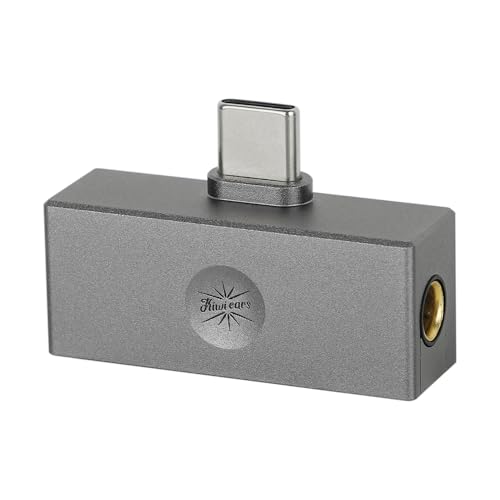
- 3.5mm and 4.4mm outputs support varied headphone setups
- PCM up to 32-bit/384kHz and DSD128
- Compact aluminum body for Android and PC use
Best For: Android and PC users wanting single-ended or balanced output
Most Versatile
2-in-1 Lightning and USB-C DAC Adapter

- Lightning and USB-C audio in one compact adapter
- DAC supports up to 24-bit/96kHz playback
- Apple MFi certified for compatible iOS devices
Best For: iPhone users who also use USB-C devices
Highest-Resolution USB-C Option
Dual-DAC USB-C Headphone Adapter

- CX31993 and MAX97220 DAC chips
- Supports up to 32-bit/384kHz audio
- Works with 16–600Ω headphones
Best For: USB-C listeners seeking high-resolution audio and broader headphone support
Amplified Detail

- Built-in amplifier for wired headphones and IEMs
- Braided 8-core silver-plated cable
- Plug-and-play support for many USB-C devices
Best For: USB-C users who want extra headphone output
Dual-Chip Hi-Res Pick
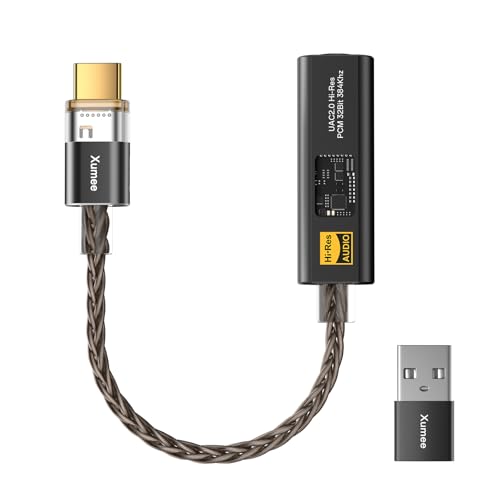
- CX31993 DAC plus MAX97220 amplifier
- Playback support up to 32-bit/384kHz
- Preserves mic and inline controls
Best For: USB-C users seeking high-resolution audio and amplification
Lightning Compatibility
Microwoo MFi Lightning DAC Adapter

- Apple MFi certified for Lightning devices
- Supports up to 24-bit/48kHz audio
- Compact design with music controls
Best For: Older iPhones, iPads, and iPods using 3.5mm audio
Best Lightning DAC for Hi-Res Power – Maktar Spectra X2
The Maktar Spectra X2 is a strong choice among portable dacs with lightning adapter support for iPhone and iPad users who want more than a basic dongle. Its ESS Sabre DAC handles PCM up to 32-bit/384kHz and DSD256, while the built-in amplifier is designed to drive headphones up to 150 ohms.
Best For: iPhone and iPad listeners using demanding headphones who want plug-and-play hi-res audio in a very small package.
Pros:
- Apple MFi-certified Lightning connection requires no app, driver, or external power.
- Supports PCM up to 32-bit/384kHz and DSD256.
- 15-gram design includes a protective carrying pouch.
- Built-in amplifier supports headphones up to 150 ohms.
Cons:
- Designed exclusively for Apple Lightning devices.
- Its premium audio features may be unnecessary for basic earbuds.
The Spectra X2 stands out when you need a compact Lightning DAC with substantial headphone-driving ability. Its Apple-only compatibility limits flexibility, but iPhone and iPad owners seeking a high-resolution, travel-friendly upgrade get a particularly capable option.
Best IEM-Focused USB-C DAC – Kiwi Ears AD1 Pro
The Kiwi Ears AD1 Pro is an IEM-oriented option rather than a Lightning model, so it is best considered only if your setup uses USB-C. Among portable dacs with lightning adapter searches, it offers a useful alternative for listeners prioritizing low noise, customizable EQ, and a choice of 3.5mm or 4.4mm output.
Best For: USB-C users with sensitive IEMs who want a quiet background and web-based sound customization.
Pros:
- Custom DAC chip is tuned for in-ear monitor performance.
- 2μV noise floor, 115dB SNR, and distortion below 0.003% are designed for clean playback.
- Official web-based EQ allows bass, midrange, and treble adjustments.
- Available in independent 3.5mm single-ended and 4.4mm balanced versions.
Cons:
- Uses USB-C rather than Lightning.
- The 3.5mm and 4.4mm versions are separate choices.
- Its feature set is more targeted to IEM users than general headphone users.
The AD1 Pro makes the most sense for a USB-C audio setup built around sensitive IEMs. Its low-noise specifications and adjustable EQ are practical advantages, but Lightning-device owners will need a different adapter.
Best Multifunction Lightning Adapter – 3-in-1 USB-C Audio Hub
This Sanjyut adapter combines a Lightning or USB-C connection with a 3.5mm headphone jack, USB OTG, and charging support. For shoppers comparing portable dacs with lightning adapter functionality, it is a practical choice when audio is only one part of the job and you also need file transfers or up to 60W USB-C PD charging.
Best For: Travelers and mobile users who need wired audio, peripheral connectivity, and charging from one compact adapter.
Pros:
- Combines 3.5mm audio, USB OTG, and charging functions.
- Supports up to 24-bit/96kHz audio output.
- Compatible with Lightning and USB-C devices, including iPhone, iPad, Android phones, and laptops.
- USB-C PD charging is rated up to 60W.
Cons:
- It is a multifunction adapter rather than a dedicated high-end headphone amplifier.
- Its many ports may be unnecessary if you only need wired audio.
- Compatibility and performance may vary across the broad range of listed devices and peripherals.
The Sanjyut is the flexible pick in this group for users who want one travel accessory to handle audio, data, and charging. Its 24-bit/96kHz DAC is suitable for everyday listening, while the extra ports add convenience at the expense of a more specialized design.
Best Dual-Output Portable DAC – Kiwi Ears Allegro Mini
The Kiwi Ears Allegro Mini is a compact USB-C DAC and amplifier with both 3.5mm single-ended and 4.4mm outputs. It does not use Lightning, so it is not a direct match for an iPhone Lightning setup, but it is a compelling alternative for Android and PC users comparing portable dacs with lightning adapter options.
Best For: Android and PC listeners who want a small USB-C DAC with both conventional and balanced headphone outputs.
Pros:
- Offers both 3.5mm and 4.4mm headphone outputs.
- Supports PCM up to 32-bit/384kHz and DSD128.
- Compact aluminum-alloy body is durable and portable.
- Low THD+N of 0.004% at 32 ohms supports clean, detailed playback.
Cons:
- Uses USB-C rather than a Lightning connector.
- Its listed plug-and-play compatibility focuses on Android 5.1 and newer and PCs.
- Balanced output benefits require headphones or cables with a 4.4mm connection.
The Allegro Mini is a well-rounded USB-C choice when output flexibility matters. Its dual connections and high-resolution support make it more versatile than a basic dongle, although Lightning iPhone users will need to look elsewhere.
Most Versatile – 2-in-1 Lightning and USB-C DAC Adapter
For shoppers seeking portable dacs with lightning adapter compatibility across multiple devices, this 2-in-1 model combines Lightning and USB-C-to-3.5mm connections in one pocket-sized accessory. Its integrated DAC supports playback up to 24-bit/96kHz, while the Lightning side offers plug-and-play audio.
Best For: iPhone users who also own USB-C phones, tablets, or computers and want one compact adapter for wired headphones.
Pros:
- Combines Lightning and USB-C audio connections in one adapter.
- Integrated DAC supports up to 24-bit/96kHz playback.
- Apple MFi certified for compatible iOS devices.
- Compact design is convenient for travel, commuting, and workouts.
Cons:
- The Lightning side offers simpler functionality than the USB-C side, which supports full playback controls.
- It is designed for 3.5mm wired audio rather than wireless headphones.
This is the strongest all-around choice when device flexibility matters. It replaces separate Lightning and USB-C dongles, although users needing advanced amplification or a higher output specification may prefer a dedicated USB-C DAC.
Highest-Resolution USB-C Option – Dual-DAC USB-C Headphone Adapter
This USB-C model is aimed at listeners comparing portable dacs with lightning adapter alternatives but prioritizing high-resolution performance. Its CX31993 and MAX97220 dual-DAC design supports up to 32-bit/384kHz audio, and the included USB-A interface broadens computer and laptop compatibility.
Best For: Music listeners using USB-C devices who want a high-resolution DAC with support for headphones ranging from sensitive IEMs to models rated up to 600 ohms.
Pros:
- Dual DAC chips support up to 32-bit/384kHz audio.
- Supports a stated 16–600Ω headphone impedance range.
- Includes a USB-A interface for additional device compatibility.
- Aluminum construction, silver-plated copper cable, and gold-plated connectors are designed for durability.
Cons:
- It uses USB-C audio rather than a direct Lightning connection.
- At 45 g, it is less lightweight than some basic dongle adapters.
- Its extra specifications may be unnecessary for casual listening.
Choose this adapter when decoding capability, output power, and headphone flexibility are more important than native Lightning convenience. iPhone users with Lightning-only devices will need an additional compatible solution.
Most Multifunctional – USB-C to Lightning Audio Adapter
For those who need a portable dacs with lightning adapter solution that does more than connect headphones, this USB-C-to-Lightning converter combines audio, charging, and data transfer. Its integrated DAC is designed for stable sound, while its small ABS housing weighs just 5.4 g.
Best For: Users who want to connect Lightning earphones to USB-C phones, tablets, or laptops while retaining inline controls and charging functionality.
Pros:
- Combines audio, charging, and data transfer in one adapter.
- Supports inline volume, playback, and call controls with Lightning earphones.
- Compact, lightweight ABS design is easy to carry.
- Compatible with listed iPhone, iPad, Mac, Samsung Galaxy, and Google Pixel devices with supported connections.
Cons:
- It has one port and is a connector converter rather than a 3.5mm headphone adapter.
- Compatibility with Android devices depends on OTG support.
- The supplied notes do not specify a maximum sampling rate.
This is a practical choice for people moving from Lightning devices to USB-C hardware who already own Lightning earphones. It is less suitable for shoppers specifically seeking a 3.5mm jack or detailed high-resolution DAC specifications.
Amplified Detail – KB EAR USB-C DAC Adapter
For listeners comparing portable dacs with lightning adapter options, this KB EAR model is a USB-C alternative with a built-in amplifier. It is designed to add clarity, bass depth, soundstage, and extra output for wired headphones, IEMs, gaming, movies, and calls.
Best For: USB-C phone, tablet, laptop, and handheld users who need more power for wired headphones.
Pros:
- Built-in amplifier helps drive more demanding headphones and IEMs.
- Supports a wide range of USB-C devices, including iPhone 15/16 series, Galaxy models, Pixel, iPad, MacBook, and Steam Deck.
- Flexible braided 8-core silver-plated cable is designed for daily durability.
- Plug-and-play operation requires no drivers or apps.
Cons:
- Uses USB-C rather than a native Lightning connector.
- The supplied notes do not specify a supported bit-depth or sample-rate maximum.
This is a practical pick when headphone drive and a reinforced cable matter more than a Lightning plug. iPhone users should verify that their device supports USB-C audio before buying.
Dual-Chip Hi-Res Pick – Xumee USB-C DAC AMP Dongle
Among portable dacs with lightning adapter searches, the Xumee stands out as a high-spec USB-C dongle rather than a Lightning model. Its CX31993 DAC and MAX97220 amplifier support up to 32-bit/384kHz playback, while retaining headset controls and microphone functionality.
Best For: USB-C listeners who want high-resolution playback, added amplification, and inline headset controls.
Pros:
- Dual-chip DAC and headphone amplifier design aims for powerful, low-distortion sound.
- Supports playback up to 32-bit/384kHz.
- Retains microphone, volume, and inline remote functions.
- Broad compatibility includes USB-C iPhone, Android, iPad, MacBook, Windows PCs, and laptops.
Cons:
- It has a USB-C connector, so it is not a direct Lightning adapter.
- Its stated compatibility is for devices with USB-C audio output; older Lightning iPhones require another solution.
- At 60 g, it may be less unobtrusive than a basic adapter.
The Xumee is the most specification-focused option here for USB-C equipment. Choose it for its dual-chip architecture and high-resolution support, not if a native Lightning connection is essential.
Lightning Compatibility – Microwoo MFi Lightning DAC Adapter
For shoppers specifically seeking portable dacs with lightning adapter connectivity, this Microwoo model is the most direct match. It is Apple MFi certified, includes a built-in DAC supporting up to 24-bit/48kHz output, and connects older iPhones, iPads, and iPods to 3.5mm headphones, car AUX systems, or speakers.
Best For: Lightning-equipped Apple devices used with wired headphones, car AUX inputs, or home speakers.
Pros:
- Apple MFi certification is intended to provide seamless iOS compatibility.
- Built-in DAC supports lossless audio output up to 24-bit/48kHz.
- Supports music controls such as volume, play, pause, and track skipping.
- Compact TPE construction is rated to withstand over 28,000 bends.
Cons:
- Does not support phone calls.
- It is intended for Lightning devices and does not provide USB-C connectivity.
- Its 24-bit/48kHz ceiling is lower than the Xumee’s stated 32-bit/384kHz support.
This is the straightforward choice for older Apple hardware that still uses Lightning. Its MFi certification and compact design make it suitable for travel, cars, gyms, and everyday wired listening, provided call support is not required.
How We Picked These Portable Dacs with Lightning Adapters
We focused on products that solve a real wired-audio problem for iPhone and other mobile users. The selection includes dedicated Lightning adapters, dual USB-C and Lightning models, USB-C DAC dongles, and compact DAC amplifiers that can work with compatible Apple devices or cables.
Our comparison emphasizes connection reliability, advertised audio support, output options, amplifier capability, device compatibility, portability, and everyday convenience. MFi certification is a notable advantage for Lightning accessories, while a built-in DAC is essential for devices that do not provide a traditional headphone jack.
Specifications such as 24-bit or 32-bit playback and high sample-rate support can be useful indicators, but they do not guarantee better sound on their own. Headphones, source files, software, and implementation quality also matter.
Quick Comparison
- Best for a simple Lightning connection: Choose an MFi-certified Lightning-to-3.5mm adapter.
- Best for flexible device support: Consider a model with both USB-C and Lightning inputs or included connection options.
- Best for demanding IEMs and headphones: Look for a dedicated DAC amplifier with a stronger output stage.
- Best for balanced audio setups: Select a model offering a 4.4mm output, but confirm your headphones use a compatible balanced cable.
- Best for charging while listening: Choose a converter designed specifically for simultaneous audio and power delivery.
Key Buying Factors for Portable Dacs with Lightning Adapter
Compatibility and Certification
Check whether the adapter connects directly to a Lightning iPhone, requires a separate cable, or is intended only for USB-C devices. MFi certification can improve confidence in iPhone compatibility, especially after iOS updates. Also verify support for cases, microphones, remote controls, and in-line volume buttons if those features matter to you.
Output and Headphone Power
A basic 3.5mm adapter is usually sufficient for efficient earbuds and easy-to-drive headphones. Larger over-ear models may benefit from a dedicated amplifier. If you use balanced headphones, a 4.4mm output may provide another connection option, though it is not automatically louder or better.
Audio Support and Noise Performance
High-resolution specifications can be useful, but prioritize low background noise, stable playback, and good app compatibility. Sensitive in-ear monitors can reveal hiss from poorly implemented dongles, so reviews and user feedback are valuable when available.
Size, Controls, and Power Use
Small dongles are easiest to carry, while larger DAC amps may offer better controls and more output power. Check whether the adapter draws noticeable phone battery power, becomes warm, or includes buttons for volume and playback.
Who Should Buy Which Portable Dacs with Lightning Adapter?
Choose a simple Lightning DAC if you mainly use standard wired earbuds and want a compact, dependable replacement for a missing headphone jack.
Choose a dual-interface adapter if your household uses both Lightning and USB-C devices or you are transitioning between iPhone generations.
Choose a dedicated portable DAC amplifier if you own higher-quality IEMs, headphones, or lossless music files and want more output flexibility than a basic dongle provides.
Choose a charging adapter if you frequently listen during long trips or work sessions and need to power your phone at the same time. Before buying, confirm that your preferred headphones, phone case, charger, and music apps will work with the chosen connection.