Choosing a field recorder with ambisonic microphone support means balancing immersive capture with portability, input flexibility, monitoring, and workflow. The right setup can simplify location recording while preserving the detail needed for VR, film, music, and spatial-audio projects.
This roundup compares 10 practical recorder and microphone options, from compact voice recorders to multitrack models designed for external microphones and professional production.
Best 10 Field Recorder with Ambisonic Microphone Picks for 2026
Premium Ambisonic Capture

- Four subcardioid capsules in a tetrahedral array
- Four-channel XLR breakout connection
- Includes shockmount and wind protection
Best For: Ambisonic, VR, and spatial-audio recording setups
Accessible Field Recording
Zoom H4 Essential Handheld Recorder

- 32-bit float recording with up to four tracks
- Built-in stereo mics and two XLR/TRS inputs
- USB-C audio plus SD card backup recording
Best For: Flexible music, podcast, video, and field recording
Simple Stereo Field Kit
TASCAM DR-05 Portable Recorder
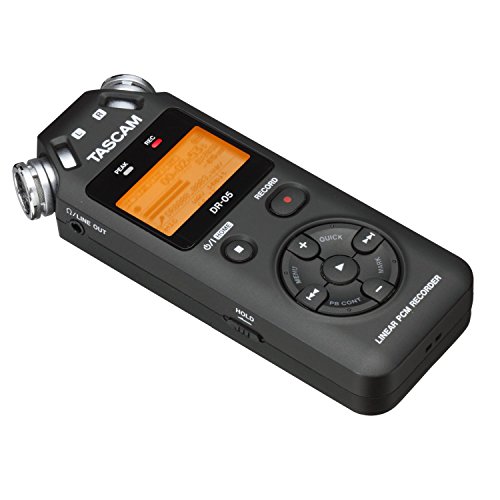
- Built-in omni-directional stereo microphones
- WAV and MP3 recording with included 4GB card
- Variable-speed playback and chromatic tuner
Best For: Simple, portable stereo recording and practice
Expandable Multitrack Recorder

- Includes XYH-6 and MSH-6 microphone capsules
- Records up to 12 simultaneous tracks
- Touchscreen control and expandable capsule system
Best For: Expandable music, podcast, and field-recording workflows
Filmmaker’s Multitrack Pick
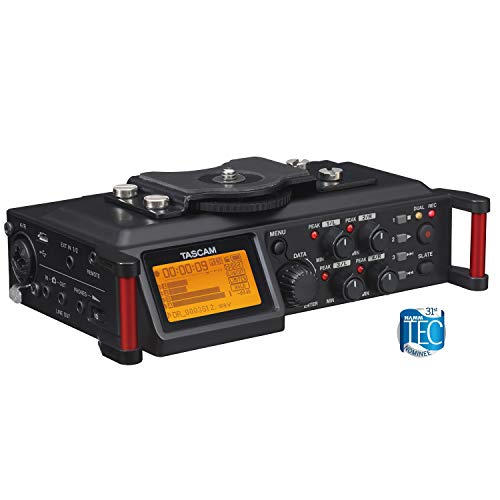
- Four XLR/TRS inputs with phantom power
- Dual Recording helps protect against distortion
- Camera-mountable design for production sound
Best For: Filmmakers recording multiple external microphones
Compact 32-Bit Float Option

- 32-bit float recording for clip-free audio
- Built-in X/Y microphones record stereo sound
- USB-C microphone mode for calls and streaming
Best For: Portable content, music, interviews, and ambience
Long-Recording Voice Pick

- Up to 1,040 hours on 4GB internal memory
- Supports Linear PCM and MP3 recording
- USB direct connection and playback controls
Best For: Lectures, meetings, and extended voice notes
Best XLR Field Recorder

- 32-bit float/96kHz recording
- Two locking XLR/TRS inputs
- OLED waveform display and 1TB SDXC support
Best For: Filmmakers, musicians, and podcasters using external microphones
Best High-Resolution Voice Recorder

- 24-bit/96kHz stereo recording
- XLR and line-in connectors
- Rechargeable Li-polymer battery
Best For: Stereo recording with external microphones or instruments
Best Podcasting Field Recorder

- Four XLR inputs with phantom power
- Four individually controlled headphone outputs
- Multitrack recording and remote-interview tools
Best For: Multi-microphone podcasts and field interviews
Premium Ambisonic Capture – NT-SF1 Ambisonic Microphone
The SoundField by RØDE NT-SF1 is the most direct fit here for anyone seeking a field recorder with ambisonic microphone capability. Its tetrahedral array uses four subcardioid condenser capsules and sends four channels through the included 10-pin XLR to four 3-pin XLR breakout cable.
Best For: Ambisonic recording setups, VR audio, and creators who already have compatible multichannel recording equipment.
Pros:
- Four-capsule tetrahedral array captures four channels.
- Includes breakout cable, shockmount, pop shield, and wind protection.
- Offers a 20Hz–20kHz frequency range and 77dB signal-to-noise ratio.
Cons:
- Requires external recording equipment with four XLR inputs.
- Its specialized ambisonic design may be more than needed for basic stereo recording.
The NT-SF1 is a purpose-built ambisonic microphone rather than a handheld recorder. Choose it when multichannel spatial capture is the priority and your recording chain can accommodate its four XLR outputs.
Accessible Field Recording – Zoom H4 Essential Handheld Recorder
The Zoom H4 Essential is a practical handheld option for field recording, interviews, music, podcasts, and video audio. It combines built-in stereo microphones with two XLR/TRS inputs, while 32-bit float recording helps reduce concern about distorted takes.
Best For: Musicians, podcasters, filmmakers, and field recordists who need built-in microphones plus external-input flexibility.
Pros:
- Supports 32-bit float recording and up to four tracks.
- Includes stereo microphones and two XLR/TRS inputs.
- Works as a USB-C recording or streaming device while saving to an SD card.
- Spoken menu guidance can improve accessibility and navigation.
Cons:
- The included microphones are stereo rather than ambisonic.
- Requires two AA batteries for portable use.
This is not an ambisonic recorder, but it is a versatile companion for conventional field work. It is particularly appealing when you want a compact recorder that can handle built-in stereo capture, external microphones, instruments, and USB audio duties.
Simple Stereo Field Kit – TASCAM DR-05 Portable Recorder
The TASCAM DR-05 Version 2 is a straightforward portable recorder for stereo field work, with built-in omni-directional microphones and a stereo mic/line input for an external source. It records WAV or MP3 files and includes a 4GB microSD card.
Best For: Beginners, note-taking, rehearsals, interviews, and uncomplicated stereo field recordings.
Pros:
- Built-in omni-directional stereo microphones keep setup simple.
- Accepts an external source through its stereo mic/line input with plug-in power.
- Supports WAV and MP3 recording and includes a microSD card.
- Offers variable-speed playback, looping, playback EQ, and a chromatic tuner.
Cons:
- It records stereo rather than ambisonic audio.
- Uses two AAA batteries for portable operation.
- Does not provide the multichannel XLR connectivity of a dedicated ambisonic setup.
The DR-05 is a budget-conscious, easy-to-use choice for basic stereo capture. It makes sense when portability and simplicity matter more than spatial audio or advanced multichannel recording.
Expandable Multitrack Recorder – Zoom H8 MS Pack
The Zoom H8 MS Pack is a flexible handheld recorder for music, podcasts, and field recording. This limited-edition package includes XYH-6 and MSH-6 microphone capsules, giving you stereo and mid-side capture options through a touchscreen-controlled system that supports up to 12 simultaneous tracks.
Best For: Creators who want an expandable recorder for varied recording situations, including music, podcasts, and field work.
Pros:
- Includes both XYH-6 and MSH-6 microphone capsules.
- Supports up to 12 simultaneous tracks.
- Touchscreen interface is designed for straightforward control.
- Compatible with Zoom’s interchangeable capsule system.
Cons:
- The supplied capsules provide XY and mid-side recording, not full ambisonic capture.
- Its larger feature set may be unnecessary for simple stereo recording.
The H8 MS Pack is a strong choice when you want more expansion and track capacity than a basic handheld recorder. Select it for adaptable stereo or mid-side workflows rather than as a dedicated field recorder with ambisonic microphone support.
Filmmaker’s Multitrack Pick – TASCAM DR-70D
If you need a field recorder with ambisonic microphone compatibility for video production, the TASCAM DR-70D offers a practical multitrack foundation. Its four balanced XLR/TRS inputs, phantom power, individual gain controls, and camera-mountable design suit production sound workflows, while the built-in microphones provide a quick recording option.
Best For: Filmmakers, documentarians, advertisers, and DSLR shooters recording multiple external microphones.
Pros:
- Four balanced XLR/TRS inputs with phantom power
- Individual gain controls and 64dB of preamp gain
- Dual Recording mode creates a lower-level safety copy
- Mounts above or below a camera and records to SD cards
Cons:
- At 1.2 pounds, it is heavier than compact handheld recorders
- Requires four AA batteries
- Its supplied microphone setup is built-in mono/stereo rather than an ambisonic microphone
The DR-70D is the strongest choice here for controlled, multi-input production recording. It does not include an ambisonic microphone, but its flexible inputs can support a more specialized external microphone setup.
Compact 32-Bit Float Option – Zoom H1essential
The Zoom H1essential is a compact field recorder with ambisonic microphone compatibility potential through its portable workflow, though the supplied microphone is a stereo X/Y pair rather than an ambisonic capsule. It is designed for quick stereo capture, USB microphone use, and clear recording of content, interviews, music, and environmental sound.
Best For: Content creators, musicians, podcasters, and users who want a lightweight stereo recorder with 32-bit float recording.
Pros:
- 32-bit float recording helps provide clip-free audio
- Built-in X/Y stereo microphones capture music, voices, and ambience
- USB-C microphone mode supports computers and smartphones
- Lightweight 92g design with up to 10 hours of battery life
Cons:
- Supplied microphones are stereo X/Y, not ambisonic
- Its compact design is less suited to multi-microphone production than the TASCAM
Choose the H1essential when portability and simple stereo recording matter most. Its 32-bit float feature and USB-C mode make it particularly convenient for creators, while an external ambisonic solution would be needed for true ambisonic capture.
Long-Recording Voice Pick – OM SYSTEM WS-882
The OM SYSTEM WS-882 is a straightforward digital recorder for voice notes and extended playback rather than a dedicated field recorder with ambisonic microphone support. Its built-in stereo microphones, Linear PCM and MP3 formats, direct USB connection, and 4GB internal memory make it useful for basic spoken-word recording.
Best For: Lectures, meetings, voice notes, and users prioritizing long recording time and simple file management.
Pros:
- Supports Linear PCM and MP3 recording
- 4GB internal memory provides up to 1,040 hours of recording time
- USB 2.0 direct connection simplifies file transfer
- Offers playback-speed and volume adjustment plus file indexing
Cons:
- Built-in microphones are not ambisonic
- Less suitable for professional multitrack or external-microphone workflows
- MP3 is the listed format in the product details, limiting format flexibility compared with WAV-focused recorders
The WS-882 is best viewed as a convenient voice recorder rather than an immersive audio tool. Its extensive storage and simple USB workflow are useful for everyday documentation, but buyers seeking ambisonic recording should consider a recorder with appropriate external microphone connectivity.
Best XLR Field Recorder – Zoom H1 XLR
The Zoom H1 XLR is a practical choice for anyone seeking a field recorder with ambisonic microphone support through flexible external connections. It records in 32-bit float/96kHz and includes two locking XLR/TRS inputs for microphones, instruments, and other sources.
Best For: Filmmakers, musicians, podcasters, and creators who need clean, flexible recordings from external microphones or instruments.
Pros:
- 32-bit float recording helps deliver clip-free audio.
- Two locking XLR/TRS inputs support varied recording setups.
- OLED waveform display makes level monitoring straightforward.
- Supports SDXC cards up to 1TB and includes 3.5mm input/output.
Cons:
- Requires two AA batteries.
- Its listed microphone operation modes are mono and stereo rather than a dedicated ambisonic mode.
For buyers comparing a field recorder with ambisonic microphone setups, the H1 XLR stands out as a compact input-focused recorder. You will need a compatible external microphone for ambisonic recording, but its high-resolution capture and broad connectivity make it adaptable.
Best High-Resolution Voice Recorder – Philips DVT7500
The Philips DVT7500 is a straightforward option for shoppers considering a field recorder with ambisonic microphone support via external sources. It records stereo audio at up to 24-bit/96kHz and provides XLR and line-in connectors for microphones, instruments, and other equipment.
Best For: Users who want high-fidelity stereo recording, external-source connectivity, and a rechargeable battery for extended sessions.
Pros:
- Supports 24-bit/96kHz recording for detailed audio.
- XLR and line-in connectors accommodate external sources.
- High-quality microphones support stereo recording.
- Rechargeable Li-polymer battery is designed for longer recording use.
Cons:
- Includes 16GB of internal storage, less than the largest removable-card capacities.
- Its listed microphone operation mode is stereo, not a dedicated ambisonic mode.
The DVT7500 can serve as a useful stereo recorder in an ambisonic microphone workflow when paired with suitable external equipment. However, buyers specifically needing native multichannel ambisonic capture should verify compatibility before purchasing.
Best Podcasting Field Recorder – Zoom PodTrak P4
The Zoom PodTrak P4 is built for multi-person production rather than standalone ambisonic capture, but it can fit a field recorder with ambisonic microphone workflow when used with compatible external equipment. Four XLR inputs, phantom power, separate headphone controls, and multitrack recording give it strong production flexibility.
Best For: Podcasters and interview teams recording several microphones, remote guests, or phone-based conversations.
Pros:
- Four microphone inputs include phantom power.
- Four headphone outputs have individual volume control.
- Supports multitrack recording for inputs and sound pads.
- Mix-minus supports phone and remote interviews.
Cons:
- Battery life is listed at up to 3.5 hours on two AA batteries.
- Its listed microphone form factor is built-in, and it is designed primarily for podcast production.
- It does not list a dedicated ambisonic recording mode.
The P4 is the strongest choice here for collaborative field recording and spoken-word production. Its four-input layout is useful with external microphones, but buyers seeking a native field recorder with ambisonic microphone capability should confirm channel and format requirements first.
How We Picked the Best Field Recorder with Ambisonic Microphone
We focused on recording flexibility, microphone compatibility, portability, controls, monitoring, and the quality of the workflow each model supports. Because a true Field Recorder with Ambisonic Microphone setup typically requires compatible multichannel inputs, the microphone’s connector and channel requirements matter as much as the recorder itself.
The selection includes dedicated ambisonic microphone equipment, handheld recorders with built-in microphones, models with XLR or combo inputs, and specialized podcasting or voice-recording options. This makes the list useful for comparing complete solutions as well as recorders that may serve as the core of a larger spatial-audio rig.
Quick Comparison
- Best for immersive microphone capture: SoundField by RØDE NT-SF1 paired with a compatible multichannel recorder.
- Best for versatile handheld recording: Zoom H8, with interchangeable capsules and expanded input options.
- Best for filmmaking: TASCAM DR-70D, designed around camera-friendly location workflows.
- Best for compact everyday recording: Zoom H1 Essential or TASCAM DR-05.
- Best for podcasts: Zoom PodTrak P4, with multiple XLR inputs and headphone outputs.
- Best for simple voice capture: Olympus WS-882 or Philips DVT7500.
Key Buying Factors for a Field Recorder with Ambisonic Microphone
Input Count and Channel Format
Ambisonic microphones can output four or more channels, depending on their design. Confirm that the recorder provides enough synchronized inputs and supports the required connector type. A stereo handheld recorder may be excellent for general recording but unsuitable for a full four-channel ambisonic microphone.
Power and Connectivity
Check whether the microphone needs plug-in power, phantom power, or an external interface. XLR inputs are generally more adaptable for professional microphones, while 3.5mm inputs favor compact consumer accessories. USB connectivity can also simplify file transfer or computer-based recording.
Recording Quality and File Handling
Look for WAV recording, suitable sample-rate options, and enough storage or microSD support. Spatial-audio projects benefit from clean, synchronized, uncompressed files. Easy file transfer and clear channel labeling can save significant editing time.
Monitoring and Field Controls
Headphone monitoring, input meters, limiters, low-cut filters, and accessible gain controls are valuable outdoors and on set. A recorder with safety features helps prevent clipping when sound levels change unexpectedly.
Who Should Buy Which Field Recorder with Ambisonic Microphone?
Choose the NT-SF1 when immersive capture is the priority and you already have, or plan to add, a suitable multichannel recorder. Choose the Zoom H8 when you want one flexible device for varied microphones, music, film, and field work. The DR-70D is a strong fit for videographers who need camera-oriented inputs and controls.
For lightweight stereo notes, ambient sound, and casual content, the H1 Essential or DR-05 is easier to carry. Podcasters should consider the PodTrak P4 for its multiple headphone outputs and remote-interview features. The Olympus and Philips models are better suited to straightforward meetings, lectures, dictation, and voice recording than to demanding ambisonic production.