Capturing clean production audio is easier when your recorder can stay synchronized with the camera throughout a shoot. The best field recorder with timecode options combine dependable clocking with flexible inputs, rugged designs, and audio formats suited to demanding work.
This roundup compares 10 recorders for filmmakers, musicians, podcasters, and sound teams, including compact timecode-enabled units, multichannel mixers, and portable 32-bit float recorders.
Best 10 Field Recorder with Timecode Picks for 2026
Best Compact Timecode Pick

- Built-in timecode generation and sync
- 32-bit float recording with dual ADCs
- Dual XLR/TRS inputs in a compact body
Best For: Portable video rigs needing integrated timecode
Best Accessible Handheld Option

- 32-bit float recording for clip-resistant capture
- Built-in stereo mics and two XLR/TRS inputs
- USB-C recording or streaming with SD backup
Best For: General-purpose music, podcast, and video recording
Best Four-Input Video Rig

- Four XLR/TRS inputs with Ultra HDDA preamps
- Built-in mixer and six-track SDXC recording
- Timecode, HDMI sync, and USB timecode out
Best For: Multi-source camera rigs and video crews
Best Professional Multitrack Pick

- Six XLR inputs and up to 14 tracks
- 32-bit float recording with dual A/D converters
- Timecode I/O for frame-accurate sync
Best For: Professional location sound and multitrack film production
Best Pocket Timecode Recorder

- 32-bit float WAV recording
- Includes W.Lav Pro lav mic
- Up to 30 hours on two AA batteries
Best For: Compact filmmaking, interviews, and mobile timecode workflows
Best XLR Timecode-Ready Field Recorder

- Dual locking XLR/TRS inputs
- 32-bit float recording with dual A/D converters
- Flexible battery and USB workflows
Best For: Professional microphone rigs, film sets, and field recording
Best Wearable Timecode Recorder

- Compact 35-gram wearable design
- IP67 dust and water protection
- Syncs up to 10 units with timecode
Best For: Discreet interviews, action cameras, and run-and-gun production
Best Multi-Input Pick
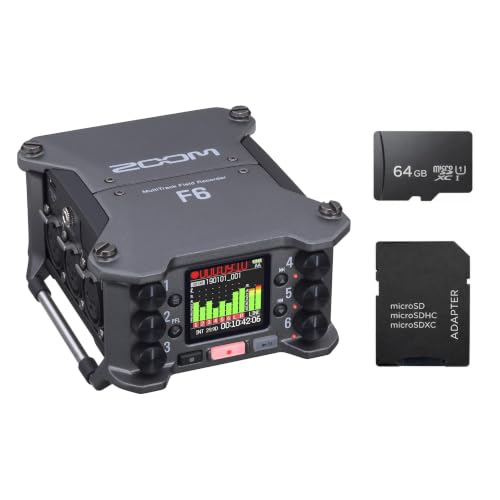
- Six XLR inputs for multi-microphone recording
- 32-bit float WAV recording with dual A/D converters
- Timecode input and output for compatible gear
Best For: Location sound and film production crews
Best Simple Two-Channel Option

- 32-bit float recording up to 96kHz
- Two locking XLR/TRS combo inputs
- Compact design with waveform display
Best For: Interviews, podcasts, music, and everyday recording
Best Compact Timecode Bundle

- Includes F3 recorder and TCA-1 timecode adapter
- 32-bit float recording with two locking XLR inputs
- 3.5mm TRS timecode input and output
Best For: Portable two-channel audio-for-video production
Best Compact Timecode Pick – TASCAM FR-AV2
The TASCAM FR-AV2 is a practical field recorder with timecode for videographers who want accurate sync without carrying a separate timecode device. Its compact design, dual XLR/TRS inputs, and 32-bit float recording support quick, low-stress setups.
Best For: Videographers needing a small recorder with built-in timecode generation and dual professional inputs.
Pros:
- Built-in timecode generation with timecode IN/OUT and a high-accuracy TCXO.
- 32-bit float recording with dual ADCs helps reduce clipping concerns.
- Dual XLR/TRS combo inputs, a 3.5 mm input, and support for recording up to 192 kHz.
- Compact 9.5-ounce design suited to portable video rigs.
Cons:
- Wireless monitoring and app-related functions require the optional AK-BT2 adapter.
- Uses three AA batteries.
Choose the FR-AV2 when portability and integrated timecode matter more than having four or six microphone inputs. It is a focused solution for compact video productions and fast location recording.
Best Accessible Handheld Option – Zoom H4 Essential
The Zoom H4 Essential is a flexible handheld recorder for music, podcasts, interviews, and video audio. While the supplied specifications do not list timecode, its 32-bit float recording, built-in stereo microphones, and two XLR/TRS inputs make it a useful general-purpose alternative for creators comparing a field recorder with timecode.
Best For: Musicians, podcasters, filmmakers, and interviewers who need versatile recording rather than a dedicated timecode workflow.
Pros:
- 32-bit float recording helps capture loud and quiet sources with less concern about clipping.
- Built-in stereo microphones plus two XLR/TRS inputs support varied recording setups.
- Can record to an SD card while connecting to a phone, tablet, or computer over USB-C.
- Spoken menu guidance can make operation easier for visually impaired users and other creators.
Cons:
- Timecode functionality is not identified in the supplied product notes.
- Uses two AA batteries.
The H4 Essential is best viewed as an accessible, adaptable recorder for everyday production. If frame-accurate synchronization is a core requirement, consider a model in this roundup that explicitly includes timecode I/O or generation.
Best Four-Input Video Rig – TASCAM FR-AV4
The TASCAM FR-AV4 is a field recorder with timecode designed for camera rigs and more involved video productions. Four XLR/TRS inputs, a built-in mixer, HDMI sync, and six-track recording give it the connectivity and routing flexibility needed for multi-source capture.
Best For: Video crews and camera-rig operators who need four professional inputs, timecode, and HDMI-based synchronization.
Pros:
- Four Ultra HDDA XLR/TRS inputs provide low-noise capture from microphones and line sources.
- 32-bit float recording and dual A/D converters offer a 133 dB analog dynamic range.
- Built-in mixer records four inputs plus a stereo mix for up to six tracks on SDXC.
- Timecode generation, HDMI sync, USB timecode out, and HDMI pass-through support video workflows.
Cons:
- Wireless monitoring, app control, and Atomos Bluetooth sync require the optional AK-BT2 adapter.
- Its expanded rig-oriented feature set may be more than needed for simple two-input recording.
The FR-AV4 is the stronger fit when a production needs more inputs and routing than a compact two-channel recorder can provide. HDMI synchronization and mixer functionality further distinguish it for camera-based workflows.
Best Professional Multitrack Pick – Zoom F6
The Zoom F6 is a professional field recorder with timecode for filmmakers, broadcast work, and demanding location sessions. Six XLR inputs, up to 14 tracks, 32-bit float recording, and timecode I/O provide substantial flexibility when several microphones must be captured and synchronized with video.
Best For: Professional location sound teams and filmmakers recording multiple microphones with frame-accurate sync.
Pros:
- Six XLR inputs support simultaneous recording from multiple microphones.
- 32-bit float recording with dual A/D converters helps handle very wide dynamic ranges without clipping.
- Timecode I/O supports frame-accurate synchronization with video.
- Works as a standalone recorder or USB audio interface and offers multiple power options.
Cons:
- At 2.4 pounds, it is heavier than the compact recorders in this roundup.
- Its professional multitrack capabilities may be unnecessary for simple two-input jobs.
- Uses four AA batteries when operated from batteries.
The F6 is the most production-oriented choice here for users who need six XLR inputs and extensive track capacity. Its larger, heavier design is a reasonable tradeoff for multitrack flexibility, rugged portability, and dedicated timecode I/O.
Best Pocket Timecode Recorder – Deity PR-2
The Deity PR-2 is a field recorder with timecode designed for filmmakers, journalists, and mobile audio work. Its 32-bit float recording, locking 3.5mm input, included lavalier microphone, and compact design make it practical for interviews, camera rigs, and location recording.
Best For: Filmmakers and interview crews needing a compact recorder with timecode, wireless control, and flexible mic connectivity.
Pros:
- Supports 24-bit and 32-bit float WAV recording.
- Includes a W.Lav Pro lavalier microphone.
- Can work as a standalone timecoder and supports DEITY timecode products.
- Offers up to 30 hours of battery life with two AA batteries.
Cons:
- Uses a 3.5mm stereo mic/line input rather than locking XLR inputs.
- Its built-in microphone form factor is listed as lavalier, so users may need an external mic for other setups.
The PR-2 stands out when portability and timecode features matter more than full-size professional inputs. Bluetooth app control, USB-C connectivity, and dual audio output modes add flexibility for location workflows.
Best XLR Timecode-Ready Field Recorder – Zoom F3
The Zoom F3 is a professional field recorder with timecode-oriented production features for filmmakers and musicians who need dependable external microphone connections. Its dual locking XLR/TRS inputs, 32-bit float recording, and ultra-low-noise preamps suit demanding location and set work.
Best For: Filmmakers and recordists using professional microphones, complex rigs, and unpredictable recording environments.
Pros:
- 32-bit float recording with dual A/D converters helps handle quiet dialogue and sudden peaks.
- Two locking XLR/TRS inputs keep microphone connections secure.
- Ultra-low-noise preamps support clean recordings in challenging conditions.
- Supports battery-powered, standalone, and USB workflows.
Cons:
- Does not list an integrated microphone, so external microphones are required.
- Its feature set and locking XLR design may be more than casual users need.
The F3 is a strong choice for users who prioritize secure XLR connectivity and reliable 32-bit float capture. It is less pocket-oriented than a wearable recorder, but better suited to professional microphone rigs and longer location sessions.
Best Wearable Timecode Recorder – Instamic Pro Plus C
The Instamic Pro Plus C is a wearable field recorder with timecode for discreet production audio, interviews, action-camera work, and mobile content creation. Its four built-in MEMS microphones, 32-bit float recording, IP67 rating, and compact 35-gram body are designed for flexible placement.
Best For: Run-and-gun creators and production teams needing a small, weather-resistant mono recorder that can sync with multiple units.
Pros:
- 32-bit float recording helps prevent clipping across changing sound levels.
- IP67 dust and water protection supports outdoor and unpredictable conditions.
- Companion App can sync and control up to 10 units.
- Compatible with Atomos and Tentacle Sync workflows.
Cons:
- Records mono audio rather than stereo.
- Its 16GB storage and 22-hour recording time are lower than some larger field recorders.
- The built-in omnidirectional microphones may not suit users who need external XLR inputs.
The Instamic Pro Plus C is especially appealing when a recorder needs to stay unobtrusive on camera or clothing. Its timecode compatibility and multi-unit control make it a practical option for productions using several small recorders.
Best Multi-Input Pick – Zoom F6 Field Recorder
If you need a field recorder with timecode for location sound or film production, the Zoom F6 combines timecode connectivity with six XLR inputs and 32-bit float recording. Its rugged, portable design and multiple power options suit demanding production work.
Best For: Location sound teams and filmmakers recording multiple microphones.
Pros:
- Six XLR inputs support multi-microphone recording.
- 32-bit float recording with dual A/D converters captures a wide dynamic range.
- Timecode input and output support synchronization with compatible equipment.
- Includes a 64GB microSD card, SD adapter, and camera mount adapter.
Cons:
- External microphones are not included.
- Its six-input feature set may be more than needed for simple two-channel recording.
The F6 is the strongest choice here for larger location setups, especially when multiple XLR sources and timecode synchronization are central to the workflow.
Best Simple Two-Channel Option – Zoom H1 XLR Recorder
The Zoom H1 XLR is a compact two-channel recorder for filmmakers, musicians, and podcasters. While its supplied notes do not specify a dedicated timecode connection, it offers 32-bit float recording, two locking XLR/TRS inputs, and a waveform display for straightforward level monitoring.
Best For: Creators who need a portable two-input recorder for interviews, podcasts, music, and everyday recording.
Pros:
- Records 32-bit float audio at up to 96kHz.
- Two locking XLR/TRS combo inputs accept microphones, instruments, and other sources.
- OLED waveform display helps monitor levels at a glance.
- Supports SDXC cards up to 1TB and includes 3.5mm input and headphone output.
Cons:
- The supplied specifications do not list timecode input or output.
- Two XLR/TRS inputs provide less capacity than larger multitrack field recorders.
- Requires two AA batteries for battery-powered operation.
The H1 XLR is a practical, compact recorder when simplicity and two-channel flexibility matter more than dedicated timecode synchronization.
Best Compact Timecode Bundle – Zoom F3 with TCA-1
For a compact field recorder with timecode, the Zoom F3 bundle pairs a two-channel 32-bit float recorder with the TCA-1 Timecode Adapter. The adapter adds 3.5mm TRS timecode input and output for syncing with compatible cameras, generators, and slates when used with compatible firmware.
Best For: Audio-for-video users who want portable two-channel recording and timecode synchronization.
Pros:
- Includes the F3 recorder and TCA-1 timecode adapter.
- 32-bit float WAV recording uses dual A/D converters and low-noise preamps.
- Two locking XLR inputs provide 24/48V phantom power.
- Supports microSDHC or microSDXC cards up to 1TB and multiple power options.
Cons:
- Only two XLR inputs are available.
- Timecode functionality depends on compatible firmware and connected equipment.
- The timecode adapter uses the F3 Remote connector, adding an accessory to the setup.
The F3 plus TCA-1 is a focused solution for video production teams that need reliable two-channel audio and timecode without moving to a larger recorder.
How We Picked the Best Field Recorder with Timecode
We focused on recorders that support timecode directly or through a compatible timecode system, while also considering recording quality, input flexibility, monitoring, portability, and workflow compatibility. Models with 32-bit float recording received particular attention because they provide useful protection against clipping during unpredictable location work.
We also considered the needs of different users. A compact two-channel recorder may be ideal for a solo filmmaker, while a camera-rig production or multitrack music session may justify four or more inputs. Bundles were evaluated for the value of included timecode accessories, storage, and adapters.
Quick Comparison
| Best For | What to Prioritize | Recommended Type |
|---|---|---|
| Solo filmmakers | Compact design, simple sync, 32-bit float | Two-channel portable recorder |
| Camera rigs | Multiple XLR inputs, mixer controls, HDMI or timecode sync | Multichannel field recorder |
| Sound professionals | Reliable clocking, preamp quality, battery life | Professional multitrack recorder |
| Wearable or hidden recording | Small size, timecode support, easy placement | Pocket or wearable recorder |
| Musicians and podcasters | Input versatility and straightforward operation | Handheld or compact recorder |
Key Buying Factors for a Field Recorder with Timecode
Timecode Compatibility
Check whether the recorder contains a built-in timecode generator, accepts an external timecode box, or uses a proprietary sync accessory. Confirm the connectors and supported frame rates match your cameras and editing software. A recorder that supports jam syncing can reduce the need for constant cable connections on set.
Inputs and Track Count
Count the microphones and line-level sources you expect to record at once. Two XLR or XLR/TRS inputs are enough for many interviews and small shoots, while four inputs or more provide room for multiple actors, wireless receivers, boom microphones, or music sources.
32-Bit Float and Recording Formats
32-bit float recording can make recovery from unexpectedly quiet or loud takes easier, but it does not replace good microphone placement or monitoring. Also check sample-rate support, file formats, pre-record functions, and whether files integrate cleanly with your editing workflow.
Power, Storage, and Physical Design
Location work rewards long battery life, accessible controls, secure mounting, and reliable media. Consider whether the recorder fits on a camera cage, in a sound bag, or on a performer. Wind protection, headphone output quality, and visible level meters can matter as much as headline specifications.
Who Should Buy Which Field Recorder with Timecode?
Choose a compact two-channel model if you primarily shoot interviews, documentary scenes, or small productions and want uncomplicated timecode synchronization. A multichannel recorder is the better choice for camera rigs, narrative sets, and crews handling several microphones at once.
Musicians and podcasters should prioritize flexible inputs and easy operation over advanced sync features unless their projects involve multicamera video. For discreet placement or wearable recording, a pocket-sized timecode model is more practical than a full mixer-recorder. If you already own compatible timecode equipment, a bundle or accessory-supported recorder may deliver the best overall value.