Headphone amplifiers with balanced output can provide more power, cleaner signal handling, and greater connection flexibility for demanding headphones and desktop audio systems. The right model depends on whether you need a DAC, Bluetooth, EQ, multiple outputs, or simple multi-person monitoring.
We selected 10 options spanning high-power audiophile amps, DAC-and-amp combos, compact desktop units, and multi-channel splitters. Use the guide below to narrow the list by features, connectivity, and listening setup.
Best 10 Headphone Amplifiers with Balanced Output Picks for 2026
Best Hi-Fi Choice

- 4.4mm balanced headphone and XLR line outputs
- PCM 384kHz/32-bit and DSD256 support
- 10-band PEQ plus LDAC Bluetooth 5.4
Best For: Desktop listeners building a customizable balanced-output system
Best Multi-Listener Value
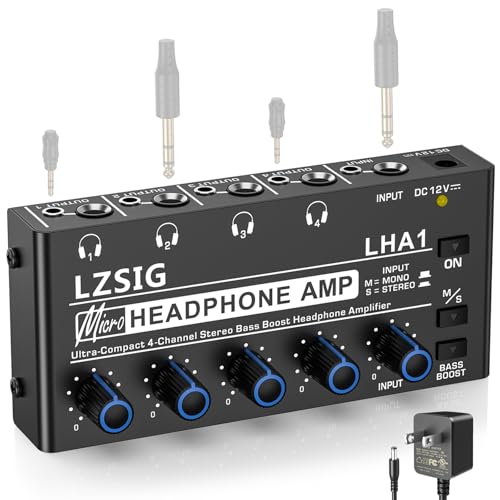
- Four headphone outputs with independent volume
- Accepts 3.5mm and 6.35mm plugs
- Stereo/mono switching and bass boost
Best For: Shared studio, rehearsal, and monitoring sessions
Best Portable Tone Control

- Three-band analog tone controls
- Up to 2400mW in high-impedance mode
- Battery-powered design with 3.5mm and 6.35mm jacks
Best For: Portable and desktop listening with adjustable sound
Best Simple Splitter

- Four independent headphone outputs
- Individual volume control for each listener
- Compact metal, plug-and-play design
Best For: Simple four-person tracking and rehearsal monitoring
Versatile Desktop Pick

- 4.4mm balanced output and powerful quad-channel amplification
- Dual ES9039Q2M DACs with PCM 768kHz/32-bit and DSD512 support
- Bluetooth LDAC, PEQ, preamp mode, and 12V trigger
Best For: Complete desktop systems using headphones, digital sources, and active speakers
Feature-Rich Preamp Choice
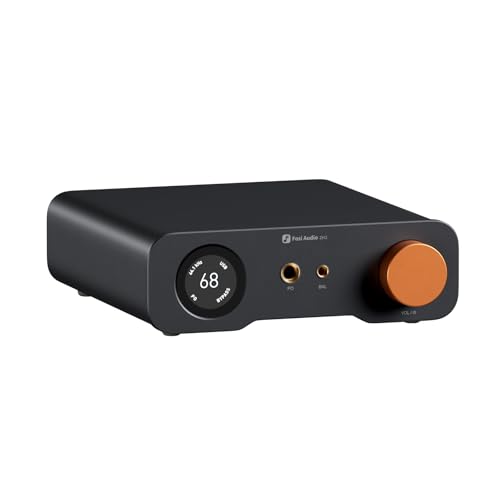
- 4.4mm balanced output with up to 2570mW at 32 ohms
- PCM 768kHz/32-bit and DSD512 support via AKM and XMOS chips
- Broad inputs, XLR/RCA preamp outputs, EQ, filters, and swappable op-amps
Best For: Customizable desktop headphone and preamp systems with varied source connections
High-Power Amp Pick

- Up to 4600mW + 4600mW balanced output at 32 ohms
- Discrete Class AB amplifier designed for demanding headphones
- RCA and 3.5mm inputs with 5V or 12V USB-C PD power
Best For: Planar magnetic and high-impedance headphone owners with an existing source
Best Compact DAC Amp

- 4.4mm balanced and 3.5mm outputs
- 1100mW balanced output at 32 ohms
- USB-C and optical DAC inputs
Best For: Compact desktop listening and versatile digital-source setups
Best High-Power Desktop Amp

- Up to 4600mW+4600mW balanced output
- Discrete Class AB amplification
- 5V USB or 12V PD power options
Best For: Power-hungry planar and high-impedance headphones
Best Multi-Listener Splitter

- Drives up to four headphones
- Independent volume for each output
- Compact 1/4-inch TRS design
Best For: Studio monitoring and shared headphone listening
Best Hi-Fi Choice – FiiO K13 R2R
For listeners seeking headphone amplifiers with balanced output, the FiiO K13 R2R combines a 4.4mm balanced headphone connection with XLR balanced line output, high-resolution decoding, and desktop-friendly controls. Its R2R architecture, selectable NOS/OS modes, and wireless LDAC support make it a flexible choice for detailed listening.
Best For: Desktop listeners who want balanced headphone output, DAC functionality, and extensive sound customization.
Pros:
- Offers 4.4mm balanced and 6.35mm single-ended headphone outputs.
- Supports PCM up to 384kHz/32-bit and DSD256 decoding.
- Includes 10-band PEQ, NOS/OS modes, and LDAC Bluetooth 5.4.
- Provides XLR balanced and dual RCA line outputs for system integration.
Cons:
- Its desktop design is less suited to portable use.
- Advanced features may be more than casual listeners need.
The K13 R2R is the strongest fit here for a full-featured balanced-output setup. Choose it when DAC performance, wireless streaming, EQ, and multiple output options matter as much as headphone amplification.
Best Multi-Listener Value – LZSIG LHA2
The LZSIG LHA2 is a practical distribution amplifier for home studios, rehearsal spaces, and shared monitoring. It drives up to four pairs of headphones from one source, with independent level controls and support for both 3.5mm and 6.35mm plugs. It is not a balanced-output amplifier, so it suits buyers prioritizing multiple listeners over balanced connectivity.
Best For: Small studios and groups that need four individually controlled headphone feeds from one source.
Pros:
- Provides four independent headphone outputs with separate volume controls.
- Accepts both 3.5mm and 6.35mm TS/TRS connections.
- Includes stereo/mono switching and a bass-boost function.
- Uses a compact metal chassis with heavy-duty control knobs.
Cons:
- Does not provide balanced headphone output.
- Designed for distributing one source rather than mixing multiple inputs.
If your priority is collaborative monitoring rather than balanced headphone amplification, the LHA2 offers useful flexibility in a compact package. Its four channels and independent controls make it especially practical for recording or rehearsal sessions.
Best Portable Tone Control – Fosi Audio SK01
The Fosi Audio SK01 is a compact Class A headphone amp and analog preamp with adjustable bass, midrange, and treble. Although it is not a balanced-output model, it supports 3.5mm and 6.35mm headphones, offers up to 2400mW in high-impedance mode, and includes a rechargeable battery for flexible desktop or portable use.
Best For: Listeners who want portable amplification with hands-on tone shaping for headphones or instruments.
Pros:
- Provides three-band bass, midrange, and treble adjustment.
- Offers up to 2400mW in high-impedance mode with a gain switch.
- Includes 3.5mm and 6.35mm headphone connections for 32–300-ohm headphones.
- Built-in 2500mAh battery provides up to six hours of use.
Cons:
- Does not include a balanced headphone output.
- Its tone controls may be unnecessary for listeners seeking a purely neutral interface.
The SK01 is a versatile alternative when portability and analog adjustment are more important than balanced connectivity. Its battery, gain control, loudness function, and compact aluminum enclosure make it easy to use across desktop and mobile listening setups.
Best Simple Splitter – Mackie HM-4
The Mackie HM-4 is a straightforward four-channel headphone amplifier for tracking sessions, rehearsals, and shared listening. It connects to a source through a 1/4-inch input and gives each listener an independent volume control. Like the other distribution amps in this group, it does not offer balanced headphone output.
Best For: Home studios and rehearsal setups needing a compact, plug-and-play way to share one headphone source.
Pros:
- Drives four headphones from a single source.
- Gives each listener independent level control.
- Compact metal build can be secured to a desk, rack, or stand.
- Simple plug-and-play operation requires no power-supply complications.
Cons:
- Does not provide balanced headphone output.
- Its listed connections are centered on 6.35mm jacks, so adapters may be needed for some headphones.
The HM-4 is a good fit when simplicity and four-way monitoring are the main goals. It lacks the DAC features and balanced connections of more advanced headphone amplifiers, but its independent controls keep shared sessions easy to manage.
Versatile Desktop Pick – TOPPING DX5 II
The TOPPING DX5 II is a flexible choice for listeners seeking headphone amplifiers with balanced output, combining a 4.4mm balanced headphone connection with a high-resolution DAC, Bluetooth, and preamp functionality. Its powerful fully balanced design suits demanding headphones while remaining useful in a broader desktop system.
Best For: Desktop listeners who want one unit for balanced headphones, wireless streaming, active speakers, and multiple digital sources.
Pros:
- 4.4mm balanced and 6.35mm headphone outputs with a fully balanced quad-channel amplifier.
- Supports PCM up to 768kHz/32-bit and DSD512 through dual ES9039Q2M DAC chips.
- Includes LDAC Bluetooth 5.1, 10-band PEQ, preamp mode, and 12V trigger connectivity.
Cons:
- Its extensive features may be more than needed for a simple headphone-only setup.
- The supplied information does not specify a built-in microphone or analog input.
Choose the DX5 II when you want balanced headphone amplification alongside serious digital-source flexibility. The display, control knob, EQ, and speaker-friendly preamp mode make it particularly adaptable for a complete desktop audio system.
Feature-Rich Preamp Choice – Fosi Audio ZH3
The Fosi Audio ZH3 is a strong option among headphone amplifiers with balanced output when you also need preamp and connection flexibility. It offers a 4.4mm balanced output, multiple digital inputs, XLR and RCA outputs, adjustable gain, and headphone-focused EQ controls.
Best For: Desktop HiFi users who want balanced headphone power plus DAC, preamp, console compatibility, and sound customization.
Pros:
- 4.4mm balanced output reaches 2570mW at 32 ohms, with a 6.35mm single-ended output as well.
- AKM4493SEQ and XMOS XU316 support PCM up to 768kHz/32-bit and DSD512.
- Offers USB, optical, coaxial, and RCA inputs, plus XLR, RCA, 4.4mm, and 6.35mm outputs.
Cons:
- EQ adjustments apply only to the headphone output.
- RCA and XLR output levels differ significantly, so the output should be matched to the connected equipment.
- Its many settings and connections may be excessive for straightforward listening setups.
The ZH3 stands out for users building a flexible desktop chain rather than a basic headphone rig. Its three gain levels, low stated noise, swappable op-amps, and broad I/O make it easy to tailor, provided you understand the separate headphone and preamp behavior.
High-Power Amp Pick – FiiO JadeAudio GIGAS 1
The FiiO JadeAudio GIGAS 1 focuses on amplification rather than built-in digital conversion, making it a practical choice for listeners seeking headphone amplifiers with balanced output for demanding headphones. Its Class AB discrete circuit and 4.4mm output provide substantial power when paired with an existing DAC or analog source.
Best For: Owners of planar magnetic or high-impedance headphones who already have a DAC or analog source and want more drive.
Pros:
- Delivers up to 4600mW + 4600mW through the 4.4mm balanced output at 32 ohms.
- Discrete Class AB amplification uses transistor output pairs for current capability and control.
- Accepts RCA and 3.5mm inputs, with 3.5mm and 4.4mm outputs, dual gain modes, and flexible 5V or 12V USB-C PD power.
Cons:
- It is an amplifier rather than an all-in-one DAC, so a suitable source may be required.
- The supplied notes do not list digital inputs, Bluetooth, or a preamp output.
- Maximum output capability depends on using 12V USB-C PD power.
GIGAS 1 is the straightforward choice when your priority is high-current headphone drive. Its compact design, balanced output, and 12V PD option make it especially appealing as a power upgrade for an existing source chain.
Best Compact DAC Amp – Fosi Audio SK02
The Fosi Audio SK02 is a versatile choice among headphone amplifiers with balanced output, combining USB-C and optical DAC inputs with both 3.5mm single-ended and 4.4mm balanced connections. Its compact desktop design, high-resolution support, and plug-and-play operation make it practical for computer and home audio setups.
Best For: Desktop listeners who want a compact DAC, preamp functionality, and powerful 4.4mm balanced headphone output.
Pros:
- Supports PCM up to 32-bit/384kHz and DSD256 decoding.
- Provides 1100mW at 32 ohms through the 4.4mm balanced output.
- Includes USB-C and optical inputs, a multifunction control knob, and gain switching.
- Can function as a preamp for active speakers or an amplifier-based home audio system.
Cons:
- Its headphone compatibility is specified for 16-300 ohms, which may not suit every headphone.
- It is designed for tabletop or desktop use rather than portable listening.
The SK02 stands out when you need one small unit to handle digital sources, balanced headphones, and basic preamp duties. Its aluminum construction and straightforward controls further support a clean, durable desktop setup.
Best High-Power Desktop Amp – FiiO JadeAudio GIGAS 1
The FiiO JadeAudio GIGAS 1 is built for listeners comparing headphone amplifiers with balanced output for demanding headphones. Its discrete Class AB design delivers up to 4600mW+4600mW through the 4.4mm balanced output at 32 ohms, while RCA and 3.5mm inputs allow it to work with several existing audio sources.
Best For: Planar magnetic and high-impedance headphone owners who want substantial desktop amplification and headroom.
Pros:
- Delivers up to 4600mW+4600mW through the 4.4mm balanced output at 32 ohms.
- Uses a discrete Class AB output stage with high-current transistor pairs.
- Offers both 4.4mm balanced and 3.5mm outputs, with CTIA microphone pass-through on 3.5mm.
- Supports standard 5V USB power and USB-C PD 12V power for greater output capability.
Cons:
- Its higher power is likely more than necessary for listeners using only sensitive headphones or IEMs.
- The 12V PD operating mode requires a compatible USB-C PD power source.
GIGAS 1 is the strongest fit here for users prioritizing drive power over all-in-one DAC features. Its flexible inputs and dual gain modes make it easier to integrate with a DAC, DAP, phone, computer, or other analog source.
Best Multi-Listener Splitter – Pyle PHA40 4-Channel Amp
The Pyle PHA40 takes a different approach to headphone amplifiers with balanced output: rather than targeting audiophile 4.4mm connections, it distributes one stereo source to four 1/4-inch TRS headphone outputs. Independent volume controls make it useful for recording, rehearsals, and other situations where several listeners need to monitor the same mix.
Best For: Small studios, performers, and recording setups that need four independently controlled headphone feeds.
Pros:
- Powers up to four pairs of headphones at the same time.
- Provides an independent rotary volume control for each channel.
- Uses four 1/4-inch stereo TRS headphone outputs and a 1/4-inch TRS source input.
- Compact dimensions make it convenient for studio, stage, or travel use.
Cons:
- Its outputs are 1/4-inch TRS rather than the 4.4mm balanced format often expected from balanced-output headphone amplifiers.
- It has a single source input and is intended for multi-listener distribution rather than DAC duties.
- The supplied notes identify a corded-electric power source, limiting cable-free use.
The PHA40 is best judged as a practical headphone distribution amp, not as a high-resolution balanced DAC amplifier. Choose it when multiple people need individual volume control from one mixer or stereo source.
How We Picked the Best Headphone Amplifiers with Balanced Output
We focused on the features that matter most in daily use: balanced output availability, output power, input and output connectivity, DAC performance, control options, size, and intended use. The selection includes complete DAC/headphone amp systems as well as simpler analog distribution amplifiers, because these products solve different problems.
We also considered practical compatibility. A balanced headphone connection does not automatically make every headphone balanced, so users should verify the connector and wiring before purchasing an adapter or cable. Models with Bluetooth, USB, optical, coaxial, EQ, or preamp functionality may be better suited to desktop entertainment systems, while compact multi-output amps are useful for shared monitoring.
Quick Comparison
| Best For | Features to Prioritize |
|---|---|
| High-impedance or planar headphones | High balanced output power, low noise, gain control |
| Computer desktop listening | USB DAC, volume control, compact design |
| Wireless and wired playback | Bluetooth codec support plus balanced and single-ended outputs |
| Multiple listeners | Four independent outputs and sufficient distribution power |
| Music production or monitoring | Reliable analog inputs, clear channel separation, durable controls |
Key Buying Factors for Headphone Amplifiers with Balanced Output
Balanced Connector and Actual Power
Check whether the amplifier provides a 4.4mm, XLR, or another balanced headphone output, then compare its rated power at your headphones’ impedance. Higher wattage can help demanding planar or high-impedance models, but clean gain control matters just as much for sensitive headphones.
DAC and Input Selection
If the amplifier will connect directly to a computer, a built-in USB DAC simplifies the setup. Optical and coaxial inputs are useful for TVs, streamers, and other digital sources. Bluetooth support adds convenience, while codec compatibility determines the quality and latency of wireless playback.
Controls, EQ, and Preamp Use
Front-panel gain, bass, balance, and volume controls make an amp easier to use. Parametric or multi-band EQ can help tailor headphones, but users who only need clean amplification may prefer a simpler signal path. A preamp output is valuable if the unit will also feed powered speakers.
Size and Output Layout
Measure your desk and check the location of every connector. Compact amps suit small workstations, while larger desktop units may offer better cooling and more inputs. Multi-channel splitters are designed for shared monitoring and should not be confused with high-end balanced DAC systems.
Who Should Buy Which Headphone Amplifiers with Balanced Output?
Choose a high-power balanced desktop amplifier if you own inefficient planar or high-impedance headphones and want maximum headroom. A DAC-and-amp combo is the most convenient choice for computer listening because it combines source conversion, volume control, and headphone amplification in one enclosure. Models with Bluetooth are best for listeners who switch between wired desktop audio and mobile streaming.
For producers, musicians, and shared workspaces, a four-channel amplifier or headphone splitter is usually more practical than an audiophile DAC. Buyers who already own a separate DAC can select a dedicated analog amp, while those seeking tonal adjustment should prioritize EQ and gain controls. Before ordering, confirm the required cable, connector type, power rating, and whether the product is truly balanced end to end rather than merely offering a balanced jack.