The best electronic drum pads make it easier to practice quietly, trigger samples, build portable setups, or explore drumming without committing to a full-size kit. This roundup compares compact multipads, MIDI controllers, sample pads, and roll-up beginner sets.
Use the buying guide below to match pad layout, sound options, connectivity, and playing feel to your setup and skill level.
Best 10 Electronic Drum Pads Picks for 2026
Versatile Powerhouse

- Nine dual-zone velocity-sensitive pads
- 592+ sounds and 30 drum kits
- MIDI, USB, triggers, looping, and sample import
Best For: Expansive live and production setups
Professional Sound Library

- 1,061 drum, percussion, and effects sounds
- 216 keyboard sounds with sequencing and loops
- Five external trigger inputs and user-sample Flash-ROM
Best For: Performers needing deep sounds and expansion
Portable Beat Maker
Akai MPD218 USB MIDI Pad Controller

- 16 velocity-sensitive MPC pads
- Three banks provide 48 assignable pads
- USB powered with MPC Beats and Ableton Live Lite
Best For: Computer-based beat production
Simple Sample Expansion

- Four velocity-sensitive pads
- 25 sounds across eight kits
- SD-card expansion and MIDI output
Best For: Compact live percussion and sample triggering
Compact Pad Module

- Four velocity-sensitive pads
- 50 built-in drum and percussion sounds
- USB/MIDI plus pedal and trigger inputs
Best For: Beginners and compact practice setups
Expanded Performance Pad
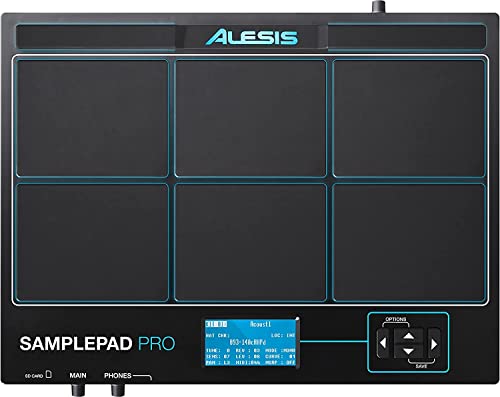
- Eight illuminated velocity-sensitive pads
- 200-plus sounds and 10 ready-to-play kits
- SD card sample loading and extensive connectivity
Best For: Live performers and expandable practice rigs
Portable Kids’ Drum Pad

- Nine pads with two foot pedals
- Built-in speakers, recording, and headphone output
- Rechargeable battery with up to 10 hours of playtime
Best For: Kids, beginners, travel, and casual practice
Best Full-Feel Beginner Kit
AKLOT B-CORE53 NEO Electronic Drum Set
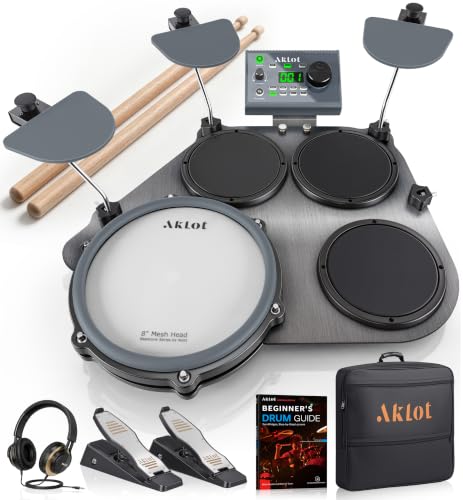
- 8-inch dual-zone mesh snare
- Full-size anti-slip pedals
- 30 kits and 360 sounds
Best For: Beginners seeking a compact setup with a more realistic drum feel
Best Roll-Up Learning Pad
Donner DED-20 Electronic Drum Pad

- Portable roll-up silicone design
- 40 free Melodics lessons
- USB and standard MIDI outputs
Best For: New players and families wanting portable, guided practice
Best Kids' Portable Set
ROCKSOCKI 7-Pad Roll-Up Drum Set
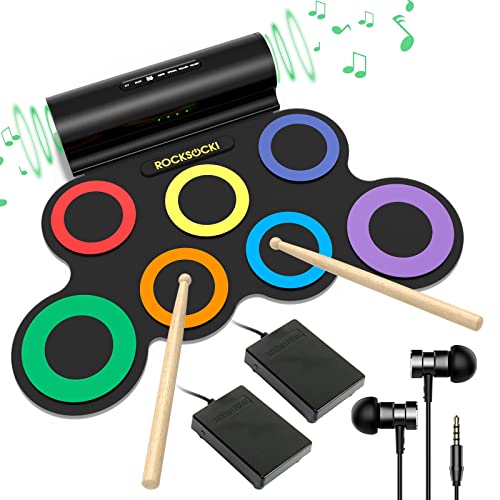
- Designed for kids ages 4–12
- Up to 10 hours of battery life
- Headphones and MIDI connectivity included
Best For: Young beginners who want a portable electronic drum gift
Versatile Powerhouse – LEKATO PD705 Sample Pad
The LEKATO PD705 is a strong choice if you want electronic drum pads with broad sound variety, expressive response, and room to expand. Its nine dual-zone, velocity-sensitive pads support detailed playing, while MIDI, USB, trigger inputs, and sample-import options make it suitable for both practice and production.
Best For: Players who want a feature-rich multipad for live performance, sound design, and DAW-based music production.
Pros:
- Nine dual-zone, velocity-sensitive pads provide a fuller drum-set-style layout.
- Includes 592+ sounds, 30 drum kits, and storage for up to 20 custom kits.
- Offers MIDI I/O, USB, trigger inputs, AUX, looping, and sample import through WaveManager.
Cons:
- Its extensive feature set may take time for beginners to learn.
- At 3.17 kg, it is less lightweight than simpler pad controllers.
The PD705 stands out among electronic drum pads for combining a large built-in library with deep connectivity and expansion potential. It is especially compelling for users who expect their setup to grow.
Professional Sound Library – Yamaha DTX-MULTI 12
The Yamaha DTX-MULTI 12 is designed for musicians who need electronic drum pads with a substantial internal sound palette and performance-focused functions. It combines drum, percussion, effects, and keyboard sounds with sequencing, loops, and connections for additional pads and controllers.
Best For: Performing drummers and percussionists who want a robust multipad with extensive sounds and external expansion.
Pros:
- Provides 1,061 drum, percussion, and effects sounds plus 216 keyboard sounds.
- Mute, layer, sequencer, and preset-loop functions support varied performances.
- Includes five external trigger inputs, a footswitch jack, and a hi-hat controller jack.
Cons:
- The supplied notes do not indicate the number of built-in pads.
- Its larger 16.5 x 21.89 x 9.65-inch dimensions may require dedicated space.
With its broad sound selection and external-trigger support, the DTX-MULTI 12 is a capable centerpiece for a performance rig. The 64MB Flash-ROM also allows user samples to expand its creative range.
Portable Beat Maker – Akai MPD218 USB MIDI Pad Controller
The Akai Professional MPD218 is a compact option for producers seeking electronic drum pads for beat making, sample triggering, and software control. Its 16 velocity-sensitive MPC pads are USB powered, and three pad banks provide 48 assignable pad locations without requiring a standalone drum module.
Best For: Producers, DJs, and musicians who want a portable USB MIDI controller for computer or iOS-based workflows.
Pros:
- Offers 16 thick, velocity-sensitive MPC pads with three banks for 48 assignable pads.
- Includes note repeat, full level, and 18 assignable knobs across three banks.
- Comes with MPC Beats, Ableton Live Lite, and Drum Synth 500 software.
Cons:
- It is a MIDI controller rather than a standalone sound-producing drum pad.
- iOS use requires a Camera Connection Kit, sold separately.
The MPD218 is best viewed as a focused software controller rather than an all-in-one electronic drum unit. Its low-complexity USB setup and MPC-style pads make it a practical choice for mobile or desktop beat production.
Simple Sample Expansion – Alesis SamplePad 4
The Alesis SamplePad 4 is a straightforward way to add electronic drum pads to a percussion or drum setup. Four velocity-sensitive pads, built-in sounds, SD-card sample expansion, and MIDI output give it useful flexibility without the larger footprint of a full multipad.
Best For: Drummers and live performers who need a compact sample pad for triggering percussion sounds and external modules.
Pros:
- Four velocity-sensitive pads support expressive triggering.
- Includes 25 percussion and electronic drum sounds across eight ready-to-play kits.
- SD/SDHC sample expansion, dual trigger input, tuning, reverb, and MIDI output add flexibility.
Cons:
- Four pads offer less hands-on playing space than larger multipads.
- The supplied notes list USB as a connector but do not specify USB functionality.
The SamplePad 4 is a sensible entry point for adding triggered sounds to an existing setup. It keeps the controls and footprint manageable while still allowing custom samples through a standard SD card.
Compact Pad Module – KAT Percussion KTMP1
The KAT Percussion KTMP1 is a compact, affordable option for shoppers comparing electronic drum pads for basic drumming and percussion setups. It provides four velocity-sensitive pads, 50 built-in sounds, and USB/MIDI connectivity in a straightforward module.
Best For: Beginners, compact practice setups, and percussionists who want a simple pad module.
Pros:
- Four velocity-sensitive pads respond to playing dynamics.
- Includes 50 drum and percussion sounds.
- Two additional inputs support a hi-hat controller pedal and bass drum trigger.
- USB/MIDI connectivity supports connection to compatible equipment.
Cons:
- Offers fewer pads and built-in sounds than larger pad units.
- The compact design may be limiting for players seeking a broad multi-pad layout.
Choose the KTMP1 if you value a small footprint and essential electronic drum functionality over extensive sound libraries or a full performance surface.
Expanded Performance Pad – Alesis SamplePad Pro
The Alesis SamplePad Pro is a versatile choice among electronic drum pads, combining eight isolated velocity-sensitive pads with 200-plus built-in sounds and SD card sample support. Its broad connectivity also suits live performance and more developed practice rigs.
Best For: Performers and experienced players who want multiple pads, expandable sounds, and flexible connections.
Pros:
- Eight isolated rubber pads include active blue LED illumination.
- Provides more than 200 built-in drum, cymbal, and percussion sounds across 10 kits.
- Supports additional pads, kick and hi-hat pedals, MIDI, USB, audio outputs, headphones, and auxiliary input.
- SD card support allows users to add samples and save up to 512 sounds and 20 kits per 32GB card.
Cons:
- SD card is not included.
- Its expanded feature set and 6.6-pound weight may be more than a beginner needs.
The SamplePad Pro is the stronger fit when customization and live-ready connectivity matter more than having the smallest or simplest electronic drum pad.
Portable Kids’ Drum Pad – Sboet 9-Pad Roll-Up Drum Kit
The Sboet roll-up kit is a portable electronic drum pad aimed at children and beginners. It includes nine drum pads, two pedals, built-in speakers, recording, headphone output, and a rechargeable battery rated for up to 10 hours of playtime.
Best For: Kids, introductory drumming, travel, and casual family music activities.
Pros:
- Nine-pad layout includes toms, crashes, hi-hat, ride, snare, bass, and two pedals.
- Offers seven timbres, 10 demo songs, and nine rhythms.
- Built-in stereo speakers, headphone output, recording, and adjustable volume and tempo support varied practice.
- Roll-up design and rechargeable battery support portable use.
Cons:
- Its miniature, toy-sized construction is less suited to advanced performance.
- The 5V 2A power adapter is not included.
- The feature set is oriented toward beginners rather than detailed sound customization.
For a child’s first electronic drum pads, the Sboet emphasizes portability, approachable controls, and entertaining practice features rather than professional-level playing depth.
Best Full-Feel Beginner Kit – AKLOT B-CORE53 NEO Electronic Drum Set
If you want electronic drum pads that feel closer to a compact drum set than a flat tabletop controller, the AKLOT B-CORE53 NEO is designed for that purpose. It combines an 8-inch dual-zone mesh snare, larger cymbals, stabilized tom pads, and full-size pedals in a desktop-friendly setup.
Best For: Beginners who want a more realistic practice layout while keeping their electronic drum setup compact.
Pros:
- 8-inch, 3-layer dual-zone mesh snare provides a larger playing surface and separate head and rim responses.
- Full-size hi-hat and kick pedals offer more foot room, anti-slip stability, and spring rebound.
- Includes 20 preset kits, 10 user kits, and 360 sounds for varied practice.
- 4.5-inch cymbals feature adjustable stands and locking hardware.
Cons:
- Its expanded layout is less compact than a simple roll-up pad.
- The supplied notes do not specify the full list of included accessories or all module features.
The B-CORE53 NEO stands out among electronic drum pads for emphasizing playing feel and a complete drum layout. It is a strong choice for learners who are willing to use a little more space in exchange for larger playing surfaces and more substantial pedals.
Best Roll-Up Learning Pad – Donner DED-20 Electronic Drum Pad
The Donner DED-20 is a practical option if you want electronic drum pads that are easy to store, carry, and use for quiet practice. Its silicone seven-pad layout includes built-in speakers, headphone output, MIDI connectivity, recording, and 40 included Melodics lessons.
Best For: Beginners, children, and casual players who prioritize portability, lessons, and flexible practice options.
Pros:
- Roll-up silicone design is easy to store and transport.
- Dual stereo speakers offer nine volume levels, while the headphone output supports quieter practice.
- Includes 40 free drum lessons from Melodics, along with 12 demo songs and nine accompaniments.
- USB MIDI and standard MIDI outputs support computer music production and gameplay.
Cons:
- The strike force is single and does not change with harder hits.
- Its flat roll-up format provides less drum-like physical feedback than a full electronic kit.
- The supplied notes list a one-year manufacturer warranty.
The DED-20 focuses on convenience rather than advanced playing dynamics. It is especially appealing for homes where storage space matters and for new players who will benefit from guided lessons, headphone practice, and straightforward MIDI connections.
Best Kids' Portable Set – ROCKSOCKI 7-Pad Roll-Up Drum Set
For families shopping for electronic drum pads for younger players, the ROCKSOCKI 7-pad set offers a simple, portable starting point. It includes three toms, a snare, hi-hat, ride, crash, two pedals, drumsticks, and headphones, with a built-in battery for playing away from an outlet.
Best For: Kids ages 4–12 and families looking for a portable practice or gift-oriented drum set.
Pros:
- Seven-pad layout includes the core drums and cymbals needed to get started.
- Built-in 2,000mAh battery provides up to 10 hours of playing time according to the supplied notes.
- Dual speakers, 10 volume levels, and included headphones support home or quiet practice.
- USB MIDI and standard MIDI connections enable computer use, music production, and compatible games.
Cons:
- The product is positioned primarily for children, so advanced players may want a more substantial kit.
- A phone connection may require an adapter.
- The roll-up format is designed for portability rather than a full-size drum-set feel.
The ROCKSOCKI makes a convenient introductory choice for young drummers who need an easy-to-carry instrument. Its rechargeable battery and included headphones add flexibility, while MIDI connectivity leaves room for computer-based activities as skills develop.
How We Picked the Best Electronic Drum Pads
We organized this roundup around the needs that matter most when choosing Electronic Drum Pads: pad response, portability, built-in sounds, MIDI and USB connectivity, expansion options, headphone support, and ease of setup. The selection includes dedicated multipads for performers, MIDI controllers for computer-based production, sample pads for sound expansion, and affordable roll-up kits for beginners.
Because these products serve different purposes, the “best” option depends on whether you need an instrument, a controller, a practice tool, or a portable introduction to electronic drumming.
Quick Comparison
| Type | Best for | What to prioritize |
|---|---|---|
| Multipad | Live performance and standalone playing | Velocity response, pad count, sounds, outputs |
| Sample pad | Triggering one-shot samples and expanding a kit | Storage, sample import, triggering accuracy |
| MIDI pad controller | DAWs, beat-making, and software instruments | USB connectivity, software mapping, sensitivity |
| Roll-up drum kit | Beginners, children, and travel practice | Portability, included pedals, speaker, lessons |
Key Buying Factors for Electronic Drum Pads
Playing Feel and Sensitivity
Velocity-sensitive pads respond to how hard you play, giving beats more realistic dynamics. Mesh or dual-zone surfaces can provide a more natural feel and additional triggering options, while basic rubber or roll-up pads are usually better suited to casual practice.
Sounds, Samples, and Expansion
Check whether the unit includes drum kits, percussion sounds, effects, or sample-import support. A larger internal library is useful for standalone playing, while sample loading matters more if you want custom sounds. Some controllers produce no sounds themselves and require a computer or external module.
Connectivity and Monitoring
USB and MIDI connections determine how easily the pad works with a computer, drum module, or recording setup. Headphone output is important for quiet practice. Also check for audio outputs, auxiliary input, and compatibility with your intended software or hardware.
Size, Power, and Accessories
Compact pads are easier to transport but may provide less separation between playing surfaces. Roll-up kits are highly portable, whereas standalone multipads generally offer better control and performance features. Confirm whether pedals, sticks, power supplies, mounting hardware, or headphones are included.
Who Should Buy Which Electronic Drum Pads?
Choose a Multipad for Performance
Drummers who need one compact instrument for practice, triggering, or live use should focus on the Yamaha, LEKATO, and Alesis multipad-style options. Prioritize responsive surfaces, reliable outputs, and enough onboard sounds for your workflow.
Choose a MIDI Controller for Music Production
The Akai MPD218 is the better fit for producers who already work in a DAW or use software instruments. It is designed around computer control rather than standalone drumming, so verify that your software supports the required mapping.
Choose a Roll-Up Kit for Beginners
Sboet, Donner, and ROCKSOCKI-style kits make sense for children, casual players, travel, and first lessons. They emphasize convenience and built-in features over the realistic response and expandability of a dedicated multipad.
Choose a Sample Pad for Kit Expansion
Alesis SamplePad models and similar sample-focused units suit players who want extra percussion, backing sounds, or custom samples alongside an acoustic or electronic kit. Check memory and input/output limitations before buying.