Finding the right multi-effects unit can simplify your rig without limiting your tone. The best guitar effects processors under $500 combine convincing amp modeling, flexible effects chains, practical controls, and useful connectivity for home and live setups.
This roundup compares 10 feature-rich options, from compact practice pedals to advanced processors with impulse-response loading, USB recording, MIDI, and expression control.
Best 10 Guitar Effects Processors Under 500 Picks for 2026
Best Practice Companion

- 71 effects and 13 amp models
- 30-second looper with 68 rhythm patterns
- Expression pedal and battery-powered operation
Best For: Practice, songwriting, and beginner-friendly tone exploration
Best Portable BOSS Option

- GT-series engine with numerous amps and effects
- Expression pedal and assignable control switch
- Up to seven hours from four AA batteries
Best For: Portable practice, busking, and mobile gigs
Best Hands-On Performance Control
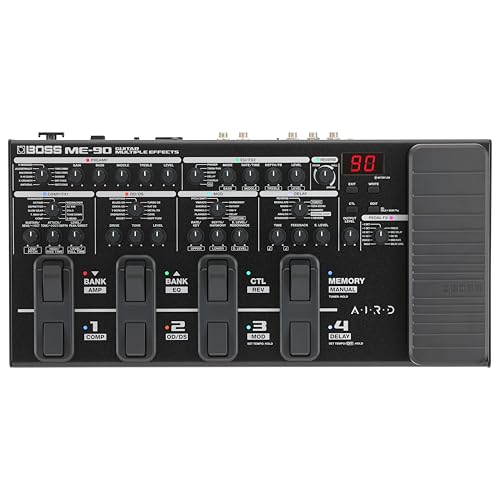
- 60 effects and 11 AIRD amp models
- Eight footswitches plus expression pedal
- IR loading and effects loop
Best For: Live players who want direct stompbox-style control
Versatile Practice Pick
FLAMMA FX100 Multi-Effects Pedal

- 55 amp models and 151 built-in effects
- 80-second looper with drums and metronome
- USB, OTG, headphone, and expression-pedal support
Best For: Flexible practice, recording, streaming, and live setups
Portable NAM Value
Valeton GP-50 NAM Multi-Effects Processor
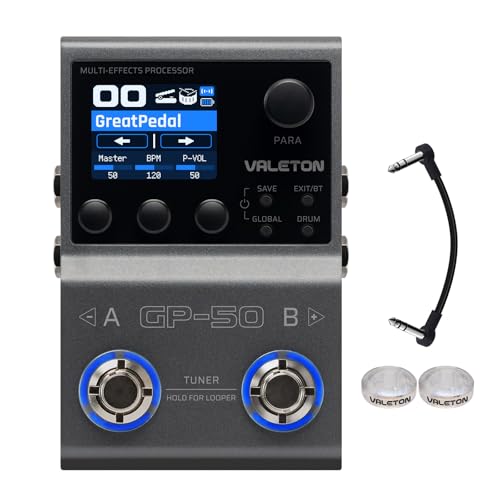
- 100+ effects with NAM and IR loading
- Nine simultaneous modules and 100 patch slots
- Rechargeable battery, Bluetooth, and USB audio
Best For: Portable guitar or bass rigs and mobile recording
Full-Featured Floorboard
Valeton GP-200R Multi-Effects Pedal

- 240+ effects with 140 amp and cabinet simulations
- 256 presets, 11 blocks, and 180-second looper
- Eight footswitches, FX loop, MIDI, XLR, and OTG
Best For: Complex live rigs, recording, and hands-on signal-chain control
Flexible Modeling Workhorse

- 200 presets with 55 amp models and 26 cab simulations
- Four footswitches, expression pedal, looper, and drum machine
- USB-C and OTG connectivity for editing and recording
Best For: Players seeking flexible live control and broad modeling options
Stage-Ready All-Rounder
Valeton GP-200 Multi-Effects Processor

- 240-plus effects and 140-plus amp and cabinet models
- Six-in/four-out USB audio interface with loopback and re-amping
- Metal chassis, expression pedal, color display, and gig bag
Best For: Live players who want deep routing and durable hardware
Portable Battery-Powered Modeler
Valeton GP-150 Multi-Effects Processor

- 200-plus effects with IR and NAM support
- Built-in battery offers more than six hours of playtime
- USB audio, Bluetooth, MIDI, looper, and drum patterns
Best For: Mobile players and recording-focused guitarists
Best Practice Companion – Zoom G1X Four
The Zoom G1X Four is a practical choice for guitar effects processors under 500, especially if you want broad sound variety without a complicated setup. It combines 71 effects, 13 amp models, an expression pedal, a looper, rhythm patterns, and battery-powered operation in one compact unit.
Best For: Players who want an affordable practice, songwriting, and entry-level live-performance processor with plenty of built-in tools.
Pros:
- Offers 71 effects and 13 amp models for experimenting with varied tones.
- Includes a 30-second looper and 68 rhythm patterns for practice and songwriting.
- Supports headphones, auxiliary audio, battery power, and patch editing through Zoom Guitar Lab.
- Built-in expression pedal adds hands-on control over compatible effects.
Cons:
- The looper is limited to 30 seconds.
- Its feature set may be more practice-focused than performance-focused for advanced players.
The G1X Four stands out when flexibility and practice features matter more than a premium stage-control layout. It is a well-rounded starting point for exploring effects and building custom patches.
Best Portable BOSS Option – BOSS GT-1
The BOSS GT-1 is a strong contender among guitar effects processors under 500 for players who want a compact unit built around BOSS’s GT-series sound engine. Its streamlined controls, assignable switch, expression pedal, patch tools, and battery operation make it suitable for home use and mobile playing.
Best For: Guitarists seeking portable BOSS tones, simple patch editing, and a lightweight processor for practice, busking, or mobile gigs.
Pros:
- Provides access to a broad selection of BOSS amps and effects in a compact floor unit.
- Includes an expression pedal and assignable control switch for real-time adjustments.
- Four AA batteries provide up to seven hours of playing time, according to the supplied specifications.
- Easy Select and Easy Edit functions simplify patch selection and tweaking.
Cons:
- It has fewer specifically listed practice features than the Zoom and SONICAKE models.
- Its compact interface may require menu navigation for deeper sound editing.
The GT-1 focuses on portability and recognizable BOSS processing rather than an extensive list of standalone practice tools. It is a sensible pick for players who value mobile convenience and quick patch control.
Best Pocket-Sized Feature Set – SONICAKE QME-10 Pocket Master
The SONICAKE QME-10 packs an unusually broad feature set into a pocket-sized format, making it an appealing option among guitar effects processors under 500 for guitar, bass, and acoustic players. It includes more than 100 effects, 20 amp models, drum rhythms, a looper, rechargeable power, and USB audio functions.
Best For: Musicians who want a highly portable multi-instrument processor with rechargeable operation, mobile connectivity, and extensive built-in effects.
Pros:
- Includes 100-plus effects, 20 amp models, 99 drum rhythms, and a looper.
- Supports third-party IRs, NAM A2 files, and up to nine simultaneous effect blocks.
- Offers stereo USB audio, OTG support for iOS and Android devices, and Bluetooth audio.
- Built-in rechargeable battery and compact dimensions suit on-the-go use.
Cons:
- The supplied warranty description lists only 90 days.
- Its pocket-sized controls and display may be less convenient for detailed live adjustments.
- Advanced features such as IR and NAM support may require additional software management.
The QME-10 is best judged by its portability and connectivity rather than by traditional pedalboard ergonomics. It offers an impressive amount of recording, practice, and modeling functionality for players who work across multiple instruments.
Best Hands-On Performance Control – BOSS ME-90
BOSS ME-90 Guitar Multi-Effects Guitar Processor | All-In-One Guitar Processor
Check Price On AmazonThe BOSS ME-90 is a compelling choice among guitar effects processors under 500 for players who want direct, stompbox-style control. It combines 60 effects, 11 AIRD amp models, IR loading, an effects loop, eight multifunction footswitches, and an expression pedal for flexible performance setups.
Best For: Performing guitarists who prefer hands-on sound shaping, multiple footswitches, and a robust all-in-one processor with amp and effects flexibility.
Pros:
- Provides 60 effects and 11 flagship-grade AIRD amp models.
- Eight multifunction footswitches and a redesigned expression pedal support live control.
- Includes IR loading, an effects loop, and 24-bit AD/DA with 32-bit floating-point processing.
- Offers 36 preset patches and 36 user patches for storing sounds.
Cons:
- Its larger dimensions may be less convenient for highly compact pedalboards.
- Optional Bluetooth connectivity requires a separate adaptor.
- The supplied notes describe corded-electric power rather than battery operation.
The ME-90 is the most performance-oriented option in this group, emphasizing immediate access to controls and a broad routing feature set. It is a strong fit when live usability matters more than pocket portability.
Versatile Practice Pick – FLAMMA FX100 Multi-Effects Pedal
For guitarists comparing guitar effects processors under 500, the FLAMMA FX100 offers a broad feature set for practice, recording, and live use. It combines 55 amp models, 151 effects, built-in cabinet modeling, a looper, drum rhythms, expression control, and USB/OTG connectivity in a compact pedal.
Best For: Players who want extensive tone options, silent practice tools, and direct recording or streaming connectivity.
Pros:
- Includes 55 amp models, 151 effects, and 10 third-party IR slots.
- 80-second looper, 40 drum rhythms, metronome, tap tempo, and tuner support practice.
- Provides an expression pedal, 200 presets, headphone output, USB, and OTG connections.
Cons:
- Its many effects and presets may require time to learn.
- The 80-second looper is shorter than the GP-200R’s 180-second looper.
The FX100 is a strong all-around choice when versatility matters more than a minimal interface. Its amp, effect, practice, and connectivity features make it suitable for home musicians and performers seeking one flexible unit.
Portable NAM Value – Valeton GP-50 NAM Multi-Effects Processor
Among guitar effects processors under 500, the Valeton GP-50 stands out for combining standard multi-effects with NAM and IR loading in a compact format. It supports more than 100 HD effects, nine simultaneous modules, wireless app editing, USB audio, and battery-powered operation.
Best For: Guitarists and bassists who prioritize portability, modern amp capture loading, wireless control, and flexible practice or recording options.
Pros:
- Combines over 100 effects with NAM loading and 20 third-party cabinet IR slots.
- Supports up to nine simultaneous modules and stores up to 100 patch slots.
- Offers Bluetooth app control, USB audio/MIDI, headphones, and a rechargeable battery.
Cons:
- Its dual-footswitch layout may offer less immediate control than larger floor units.
- The compact design provides fewer built-in footswitches than the GP-200R.
The GP-50 is a particularly convenient option for musicians who want advanced digital loading features without carrying a large processor. Battery operation and mobile-compatible connectivity add practical flexibility for rehearsals, travel, and quick recording sessions.
Full-Featured Floorboard – Valeton GP-200R Multi-Effects Pedal
For shoppers seeking guitar effects processors under 500 with extensive hands-on control, the Valeton GP-200R is a comprehensive floorboard. It provides 240-plus effects, 140 amp and cabinet simulations, 11 simultaneous blocks, a large color display, an expression pedal, and broad stage and recording connectivity.
Best For: Performers and home-studio players who need deep signal-chain control, many presets, an integrated expression pedal, and flexible I/O.
Pros:
- Includes 240-plus effects, 140 amp and cabinet simulations, and 100 stompbox models.
- Provides 256 presets, 11 simultaneous blocks, a 180-second looper, and 100 drum rhythms.
- Features eight customizable footswitches, a 4.3-inch display, FX loop, MIDI, XLR, USB-C, and OTG.
Cons:
- At 6.5 pounds, it is less portable than the compact GP-50.
- Its extensive controls and routing options may be more than beginners need.
- It lists a 90-day free-returnable warranty period.
The GP-200R is the most expansive option of these three for players building complex live or studio rigs. Its larger interface, expression pedal, FX loop, and extensive I/O make it well suited to musicians who want a central control hub rather than a minimalist pedal.
Flexible Modeling Workhorse – MOOER GE150 Pro
The MOOER GE150 Pro is a versatile choice for guitar effects processors under 500, combining extensive amp and cabinet modeling with practical performance and recording tools. Its four footswitches, expression pedal, looper, drum machine, and USB-C connectivity make it suitable for both stage use and home practice.
Best For: Guitarists who want broad tone-shaping options, hands-on patch control, and phone-friendly recording in a compact processor.
Pros:
- Includes 200 factory presets, 55 amp models, 26 cabinet simulations, and 20 IR slots.
- Four multi-purpose footswitches and an expression pedal support flexible live control.
- Built-in 80-second stereo looper, 40 drum rhythms, tuner, AUX input, and headphone output.
- USB-C supports editing, data management, firmware updates, and OTG recording.
Cons:
- The standard model is corded electric rather than battery powered.
- Its compact control layout may require setup time to master the available functions.
With MNRS amp and cab support, extensive connectivity, and integrated practice features, the GE150 Pro is a strong all-around option for players prioritizing flexibility without moving to a larger floorboard.
Stage-Ready All-Rounder – Valeton GP-200 Multi-Effects Processor
The Valeton GP-200 is a stage-focused pick among guitar effects processors under 500, offering a large effects library, flexible routing, and a color display in a durable metal chassis. The included gig bag adds convenient protection for rehearsals, transport, and live performance.
Best For: Gigging guitarists and multi-instrumentalists who need extensive modeling, quick patch access, and a rugged all-in-one setup.
Pros:
- Provides more than 240 effects, including 140-plus amp and cabinet models.
- Supports up to 11 simultaneous modules and 20 user cabinet IRs.
- Includes 256 patch slots, a 180-second looper, 100 drum patterns, and a chromatic tuner.
- Functions as a 6-in/4-out USB audio interface with loopback and re-amping support.
Cons:
- At 2.37 kg, it is less lightweight than more compact processors.
- The extensive routing and effects options may be more than beginners need.
The GP-200 emphasizes performance control and connectivity, making it a compelling choice when durable construction, deep patch management, and recording functionality matter as much as modeled tones.
Portable Battery-Powered Modeler – Valeton GP-150 Multi-Effects Processor
The Valeton GP-150 stands out among guitar effects processors under 500 for its built-in rechargeable battery, modern modeling, and support for both IR and NAM files. Its compact design, wireless-oriented features, and USB audio interface make it especially practical for mobile practice, recording, and streamlined live setups.
Best For: Guitarists who value portability, battery-powered operation, and flexible tone loading for practice, recording, or gigs.
Pros:
- Offers more than 200 effects with support for up to 12 simultaneous modules.
- Stores up to 100 SnapTone files and 20 IR files, with NAM file conversion support.
- Its 3000mAh battery provides more than six hours of playtime and charges via USB-C or 9V DC.
- Includes a 180-second looper, 100-plus drum patterns, Bluetooth, MIDI, and a 6-in/4-out USB interface.
Cons:
- The listed dimensions and lightweight design may offer less physical control than larger floor units.
- It has a dual-footswitch layout, providing fewer dedicated switches than the GE150 Pro or GP-200.
The GP-150 is a particularly convenient option for players who want substantial modeling depth without relying on mains power. Its battery, file support, and mobile-device compatibility give it a strong advantage for portable workflows.
How We Picked the Best Guitar Effects Processors Under 500
We focused on the features that matter most in real-world use: sound-shaping flexibility, amp and cabinet modeling, preset capacity, editing workflow, foot control, connectivity, and portability. We also considered whether each processor suits a particular use case, such as bedroom practice, direct recording, rehearsals, or live performance.
Feature counts can be useful, but they do not tell the whole story. A unit with fewer effects may be easier to operate, while a more advanced model may offer better routing, third-party IR support, or deeper computer integration.
Quick Comparison
| What to Compare | Why It Matters |
|---|---|
| Effects and amp models | Determines how broadly you can cover clean, high-gain, ambient, modulation, and bass sounds. |
| IR and cabinet support | Helps shape a direct-to-mixer or headphone tone, especially when bypassing a physical amplifier. |
| Foot control | Expression pedals, assignable switches, and looper controls improve hands-free performance. |
| Connectivity | USB, MIDI, Bluetooth, OTG, and effects loops expand recording and rig-integration options. |
Key Buying Factors for Guitar Effects Processors Under 500
Sound and Signal Flexibility
Check whether the processor includes the amp models and effects you actually use. Players who build tones from scratch should prioritize flexible routing and simultaneous modules. If you mainly need reliable presets, straightforward controls may be more valuable than an enormous library.
Direct Recording and Monitoring
For silent practice or recording, look for a headphone output and USB audio functionality. IR or cabinet loading is particularly useful for direct tones because it can make modeled amplifiers sound more natural through studio monitors, headphones, or a PA.
Live Usability
Consider preset navigation, switch spacing, screen readability, and whether key parameters can be assigned to footswitches. An expression pedal can control volume, wah, pitch, or effect depth without requiring an additional accessory.
Expansion and Future-Proofing
MIDI, an effects loop, third-party IR support, and app-based editing can extend a processor’s usefulness as your setup grows. Bluetooth or mobile control is convenient, but verify whether it supports audio streaming, editing, or both.
Who Should Buy Which Guitar Effects Processors Under 500?
- Beginners and practice-focused players: Choose a compact, easy-to-edit unit with built-in effects, a tuner, a looper, and headphone monitoring.
- Gigging guitarists: Prioritize sturdy foot controls, fast preset access, expression control, and outputs that connect cleanly to an amplifier or PA.
- Home recordists: Look for USB audio, convincing amp and cabinet modeling, IR support, and convenient computer editing.
- Tone explorers: A processor with extensive routing, many simultaneous modules, NAM or third-party IR support, and app control offers more room to experiment.
- Bass players and multi-instrumentalists: Confirm that the processor includes suitable bass models, sufficient headroom, and routing options for your instruments.
The best choice is the processor that matches your workflow rather than the one with the longest feature list. Decide whether simplicity, live control, recording connectivity, or deep customization matters most, then use those priorities to narrow the field.