Finding the right guitar effects processor under $200 can make it easier to practice quietly, explore new tones, and build a compact live rig without buying separate pedals one at a time.
This roundup compares 10 multi-effects units by modeling features, effects variety, preset control, connectivity, portability, and overall value. Whether you need a beginner-friendly practice tool or a more capable processor for recording and performance, the options below cover a range of playing styles and budgets.
Best 10 Guitar Effects Processors Under 200 Picks for 2026
Practice-Ready Pick

- 71 effects and 13 amp models
- 30-second looper with 68 rhythm patterns
- Included expression pedal and headphone output
Best For: Practice, songwriting, and accessible tone exploration
Connectivity Powerhouse
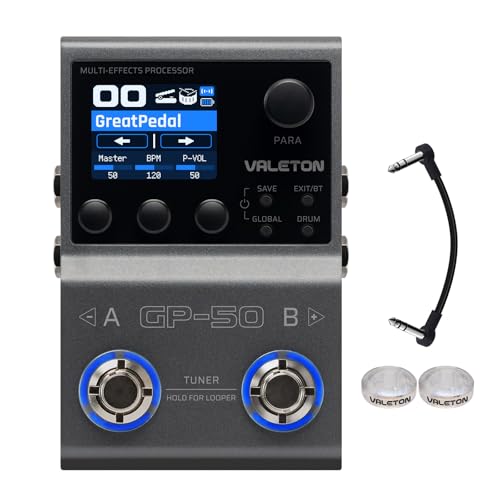
- 100-plus HD effects and nine simultaneous modules
- NAM and cabinet IR loading
- Bluetooth, USB audio, MIDI, and rechargeable battery
Best For: Expandable guitar or bass rigs and mobile recording
Learning-Friendly Workhorse

- 66 effects with 80 preset and 80 user patches
- 180-second looper and drum machine
- Assignable expression pedal with scale and chord learning
Best For: Beginners, practice routines, and building custom patches
Smart Tone Explorer

- 240 effects with NAM, MNRS, and IR support
- AI assistant, color display, Bluetooth, and app editing
- Looper, drum machine, expression pedal, and OTG recording
Best For: Modern tone shaping, practice, and creative recording
Portable Practice Companion
Leo Jaymz Multi-Effects Processor

- 80 editable presets and six core effects modules
- Rechargeable battery rated for up to 10 hours
- Bluetooth, headphones, USB, and footswitch control
Best For: Portable guitar or bass practice and jamming
Performance Preset Powerhouse

- 200 presets, 170 effects, 55 amps, and 26 cabinet sims
- Four footswitches plus expression pedal for live control
- Looper, drum machine, AUX, headphone, USB-C, and OTG recording
Best For: Live performance, extensive tone libraries, and recording
Most Portable Feature Set
SORAN Dual Stomp Multi-Effects Pedal

- 125 effects with 99 presets and 11 simultaneous modules
- Dual-mode wah/volume expression pedal
- Rechargeable battery with looper, drums, and USB audio
Best For: Portable practice, streaming, and small-stage setups
Most Advanced Modeling
Valeton GP-150 Multi-Effects Processor

- 200-plus effects with up to 12 simultaneous modules
- IR, NAM, SnapTone, Bluetooth, and MIDI support
- 180-second looper and 6-in/4-out USB audio interface
Best For: Detailed tone design, recording, and live performance
Best Compact Practice Package
STRICH Master Tone Multi-Effects Pedal

- 125 effects, 99 presets, and 11 effect modules
- 80 amp and cab simulations with IR/NAM slots
- Six-hour battery, looper, drums, and USB audio
Best For: Home practice, rehearsals, and small live performances
Practice-Ready Pick – Zoom G1X Four
The Zoom G1X Four is a practical choice for guitar effects processors under 200 when you want a broad effects selection, built-in practice tools, and an included expression pedal. Its 71 effects, 13 amp models, looper, rhythm patterns, and headphone support cover practice, recording, and live experimentation.
Best For: Players who want an accessible all-in-one unit for practice, tone exploration, and looping.
Pros:
- Includes 71 effects and 13 amp models.
- 30-second looper and 68 rhythm patterns support practice and songwriting.
- Expression pedal, tuner, aux input, and headphone monitoring are included.
- Battery-powered operation and Guitar Lab editing add flexibility.
Cons:
- The looper is limited to 30 seconds.
- Its listed effects and amp models may be less extensive than newer units with 100-plus effects.
The G1X Four stands out as a straightforward, feature-rich practice pedal with useful live and recording tools, especially for players who value an included expression pedal.
Connectivity Powerhouse – Valeton GP-50
The Valeton GP-50 is a strong contender among guitar effects processors under 200 for players seeking extensive digital modeling, modern connectivity, and patch storage. It combines more than 100 HD effects with NAM and cabinet IR loading, Bluetooth app control, USB audio, and a rechargeable battery.
Best For: Guitarists and bassists who want flexible tone loading, computer or mobile recording, and compact pedalboard control.
Pros:
- Offers over 100 HD effects with up to nine modules running simultaneously.
- Supports third-party cabinet IR files and NAM files.
- Includes Bluetooth 5.0 app control, USB audio, USB MIDI, and stereo outputs.
- Rechargeable battery, DC 9V, and USB 5V power options improve portability.
Cons:
- Its advanced NAM, IR, MIDI, and routing features may require more setup than simpler pedals.
- The compact dual-footswitch layout may offer less direct control than larger units.
With its color screen, broad connectivity, and support for user-loaded amp and cabinet content, the GP-50 is aimed at players who want a highly expandable compact processor rather than a basic effects unit.
Learning-Friendly Workhorse – MOOER GE100
The MOOER GE100 is a versatile option among guitar effects processors under 200, combining 66 effect types with extensive preset storage, an assignable expression pedal, and built-in learning tools. Its 180-second looper, drum machine, headphone output, and adjustable output mode make it suitable for both focused practice and standalone playing.
Best For: Beginners and developing players who want presets, looping, rhythm practice, and scale and chord learning in one pedal.
Pros:
- Provides 80 preset patches and 80 user patches.
- Includes 66 effect types across eight modules.
- 180-second looper and drum machine support extended practice sessions.
- Assignable expression pedal, tuner, headphone output, and line-out mode add convenience.
Cons:
- Its analog signal format and older-style feature set may appeal less to players seeking advanced digital loading.
- The larger 9.06-inch footprint may require more pedalboard space.
The GE100 is particularly compelling when practice features matter as much as effects variety. Its generous patch memory and learning functions give newer players room to experiment and build a personal sound library.
Hands-On Control Pick – AME-200 Multi-Effects Processor
The AME-200 is worth considering among guitar effects processors under 200 if you prefer direct foot control and a larger multi-effects format. It combines amp modeling with reverb, delay, chorus, and flanger, while adding four programmable footswitches, loop recording, drum patterns, USB OTG recording, and MNRS GNR and GIR loading.
Best For: Players who prioritize hands-on switching, built-in rhythm tools, and recording-oriented features.
Pros:
- Includes four programmable footswitches for direct control.
- Combines amp modeling, multiple modulation effects, reverb, and delay.
- Provides a 60-second looper, 50 drum patterns, tuner, and global BPM settings.
- Supports USB OTG recording, MNRS GNR and GIR loading, and an external expression pedal.
Cons:
- Its listed 12-by-12-by-6-inch dimensions and 2.2-pound weight make it less compact than several alternatives.
- An external footswitch requires a TRS stereo cable with two 1/4-inch connectors.
- The supplied notes do not specify the number of effects, presets, or simultaneous modules.
The AME-200 favors physical control and feature access over minimal size. Its four switches and recording tools make it a useful fit for players who want fewer device changes during practice or performance.
Smart Tone Explorer – MOOER GE100 Pro
The MOOER GE100 Pro is a versatile choice for guitarists comparing guitar effects processors under 200. Its AI tone assistant, 240 effects, realistic amp modeling, color display, and app/desktop editing provide plenty of room for shaping and organizing sounds.
Best For: Players who want modern tone creation tools, app connectivity, and an all-in-one practice or performance setup.
Pros:
- Includes 240 effects with NAM and MNRS loading support plus third-party IR compatibility.
- Offers AI-assisted tone creation, a 3.5-inch color display, RGB lighting, and Bluetooth audio input.
- Built-in 80-second stereo looper, drum rhythms, metronome patterns, expression pedal, and OTG recording support.
- Works with MOOER Cloud and dedicated computer software for editing, preset management, and sharing.
Cons:
- The standard version uses an AC adapter rather than an integrated battery.
- Its broad feature set may require time to learn and organize.
The GE100 Pro stands out for flexible digital editing and creative practice features. It is especially appealing if you want a modern interface and expandable tone library rather than a simple plug-and-play pedal.
Portable Practice Companion – Leo Jaymz Multi-Effects Processor
The Leo Jaymz portable processor is a practical pick among guitar effects processors under 200 for players who value portability. It combines 80 editable presets, core amp and effects modules, wireless music transmission, headphone monitoring, and a rechargeable battery in a compact unit.
Best For: Guitarists and bassists who need a battery-powered processor for practice, travel, jams, or basic computer integration.
Pros:
- Provides 80 editable presets with noise gate, boost, compressor, preamp, EQ, modulation, delay, reverb, and IR cabinet options.
- Rechargeable battery offers up to 10 hours of operation according to the supplied notes.
- Footswitches allow convenient module on/off control during playing.
- Supports Bluetooth music transmission, headphone monitoring, and computer sound-card compatibility.
Cons:
- The supplied warranty description is limited to 30 days.
- Its feature and preset count is more modest than the larger MOOER units in this roundup.
- The notes identify the signal format as analog despite the processor’s digital-style feature set.
The Leo Jaymz focuses on accessible operation and mobility. Choose it when rechargeable convenience and straightforward editing matter more than an especially large modeling library or advanced connectivity.
Performance Preset Powerhouse – MOOER GE150 Pro
The MOOER GE150 Pro is built for players who want substantial preset depth from guitar effects processors under 200. With 200 factory presets, 170 effects, 55 amp models, 26 cabinet simulations, four footswitches, and an expression pedal, it is equipped for detailed live and practice workflows.
Best For: Gigging or recording guitarists who need broad modeling options, hands-on patch control, looping, and direct recording features.
Pros:
- Offers 200 presets, 170 effects, 55 amp models, 26 cabinet simulations, and 20 slots each for AMP and CAB samples.
- Four multi-purpose footswitches and an expression pedal provide flexible live control.
- Includes an 80-second stereo looper, 40 drum rhythms, 10 metronome modes, and a tuner.
- USB-C, OTG recording, AUX input, headphone output, and stereo outputs support practice and recording setups.
Cons:
- The standard model is corded electric; the integrated nine-hour battery is specified for the separate GE150 Pro Li edition.
- Its extensive controls and modeling options may be more than beginners need.
- The unit weighs about 1.1 kg, so it is less minimal than a small single-purpose pedal.
The GE150 Pro is the strongest option here for preset variety and foot-controlled performance flexibility. It makes the most sense for players who want one unit to cover tones, rhythm practice, looping, and USB-based recording.
Most Portable Feature Set – SORAN Dual Stomp Multi-Effects Pedal
For guitarists comparing guitar effects processors under 200, the SORAN Dual Stomp offers a broad feature set in a rechargeable format. It combines 125 effects, amp and cab modeling, an expression pedal, practice tools, and USB audio functionality in a compact unit.
Best For: Players who want flexible home practice, recording, streaming, and small-stage use without relying on external power.
Pros:
- Includes 99 presets, 125 effects, and up to 11 simultaneous modules.
- Built-in expression pedal supports both wah and volume control.
- Offers a 40-second stereo looper, 100 drum patterns, and six-hour battery life.
- Supports USB audio, third-party IR imports, and NAM-related customization through its amp and cab library.
Cons:
- The 40-second looper is shorter than some competing processors.
- The unit provides 10 slots each for NFILE amp imports and third-party IR imports, which may limit larger libraries.
The SORAN is a practical choice when portability and an all-in-one workflow matter most. Its rechargeable battery and practice features make it especially useful away from a traditional pedalboard.
Most Advanced Modeling – Valeton GP-150 Multi-Effects Processor
The Valeton GP-150 stands out among guitar effects processors under 200 for its extensive modeling and connectivity features. It provides more than 200 effects, flexible routing, IR and NAM support, a long looper, and a multi-channel USB audio interface.
Best For: Guitarists who need deep tone customization, extensive practice tools, and recording or streaming connectivity.
Pros:
- Provides 200-plus effects and supports up to 12 simultaneous effect modules.
- Supports third-party cabinet IRs, up to 100 SnapTone files, and 20 IR files.
- Includes a 180-second looper, 100-plus drum patterns, tuner, and 200 patch slots.
- Built-in battery lasts over six hours and the unit functions as a 6-in/4-out USB audio interface.
Cons:
- Its larger feature set may require more setup time than a simpler multi-effects pedal.
- The supplied notes do not specify the number of built-in amp or cabinet models.
With its broad effects library, flexible file support, and recording-focused USB design, the GP-150 is the strongest fit here for players building detailed presets or integrating a processor into a computer or mobile setup.
Best Compact Practice Package – STRICH Master Tone Multi-Effects Pedal
The STRICH Master Tone is a compact option for shoppers comparing guitar effects processors under 200. It combines 125 effects, 99 presets, amp and cab simulations, a dual-mode expression pedal, and built-in practice tools in a rechargeable red pedal.
Best For: Beginners and experienced players seeking an easy-to-navigate processor for home practice, rehearsals, recording, and small performances.
Pros:
- Offers 125 effects, 99 presets, and up to 11 effect modules per preset.
- Includes 80 amp and cab simulations with support for external amp and IR imports.
- Combines a 40-second stereo looper with 100 drum rhythms for solo practice.
- Features a 2-inch color screen, USB audio interface, and up to six hours of battery runtime.
Cons:
- The 40-second looper may feel limiting for longer arrangements.
- Its listed 20 IR/NAM slots provide less file capacity than the Valeton GP-150.
The STRICH offers a balanced combination of accessible controls, portable design, and core modeling features. It is a sensible pick for players who want a straightforward practice-and-performance unit without giving up USB recording.
How We Picked the Best Guitar Effects Processors Under 200
We focused on processors that offer meaningful flexibility at or below the $200 price range. Key considerations included amp and cabinet modeling, effects quality and variety, preset capacity, footswitch layout, expression control, looper and drum features, USB connectivity, and compatibility with impulse responses or newer neural amp-modeling formats.
We also considered practical differences between compact rechargeable units, traditional floor processors, and models with larger screens or app control. Specifications can vary by seller and revision, so confirm current pricing, included accessories, firmware support, and software compatibility before ordering.
Quick Comparison
| Best For | Features to Prioritize | Processor Type to Consider |
|---|---|---|
| Beginners and practice | Simple editing, presets, tuner, looper, and drum patterns | Compact multi-effects unit with an expression pedal |
| Recording and tone experimentation | USB audio, amp modeling, IR loading, and app editing | Modeler with computer and mobile connectivity |
| Live performance | Fast preset changes, sturdy footswitches, patch organization, and outputs | Floor processor with multiple switches and clear display |
| Portable setups | Rechargeable battery, compact design, headphone output, and Bluetooth | Battery-powered processor or practice-focused model |
Key Buying Factors for Guitar Effects Processors Under $200
Modeling and Effects
Count more than the number of advertised effects. Check whether the processor includes usable amp models, cabinet simulations, reverb, delay, modulation, distortion, compression, and pitch effects. A smaller library with intuitive editing may be more useful than a long list of rarely used sounds.
Preset and Signal-Chain Control
Preset capacity matters if you want separate sounds for rehearsals or a set list. Also check how many modules can run simultaneously and whether their order can be changed. Flexible routing helps you create practical chains rather than merely selecting isolated effects.
Footswitches, Expression, and Display
Multiple footswitches make live changes faster, while an expression pedal can control wah, volume, pitch, or a mapped effect parameter. A larger display and app support may significantly reduce editing time, especially for players who dislike navigating small menus.
Connectivity and Recording
USB can support recording, editing, firmware updates, or re-amping, but capabilities differ. Look for headphone and auxiliary inputs for silent practice, Bluetooth when wireless playback is useful, and appropriate outputs for an amplifier, mixer, powered speaker, or audio interface.
IR, NAM, Battery, and Durability
IR and NAM support can expand cabinet and amp options, but verify file formats and loading limits. Rechargeable models are convenient for mobile practice, while heavier floor units may be better suited to regular stage use. Check construction, switch spacing, power requirements, and warranty coverage.
Who Should Buy Which Guitar Effects Processors Under 200?
Choose a simple compact processor if you are learning effects, practicing with headphones, or want an affordable backup rig. Choose a model with an expression pedal if wah and volume control are important. Choose a unit with IR or NAM support if you enjoy experimenting with downloaded tones or recording directly into a computer. Choose a larger floorboard if you need quick access to multiple presets and effects during rehearsals or performances.
Before buying, decide where the processor will be used most: bedroom, desk, rehearsal room, stage, or recording setup. Matching the controls and connections to that environment is usually more important than choosing the processor with the biggest effects count.