Finding the right cajon under $300 means balancing tone, playing comfort, construction, and the features that matter for your style. This roundup compares versatile box drums ranging from compact crate-style designs to full-size models with snares, pickups, and bass-focused voicing.
Whether you are accompanying acoustic sessions, practicing at home, or adding portable percussion to a live setup, these options offer practical ways to choose based on sound, durability, and budget.
Best 10 Cajons Under 300 Picks for 2026
Best European-Made Value

- Baltic birch construction made in Europe
- Fixed steel snares and rear sound port
- Compact design for beginners and travel
Best For: Beginners, acoustic shows, and portable practice
Best Crate-Style Design

- MDF body with meranti faceplate
- Built-in rear bass port
- Music-genre silkscreened design
Best For: Casual players seeking a distinctive crate-style cajon
Best Adjustable Snare

- American white ash playing surface
- Adjustable micro-coiled steel snare strings
- Full-size body with silicone feet
Best For: Performers wanting adjustable snare response and fuller projection
Best Accessory Bundle

- Includes gig bag and foam comfort pad
- Deep, punchy ash playing surface
- Quick lever controls the built-in snare
Best For: Portable players who value accessories and easy snare control
Big-Bass Pick

- Deep bass from a jumbo body and bass-reflex channels
- Two fixed snare sets for crisp accents
- Walnut frontplate with stabilizing silicone feet
Best For: Acoustic sets, worship, outdoor jams, and recording
Distinctive Design
LP Matador Whiskey Barrel Cajon

- Mini-conga shape with whiskey-barrel styling
- Rounded belly adds resonance and bass
- Smaller top supports crisp slap tones
Best For: Players seeking an original look and versatile stave-cajon sound
All-Around Value
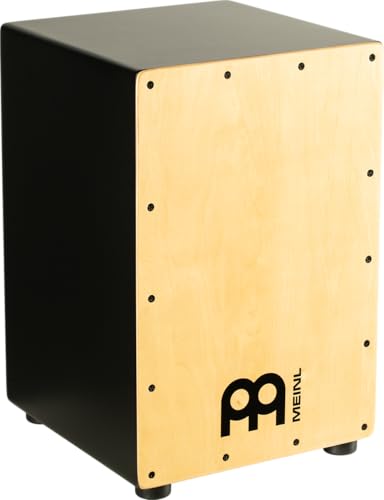
- Maple frontplate balances clear highs and deep lows
- Internal coiled-steel snares add crisp pop
- Durable body and rubber feet suit regular playing
Best For: Acoustic shows, jams, worship, studio use, and outdoor playing
Best Budget-Friendly Pick

- Adjustable internal guitar strings
- Compact and lightweight design
- Rubber-capped feet reduce vibration
Best For: Beginners, families, and portable practice
Best Amplified Option

- Three factory-installed piezo pickups
- Volume and tone controls
- Baltic birch body with burl frontplate
Best For: Amplified performances and larger ensembles
Best Acoustic Build

- 100% Baltic birch construction
- Fixed steel strings for snare effect
- Silicone feet improve stability
Best For: Acoustic shows, worship music, and jam sessions
Best European-Made Value – Meinl Jam Cajon
For shoppers comparing cajons under 300, the Meinl Jam Cajon is a compact, straightforward option with a Baltic birch body, fixed snare wires, and a rear sound port. Its sit-on design is easy for beginners to use, while the portable size suits casual practice, acoustic performances, and group jams.
Best For: Beginners, acoustic shows, worship teams, and portable rhythm practice.
Pros:
- Made in Europe from 100% Baltic birch.
- Fixed steel snare wires provide crisp, snappy tones.
- Silicone feet help stabilize the cajon and reduce vibrations.
- Compact 10.25-by-15-by-10.25-inch design is easy to transport.
Cons:
- Fixed snares do not offer user adjustment.
- Its compact size may provide less projection than a full-size cajon.
The Jam Cajon stands out as a durable, beginner-friendly pick with balanced highs and lows. Choose it if portability and simple operation matter more than advanced tuning controls.
Best Crate-Style Design – Pearl Primero Cajon
Among cajons under 300, the Pearl Primero offers a distinctive crate-style format with an MDF body, meranti faceplate, built-in rear bass port, and two sets of fixed snare wires. Its music-genre faceplate also gives it a more decorative look for casual playing spaces.
Best For: Players who want a visually distinctive cajon for casual music-making and rhythm practice.
Pros:
- Built-in rear bass port supports low-end projection.
- Two sets of fixed curly snare wires add snare texture.
- Meranti faceplate and silkscreened music-genre design create a distinctive appearance.
Cons:
- Fixed snare wires limit tuning flexibility.
- MDF construction is less traditional than a solid-wood body.
- Supplied dimensions vary between the listed specifications.
The Primero is a practical choice when appearance and a crate-style profile are priorities. It delivers the essential bass-and-snare layout without the added complexity of adjustable internal hardware.
Best Adjustable Snare – Meinl Headliner Cajon
The Meinl Headliner is a strong contender among cajons under 300 for players who want more control over snare response. Its American white ash playing surface, two adjustable micro-coiled steel strings, full-size body, and included hex key support both practice and live acoustic use.
Best For: Acoustic performers, worship players, studio users, and drummers who want adjustable snare tension.
Pros:
- American white ash playing surface offers warm mids, crisp highs, and low-end tone.
- Adjustable snare strings let players tailor definition and looseness.
- Full-size 18-inch height provides strong volume for a range of rooms.
- Silicone feet help with stability and surface protection.
Cons:
- At 10 pounds, it is heavier than more compact cajons.
- Its larger body takes up more storage and transport space.
- The listed product details indicate a modern composite body rather than an all-wood body.
The Headliner is the most versatile choice here for players who value snare adjustment and fuller projection. It makes sense for performance-focused buyers who can accommodate its larger, heavier format.
Best Accessory Bundle – Luna Satin Black Cajon
For buyers browsing cajons under 300, the Luna Cajon combines a satin-black finish and tattoo-inspired design with useful included accessories. Its ash front produces deep, punchy bass, while the built-in snare can be switched on or off with a lever.
Best For: Players who want a stylish cajon with a gig bag, comfort pad, and quick snare control.
Pros:
- Includes a gig bag and soft foam sitting pad.
- Ash front delivers deep, punchy bass tones.
- Lever provides convenient on/off control for the built-in snare.
- Birch and eucalyptus body woods support the instrument’s sturdy construction.
Cons:
- The snare is switched on or off rather than described as tension-adjustable.
- At 9 pounds, it is not the lightest compact option.
- The satin-black finish may show handling marks more readily than a natural finish.
The Luna is a well-rounded package for casual performers who value portability accessories and quick snare control. Its included bag and cushion make it especially convenient for taking to rehearsals or gatherings.
Big-Bass Pick – Meinl Jumbo Subwoofer Cajon
If you want especially deep low-end from a cajon under 300, the Meinl Jumbo Bass Subwoofer Cajon is built around a larger body and bass-reflex channels. Its walnut playing surface and fixed snare wires balance the pronounced bass with crisp, usable highs.
Best For: Acoustic sets, worship music, outdoor jams, and recording where controlled subwoofer-style bass is a priority.
Pros:
- Deep, powerful bass from its jumbo body and internal bass-reflex channels.
- Two fixed steel snare sets provide crisp, snappy accents.
- Walnut frontplate and silicone feet support a warm tone, stability, and reduced vibration.
- Full-size seating dimensions provide a comfortable playing surface for adults.
Cons:
- Its jumbo 17-pound design is less portable than a standard-size cajon.
- The bass-forward profile may not suit players seeking a more neutral sound.
This is the most specialized option here: choose it when low-end impact matters more than compactness. The modern composite body and forward-facing ports help project its bass while keeping the overall tone clear.
Distinctive Design – LP Matador Whiskey Barrel Cajon
Among cajons under 300, the Latin Percussion Matador Whiskey Barrel Cajon stands out for its mini-conga shape and barrel-inspired bands. The rounded belly and smaller top are designed to produce crisp slap tones alongside added resonance and bass.
Best For: Players who want an original-looking stave cajon with a broader sonic range than a conventional box shape.
Pros:
- Distinctive whiskey-barrel-inspired appearance.
- Rounded belly and smaller top create a versatile sonic range.
- Designed for crisp slap tones with increased resonance and bass tone.
Cons:
- The unusual mini-conga profile may feel less familiar than a traditional cajon.
- The supplied notes do not specify internal snares or included accessories.
The Matador is a style-led alternative for shoppers who want a cajon that looks as distinctive as it sounds. Its shape is the main differentiator, pairing visual character with slap, resonance, and bass capabilities.
All-Around Value – Meinl Headliner Maple Cajon
For a straightforward all-purpose choice among cajons under 300, the Meinl Headliner combines a maple playing surface, internal fixed snares, and a durable modern composite body. It is designed to deliver kick-and-snare-style sounds at a more manageable volume than a full drum set.
Best For: Acoustic shows, jam sessions, worship bands, studio use, and outdoor playing.
Pros:
- Maple frontplate produces clear highs and deep low-end tone.
- Two fixed coiled-steel snare sets provide a crisp pop without setup.
- Modern composite body reflects sound for clarity and touring durability.
- Rubber feet improve stability, reduce vibration, and help protect surfaces.
Cons:
- Fixed snares offer less adjustment than a cajon with a customizable snare system.
- Its standard full-size design is less bass-focused than the jumbo subwoofer model.
The Headliner is the most balanced pick of these three for players who want familiar cajon versatility. Its compact full-size format, built-in snares, and two-year warranty make it a practical starting point for regular playing.
Best Budget-Friendly Pick – Pyle Jam Wooden Cajon
If you are comparing cajons under 300, the Pyle Jam Wooden Cajon is a compact, lightweight option with adjustable internal guitar strings. Its traditional birch-wood construction, rubber-capped feet, and included hex key make it practical for casual playing, lessons, and portable performances.
Best For: Beginners, families, and players who want a lightweight cajon with adjustable snare-style strings.
Pros:
- Adjustable internal guitar strings can be tuned from the bottom.
- Compact 12 x 12 x 18-inch design weighs about 9–11 pounds.
- Rubber-capped feet help reduce vibration interference.
- Includes a hex key and has no stated age restriction.
Cons:
- It does not include built-in pickups for amplification.
- Its lightweight construction may be better suited to casual use than demanding professional applications.
The Pyle is a sensible entry-level choice when portability and adjustable string response matter more than amplification. It offers useful features at a compact size, though players performing with amplified groups will need a separate microphone or pickup solution.
Best Amplified Option – Meinl Pickup Woodcraft Cajon
Among cajons under 300, the Meinl Pickup Woodcraft stands out for players who need built-in amplification. Three factory-installed piezo pickups, internal snare strings, and volume and tone controls let you connect directly to an amplifier or PA without batteries.
Best For: Performers who play with larger groups, amplified acoustic acts, or venues where a standard cajon needs more volume.
Pros:
- Three internal piezo pickups capture both snare and bass areas.
- Built-in volume and tone controls connect through 1/4-inch jacks.
- Baltic birch body and makah burl frontplate provide a responsive build.
- Includes a two-year Meinl warranty and does not require batteries for pickup operation.
Cons:
- A quarter-inch cable is not included.
- It is heavier than the Pyle option, with listed weights ranging from 9 to 12.5 pounds.
- The pickup system adds complexity compared with an acoustic-only cajon.
This is the most practical pick here for connecting a cajon to a PA or amplifier. Its passive pickup system expands where you can play, while the full-size body and internal strings preserve the familiar bass-and-snare layout.
Best Acoustic Build – Meinl Woodcraft Cajon
For shoppers seeking cajons under 300 with a straightforward acoustic design, the Meinl Woodcraft Cajon uses a 100% Baltic birch construction and fixed internal steel strings. It delivers kick-like bass and crisp snare tones without electronics, making it easy to use at acoustic shows, worship settings, and jam sessions.
Best For: Acoustic performers and players who want a durable, non-electric cajon with defined bass and snare tones.
Pros:
- 100% Baltic birch construction with a 7-ply, 9 mm body.
- Two sets of fixed micro-coiled steel strings provide snare effect.
- Rounded, sanded playing-surface corners support comfortable hand technique.
- Four silicone feet improve stability and help reduce unwanted vibration.
Cons:
- The strings are fixed rather than user-adjustable.
- There is no connector or built-in pickup for direct amplification.
- It weighs about 8 pounds or 4 kg, depending on the listed specification.
The Meinl Woodcraft is a strong acoustic-focused choice for players who prioritize natural response and solid materials. Its fixed string system keeps operation simple, but amplified performers will need external miking or a separate pickup.
How We Picked the Best Cajons Under 300
We focused on cajons that offer useful musical performance and dependable construction within a $300 budget. The selection includes full-size, medium, bass, crate-style, pickup-equipped, and travel-friendly models to cover different playing situations. We considered the likely impact of frontplate material, body construction, internal strings or snares, bass response, portability, and included accessories such as gig bags.
Because cajon sound is highly personal, the list does not assume that one voicing suits everyone. Instead, it highlights models for players who prioritize crisp snare response, deeper low end, traditional acoustic tone, compact size, or amplification-ready performance.
Quick Comparison
| Best For | Features to Look For | Recommended Type |
|---|---|---|
| General acoustic playing | Balanced bass and snare response | Full-size string cajon |
| Deep, powerful grooves | Larger body and bass-focused design | Bass cajon |
| Live performances | Pickup or microphone-friendly construction | Pickup cajon |
| Travel and casual sessions | Lower weight and compact dimensions | Medium or lightweight cajon |
| Distinctive styling | Specialty body or frontplate design | Crate-style or barrel cajon |
Key Buying Factors for Cajons Under 300
Size and Playing Comfort
Full-size cajons generally provide more separation between bass and snare tones, while medium and lightweight models can be easier to carry. Check the seat height and playing surface dimensions, especially if you expect to perform for long periods.
Snare Response and Tone
Internal strings or snares add a familiar buzz and articulation, but their adjustment and sensitivity vary. A tighter response can suit rhythmic patterns and acoustic accompaniment, while a looser, more resonant setup may feel warmer and less aggressive.
Body and Frontplate Construction
The frontplate has a major effect on attack and tonal color. Maple, ash, birch, and other woods can produce different combinations of brightness, warmth, and projection. A solid-feeling body and stable rubber feet also matter for consistent playing and reduced unwanted movement.
Pickup and Portability Features
If you play amplified shows, a built-in pickup can simplify setup, but you should still confirm compatibility with your amplifier or mixer. A gig bag, manageable weight, and durable finish are valuable for players who transport their cajon regularly.
Who Should Buy Which Cajons Under 300?
Beginners and general-purpose players should start with a balanced full-size string cajon that offers clear bass and snare tones without unnecessary complexity. Players who want stronger low-end impact should consider a bass-focused model with a larger or specially voiced body. For live musicians, a pickup-equipped cajon is the most convenient choice when amplification is part of the regular setup.
Choose a medium or lightweight design if portability is more important than maximum projection. Crate-style and barrel-inspired models make sense for players seeking a distinctive feel or appearance, while woodworkers and tone-focused performers may prefer a model with a carefully selected frontplate and rigid body construction. Among Cajons Under 300, the best choice is ultimately the one that matches your playing position, transport needs, preferred snare character, and intended performance environment.