A patch bay for guitar pedals can make a crowded pedalboard easier to connect, troubleshoot, and transport. The right solution depends on whether you need a true rack-style patch bay, a compact junction box, or short patch cables for flexible routing.
We compared 10 popular options across connection capacity, signal path, mounting practicality, cable design, and overall value so you can choose a setup that fits your board and playing style.
Best 10 Patch Bay for Guitar Pedals Picks for 2026
Studio Routing Workhorse
Behringer ULTRAPATCH PRO PX3000

- 48-point patch bay for extensive routing
- Four selectable channel modes
- Rugged construction with quality jacks
Best For: Large pedal and studio signal-routing setups
Compact Pedalboard Hub

- Four passive TRS channels
- Supports mono and stereo connections
- No power supply required
Best For: Compact guitar or bass pedalboards
Rackmount Studio Organizer

- 48-point fully balanced design
- Normal, half-normal, and thru modes
- 1U rack-mountable construction
Best For: Rack-based studios and complex pedal rigs
Simple Board I/O Solution
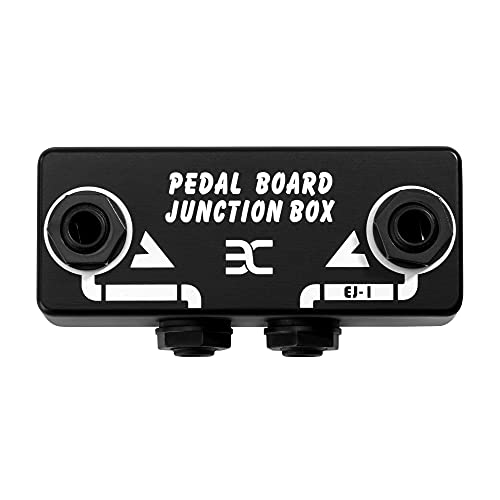
- Combines instrument input and amp output
- Passive and power-free operation
- Vertical or horizontal connector placement
Best For: Quick-access pedalboard input and output
Balanced Routing Choice
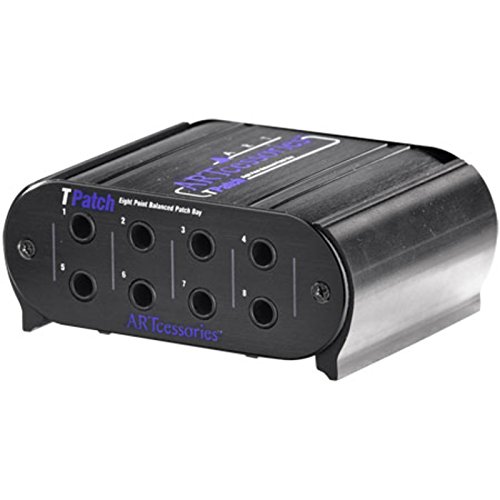
- Eight balanced points for signal routing
- Switchable half-normal and normal modes
- Rugged case with 1/4-inch TRS connections
Best For: Compact home and project studio routing
Pedalboard Cable Variety
Ernie Ball Flat Ribbon Multi-Pack

- Ten cables in four practical lengths
- Flat design helps reduce pedalboard clutter
- Low-profile connectors with strain relief
Best For: Flexible pedalboard wiring and effects chains
High-Capacity Studio Hub

- 48-point rackmount design
- Fully shielded for organized connections
- Suitable for studio and live installations
Best For: Large rack-based audio systems and installations
Road-Ready Signal Link
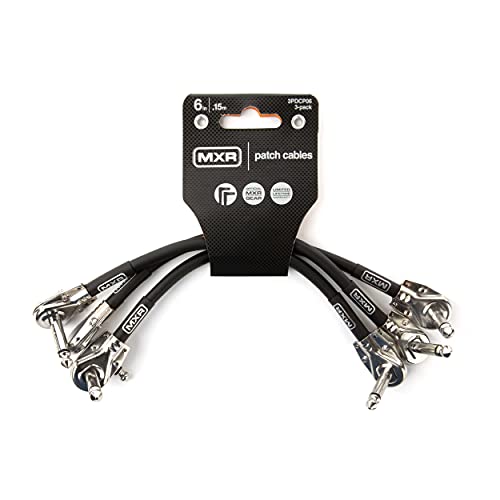
- 20-AWG OFC wire for clear signal transmission
- Shielding helps reduce interference and handling noise
- Flexible, durable construction for repeated use
Best For: Compact pedalboards and live-playing setups
Maximum Space Saver
Gold-Plated Flat Ribbon 4-Pack
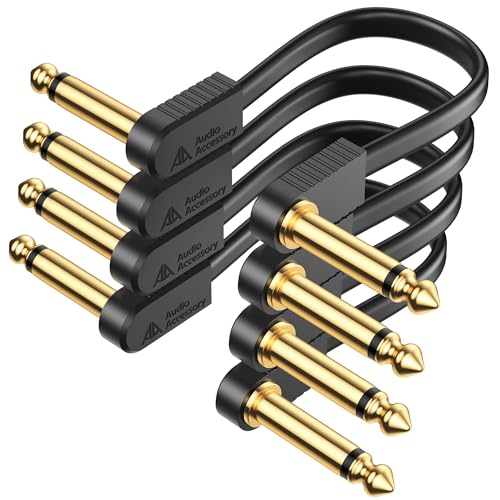
- Low-profile plugs fit jack spacing as tight as 0.2 inch
- Flat, compact design saves pedalboard space
- Kevlar core and multi-layer shielding support durability and low noise
Best For: Densely packed pedalboards with tight jack spacing
Budget Board Builder
Amazon Basics 6-Inch Patch Cable 6-Pack

- Six 6-inch cables offer ample connections
- Right-angle plugs support close pedal placement
- Shielding helps block outside interference
Best For: Value-focused guitar and bass pedalboards
Studio Routing Workhorse – Behringer ULTRAPATCH PRO PX3000
Behringer ULTRAPATCH PRO PX3000 Multi-Functional 48-Point 3-Mode Balanced Patchbay
Check Price On AmazonIf you need a flexible patch bay for guitar pedals and broader studio routing, the Behringer ULTRAPATCH PRO PX3000 provides 48 points and selectable channel modes. Its rugged construction and TRS-based connectivity suit organized indoor studio setups.
Best For: Guitarists and home studios needing extensive, configurable signal routing.
Pros:
- 48-point design helps centralize numerous connections.
- Selectable parallel, half-normalled, normalled, and open modes offer routing flexibility.
- Rugged construction and high-quality jack connectors support long-term use.
Cons:
- Its rack-style 48-point format may be more than a compact pedalboard requires.
- The unit is relatively heavy at 3.9 pounds.
The PX3000 is a strong choice when your pedal and studio setup demands many routing options rather than a simple plug-and-play junction box.
Compact Pedalboard Hub – SONICAKE Junction Box
The SONICAKE Junction Box is a compact patch bay for guitar pedals that gathers pedalboard connections into one passive unit. Four TRS channels support mono or stereo configurations while helping keep cables organized and conserve space.
Best For: Guitarists and bassists building a tidy, space-conscious pedalboard.
Pros:
- Four passive channels provide flexible signal-routing options.
- Accepts mono or stereo connections through TRS connectors.
- True bypass and plug-and-play operation require no power supply.
- Compact design helps protect pedal jacks and reduce cable clutter.
Cons:
- Four channels offer less capacity than a rack-mounted patch bay.
- Its 90-day warranty is relatively short.
For a compact board, the SONICAKE combines straightforward operation with useful mono/stereo flexibility and a neat connection layout.
Rackmount Studio Organizer – Samson S-Patch Plus
Samson S-Patch Plus Balanced 48-Point 1/4" Patch Bay | 1/4 Inch Phone Connections
Check Price On AmazonThe Samson S-Patch Plus is a fully balanced patch bay for guitar pedals, mixers, microphones, and rack gear. Its 48 front and 48 rear 1/4-inch connections provide a central access point, while front-panel switches simplify routing changes.
Best For: Rack-based studios that need balanced connections and quick front-panel access.
Pros:
- Provides 48 balanced patch points with front and rear 1/4-inch connections.
- Each channel supports normal, half-normal, or thru operation.
- 19-inch 1U rack-mountable design keeps connections organized.
- Front access reduces the need to reach behind studio equipment.
Cons:
- Its rack-mounted format is less convenient for a small standalone pedalboard.
- It is designed around 1/4-inch phone connections rather than a variety of connector types.
The S-Patch Plus is a practical choice for musicians who want a clean, reliable studio patch point with familiar switching options and balanced operation.
Simple Board I/O Solution – EX Pedalboard Junction Box
The EX Pedalboard Junction Box is a straightforward patch bay for guitar pedals that places instrument input and amplifier output in one convenient location. Its passive design needs no power and can help reduce repeated plugging into individual pedal jacks.
Best For: Pedalboards needing convenient corner-mounted input and output connections.
Pros:
- Aggregates guitar input and amplifier output in one place.
- Passive operation requires no power supply.
- Helps reduce repeated cable changes at pedal input and output jacks.
- Vertical or horizontal connector insertion supports space-conscious layouts.
Cons:
- It offers a simpler input/output solution rather than multiple configurable patch channels.
- The supplied notes do not specify connector types or channel count.
The EX Junction Box suits players who want faster pedalboard setup and cleaner cable access without adding powered electronics or a full rack patch bay.
Balanced Routing Choice – Art Pro Audio TPatch
For a patch bay for guitar pedals and broader studio routing, the Art Pro Audio TPatch provides eight balanced points in a compact, rugged enclosure. Its switchable half-normal and normal modes give you flexibility for direct signal routing and through connections.
Best For: Home studios, project studios, and users who need flexible balanced signal routing in an eight-channel format.
Pros:
- Offers eight points of balanced direct signals.
- Provides four linked input/output pairs.
- Switchable half-normal and normal operating modes.
- Uses 1/4-inch TRS phone jack connectors and a rugged extruded aluminum case.
Cons:
- Its balanced, studio-oriented design may be more than needed for a simple pedalboard setup.
- Provides eight channels rather than the higher capacity of a 48-point patch bay.
The TPatch is a practical choice when you want compact, configurable balanced routing with standard 1/4-inch TRS connections. Its two-year warranty is an added benefit for studio-focused buyers.
Pedalboard Cable Variety – Ernie Ball Flat Ribbon Multi-Pack
If you are shopping for a patch bay for guitar pedals, the Ernie Ball Flat Ribbon Multi-Pack addresses the cable side of a clean pedalboard setup. It includes ten low-profile patch cables in several lengths, making it easier to position pedals while reducing cable clutter.
Best For: Pedalboard builders who need multiple cable lengths for arranging musical instrument pedals and effects.
Pros:
- Includes ten cables: two 3-inch, four 6-inch, two 12-inch, and two 24-inch lengths.
- Flat ribbon construction allows easy maneuvering and flexible pedal placement.
- Low-profile metal connectors include built-in strain relief.
- Oxygen-free copper, shielding, and a PVC jacket support durability and reduced handling noise.
Cons:
- These are pedalboard patch cables, not a rack-mounted patch bay.
- The assortment may include lengths you do not need for a particular board layout.
This multi-pack is a useful complement to a pedalboard signal-routing setup rather than a replacement for a hardware patch bay. Its varied lengths and flat design are especially helpful when space is tight.
High-Capacity Studio Hub – Art Pro Audio P48
For larger installations using a patch bay for guitar pedals alongside mixers, amplifiers, microphones, and other equipment, the Art Pro Audio P48 offers 48 points in a single 19-inch rackmount unit. Its fully shielded construction helps organize connections and reduce wear on equipment connectors.
Best For: Professional or home recording studios, live sound systems, PA, AV, and home theater installations requiring high-capacity rack routing.
Pros:
- Provides 48 points in one 19-inch rack-installable unit.
- Fully shielded to support organized, protected signal connections.
- Helps reduce wear and tear on audio equipment connectors.
- Suitable for studios, live sound, PA, AV, and home theater applications.
Cons:
- Its large 48-point capacity may be excessive for a small pedalboard.
- Uses XLR connections, which may not directly match typical 1/4-inch pedal cables.
The P48 is aimed at centralized, rack-based cable management rather than compact pedalboard use. Choose it when installation capacity and connector protection matter more than portability.
Road-Ready Signal Link – MXR 6-Inch Patch Cable 3-Pack
For a dependable patch bay for guitar pedals setup, the MXR 6-inch cables provide a straightforward connection between effects. Their 20-AWG oxygen-free copper wire, polyethylene insulation, and layered shielding are designed to preserve clarity while reducing interference and handling noise.
Best For: Guitarists who want flexible, durable short cables for pedalboards and live playing.
Pros:
- 20-AWG oxygen-free copper wire supports a clean, clear signal.
- OFC spiral shielding and conductive PVC shielding help block interference and handling noise.
- Flexible PVC construction and metal ends with heat-shrink strain relief are suited to repeated pedal changes.
- Includes three 6-inch cables with a lifetime limited warranty against manufacturing defects.
Cons:
- The three-pack provides fewer cables than some competing options.
- The 6-inch length may not suit widely spaced pedals.
This is a practical choice when you prioritize established construction and noise control over maximum pack size. It is especially well suited to compact or frequently changed pedal setups.
Maximum Space Saver – Gold-Plated Flat Ribbon 4-Pack
When building a space-efficient patch bay for guitar pedals, these 6-inch flat ribbon cables are designed for tightly packed boards. Their low-profile plugs, compact bend radius, Kevlar-reinforced core, and multi-layer shielding address common fit, routing, and noise concerns.
Best For: Densely arranged pedalboards with closely spaced jacks and limited routing space.
Pros:
- Low-profile gold-plated plugs fit jack spacing as tight as 0.2 inch, according to the supplied specifications.
- Flat construction and a small bend radius help conserve pedalboard space.
- Kevlar reinforcement and protected solder joints support everyday bending and durability.
- Quad-layer OFC shielding is designed to reduce interference; the pack includes four cables and a lifetime warranty.
Cons:
- The 6-inch length may be limiting for pedals positioned farther apart.
- Designed for indoor pedalboard use rather than general outdoor applications.
This is the most fit-focused option in the group. Choose it when connector clearance and tidy routing matter as much as signal protection, particularly on compact boards with crowded jacks.
Budget Board Builder – Amazon Basics 6-Inch Patch Cable 6-Pack
For a value-oriented patch bay for guitar pedals, the Amazon Basics 6-inch cable pack supplies six short leads for connecting compatible effects. Right-angle connectors support close pedal placement, while OFC spiral and conductive PVC shielding help block outside interference.
Best For: Players wiring several guitar or bass effects pedals on a close-layout pedalboard.
Pros:
- Six cables provide more connections per pack than the other listed options.
- Right-angle-to-right-angle connectors support close placement of effects.
- OFC spiral shielding and conductive PVC shielding help reduce external interference.
- Full metal casing is intended to provide strength and long-lasting performance.
Cons:
- The round cable construction may not route as compactly as a flat ribbon design.
- At 6 inches, the cables may be too short for pedals with wider spacing.
This pack makes sense when quantity and basic pedalboard compatibility are the priorities. Its right-angle connectors and six-cable count make it a practical starting point for larger or expanding pedal chains.
How We Picked the Best Patch Bay for Guitar Pedals
We looked at each product’s connection format, intended use, build features, and suitability for guitar pedalboards. Traditional multi-point patch bays are useful for studios, racks, and complex signal-routing systems, while compact junction boxes are often better for keeping a pedalboard’s inputs and outputs in one accessible location. We also included dependable patch-cable choices because some boards need simple, low-profile connections rather than a dedicated bay.
Our comparison prioritizes practical concerns: connector count, balanced or unbalanced operation, cable length, space savings, durability, ease of installation, and compatibility with standard 1/4-inch guitar-pedal connections.
Quick Comparison
- For studio-style routing: Behringer, Samson, and ART Pro Audio patch bays offer multiple connection points and more advanced signal-management flexibility.
- For compact pedalboards: SONICAKE and EX junction boxes consolidate connections without taking up the space of a full rack unit.
- For straightforward pedal linking: Ernie Ball, MXR, Amazon Basics, and Kevlar-reinforced flat-ribbon cables provide short connections between effects.
- For flexible layouts: Choose a product with enough connections to accommodate future pedals, stereo paths, or separate send-and-return routes.
Key Buying Factors for a Patch Bay for Guitar Pedals
Connection Type and Count
Check whether you need a true patch bay with front-and-rear connections or a junction box with clearly labeled input and output ports. Count your current signal paths, then allow room for additional pedals or stereo operation. A higher point count is valuable in a studio, but unnecessary bulk can be a drawback on a small board.
Balanced Versus Unbalanced Connections
Most guitar pedals use unbalanced TS connections, while balanced TRS connections are more common in mixers, interfaces, and studio equipment. A balanced patch bay can be useful in a larger rig, but it does not automatically improve a typical guitar-pedal signal chain. Confirm the connector wiring before mixing TRS and TS equipment.
Size, Mounting, and Accessibility
Measure your pedalboard, rack, or desk space before buying. A junction box may let you place guitar and amplifier connections along the board’s edge, reducing cable strain. A rack-style unit needs suitable mounting space and may be better positioned in a studio than on a compact touring board.
Cable Quality and Length
For ordinary pedal connections, short, flexible, low-profile cables help reduce clutter and avoid stressing pedal jacks. Right-angle plugs can save space, while durable shielding and strain relief may improve long-term reliability. Keep cables as short as practical without forcing tight bends.
Who Should Buy Which Patch Bay for Guitar Pedals?
Choose a multi-point patch bay if you manage several instruments, outboard effects, amplifiers, or recording connections. Choose a compact junction box if your main goal is moving input and output connections to a convenient board edge. Choose individual patch cables if your layout is simple, your connections change often, or you want the lowest-cost way to tidy a pedalboard.
Before ordering, verify the port type, wiring mode, available space, and whether the product is intended for pedalboard mounting or rack/studio use. The best Patch Bay for Guitar Pedals is the one that simplifies your actual signal path without adding unnecessary connections, adapters, or installation work.