Choosing among the best djembes for recording means balancing tone, projection, tuning stability, and microphone-friendly dynamics. A drum that sounds lively in a circle may produce excessive overtones or uneven bass in a studio.
This roundup includes rope-tuned and mechanically tuned models in several sizes, with natural goat-skin and synthetic options. Use the guide below to match your playing style, room, and recording goals with the right djembe.
Best 10 Djembes for Recording Picks for 2026
Studio-Ready Synthetic Classic

- Large 14-inch playing format
- Acousticon body
- 10-pound sturdy build
Best For: A substantial djembe for studio, rehearsal, or home use
Warm, Versatile Recording Pick
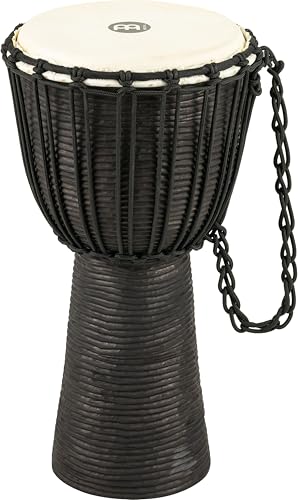
- Mahogany shell and goat-skin head
- Deep bass and bright slaps
- Pre-tuned rope system with two-year warranty
Best For: Broad-toned recording, practice, and acoustic performance
Bright Budget-Friendly Choice

- Sharp, loud goat-skin response
- Solid hand-carved mahogany shell
- Case included
Best For: Beginners and mobile recording setups needing bright attack
Full-Size Low-End Option

- 12-inch head and 24-inch height
- Deep bass with bright slaps
- Solid mahogany and goat skin
Best For: Studio setups prioritizing full tone and a larger playing surface
Warm-Tone Traditionalist

- Mahogany shell for deep bass and crisp highs
- Natural goat skin provides warm, responsive tone
- 24-inch body with Alpine cord tuning
Best For: Natural, traditional-sounding recording sessions
Studio-Ready Utility
Mechanically Tuned Freestyle Djembe
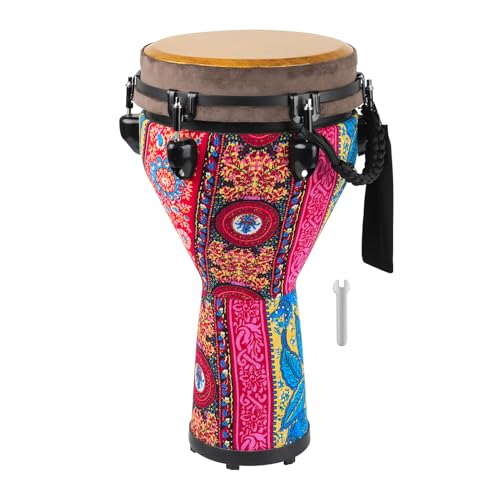
- Six lugs enable quick, precise pitch changes
- Distinct highs, mids, and lows for recording
- Weatherproof and portable with a carry handle
Best For: Flexible studio, live, and outdoor use
All-Weather Performer

- Synthetic shell and head resist weather-related changes
- Quick tuning with included wrench
- Thumping bass, crisp slaps, and two-year warranty
Best For: Portable recording and outdoor performance
Best Tunable Pick
Freestyle Mechanically Tuned Djembe

- Six-lug tuning system with wrench
- Synthetic head and shell for stable tone
- Portable, weatherproof 12-inch design
Best For: Recording musicians seeking precise tuning and dependable portability
Best Traditional Value
Handcrafted Rope-Tuned Goat-Skin Djembe

- Natural goat-skin head for warm tone
- Hand-carved wooden body with mahogany finish
- Traditional rope tuning and included case
Best For: Acoustic players and collectors who prefer organic materials
Best Handcrafted Studio Character
Terre Percussion Mahogany Djembe
- Mahogany body with natural goat skin
- Resonant, dynamic acoustic sound profile
- Rubber leg protection for added durability
Best For: Players wanting traditional materials and expressive recording tone
Studio-Ready Synthetic Classic – Remo Mondo Djembe 14-Inch
For shoppers comparing djembes for recording, the Remo Mondo offers a large 14-inch format with a durable Acousticon body and Earth finish. Its synthetic-style construction may suit players who want a substantial studio or rehearsal instrument, though the supplied specifications do not include a detailed sound profile.
Best For: Players seeking a large Remo djembe with an Acousticon body for practice, rehearsal, or recording setups.
Pros:
- Large 14-inch size for a substantial playing surface.
- Acousticon body material.
- Earth finish and wood-colored appearance.
- Listed weight of 10 pounds, providing a sturdy format.
Cons:
- Supplied notes do not specify the head material or tuning system.
- No included components are listed.
- Its larger, 10-pound format may be less convenient to transport.
The Mondo is a size-forward option for a recording collection or fixed studio space. Confirm the head and tuning details before buying if precise tonal control is central to your recording workflow.
Warm, Versatile Recording Pick – Meinl Headliner 10-Inch
For djembes for recording, this 10-inch Meinl Headliner balances a hand-carved mahogany shell with a natural goat-skin head. Its stated sound profile—deep bass, bright slaps, warm tone, and clear attack—gives a recorder useful tonal contrast across the playing surface.
Best For: Beginners and intermediate players who want a pre-tuned, all-purpose djembe with a broad tone range for recording, jam sessions, or acoustic performance.
Pros:
- Hand-carved solid mahogany shell.
- Natural goat-skin head with warm tone and clear attack.
- Ships pre-tuned with Mali Weave rope tuning.
- Two-year warranty is included.
Cons:
- Its 10-inch head provides less playing area than the larger 12-inch model.
- Natural skin can have variations in color and texture.
- No accessories are listed as included.
This is one of the most recording-friendly choices in the group when you want organic tone without an overly specialized setup. Its compact medium size also makes it practical for mobile sessions and general playing.
Bright Budget-Friendly Choice – AKLOT Hand-Carved Djembe
If you want djembes for recording with a sharper, more immediate character, the AKLOT pairs a genuine goat-skin head with a hand-carved mahogany shell. The supplied notes describe a loud sound with fewer overtone-heavy slaps, while the 9.5-inch head keeps the instrument relatively portable.
Best For: Beginners, students, and home recordists who need a portable djembe with a bright, loud response and distinctive decorative styling.
Pros:
- Genuine goat-skin drumhead for a sharp, loud sound.
- Hand-carved solid mahogany construction.
- Low-stretch rope is designed to support tuning.
- Includes a case and a one-year warranty.
Cons:
- Its sharper sound may be less suitable for warm, mellow recordings.
- The 9.5-inch head is smaller than the 12-inch Meinl option.
- Decorative hand-carved and hand-painted finish may not suit every studio aesthetic.
The AKLOT is a practical entry point when portability and attack matter more than a subdued tone. Its included case adds convenience for lessons, rehearsals, and location recording.
Full-Size Low-End Option – Meinl Headliner 12-Inch
For recording djembes with a bigger low-end presence, this 12-by-24-inch Meinl Headliner uses a solid hand-carved mahogany shell and natural goat-skin head. Its stated deep bass, bright slaps, warm tone, and clear attack provide a wide palette for rhythm tracks and ensemble work.
Best For: Players and recording spaces that can accommodate a full-size djembe and want a larger playing surface with broad tonal range.
Pros:
- 12-inch head with a 10-inch playing area.
- Solid hand-carved mahogany shell.
- Natural goat-skin head offers warm tone and clear attack.
- Pre-tuned Mali Weave rope system and two-year warranty.
Cons:
- At about 15 pounds, it is the heaviest option listed.
- Its 24-inch height requires more storage and transport space.
- No included accessories are listed.
The larger shell and head make this a strong choice when a recording needs a prominent, roomy djembe voice. Choose it over the 10-inch model when low-end body and playing area take priority over portability.
Warm-Tone Traditionalist – Carved Mahogany Djembe
For shoppers seeking djembes for recording with an organic, traditional character, this 24-inch Terre model pairs a solid mahogany shell with a natural goat-skin head. Its stated deep bass, crisp highs, and strong resonance make it a compelling acoustic option for close-mic or room recording.
Best For: Players and recording setups that prioritize natural wood tone, responsive goat skin, and traditional-inspired visual appeal.
Pros:
- Mahogany shell is designed to produce deep bass, crisp high notes, and strong resonance.
- Natural goat skin offers warm, vibrant tone and responsive playability.
- Heavy-duty Alpine cord tuning and a protective rubber base support practical everyday use.
Cons:
- At 10 pounds, it is heavier than the synthetic-shell alternatives listed here.
- Natural goat skin and wood may require more care around changing environmental conditions than all-weather synthetic designs.
This is the most traditional-sounding choice of the group on paper, with the mahogany-and-goat-skin construction favoring warmth and acoustic character. Choose it when recording tone and handcrafted presentation matter more than minimum weight or weather resistance.
Studio-Ready Utility – Mechanically Tuned Freestyle Djembe
When shopping for djembes for recording, the Freestyle mechanically tuned model stands out for its adjustable hardware and explicitly studio-grade sound profile. Six tuning lugs, a wrench, and separate high, mid, and low frequency output make it practical for repeatable pitch adjustments.
Best For: Recording musicians who want quick mechanical tuning, a lightweight build, and a weather-resistant drum for studio or live use.
Pros:
- Six heavy-duty tuning lugs allow precise pitch adjustments with the included wrench.
- Designed to deliver crisp highs, warm mids, and deep lows for recording and performance.
- Weatherproof synthetic shell and tear-resistant DuPont composite head resist humidity-related changes, dents, scratches, and wear.
- Integrated carry handle and 7.3-pound weight support portability.
Cons:
- Plastic body and synthetic head may offer less traditional acoustic character than wood and natural skin.
- The supplied details do not include a warranty.
Its key advantage is control: the mechanical tuning system makes pitch changes more direct than rope tuning, while the synthetic construction is suited to consistent use in varied conditions. It is a strong practical pick when recording flexibility and durability take priority.
All-Weather Performer – Alpine Synthetic Djembe
For djembes for recording that can also handle outdoor sessions, the Meinl Alpine Series combines a synthetic shell and head with quick tuning. Its specified thumping bass and crisp slap tones offer a clear contrast between low and high sounds, while the pre-tuned design helps it arrive ready to play.
Best For: Recording and performance setups that need a lightweight, low-maintenance djembe for changing locations and weather conditions.
Pros:
- All-weather synthetic materials resist expansion, contraction, dents, scratches, and cuts.
- Easy tuning with steel tension rods and an included wrench.
- Produces thumping bass and crisp slap tones with a 12-inch head and 10-inch playing area.
- Includes a two-year manufacturer warranty and weighs about 8 pounds.
Cons:
- Synthetic construction may not provide the same natural tonal character as mahogany and goat skin.
- It is larger and heavier than some compact travel-oriented drums, despite its lightweight-for-size design.
The Alpine Series is a sensible choice for players who need consistent handling beyond a controlled studio. Its weather resistance, quick tuning, and warranty make it especially useful for mobile recording, open-mic work, and outdoor sessions.
Best Tunable Pick – Freestyle Mechanically Tuned Djembe
For shoppers comparing djembes for recording, the Freestyle mechanically tuned model stands out for its precise pitch control and stable synthetic construction. Six heavy-duty tuning lugs, a DuPont composite head, and a synthetic resonant shell are designed to deliver clearly separated highs, mids, and lows in studio or live settings.
Best For: Recording musicians, performers, and players who want easy tuning, reliable tone, and a portable all-weather drum.
Pros:
- Six tuning lugs and included wrench allow precise pitch adjustments.
- Designed for crisp highs, balanced mids, and deep low resonance.
- Weatherproof synthetic materials require minimal maintenance.
- Integrated carry handle and 9.3-pound weight support portability.
Cons:
- Synthetic construction may not provide the traditional feel of a wood-and-goat-skin djembe.
- No warranty is listed in the supplied details.
Choose this model when consistent tuning and practical studio handling matter more than traditional materials. Its mechanically tuned design makes it particularly convenient for recording sessions that require repeatable pitch adjustments.
Best Traditional Value – Handcrafted Rope-Tuned Goat-Skin Djembe
For djembes for recording with a traditional character, this handcrafted rope-tuned model pairs a genuine goat-skin head with a wooden body. Its warm, resonant sound and hand-carved construction make it a distinctive option for acoustic sessions, drum circles, and players who value an artisanal instrument.
Best For: Beginners, collectors, and acoustic players wanting a warm-sounding, traditionally styled djembe.
Pros:
- Genuine goat skin produces traditional tones and vibrant sound.
- Rope tuning allows pitch adjustment without mechanical lugs.
- Hand-carved wood construction gives each drum an individual character.
- Includes a case for added transport convenience.
Cons:
- Handcrafted sizing may vary slightly from the listed dimensions.
- Rope tuning may be less immediately precise or convenient than lug tuning.
- The supplied details list conflicting size references, so buyers should verify the exact configuration.
This djembe is a good fit for recordings where organic tone and visual character are priorities. Its natural materials can offer a more traditional sonic identity, while the rope system preserves the classic playing experience.
Best Handcrafted Studio Character – Terre Percussion Mahogany Djembe
Among djembes for recording, the Terre Percussion Standard line model offers a handcrafted mahogany body and natural goat-skin head for a resonant, dynamic sound. Its 20-inch height, 10-inch head, alpine cord wrapping, and carved finish give it a traditional presentation suited to expressive playing and acoustic recording.
Best For: Players and collectors seeking a handcrafted mahogany djembe with natural projection and traditional styling.
Pros:
- Mahogany wood body provides a durable, natural instrument foundation.
- Natural goat skin is designed for resonant, dynamic tones.
- Alpine cord wrapping supports the traditional construction.
- Rubber leg protection helps guard the drum during use and transport.
Cons:
- Natural goat skin and rope construction may require more care than synthetic alternatives.
- Its 10-inch head may offer less playing area than larger djembes.
- No carrying case is listed among the supplied components.
Select this Terre Percussion model when a warm, resonant acoustic character and handcrafted appearance are central to your recording setup. It favors traditional materials and expressive tone over the low-maintenance convenience of a synthetic drum.
How We Picked the Best Djembes for Recording
We focused on the features that matter most when a djembe is placed in front of a microphone: shell material, head response, tuning control, size, construction, and consistency. The selection includes carved mahogany drums for traditional warmth, synthetic-shell options for greater durability, and mechanically tuned models for faster pitch adjustments.
We also considered practical recording needs, including whether a drum can deliver a defined bass tone, a crisp slap, and manageable sustain without requiring extensive equalization. Warranty coverage and stated construction details were additional factors for buyers who need dependable instruments.
Quick Comparison
| Type | Main Advantage | Best For |
|---|---|---|
| Carved mahogany with natural goat skin | Warm, organic tone | Traditional studio and acoustic recordings |
| Synthetic shell and head | Stable, low-maintenance performance | Variable rooms, frequent use, and beginners |
| Mechanically tuned | Quick, precise tension changes | Players recording multiple tunings |
| Rope tuned | Classic feel and traditional response | Experienced players and ensemble work |
Key Buying Factors for Djembes for Recording
Shell and Head Materials
Mahogany shells generally provide a warm, resonant character, while synthetic shells can offer more consistent behavior in changing humidity. Natural goat-skin heads often produce nuanced highs and a complex response, but they may require more care and periodic retuning. Synthetic heads are typically more predictable for repeated sessions.
Size and Frequency Balance
Larger drums, such as 12-inch models, usually produce deeper bass and greater projection. Ten-inch djembes can be easier to position and may deliver a tighter midrange that sits cleanly in dense arrangements. Consider the room as well as the instrument: a large, resonant drum can overwhelm a small recording space.
Tuning and Setup
Mechanically tuned drums are convenient when precise adjustments are important, especially for overdubs or tonal matching. Rope-tuned drums offer a traditional playing experience but require more familiarity with tension systems. Whichever style you choose, allow the drum to acclimate to the room before recording.
Microphone Response and Playing Dynamics
Look for a djembe with clear separation between bass, tone, and slap. Record a short test from several microphone distances before committing to a performance. Slightly off-axis placement can reduce harsh slap frequencies, while a room microphone can capture useful body and ambience.
Who Should Buy Which Djembes for Recording?
Choose a carved mahogany, natural-head djembe if you want organic character for acoustic music, hand-percussion arrangements, or intimate studio sessions.
Choose a mechanically tuned model if you need repeatable setup, quick tuning changes, or a simpler workflow while recording multiple parts.
Choose a synthetic option if durability, weather resistance, and consistent maintenance are more important than the most traditional tonal response.
Choose a 10-inch drum for portability and controlled projection; choose a 12-inch drum when deep bass, volume, and a fuller low end are priorities.