The right looper can help church musicians build layered worship arrangements, support spontaneous moments, and simplify solo or small-team performances. The best choice depends on your instrument setup, control preferences, available outputs, and how complex your loops need to be.
Our roundup covers compact pedal loopers, advanced floor units, tabletop performers, and options with built-in accompaniment. Use the guide below to match your workflow with the features that matter most in a church setting.
Best 10 Loop Stations for Church Musicians Picks for 2026
Compact Church Looping

- High-resolution 32-bit audio processing
- 99 phrase memories and 13 hours of stereo recording
- 57 rhythms, MIDI, USB, and compact pedal design
Best For: Compact worship pedalboards needing versatile single-track looping
Accompaniment-Focused Looping

- Automatically creates bass and drum accompaniment
- 12 genres, 12 styles, and variable tempo
- Five-part looper with SD card expansion
Best For: Solo guitarists wanting fuller worship arrangements
Dual-Track Worship Control

- Dual-track looping with onboard mixing
- 57 rhythms, 16 drum kits, and Loop FX
- USB WAV management plus MIDI connectivity
Best For: Layered worship performances needing independent track control
Flagship Multi-Track Worship Rig
BOSS RC-600 Floor-Based Loop Station
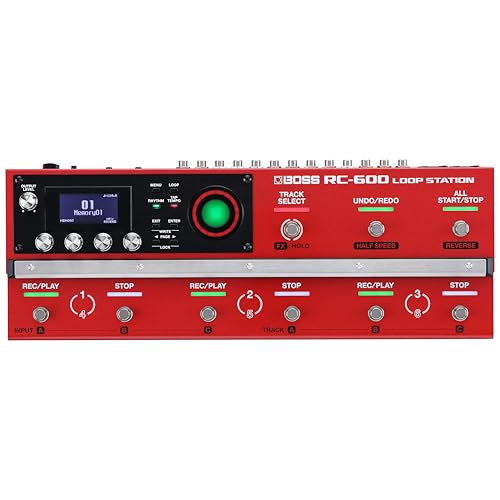
- Six simultaneous stereo phrase tracks
- 49 Input FX and 53 Track FX types
- Nine assignable footswitches and three pedal modes
Best For: Advanced multi-instrumental worship performances
Flexible Tabletop Control

- Five stereo tracks for layered arrangements
- Two XLR mic inputs with phantom power
- Includes footswitches and expression pedal
Best For: Tabletop worship setups with hands-on control
Advanced Layering and Effects
- Five stereo tracks with dedicated faders
- Extensive Input FX and Track FX selection
- 99 memories for recalling performance setups
Best For: Experienced musicians needing detailed live control
Floor-Based Six-Track Power
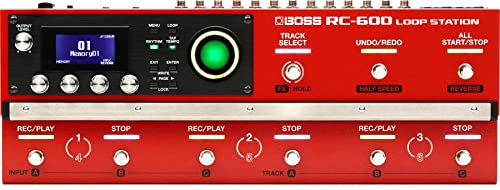
- Six stereo phrase tracks for extensive layering
- Two XLR mic inputs with phantom power
- 99 presets plus a rhythm guide
Best For: Pedalboard-based worship performances
Simple Stereo Starter

- 12 minutes of stereo recording
- Clear 24-segment loop-status indicator
- Includes power adapter and cables
Best For: Musicians wanting an easy stereo looper with useful accessories
Reliable One-Pedal Looper

- Record, overdub, play, and undo loops
- 12 minutes of stereo recording
- Five-year BOSS warranty
Best For: Players seeking a compact, uncomplicated looping pedal
Advanced Tabletop Performance

- Two simultaneous stereo phrase tracks
- Four input and four track effects
- 64 phrase memories with MIDI support
Best For: Performers creating complex, repeatable layered arrangements
Compact Church Looping – BOSS RC-5 Loop Station
For church musicians who need capable looping in a compact pedalboard format, the BOSS RC-5 combines high-resolution audio, onboard rhythms, and flexible connectivity. Its single-track design is well suited to building repeatable guitar, vocal, or instrumental parts during worship sets.
Best For: Church musicians seeking a compact, high-quality looper with rhythms, phrase storage, and MIDI control.
Pros:
- 32-bit AD/DA conversion and 32-bit floating-point processing support professional-grade loop capture and playback.
- Stores up to 99 phrase memories and provides 13 hours of stereo recording time.
- Includes 57 rhythms with A/B variations, seven drum kits, reverse playback, USB, and MIDI connectivity.
- Multi-color LCD helps monitor loop status and parameters during performances.
Cons:
- Uses a single-track looping configuration rather than multiple simultaneous tracks.
- Optional PSA adapter is needed for extended sessions if you do not use a 9V battery.
The RC-5 is a practical choice when pedalboard space matters but you still want substantial storage, rhythm support, and control integration for church performances.
Accompaniment-Focused Looping – DigiTech Trio+ Band Creator
The DigiTech Trio+ is an unusual option among loop stations for church musicians because it creates automatic bass and drum accompaniment from your playing. Alongside its looper, it offers multiple genres, styles, tempo control, and an effects loop for building fuller solo performances.
Best For: Guitarists leading worship alone or practicing arrangements with automatic bass and drum parts.
Pros:
- Listens to guitar playing and generates matching bass and drum accompaniment.
- Offers 12 genres, 12 styles, variable tempo, and individual volume controls.
- Includes a looper with a five-part loop sequencer and SD card expansion.
- Bundle includes patch cables and a power supply.
Cons:
- Its accompaniment-centered design may be less suitable for musicians who only want straightforward looping.
- Supplied details identify analog operation and corded power rather than battery operation.
For a solo church guitarist, the Trio+ can add rhythmic and harmonic depth without requiring a separate bassist or drummer. It is especially useful for practice, songwriting, and stripped-down performances.
Dual-Track Worship Control – BOSS RC-500 Loop Station
The BOSS RC-500 gives church musicians more hands-on control than a basic looper through its dual-track design, onboard mixing, rhythms, and Loop FX. It is a strong fit for worship players who want to separate and manage layered parts while retaining USB and MIDI integration.
Best For: Worship performers who need dual-track looping, onboard rhythms, effects, and deeper live control.
Pros:
- Provides an advanced dual-track looping setup with onboard mixing.
- Uses 32-bit AD/DA conversion and 32-bit floating-point processing for detailed audio.
- Includes 57 rhythms, 16 drum kits, reverse playback, and Loop FX such as repeat, scatter, shift, and vinyl flick.
- Stores 99 phrase memories and supports WAV backup and loading through USB.
Cons:
- Its corded-electric design requires the included power supply for operation.
- The larger, heavier enclosure may take more pedalboard space than the RC-5.
The RC-500 is a flexible middle ground for church musicians who have outgrown a single-track pedal but do not need the six-track scale of a flagship floor-based system.
Flagship Multi-Track Worship Rig – BOSS RC-600 Floor-Based Loop Station
For church musicians building complex live arrangements, the BOSS RC-600 offers six simultaneous stereo phrase tracks and extensive real-time control. Its flagship floor-based design is aimed at guitarists, singer-songwriters, and multi-instrumentalists who need effects and assignable footswitches in one system.
Best For: Advanced worship performers creating complex, multi-layered arrangements with hands-free control.
Pros:
- Supports six simultaneous stereo phrase tracks for detailed layered performances.
- Provides 49 Input FX and 53 Track FX types, with up to four usable at once in each section.
- Includes nine freely assignable footswitches and three pedal modes for customized control.
- Uses 32-bit AD/DA conversion and 32-bit floating-point processing.
Cons:
- Its 8.2-pound, floor-based enclosure is substantially less portable than compact loop pedals.
- Advanced controls and effects may be more capability than a simple worship setup requires.
- Requires corded power and a higher-current 1100 mA supply.
The RC-600 is best viewed as a complete performance hub rather than a basic looper. Its track count, effects, and assignable controls make it a strong choice for ambitious solo worship arrangements and multi-instrumental setups.
Flexible Tabletop Control – Boss RC-505 Mk2 Loop Station
For church musicians seeking loop stations for church musicians, the Boss RC-505 Mk2 offers a tabletop workflow built around five stereo tracks. Its two XLR microphone inputs with phantom power, stereo line inputs, rhythm generator, and hands-on buttons and knobs support layered vocal and instrumental arrangements.
Best For: Worship leaders and musicians who prefer tabletop control for building layered live arrangements.
Pros:
- Five stereo tracks support substantial layering.
- Two XLR microphone inputs include phantom power.
- Includes a footswitch, dual footswitch, expression pedal, and AC adaptor.
- USB connectivity supports computer integration.
Cons:
- Tabletop format may require a dedicated stand or surface.
- Its listed 9-volt, 500-milliamp power requirement adds setup considerations.
The RC-505 Mk2 is a practical choice when tactile tabletop control matters more than a conventional floor-pedal layout. Its multiple stereo inputs and included control accessories make it adaptable for church performance setups.
Advanced Layering and Effects – BOSS RC-505mkII Loop Station
The BOSS RC-505mkII is designed for church musicians comparing loop stations for church musicians with extensive routing and sound-shaping needs. It combines five simultaneous stereo phrase tracks with dedicated faders, dual effects sections, customizable controls, and memory storage for recalling complete performance setups.
Best For: Experienced worship performers who need detailed track mixing, effects control, and repeatable presets.
Pros:
- Five stereo phrase tracks have dedicated controls and volume faders.
- Includes 49 Input FX types and 53 Track FX types.
- Stores up to 99 memories with phrase tracks, effects, and control assignments.
- Provides two XLR mic inputs with phantom power and multiple stereo outputs.
Cons:
- The extensive effects and routing options may require a learning period.
- Its tabletop design is less suited to musicians seeking a floor pedal.
With 32-bit AD/DA conversion, 32-bit floating-point processing, and expanded control customization, this version is suited to complex live worship arrangements. It is most compelling when precise mixing and saved configurations are central to the performance.
Floor-Based Six-Track Power – Boss RC-600 Loop Station
For performers who want loop stations for church musicians in a pedal-style format, the Boss RC-600 provides six stereo phrase tracks and push-button control. It also includes two XLR microphone inputs with phantom power, two stereo instrument or line input pairs, 99 phrase memory presets, and a rhythm guide.
Best For: Worship musicians who want extensive looping capacity in a floor-based looper pedal.
Pros:
- Six stereo phrase tracks offer more layering capacity than five-track models.
- Two XLR microphone inputs include phantom power.
- Includes 99 phrase memory presets and a rhythm guide.
- Comes with pedal switches, an expression pedal, and micro XLR cables.
Cons:
- Push-button controls may offer less tabletop-style visual access during performance.
- Its 9-volt, 300-milliamp power requirement should be planned into the pedalboard setup.
The RC-600 stands out for musicians who need six stereo tracks and hands-free pedal operation. Its microphone support, instrument inputs, presets, and rhythm guide make it a strong fit for larger or more intricate live worship arrangements.
Simple Stereo Starter – Boss RC-1 Loop Station Bundle
Boss RC-1 Loop Station | Bundle with Gearlux Power Supply, Instrument Cable, Patch Cable, and Picks
Check Price On AmazonFor church musicians seeking straightforward loop stations for church musicians, the Boss RC-1 bundle offers an approachable way to record, overdub, and play extended stereo phrases. Its circular 24-segment indicator makes the current mode easy to follow, while the included power adapter and cables help you get started quickly.
Best For: Guitarists and other musicians who want a simple stereo looper with useful accessories included.
Pros:
- Up to 12 minutes of stereo recording time.
- Clear 24-segment LED indicates Rec, Overdub, and Play modes.
- Stereo inputs and outputs support stereo instruments and effects.
- Bundle includes a power adapter, instrument cable, patch cable, and picks.
Cons:
- Battery life is approximately 4.5 hours when using a 9-volt alkaline battery.
- External AC adapter is required for corded operation and is included in this bundle.
The RC-1 is a practical choice when ease of operation matters more than advanced effects or extensive phrase storage. Its retained memory and stereo connectivity make it a flexible option for worship setups built around layered phrases.
Reliable One-Pedal Looper – BOSS RC-1 Loop Station Pedal
The BOSS RC-1 is a compact, user-friendly option for church musicians comparing loop stations for church musicians. It supports recording, playback, overdubbing, and undo or redo functions, with stereo connectivity and a simple indicator designed to keep live looping easy to monitor.
Best For: Guitar, bass, and keyboard players who want a familiar, compact looping pedal for layered worship parts.
Pros:
- Offers 12 minutes of stereo recording time.
- Supports recording, playback, overdub, undo, and redo.
- 24-segment LED displays the current loop mode.
- Recorded phrases remain in memory after the pedal is turned off.
Cons:
- AC adapter is optional and sold separately.
- Its feature set is focused on straightforward looping rather than built-in effects.
With its compact stompbox format and uncomplicated controls, the RC-1 fits musicians who need dependable phrase layering without a complex tabletop interface. The five-year BOSS warranty adds reassurance for regular use.
Advanced Tabletop Performance – BOSS RC-202 Loop Station
For church musicians who need more control than a basic pedal provides, the BOSS RC-202 brings two simultaneous stereo phrase tracks and hands-on tabletop operation. Its phrase memories, effects, and external-control options suit complex arrangements and live performance workflows.
Best For: Experienced performers building layered worship textures with multiple tracks, effects, and saved phrase setups.
Pros:
- Provides two simultaneous stereo phrase tracks with dedicated controls.
- Includes four input effects and four track effects.
- Stores 64 phrase memories across eight banks.
- Supports optional footswitches, expression pedals, and MIDI connectivity.
Cons:
- Tabletop design may require more setup space than a compact pedal.
- It weighs 3.8 pounds and has a larger footprint than the RC-1 models.
- Requires corded electric power.
The RC-202 is the strongest fit here for musicians who want deep, real-time control and repeatable saved setups. Its larger interface and advanced effects bring more capability, but also make it a more involved choice than a basic foot-operated looper.
How We Picked the Best Loop Stations for Church Musicians
We focused on features that directly affect worship performance: recording and overdubbing workflow, foot-control access, loop memory, input and output flexibility, rhythm or accompaniment tools, and ease of use during rehearsals and services. We also included models suited to different experience levels, from simple one-button looping to multitrack arrangements and hands-free control.
Because church setups vary widely, no single looper is best for everyone. A guitarist leading a small congregation may need a compact pedal, while a solo worship artist or electronic musician may benefit from multiple tracks, effects, and deeper routing options.
Quick Comparison
| Best For | Look For | Typical Fit |
|---|---|---|
| Simple live looping | One-button operation and reliable overdubs | RC-1-style pedals |
| Compact worship rigs | Small footprint, stereo operation, and onboard memory | RC-5-style loopers |
| Layered arrangements | Multiple tracks, scenes, and independent controls | RC-500 or RC-600-style units |
| Tabletop performance | Hands-on controls and vocal or electronic inputs | RC-202 or RC-505-style units |
| Built-in accompaniment | Automatic backing parts and guided song development | TRIO+-style products |
Key Buying Factors for Loop Stations for Church Musicians
Control During Worship
Footswitch placement and control layout matter when you are singing, playing guitar, or leading from a microphone. Choose a straightforward pedal for basic verse-and-chorus loops, or a model with assignable switches and external-control support for more complex arrangements.
Loop Capacity and Track Management
Check how many tracks or phrases can run independently, how much onboard memory is available, and whether loops can be saved and recalled. More tracks are useful for layered pads, percussion, bass lines, and vocal parts, but they also require more planning and practice.
Inputs, Outputs, and Signal Routing
Confirm compatibility with your instruments, microphones, stereo effects, mixer, amplifier, or church sound system. Stereo outputs can preserve spatial effects, while dedicated input controls and flexible routing help prevent vocals and instruments from competing in the mix.
Rhythms, Effects, and Synchronization
Built-in rhythms can provide a steady foundation during solo performance, while effects may reduce the need for extra pedals or processors. MIDI, USB, and synchronization features are especially useful for musicians combining loopers with keyboards, drum machines, or playback systems.
Who Should Buy Which Loop Stations for Church Musicians?
Choose a compact single-track pedal if you want dependable looping for guitar, keyboard, or simple vocal arrangements with minimal setup. It is usually the easiest starting point for worship teams and beginners.
Choose a midrange stereo looper if you need saved phrases, rhythms, or more control without moving to a large floorboard. This is a strong balance for solo worship leaders and instrumentalists.
Choose an advanced floor looper if you perform layered arrangements, need multiple independent tracks, or want deep foot control and routing. Expect a steeper learning curve and more rehearsal time.
Choose a tabletop looper if your performance is built around vocals, electronic instruments, beatboxing, or hands-on manipulation rather than traditional pedal control.
Before buying, map your actual service workflow: count your inputs, decide whether you need mono or stereo output, identify how many layers you will run, and confirm that the controls remain usable while you perform.