Choosing the right encoder can make or break a corporate livestream. For meetings, town halls, product launches, and hybrid events, you need stable video, dependable audio, and streaming protocols that fit your platform and IT setup.
This roundup focuses on practical streaming encoders for corporate events, with options ranging from simple HDMI units to more advanced SDI and multi-input models.
Best 10 Streaming Encoders for Corporate Events Picks for 2026
Enterprise 4K HDMI Streamer

- 4K UHD HDMI input up to 30fps
- Streams via RTMP, RTSP, SRT, HLS, and more
- Adds logos, captions, timestamps, and edits
Best For: corporate AV teams needing flexible multi-platform streaming
Compact Hybrid AV Encoder

- HDMI encoder, decoder, and UVC converter
- Supports SRT, RTMP(S), RTSP, and HDMI output
- Compact build with PoE, tally light, and PC-free use
Best For: compact corporate AV workflows needing flexible signal conversion
Broadcast-Ready 4K Encoder
Blackmagic Streaming Encoder 4K
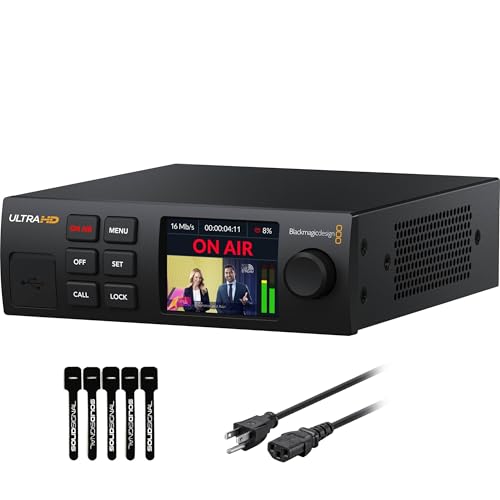
- Streams 4K up to 2160p60 via SRT or RTMP
- Includes 12G-SDI, standards conversion, and monitoring
- Adds auto-failover, captions, timecode, and REST API
Best For: broadcast-style corporate events with SDI and failover needs
Multi-Protocol 4K Stream Box

- 4K HDMI input with H.265/H.264 encoding
- Streams to RTMP, SRT, HLS, RTSP, HTTP, and more
- Supports logos, captions, timestamps, and image edits
Best For: corporate streaming teams needing broad protocol support and branding
All-in-One 4K Contribution Encoder

- HDMI and SDI inputs with mixed layouts
- Streams to up to six destinations
- Streams and records simultaneously
Best For: Corporate AV teams needing one flexible encoder for hybrid events
Multi-Protocol HDMI Encoder
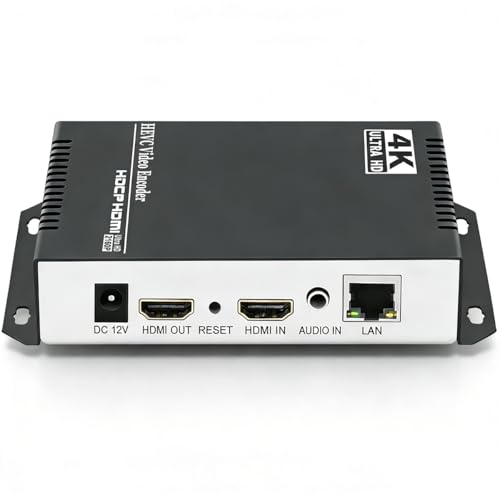
- Supports RTSP, RTMP, SRT, HLS, and more
- Can send 4 simultaneous streams
- Includes captions, logos, and timestamps
Best For: Teams wanting wide protocol support from a straightforward HDMI encoder
Standalone HDMI Encoder with NDI|HX
Magewell Ultra Encode HDMI Plus

- 4K HDMI encoding with loop-through
- Supports NDI|HX, RTMP, SRT, and HLS
- Streams and records at the same time
Best For: HDMI-based corporate events needing local monitoring and IP streaming
4K Multistream Encoder
4K30 DisplayPort Encoder with 4 Outputs

- 4K UHD input/output at 2160p30
- Streams to 4 outputs with different protocols
- OSD overlays plus crop, rotate, flip, and noise reduction
Best For: Multi-platform corporate broadcasts with 4K sources and simultaneous streaming
Compact HD Event Encoder
1080P60 HDMI Live Streaming Encoder

- Hardware H.265/H.264 encoding at 1080P60
- Browser setup with no software or drivers
- Supports SRT, RTMP(S), RTSP, HLS, WebRTC, and overlays
Best For: Quick HDMI-based corporate event streaming with simple setup
4-Channel Broadcast Encoder
OLED HDMI 4K/1080P Streaming Encoder

- Choose 1x4K30 or 4x1080P30 output mode
- OLED display shows IP, resolution, and status
- Supports RTMP, RTMPS, SRT, RTSP, HTTP, UDP, and ONVIF
Best For: Multi-stream corporate events and broadcast meetings with status visibility
Enterprise 4K HDMI Streamer – 4K HDMI to Network Encoder
If you need streaming encoders for corporate events, this URayCoder unit is built to turn a single HDMI source into multiple network streams with very little setup. It supports 4K input, dual H.265/H.264 encoding, and a wide range of protocols, so it fits everything from keynote presentations to live product launches.
Best For: Corporate AV teams that want one HDMI encoder for multi-platform live streaming and branded event feeds.
Pros:
- Supports 4K UHD input up to 30fps and 2K/lower resolutions up to 120fps.
- Outputs multiple protocols, including RTMP(S), RTSP, SRT, HLS, HTTP, UDP, and WebRTC.
- Allows text overlays, scrolling captions, logos, timestamps, cropping, and rotation.
- Includes lifetime free warranty and technical support.
Cons:
- HDMI-only design limits use with SDI-based event rigs.
- Best suited to teams that can manage encoder configuration and stream settings.
Overall, this is a flexible choice when your event needs one encoder to serve multiple platforms and presentation formats. Its customization options and broad protocol support make it especially useful for branded corporate streaming.
Compact Hybrid AV Encoder – ZowieBox 4K HDMI
For corporate events that need a compact, all-in-one option, this ZowieBox is designed to handle HDMI streaming, decoding, and UVC conversion in one device. It supports SRT, RTMP(S), and RTSP workflows, making it practical for live event production, conference rooms, and remote monitoring setups.
Best For: Teams that want a compact HDMI encoder/decoder for event streaming, monitoring, and hybrid AV workflows.
Pros:
- Encodes HDMI to SRT, RTMP(S), and RTSP for real-time broadcasting.
- Also works as a decoder, converting network streams back to HDMI.
- Supports HDMI to UVC and UVC to HDMI conversion for meetings and training.
- Includes compact aluminum housing, PoE support, tally light, and PC-free operation.
Cons:
- HDMI-only input may not suit SDI-heavy production environments.
- Feature-rich design may be more than needed for simple one-camera streaming.
This is a strong fit when your event setup needs more than simple encoding and benefits from bidirectional signal handling. The compact build and flexible power options make it especially appealing for mobile or temporary corporate installs.
Broadcast-Ready 4K Encoder – Blackmagic Streaming Encoder 4K
Among streaming encoders for corporate events, this Blackmagic unit stands out for higher-end production needs where reliability, monitoring, and failover matter. It supports 4K streaming over SRT or RTMP, includes SDI input and dual monitor outputs, and can keep going with Ethernet or mobile data if the main connection drops.
Best For: Broadcast-style corporate events that need SDI integration, failover, and professional control features.
Pros:
- Supports H.264 and H.265 streaming up to 2160p60.
- Includes 12G-SDI input, loop output, and automatic standards conversion.
- Offers Ethernet plus 5G/4G mobile connectivity with auto-failover.
- Provides captions, timecode passthrough, REST API control, tally, talkback, and webcam output.
Cons:
- Designed around SDI workflows, so it may be overkill for basic HDMI-only events.
- More advanced than simpler stand-alone streaming boxes.
This model makes sense when your corporate production needs are closer to a broadcast control room than a basic webcast. The combination of SDI features, failover connectivity, and on-device monitoring is especially useful for mission-critical live events.
Multi-Protocol 4K Stream Box – H.265 HDMI IP Encoder
If you want streaming encoders for corporate events that can feed many destinations at once, this URayCoder model is built for protocol flexibility. It accepts HDMI input, supports 4K encoding, and can output multiple streams in formats like RTMP(S), SRT, HLS, RTSP, HTTP, and WebRTC for broader distribution.
Best For: Event teams that need one HDMI encoder for multi-platform corporate streaming and custom branding.
Pros:
- Supports 4K UHD input with H.265/H.264 dual encoding.
- Can output multiple stream protocols, including RTSP, RTMP(S), SRT, HLS, HTTP, UDP, and WebRTC.
- Allows text, scrolling captions, logos, timestamps, cropping, rotation, and mirror controls.
- Includes lifetime free warranty, technical support, and customization services.
Cons:
- HDMI-only design is less suitable for SDI-centric event systems.
- Customization and multi-protocol options may add complexity for simple setups.
This is a practical pick when you need wide protocol coverage and presentation branding from a single encoder. It is especially useful for corporate live streams that have to reach several platforms without extra hardware.
All-in-One 4K Contribution Encoder – Magewell Ultra Encode AIO
If you need streaming encoders for corporate events that can handle both AV flexibility and network options, the Magewell Ultra Encode AIO is built for that kind of mixed workflow. It accepts HDMI or SDI, supports multi-destination streaming, and can also record while going live, which makes it a practical fit for hybrid meetings, panels, and in-house event production.
Best For: Corporate AV teams that need one encoder for HDMI/SDI sources, streaming, and recording in a single box.
Pros:
- HDMI and SDI inputs in one unit, with picture-in-picture or side-by-side layouts
- Streams to up to six destinations using RTMP, RTMPS, SRT, NDI|HX2/HX3, HLS, and more
- Can stream and record at the same time to SD card, USB storage, or network drives
- Includes onboard processing like scaling, cropping, de-interlacing, and overlays
Cons:
- More features than a basic one-input encoder, so setup may be more involved
- 4K HDMI and SDI support are not identical, with SDI capped lower than HDMI in the notes
- Rack-mount form factor may be more than some small portable event kits need
For corporate events that need reliable multi-protocol streaming plus local recording, this model offers a lot of control in one device. Its mix of input flexibility, overlays, and network options makes it a strong fit when the production needs go beyond simple passthrough streaming.
Multi-Protocol HDMI Encoder – URayCoder 4K IP Video Encoder
Among streaming encoders for corporate events, this URayCoder HDMI-to-Ethernet unit stands out for broad protocol support and straightforward operation. It takes HDMI input, encodes up to 4K, and can push multiple streams at once, which is useful when you need to reach several platforms or internal distribution endpoints from a single source.
Best For: Teams that want a simple HDMI encoder with wide protocol compatibility and multi-platform output.
Pros:
- Supports many protocols, including RTSP, RTMP(S), SRT, HLS, UDP/RTP, WebRTC, and more
- Can output up to 4 video streams with different protocols simultaneously
- Includes text, scrolling captions, logos, timestamps, and video adjustments
- Supports HDMI embedded audio plus line-in audio
Cons:
- Built around HDMI-only input, so it is less flexible than dual-input units
- Does not list onboard recording in the supplied notes
- Best suited to HDMI sources rather than mixed AV systems
This is a practical choice when you need broad streaming compatibility without a steep learning curve. It works well for event teams that value simple setup, multiple output options, and basic branding tools over advanced input switching.
Standalone HDMI Encoder with NDI|HX – Magewell Ultra Encode HDMI Plus
If your corporate event workflow is centered on HDMI sources, the Magewell Ultra Encode HDMI Plus is a strong option among streaming encoders for corporate events. It combines 4K encoding, HDMI loop-through, recording, and modern IP streaming support, making it useful for conference rooms, event stages, and hybrid production setups.
Best For: HDMI-based corporate productions that need streaming, recording, and local monitoring in one device.
Pros:
- Encodes HDMI up to 4096×2160p30 with loop-through for monitoring or pass-through
- Supports RTMP, RTMPS, SRT, NDI|HX, HLS, and TS over UDP/RTP
- Can stream and record simultaneously to internal storage, USB, or network locations
- Offers PoE, Wi-Fi, and support for 4G/5G USB modems for flexible deployment
Cons:
- HDMI-only input means it is less versatile for SDI-based event rigs
- Maximum listed encoding is 4K at 30p, not 60p
- Advanced network and workflow features may be more than basic event streaming needs
For teams that want a compact HDMI encoder with serious workflow flexibility, this model checks many boxes. Its combination of NDI|HX, recording options, and network connectivity makes it especially appealing for managed AV environments and mobile event production.
4K Multistream Encoder – 4K30 DisplayPort Encoder with 4 Outputs
If you need streaming encoders for corporate events that can handle higher-resolution presentations, this 4K30 DisplayPort unit is built for flexible live delivery. It supports 4K UHD input and output, plus multiple protocols like SRT, RTSP, RTMPS, UDP, and NVR workflows, so you can send the same event feed to different destinations at once.
Best For: Multi-platform corporate broadcasts that need 4K input, simultaneous outputs, and broad protocol support.
Pros:
- Supports 4K UHD video input and output at 2160p30.
- Can output 4 video streams simultaneously using different streaming protocols.
- Includes SRT, RTSP, RTMPS, UDP, and NVR support for flexible distribution.
- Offers OSD text, scrolling caption, PNG overlay, plus crop, rotation, flip, mirror, and noise reduction tools.
Cons:
- DisplayPort-based setup may not match every corporate AV source without the right cabling.
- Advanced stream and overlay options may take some configuration time.
For organizations that want one encoder to feed multiple live channels from a 4K source, this model offers strong versatility. The built-in image controls and overlay tools also make it useful for branded event coverage and internal presentations.
Compact HD Event Encoder – 1080P60 HDMI Live Streaming Encoder
For streaming encoders for corporate events where a simple HDMI workflow matters, this 1080P60 unit keeps setup straightforward. It encodes in H.265/H.264, supports common live and IP protocols, and can be configured through a browser with no PC software required, which is helpful for fast event deployment.
Best For: Small to mid-size corporate events that need easy browser setup and reliable HDMI streaming.
Pros:
- Hardware encoding supports 1080P60 in H.265/H.264.
- Broad protocol support includes SRT, RTMP(S), RTSP, UDP, HLS, WebRTC, and more.
- Browser-based setup requires no software or drivers.
- Supports HDMI embedded audio, external 3.5mm input, and OSD text/logo/timestamp overlays.
Cons:
- Limited to HDMI input rather than 4K or DisplayPort workflows.
- Advanced networking configurations may still require basic technical knowledge.
This is a practical choice when you want dependable live streaming without extra software overhead. Its compact size and low power design also make it easier to place in racks, behind displays, or at temporary event stations.
4-Channel Broadcast Encoder – OLED HDMI 4K/1080P Streaming Encoder
This option stands out among streaming encoders for corporate events when you need selectable multi-stream output and clear status monitoring. It can run either 1x4K30 or 4x1080P30 streams, includes an OLED display for IP and encoding status, and supports several common broadcast protocols for flexible deployment.
Best For: Corporate events, broadcast meetings, and IPTV workflows that need up to four simultaneous streams.
Pros:
- Selectable output mode: 1x4K30 or 4x1080P30.
- Built-in OLED display shows IP address, resolution, and encoding status.
- Supports H.265, H.264, and MJPEG encoding with HDMI loop-out.
- Works with RTMP, RTMPS, SRT, RTSP, HTTP, UDP, and ONVIF-compatible workflows.
Cons:
- 4K input requires selecting the 4K EDID option in the web interface.
- Larger chassis and 0.63 kg weight make it less compact than pocket-size units.
For teams that want visibility, flexibility, and multiple output paths from one encoder, this model is a strong fit. The OLED screen and loop-out feature are especially helpful during live production when fast troubleshooting matters.
How We Picked These Streaming Encoders for Corporate Events
We prioritized reliability, codec support, input options, and compatibility with common enterprise workflows. That means looking for strong support for RTMP, SRT, RTSP, HLS, and similar protocols, plus hardware features such as loop-through, recording, PoE, and mobile connectivity where they add real value.
We also favored models that can handle real-world event needs: consistent uptime, straightforward setup, and enough flexibility for a small control room, venue AV rack, or traveling production kit.
Quick Comparison: What Matters Most
If you need a simple camera-to-stream setup, a single HDMI encoder is usually the easiest choice. If your event relies on professional cameras, longer cable runs, or more robust AV infrastructure, SDI or multi-input units are often a better fit.
For larger programs, the best Streaming Encoders for Corporate Events are the ones that match your workflow first and your resolution second. A stable 1080p encoder can outperform a poorly configured 4K model if your network or production team is limited.
Key Buying Factors for Streaming Encoders for Corporate Events
Inputs and Signal Type
Check whether your cameras and switchers use HDMI, SDI, or both. HDMI works well for simpler setups, while SDI is typically preferred in professional corporate production because it is more secure over distance and better suited to locked-down AV environments.
Protocols and Platform Compatibility
Make sure the encoder supports the delivery method you actually use. RTMP remains common for public platforms, SRT is valuable for secure and resilient contribution feeds, and RTSP, HLS, or WebRTC can matter for internal distribution or low-latency viewing.
Resolution, Frame Rate, and Stability
4K can be useful for high-end events, but many corporate streams still look excellent at 1080p60. Prioritize stable encoding, clean audio handling, and dependable thermal design over maximum specs that your workflow will not fully use.
Workflow Extras
Features like recording, dual-input mixing, loop-through, PoE, and OLED status displays can simplify live production. For Streaming Encoders for Corporate Events, those small conveniences often save time during setup and troubleshooting.
Who Should Buy Which Streaming Encoders for Corporate Events?
Choose a basic HDMI encoder if you need a simple, budget-conscious way to stream a single source. Pick an SDI or hybrid HDMI/SDI model if you support professional cameras, event stages, or more demanding production environments.
If your team needs flexibility for simulcasts, backup workflows, or internal and public delivery at the same time, look for a higher-end encoder with multi-protocol support, recording, and input mixing. For smaller teams, the best choice is usually the most reliable model that fits your platform, source type, and network conditions—not the one with the longest spec sheet.