Low light can turn sharp moments into blurry, noisy photos fast. A good flash helps you keep detail, freeze motion, and shoot with more confidence indoors or after dark.
This roundup of the best camera flashes for low light focuses on compact, practical options that balance power, speed, compatibility, and ease of use.
Best 10 Camera Flashes for Low Light Picks for 2026
Smart TTL Wireless Pick
GODOX IT32 TTL Camera Flash with X5N Trigger
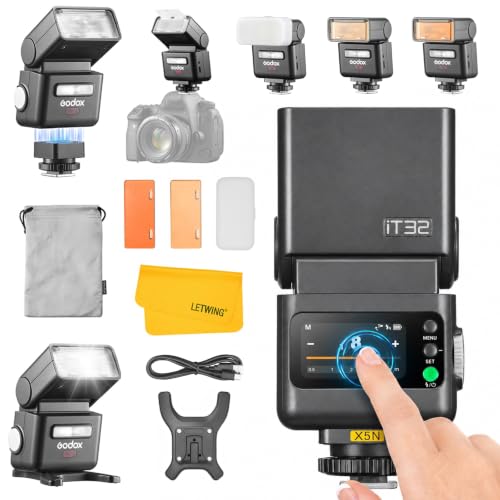
- TTL and manual output control
- HSS up to 1/8000s
- Built-in 2.4G wireless receiver
Best For: Nikon shooters needing compact wireless TTL lighting
Mini Travel Flash
PHOTOOLEX G01 Mini Camera Flash

- GN16 output with 10 power levels
- Lightweight 160g body
- Includes diffuser and 7 filters
Best For: Portable manual flash work and street photography
Compact Auto-Manual Pick
NEEWER Z160 Single Contact Camera Flash

- 22Ws output with GN14 power
- Auto and manual flash modes
- 1.5-second recycle time
Best For: Creators wanting a small flash with simple exposure control
Powerful Manual Speedlite

- GN33 output for stronger light
- 8 manual power levels
- S1/S2 optical slave modes
Best For: Portraits and events needing more flash power
Compact Manual Pick
NEEWER Z160 SE 20Ws Manual Speedlight

- 20Ws manual flash with 1/128-1/1 power control
- Built-in battery rated for up to 650 full-power flashes
- Very light 5.3 oz body with a small footprint
Best For: Lightweight manual low-light flash use on compatible cameras
Ultra-Light Hybrid Choice
Ulanzi SL03 Mini Flash Speedlite

- 1.16 oz mini flash with 4 manual power levels
- Adds continuous AF assist/fill light mode
- USB-C rechargeable with pass-through charging
Best For: Travelers and creators wanting a tiny flash plus assist light
Photo/Video Compact Option
LOUERN GN8 Mini Flash with Video Light

- GN8 manual flash with 4 power levels
- Continuous light mode with 2500K-6500K adjustment
- 90-degree head and USB-C charging
Best For: Small photo/video setups needing a flash and fill light in one
Smart TTL Wireless Pick – GODOX IT32 TTL Camera Flash with X5N Trigger
If you want camera flashes for low light that stay flexible across on-camera and off-camera setups, the Godox IT32 is built around speed and simplicity. It offers TTL, high-speed sync up to 1/8000s, a built-in 2.4G receiver, and a magnetic detachable design that makes quick lighting changes much easier.
Best For: Nikon users who want a compact TTL flash with wireless multi-light control and fast setup.
Pros:
- TTL and manual output from 1/128 to 1/1 for quick exposure control
- HSS up to 1/8000s plus front/rear curtain sync for more shooting flexibility
- Built-in 2.4G receiver and X5N trigger support wireless multi-light use
- Compact body with LED modeling light, diffuser, reflector, and magnetic plates
Cons:
- Designed specifically for Nikon with X5N pairing in the notes
- X5 module charging requires attachment to the flash body via USB-C
This is the strongest option here for photographers who want modern automation plus wireless control in a compact package. The tradeoff is brand-specific compatibility, but for Nikon shooters it is an especially efficient low-light flash system.
Mini Travel Flash – PHOTOOLEX G01 Mini Camera Flash
The PHOTOOLEX G01 is a compact choice among camera flashes for low light when portability matters more than advanced automation. It delivers GN16 output, 10 manual power levels, and simple M, S1, and S2 modes, making it a practical small flash for street shooting and casual lighting work.
Best For: Shooters who want a lightweight mini flash with basic manual control and color effects.
Pros:
- Very lightweight 160g design that is easy to carry for street use
- GN16 output with 10 manual power levels from 1/1 to 1/128
- Built-in battery with up to 700 full-power flashes
- Includes diffuser and 7 color filters for creative looks
Cons:
- No TTL support and no camera menu control
- Compatibility is limited, with several listed cameras not supported
This is a simple, budget-friendly flash for photographers who mainly need portable light and manual control. It is not the most advanced option, but it is easy to understand and useful for compact setups.
Compact Auto-Manual Pick – NEEWER Z160 Single Contact Camera Flash
The NEEWER Z160 is a compact option for camera flashes for low light when you want a small body with a bit more output than entry-level mini flashes. It combines A/Auto and M/Manual modes, GN14 brightness, a 6000K color temperature, and a built-in modeling light for previewing your setup.
Best For: Creators who want a pocketable flash with auto and manual modes for everyday low-light shooting.
Pros:
- 22Ws output with GN14 guide number for brighter illumination
- A/Auto and M/Manual modes for flexible shooting
- Built-in 0.5W modeling light helps preview lighting
- Fast 1.5-second recycle and up to 650 full-power flashes
Cons:
- Single-contact design means it is not a full-featured TTL flash
- Some camera models are specifically listed as incompatible
For a compact on-camera flash, the Z160 gives you a useful balance of portability, power, and simple control. It makes sense for creators who want dependable low-light fill without moving up to a larger speedlite.
Powerful Manual Speedlite – PHOTOOLEX FK300 GN33 Flash
The PHOTOOLEX FK300 is aimed at photographers who need stronger camera flashes for low light than mini units can provide. With GN33 output, 8-level manual power adjustment, and S1/S2 optical slave modes, it is set up for portraits, product shots, and basic off-camera lighting.
Best For: Users who want a more powerful universal manual flash for portraits, events, and simple multi-light setups.
Pros:
- GN33 output offers more reach and coverage than compact mini flashes
- 8 power levels from 1/128 to 1/1 for manual control
- S1 and S2 optical slave modes support wireless triggering
- Includes flash stand, pouch, and 12 color filters
Cons:
- No TTL support listed, so exposure must be set manually
- Relies on optical pulse triggering rather than modern radio control
If you want a straightforward step up in flash output, the FK300 is the most power-focused manual option in this group. It is a practical pick when you care more about stronger light and flexibility than automation.
Manual Flash Pick – NEEWER TT560 Manual Speedlite
If you want camera flashes for low light and don’t mind working manually, the NEEWER TT560 is a straightforward, budget-friendly option. It gives you a decent GN38 output, adjustable power, and bounce-capable movement, but it does not offer TTL, HSS, or automatic exposure. That makes it best for shooters who are comfortable dialing in flash power themselves.
Best For: Photographers using compatible DSLRs or mirrorless cameras who want a manual flash with strong output and simple controls.
Pros:
- GN38 output with 8 manual power levels for controlled low-light shooting
- Tilts 0°-90° and rotates 0°-270° for bounce and direction control
- Supports S1/S2 optical slave modes and PC sync for off-camera use
- Uses 4 AA batteries and includes low-battery indication plus overheating protection
Cons:
- No TTL, no HSS, and no automatic flash exposure
- Requires a standard center-contact hotshoe and is not compatible with several listed cameras
- Fuji and other mirrorless cameras may require mechanical shutter mode
Overall, the TT560 is a solid manual choice if you want more power and bounce flexibility than a tiny pocket flash can offer, and you’re fine setting exposure by hand.
Ultra-Compact Choice – Godox iM30 Mini Flash
The Godox iM30 is one of the simplest camera flashes for low light if you want a tiny, lightweight unit that is ready fast. With 7 power levels, a GN15 rating, and a built-in diffuser, it’s designed for casual flash use without the bulk of a larger speedlite. Just remember that it is manual only, with no TTL or HSS.
Best For: Everyday shooters who want a compact, easy-to-carry flash for compatible single-contact hotshoe cameras.
Pros:
- Very small and lightweight at 2.7 oz for easy carry
- 7 power levels from 1/64 to 1/1 help fine-tune exposure
- Up to 230 flashes per charge and 3.6s recycle time at full power
- Includes a diffuser and uses simple single-contact hotshoe compatibility
Cons:
- No TTL or high-speed sync
- GN15 output is modest compared with larger flashes
- Not compatible with several listed Sony, Canon, and Fuji models
In practice, the iM30 makes sense when portability matters most and you want a quick, manual light boost for everyday indoor or low-light shooting.
Pocket Flash Option – Ulanzi SL01 Mini Speedlite
If you’re comparing camera flashes for low light and want something very compact, the Ulanzi SL01 is a simple manual speedlite with a GN8 output and four brightness steps. It’s built for single-contact hotshoe cameras and keeps the feature set intentionally basic, so it works best when you want a small on-camera flash rather than advanced automation.
Best For: Users who need a pocket-sized manual flash for compatible Sony, Canon, Nikon, Fuji, Panasonic, Leica, Pentax, or Olympus cameras.
Pros:
- GN8 output with 4 brightness levels for basic low-light fill
- Compact on-camera design that stays easy to carry
- 6500K color temperature and 97 CRI for consistent light quality
- Rated for at least 500 full-power flashes
Cons:
- No TTL and not automatic
- Single-contact hotshoe only, so compatibility must be checked carefully
- Shutter speed should not exceed 1/250s for best results
The SL01 is a practical pick if you want a tiny manual flash for occasional low-light work and don’t need the reach or automation of a larger unit.
Compact Manual Pick – NEEWER Z160 SE 20Ws Manual Speedlight
If you want camera flashes for low light without paying for TTL features you may never use, the NEEWER Z160 SE is a compact manual speedlight that keeps things straightforward. It offers 20Ws output, 1/128 to 1/1 power adjustment, and a 6000K±200K color temperature, so it can help add clean fill in dim rooms, street scenes, or small indoor setups. Just note that it requires manual control and a compatible single-contact hot shoe.
Best For: Photographers who want a lightweight manual flash for simple low-light shooting on compatible hot shoe cameras.
Pros:
- Compact 5.3 oz body with a vintage-style rotary dial and display
- Manual power control from 1/128 to 1/1 for predictable output
- Built-in 1200mAh battery supports up to 650 full-power flashes
- Works with many Canon, Nikon, Sony, Fuji, Olympus, and Panasonic models that use the right hot shoe type
Cons:
- No TTL, no HSS, and no automatic flash exposure
- Only works with a center-contact hot shoe and is not compatible with several listed camera models
- Fuji and other mirrorless cameras must use mechanical shutter mode
Overall, this is a practical low-light flash if you value portability and manual control over automation. It is best suited to users who are comfortable dialing in settings themselves and checking camera compatibility before buying.
Ultra-Light Hybrid Choice – Ulanzi SL03 Mini Flash Speedlite
The Ulanzi SL03 is a good option if you want camera flashes for low light that stay tiny while still giving you a bit more versatility than a basic flash. It pairs GN8 flash output with a continuous AF assist/fill light function, plus 4 manual power levels and a 90-degree adjustable head for bounce-style shooting. Its single-contact hot shoe design means compatibility needs a quick check before ordering.
Best For: Creators who want an ultra-light manual flash with a built-in assist light for low-light shooting and travel use.
Pros:
- Extremely light at 1.16 oz and easy to carry on compact cameras
- Combines flash mode with continuous fill/AF assist light
- Four power settings and a 90-degree tilting head for more control
- Rechargeable via USB-C with pass-through charging support
Cons:
- No TTL and not automatic
- Uses a single-contact hot shoe, so camera fit is limited
- Not compatible with several Sony, Canon, and Fujifilm models listed in the notes
In practice, this is a flexible little low-light helper for travel, vlogging, and quick everyday shooting. It is most appealing if you want something featherweight that can double as a small fill light, but it still depends on manual setup and compatible hardware.
Photo/Video Compact Option – LOUERN GN8 Mini Flash with Video Light
The LOUERN mini flash is aimed at buyers who want camera flashes for low light plus a little extra flexibility for video or close-up work. It offers GN8 manual flash output with four power levels, a 90-degree adjustable head, and a built-in continuous light mode with adjustable 2500K-6500K color temperature and CRI 97. That makes it useful when you need a compact hot shoe light for stills, tabletop shots, or simple content creation.
Best For: Shooters who want a small manual flash that can also work as a basic continuous light for photo and video.
Pros:
- Manual GN8 flash with 4 power levels for simple low-light control
- Continuous light mode with 12 LEDs, adjustable color temperature, and CRI 97
- 90-degree tilting head supports bounce-style lighting
- USB-C rechargeable with about 500 full-power flashes per charge
Cons:
- No TTL; this is a manual flash only
- Designed for single-contact hot shoe cameras
- GN8 output is modest, so it is better for close-range use than larger scenes
For a compact lighting tool, this model stands out because it blends a small flash with a useful video light. It is a sensible choice if you want one accessory that can cover both low-light still photography and lightweight content work.
How We Picked These Camera Flashes for Low Light
We focused on flashes that solve the most common low-light problems: underexposure, slow shutter blur, and harsh built-in flash results. Priority went to models with useful guide numbers, fast recycle times, adjustable output, and broad camera compatibility. We also considered battery type, portability, tilt or angle flexibility, and whether the flash makes sense for beginners or more advanced users.
Quick Comparison
For the simplest experience, TTL-capable options and automatic systems are easier to use when lighting changes quickly. Manual flashes usually give more control and can offer better value if you’re comfortable adjusting power yourself. Smaller mini flashes are great for travel, casual portraits, and on-camera fill, while higher-output speedlites are better if you need more reach or bounce capability.
Key Buying Factors for Camera Flashes for Low Light
Power and Guide Number
Higher output matters when subjects are farther away, ceilings are high, or you want to bounce light. For close-range indoor work, a compact flash can be enough, but very dim rooms often benefit from stronger output.
TTL, Manual, and HSS
TTL helps automatically set exposure, which is useful for fast-moving scenes. Manual power is ideal when you want repeatable results. High-speed sync can be valuable if you need flash outdoors or want to shoot with wider apertures while keeping ambient light under control.
Recycle Time and Battery
A quick recycle time keeps you from missing moments. Rechargeable lithium batteries are common in newer mini flashes and can be more convenient than disposable batteries for frequent shooters.
Compatibility and Mounting
Always check whether the flash is designed for your camera brand and whether it uses TTL, single-contact, or manual communication. A mismatch can limit automation or prevent full functionality.
Size, Tilt, and Extra Modes
Smaller flashes are easier to carry and ideal for everyday use, while a tilting head or video light mode adds flexibility for mixed photo-and-video creators. If you often shoot portraits, bounce capability can make a big difference in softness and skin tones.
Who Should Buy Which Camera Flashes for Low Light?
If you want the easiest low-light workflow, choose a TTL-enabled flash with HSS. If you prefer control and consistency, a manual speedlite is usually the better fit. Travelers and content creators may prefer mini flashes for their size and convenience, while photographers working in larger indoor spaces may want a more powerful unit with stronger guide numbers. For most buyers, the best Camera Flashes for Low Light are the ones that match your camera system, your shooting style, and how often you actually need flash power.