Choosing the right studio monitors can make a huge difference when producing electronic music. The best pair should reveal low-end detail, stereo imaging, and mix problems without adding hype.
Below, we’ve rounded up 10 strong options for home studios, project rooms, and desktop setups, with choices for compact spaces, fuller-range listening, and different budgets.
Best 10 Studio Monitors for Electronic Music Picks for 2026
Reference-Grade Nearfield

- Bi-amplified 70W total output
- 5-inch woofer, 1-inch tweeter
- XLR and TRS balanced inputs
Best For: Producers who want accurate, compact monitors for mixing electronic tracks.
Budget-Friendly Studio Pick
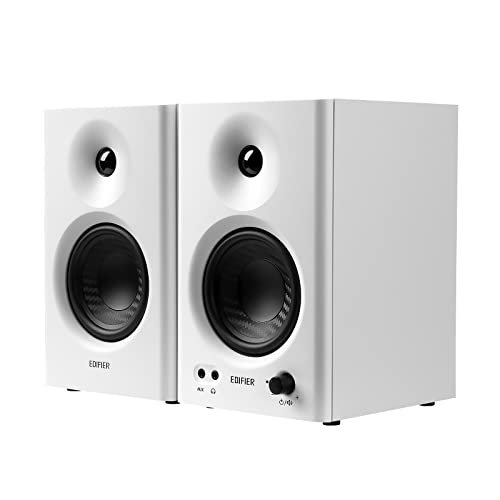
- Near-flat tuning for creators
- TRS, RCA, AUX, and headphone out
- Tone controls with dual listening modes
Best For: Home studios and desktop producers needing flexible, compact monitoring.
Compact Yamaha Option

- 4.5-inch woofer, compact desktop size
- Room control and high trim controls
- XLR/TRS, RCA, and stereo mini inputs
Best For: Small desks and producers who need a compact, adaptable monitor pair.
Desktop Creative Monitor

- Tone knob for quick sound shaping
- Desktop and bookshelf location switch
- TRS, RCA, and 3.5 mm connectivity
Best For: Desktop users who want compact monitors for production, gaming, and casual listening.
Mixing Accuracy Pick
Yamaha HS7 7-Inch Powered Studio Monitor Pair

- 7-inch woofer with bi-amp power
- 43Hz–30kHz response for clear detail
- XLR and TRS inputs for studio gear
Best For: Producers who want a neutral nearfield reference for electronic mixes
Feature-Rich Compact Pick
Edifier MR5 2.0 Studio Monitor Bookshelf Speakers

- 3-way design with 46Hz–40kHz response
- Room tuning via knobs or app
- XLR, TRS, RCA, AUX, and Bluetooth
Best For: Bedroom producers who want flexible, tuning-friendly monitors
Low-End Power Pick
Yamaha HS8 8-Inch Powered Studio Monitor Pair

- 8-inch woofer with 120W bi-amp power
- 38Hz–30kHz response for deeper bass
- XLR input and sold as a stereo pair
Best For: Bass-heavy electronic producers who need stronger low-end monitoring
Compact Desktop Choice
PreSonus Eris 3.5 Powered Studio Monitors

- 50W powered stereo pair
- 3.5-inch woofer with silk-dome tweeter
- TRS, RCA, and front aux inputs
Best For: Small desks and bedroom producers
Hi-Res Monitoring Pick
Edifier MR3 Powered Studio Monitor Speakers

- Hi-Res certified with 52Hz-40kHz response
- TRS, RCA, AUX, Bluetooth, and headphone output
- Music, Monitor, and Custom modes with app EQ
Best For: Flexible home studios and creators
Feature-Rich Budget Option
Ortizan C7 Powered Studio Monitors Pair

- 24-bit DAC with USB Type-C input
- Balanced TRS plus RCA, AUX, and Bluetooth 5.3
- 3.5-inch woofer with 0.75-inch silk dome tweeter
Best For: Compact studios needing many connection options
Reference-Grade Nearfield – Yamaha HS5 Pair
If you’re comparing studio monitors for electronic music, the Yamaha HS5 pair is a straightforward choice for producers who want a detailed, uncolored check on their mixes. The 5-inch woofer and 1-inch dome tweeter are built for near-field listening, and the balanced XLR/TRS inputs make them easy to integrate with a typical studio setup.
Best For: Electronic music producers who want honest, compact monitors for mixing and editing.
Pros:
- Bi-amplified design with 70 watts of total power for clean nearfield playback
- 5-inch woofer and 54 Hz to 30 kHz response for detailed monitoring
- XLR and TRS inputs accept balanced or unbalanced signals
- Tuned to emphasize sonic purity without added coloration
Cons:
- 5-inch drivers may not deliver deep sub-bass on their own
- More focused on accuracy than a flattering listening sound
The HS5 pair is a classic pick if you value mix translation and clarity over extra hype. For desktop production and critical editing, it keeps the focus on what is actually in your track.
Budget-Friendly Studio Pick – Edifier MR4 White
The Edifier MR4 is a practical option if you want studio monitors for electronic music without jumping to a larger or pricier setup. Its near-flat tuning, 4-inch composite woofers, and 1-inch silk dome tweeters are aimed at clear desktop monitoring, while the MDF cabinet helps reduce resonance.
Best For: Home producers and creators who want a compact, flexible monitor for everyday music production.
Pros:
- Professionally fine-tuned to a near-flat response curve
- Multiple inputs: 1/4-inch TRS, RCA, AUX, and front headphone output
- Separate high- and low-frequency controls plus a front volume knob
- Dual mode design for monitor listening or casual music playback
Cons:
- 4-inch woofers are better suited to desktop use than room-filling bass
- Best results will still depend on the quality of your source and placement
For smaller workspaces, the MR4 offers a sensible balance of clarity, control, and connection options. It is a versatile pick when you want one set of speakers to handle production and everyday listening.
Compact Yamaha Option – Yamaha HS4 Pair
If your setup needs a smaller footprint, the Yamaha HS4 pair brings the HS-series approach to a more compact format. These powered studio monitors for electronic music include a 4.5-inch woofer, room control and high trim adjustments, and a range of inputs that work well with audio interfaces and DAW workstations.
Best For: Small desks and creators who need compact monitors with flexible connectivity.
Pros:
- Compact 4.5-inch woofer design for tabletop or desk placement
- Room control and high trim settings help adapt the sound
- XLR/TRS combo, RCA, and stereo mini inputs add flexibility
- Includes cables and anti-slip pads in the box
Cons:
- Smaller drivers are less suited to deep low-end playback
- Output power is modest compared with larger studio monitors
The HS4 is a good fit when space is tight but you still want a serious monitoring option. It keeps the setup simple while offering the core connectivity most producers need.
Desktop Creative Monitor – Mackie CR3.5
The Mackie CR3.5 is a versatile entry if you want studio monitors for electronic music that can also handle gaming and casual playback. Its 3.5-inch woven woofer, silk dome tweeter, tone knob, and location switch make it easy to tailor the sound for close-up desktop listening or more relaxed bookshelf use.
Best For: Desktop users who want a compact monitor with easy sound shaping and broad everyday use.
Pros:
- Tone knob lets you move from transparent monitoring to boosted bass and sparkle
- Location switch optimizes sound for desktop or bookshelf placement
- TRS, RCA, and 3.5 mm input options cover many devices
- Built-in headphone output adds convenient private listening
Cons:
- 3.5-inch woofers are best for nearfield use, not deep bass production
- Designed as a hybrid monitor, so it is less strictly reference-focused than some alternatives
For small spaces and mixed-use setups, the CR3.5 offers a lot of flexibility in one compact package. It is especially appealing if you want one speaker set that can move between production, gaming, and daily listening.
Mixing Accuracy Pick – Yamaha HS7 7-Inch Powered Studio Monitor Pair
If you want studio monitors for electronic music that make EQ, kick weight, and synth balance easier to judge, the Yamaha HS7 is built for straightforward nearfield monitoring. Its 7-inch woofer, bi-amp design, and broad 43Hz to 30kHz response give you a clear picture of your mix without extra coloration.
Best For: Producers and mixers who want a reliable, neutral reference for arranging and balancing electronic tracks.
Pros:
- 7-inch woofer with 60W LF plus 35W HF bi-amp amplification
- 43Hz–30kHz frequency response for detailed monitoring
- XLR and TRS inputs accept balanced or unbalanced signals
- Sold as a pair, ready for stereo setup
Cons:
- No wireless features or Bluetooth connectivity
- Large footprint may be less convenient on smaller desks
The HS7 is a practical choice if you care more about mixing decisions than extra features. It favors clarity and control, which makes it a strong fit for electronic music production.
Feature-Rich Compact Pick – Edifier MR5 2.0 Studio Monitor Bookshelf Speakers
The Edifier MR5 is a versatile option for studio monitors for electronic music when you want accurate sound plus modern convenience. Its 3-way active crossover, 46Hz to 40kHz response, and room tuning controls help it adapt to different listening spaces while staying detailed enough for production work.
Best For: Bedroom producers and multitaskers who want studio-oriented sound with flexible connectivity and tuning.
Pros:
- 3-way active crossover with dedicated woofer, mid driver, and tweeter
- Room tuning via rear knobs or EDIFIER ConneX app
- Multiple inputs including XLR, TRS, RCA, AUX, and Bluetooth 6.0
- 110W RMS output with compact MDF cabinets
Cons:
- Bluetooth and app features add complexity if you want a simple plug-and-play setup
- Smaller 5-inch woofer may not hit as hard as larger studio monitors
The MR5 stands out if you want one speaker pair that can handle studio use, desktop listening, and wireless playback. It brings useful tuning and connectivity without giving up a monitor-style sound.
Low-End Power Pick – Yamaha HS8 8-Inch Powered Studio Monitor Pair
For electronic music producers who want more low-end reach, the Yamaha HS8 is the largest and most powerful option in this group. With an 8-inch woofer, 120W bi-amp amplification, and a 38Hz to 30kHz response, it gives you extra confidence when checking basslines, kicks, and sub-heavy arrangements.
Best For: Producers working on bass-forward electronic genres who want deeper low-end monitoring from a pair of powered speakers.
Pros:
- 8-inch woofer with 75W LF plus 45W HF bi-amp power
- 38Hz–30kHz frequency response for extended bass monitoring
- Sold as a pair for stereo production setups
- XLR connectivity for studio use
Cons:
- Large size and 56-pound total weight make placement less flexible
- XLR cables are not included in the box
- Fewer connectivity options than some competing models
The HS8 is the best fit here if your mixes depend on low-end judgment and you have enough desk or stand space. It prioritizes power and extension over convenience extras, which is often what electronic music rooms need.
Compact Desktop Choice – PreSonus Eris 3.5 Powered Studio Monitors
If you want studio monitors for electronic music on a small desk, the PreSonus Eris 3.5 keeps things simple and practical. This powered stereo pair gives you true near-field monitoring with 3.5-inch woven-composite woofers, silk-dome tweeters, and built-in tone controls to help balance the sound in your room.
Best For: Bedroom producers, small desks, and budget-conscious listeners who need compact near-field monitors.
Pros:
- 50W built-in amplification for clear, distortion-free playback
- 3.5-inch woofer and 1-inch tweeter for balanced desktop monitoring
- High- and low-frequency tuning controls help adapt the sound to your space
- TRS, RCA, and front aux inputs make it easy to connect common gear
Cons:
- 3.5-inch drivers are compact, so they are not aimed at heavy bass output
- Best suited to close-up listening rather than larger rooms
For small-scale production, the Eris 3.5 is a straightforward option that covers the essentials without taking over your desk. It is a practical pick when you want accurate desktop monitoring and flexible connections in a compact format.
Hi-Res Monitoring Pick – Edifier MR3 Powered Studio Monitor Speakers
The Edifier MR3 is a strong fit if you want studio monitors for electronic music with a wider listening range and more control over the sound. It is Hi-Res Audio certified, offers balanced TRS, RCA, AUX, and Bluetooth connectivity, and includes Music, Monitor, and Custom modes plus app-based EQ adjustments.
Best For: Home studios, creators, and listeners who want flexible inputs and app-based sound shaping.
Pros:
- Hi-Res Audio certification with a flat 52Hz to 40kHz response
- Balanced TRS, RCA, AUX, headphone output, and Bluetooth support
- Music, Monitor, and Custom modes for different use cases
- MDF cabinet helps reduce distortion during monitoring
Cons:
- Sold as a single unit in the supplied notes, so check pairing details before buying
- Less compact than small desktop monitors
Overall, the MR3 offers a useful blend of monitoring accuracy and everyday convenience. If you want one pair of speakers that can handle production, editing, and casual playback, this model gives you a lot of flexibility.
Feature-Rich Budget Option – Ortizan C7 Powered Studio Monitors Pair
The Ortizan C7 is a feature-packed entry in studio monitors for electronic music, especially if you want multiple inputs in a compact setup. It combines a built-in 24-bit DAC, balanced TRS input, USB Type-C, RCA, AUX, Bluetooth 5.3, and a front headphone output for quick switching between sources.
Best For: Compact home studios, content creators, and users who want lots of input options in one pair.
Pros:
- 24-bit DAC over USB aims to preserve sound fidelity
- Balanced TRS input works with mixers and other pro gear
- Bluetooth 5.3, RCA, AUX, and Type-C cover many common sources
- 3.5-inch carbon fiber woofer and 0.75-inch silk dome tweeter for clear detail
Cons:
- 3.5-inch drivers are better for near-field use than deep bass monitoring
- Supplied notes emphasize general gaming and multimedia use as well as monitoring
In practice, the C7 stands out for convenience and connectivity more than raw scale. It is a sensible choice when you want a compact monitor pair that can handle production tasks, desktop audio, and quick wireless playback.
How We Picked These Studio Monitors for Electronic Music
We focused on models that are commonly chosen for music production, with an emphasis on accuracy, usable bass response, and near-field performance. For Studio Monitors for Electronic Music, that means looking beyond raw power and checking whether a speaker can help you judge kicks, basslines, synth layers, and stereo placement more reliably.
We also considered size options, connectivity, and whether each model makes sense in a small bedroom studio, a desktop setup, or a larger treated room.
Quick Comparison
Smaller monitors such as 3.5-inch and 4-inch models are usually best for tight desks and limited spaces, while 5-inch to 7-inch speakers tend to offer a better balance of low-end extension and mix clarity. Eight-inch monitors can sound more complete, but they usually work best in larger rooms where bass buildup is easier to control.
If you want the simplest path, choose the monitor size that fits your room first, then match it to your workflow and budget.
Key Buying Factors for Studio Monitors for Electronic Music
Low-End Accuracy
Electronic music depends heavily on kick drums, bass patches, and sub-bass content. You want monitors that stay controlled in the low end rather than exaggerating it. Too much bass can make your mixes translate poorly outside the studio.
Room Size and Speaker Size
Smaller rooms often benefit from compact monitors, because oversized speakers can overwhelm untreated spaces. In larger or better-treated rooms, 5-inch, 7-inch, or 8-inch models may give you a more complete picture of the mix.
Detail and Stereo Imaging
Look for monitors that present a clear center image and enough top-end detail to hear effects, transient shaping, and synth layering. This matters when balancing dense arrangements.
Connectivity and Desktop Use
Some buyers need simple analog inputs for an audio interface, while others want extras like Bluetooth for casual listening. For production, the cleanest signal path is usually the priority.
Who Should Buy Which Studio Monitors for Electronic Music?
If you’re building a first home setup, compact 3.5-inch or 4-inch models can be practical and affordable. If you produce electronic music regularly and want a more trustworthy mix reference, 5-inch monitors are often the best all-around choice. For larger rooms or producers who need fuller bass representation, 7-inch and 8-inch options make more sense.
In short, choose the smallest monitor that still gives you the low-end detail and headroom you need. That balance is usually the key to getting better results from your Studio Monitors for Electronic Music.