If you want cleaner imaging, fuller mids, and more accurate detail from a desk setup, the right speaker choice matters more than raw wattage. The best audiophile desktop speakers can make music, games, and everyday listening sound more open and refined without taking over your workspace.
This roundup focuses on compact, buyer-friendly picks with the features most desktop listeners actually need: good connectivity, sensible size, and sound quality that holds up near-field.
Best 10 Audiophile Desktop Speakers Picks for 2026
Premium Compact Desktop Choice
Audioengine A2+ Wireless Desktop Speakers

- 24-bit DAC with USB-C input
- Bluetooth 5.3 aptX-HD plus wired inputs
- Real wood cabinets with custom-tuned sound
Best For: A premium small-speaker setup for desks and nearfield listening
Desktop Monitor Pick for Precision
ADAM Audio D3V Active Desktop Monitoring System
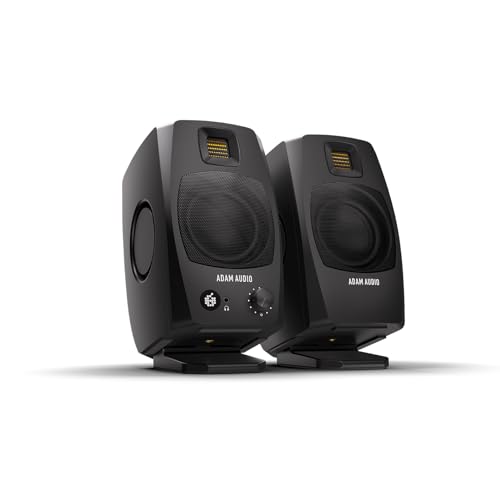
- USB-C plug-and-play plus balanced 1/4-inch inputs
- D-ART ribbon tweeters for precise highs
- Angled stands and DSP room switches included
Best For: Listener-first desktop monitoring with compact placement flexibility
Neutral Studio Reference Option
Yamaha HS3 Powered Studio Monitor Pair

- 2-way powered pair with room control
- RCA, USB, and XLR inputs
- Compact design for computer and editing use
Best For: A reference-minded desktop monitor setup with simple controls
Feature-Rich Compact Favorite
Edifier M60 Multimedia Speaker

- 66W RMS output in a compact design
- Bluetooth 5.3 with LDAC and USB-C
- Includes angled aluminum stands
Best For: A compact hi-res desktop speaker with modern wireless convenience
Compact Reference Pick
FiiO SP3 Powered HiFi Active Desktop Speakers

- 3.5-inch carbon fiber woofer and 1-inch silk tweeter
- Waveguide and S-shaped inverter for imaging and bass extension
- Adjustable bass gain plus switchable left/right channels
Best For: Compact hi-fi listening with controlled bass and clear imaging
Feature-Packed Wireless Pick
Edifier QR65 Desktop Active Monitor

- 70W RMS output with silk dome tweeters and mid-low drivers
- Bluetooth 5.3 with LDAC for hi-res wireless audio
- Includes aluminum stands and app-based light customization
Best For: Wireless hi-res listening with stands and app controls
Studio Accuracy Pick
PreSonus Eris 3.5 Studio Monitors

- 3.5-inch woven-composite woofers with 1-inch silk-dome tweeters
- 50W Class AB amplification for balanced nearfield listening
- High- and low-frequency tuning plus TRS, RCA, and aux inputs
Best For: Accurate nearfield listening and desktop music production
Premium Hi-Res Desktop Hub
Edifier M90 100W Compact Speaker System

- 100W RMS compact desktop speaker design
- Bluetooth 6.0 with LDAC Hi-Res support
- HDMI eARC, optical, USB-C, AUX, and SUB OUT
Best For: Compact desktop and TV setups with premium wireless audio
Budget Bass Desktop Pick
Bluedee 2.1 PC Speakers with Subwoofer

- 2.1 system with dedicated subwoofer
- DSP tuning for clearer vocals and smoother highs
- Bluetooth 5.4 plus USB, USB-C, and AUX
Best For: Affordable desktop listening with extra bass and RGB styling
Studio Monitor Choice
Edifier MR3 Hi-Res Powered Bookshelf Speakers

- Hi-Res certified with 52Hz-40kHz response
- Balanced TRS, RCA, AUX, and Bluetooth inputs
- MDF cabinet and monitor modes for accurate listening
Best For: Accurate near-field listening, editing, and home studio use
Premium Compact Desktop Choice – Audioengine A2+ Wireless Desktop Speakers
If you want audiophile desktop speakers that stay compact but still sound refined, the Audioengine A2+ Wireless is built for nearfield listening on a desk. The real wood cabinets, built-in amplification, and 24-bit DAC make it a strong fit for music streaming, calls, gaming, and everyday computer audio.
Best For: Listeners who want a premium small-speaker setup with easy plug-and-play use.
Pros:
- 24-bit DAC with USB-C input for direct computer connection
- Bluetooth 5.3 with aptX-HD plus RCA and 3.5mm wired options
- Real wood cabinets and custom-tuned components for a more premium build
- Designed for detailed nearfield listening on desks and in small spaces
Cons:
- Compact size means limited low-end compared with larger desktop systems
- May not suit users who want studio-monitor style room controls
Overall, the A2+ Wireless is a polished desktop option if you value simplicity, wireless flexibility, and a more finished cabinet design. It is especially appealing when you want a small footprint without giving up clarity.
Desktop Monitor Pick for Precision – ADAM Audio D3V Active Desktop Monitoring System
The ADAM Audio D3V is a serious option for audiophile desktop speakers when you want a compact monitoring system with precise high-frequency detail. It connects directly over USB-C and also supports balanced 1/4-inch inputs, making it practical for music work, streaming, and focused listening at a desk.
Best For: Users who want monitor-style accuracy and flexible desk placement.
Pros:
- USB-C plug-and-play connection plus balanced 1/4-inch inputs
- 1.5-inch D-ART ribbon tweeters for detailed, unfatiguing highs
- 3.5-inch woofers with passive radiators that extend to 45 Hz
- Includes angled stands and mic-stand mounting support
Cons:
- More studio-oriented than casual desktop speakers
- Requires corded power and a bit of setup attention for best placement
For buyers prioritizing clarity, placement control, and a monitoring-focused sound, the D3V stands out. It brings high-end desktop performance in a compact format without adding unnecessary complexity.
Neutral Studio Reference Option – Yamaha HS3 Powered Studio Monitor Pair
The Yamaha HS3 is a straightforward choice for audiophile desktop speakers if you want a compact monitor pair for computer use and editing. With a 3.5-inch woofer, dome tweeter, and room control plus high-trim controls, it is built to give you a more controlled desktop listening setup.
Best For: Buyers who want a simple, reference-minded monitor pair for desks and editing work.
Pros:
- 2-way powered monitor pair with room control and high-trim adjustments
- RCA, USB, and XLR connectivity for flexible desktop hookups
- Compact tabletop design that fits computer workspaces well
- Designed for computer and video-editing use
Cons:
- 70 Hz low end is modest compared with fuller-range desktop speakers
- More functional than feature-rich for casual wireless listening
The HS3 makes sense if your priority is dependable monitor behavior and a tidy desk footprint. It is less about extras and more about giving you a practical, adjustment-friendly desktop speaker pair.
Feature-Rich Compact Favorite – Edifier M60 Multimedia Speaker
The Edifier M60 is a strong pick for audiophile desktop speakers when you want compact size, modern wireless features, and hi-res support. Its 66W RMS output, LDAC Bluetooth 5.3, and bundled aluminum stands make it a practical desktop upgrade for music, gaming, and general computer listening.
Best For: Users who want a small desktop system with high-resolution wireless playback.
Pros:
- 66W RMS output in a compact desktop-friendly enclosure
- Bluetooth 5.3 with LDAC plus USB-C and AUX inputs
- Hi-Res Audio and Hi-Res Wireless Audio certification
- Bundled 15-degree aluminum stands help aim sound toward ear level
Cons:
- Small 3-inch drivers may limit bass output versus larger speakers
- Touch controls and app features may not appeal to everyone
The M60 is a well-rounded option if you want convenience and resolution in a compact package. It balances modern connectivity with enough power to serve as an everyday desktop speaker upgrade.
Compact Reference Pick – FiiO SP3 Powered HiFi Active Desktop Speakers
If you want audiophile desktop speakers that stay compact without sounding thin, the FiiO SP3 is built around a 3.5-inch carbon fiber woofer, 1-inch silk tweeter, and a tuned waveguide/S-shaped inverter design. It is a good fit for listeners who want tight imaging, controlled bass extension, and a small desktop footprint for music, gaming, or general computer audio.
Best For: Listeners who want a compact hi-fi desktop speaker with clean imaging and adjustable bass.
Pros:
- 3.5-inch carbon fiber woofer and 1-inch silk tweeter for fast bass response and smoother treble.
- Waveguide design and S-shaped inverter help extend low frequencies and improve imaging at low volume.
- Texas Instruments digital amp with independent output for woofers and tweeters.
- Adjustable bass gain and switchable left/right channels add setup flexibility.
Cons:
- Wired-only connectivity may be limiting for users who want Bluetooth.
- Small cabinet size means it is not aimed at big-room sound.
- Best results will depend on careful desktop placement.
This is a well-rounded choice if you value a refined, nearfield sound and want a desktop speaker that emphasizes detail and control over raw size.
Feature-Packed Wireless Pick – Edifier QR65 Desktop Active Monitor
The Edifier QR65 is one of the more feature-rich audiophile desktop speakers in this group, combining 70W RMS output, hi-res Bluetooth streaming with LDAC, and bundled aluminum stands. If you want a desktop speaker system that pairs strong wireless convenience with a polished sound profile and lots of customization, this model stands out.
Best For: Buyers who want wireless hi-res audio, desktop stands, and customizable lighting in one system.
Pros:
- 70W RMS total output with 1.25-inch silk dome tweeters and 2.75-inch mid-low drivers.
- Bluetooth 5.3 with LDAC support for wireless hi-res audio transmission up to 990Kbps.
- Bundled aluminum stands help reduce desktop reflections and aim sound at ear level.
- EDIFIER ConneX app adds playback, sound, and light-effect customization.
Cons:
- Lighting effects may not appeal to buyers who want a minimalist setup.
- Wireless-first feature set may be more than some users need for basic desktop audio.
- Speaker size and stand setup take more desk space than ultra-compact models.
For users who want a desktop speaker with modern connectivity and extra features, the QR65 offers a strong mix of output, app control, and practical accessories.
Studio Accuracy Pick – PreSonus Eris 3.5 Studio Monitors
The PreSonus Eris 3.5 is aimed at listeners who want audiophile desktop speakers with a more neutral, studio-style presentation. With 3.5-inch woven-composite woofers, 1-inch silk-dome tweeters, and tuning controls for the highs and lows, these monitors are a practical option for nearfield listening, music production, and everyday hi-fi use.
Best For: Nearfield listeners who want accurate desktop sound with room tuning controls.
Pros:
- Studio-oriented sound with clear, accurate output and tight low-end response.
- 50W Class AB amplification gives the pair solid volume without losing balance.
- High- and low-frequency tuning controls help match the speakers to your room and placement.
- Flexible inputs include TRS, RCA, and front-panel aux for easy desktop hookup.
Cons:
- More reference-style than lush or bass-heavy in tuning.
- Smaller 3.5-inch drivers are best suited to nearfield use, not larger rooms.
- Designed for wired setups rather than wireless convenience.
If accuracy matters more than extras, the Eris 3.5 is a sensible pick for desktop audio users who want a compact monitor with useful tuning options.
Premium Hi-Res Desktop Hub – Edifier M90 100W Compact Speaker System
If you want audiophile desktop speakers that stay compact while covering a lot of ground, the Edifier M90 is built like a flexible all-in-one hub. Its 100W RMS output, Hi-Res Audio support with LDAC, and broad input selection make it a strong pick for PC, TV, and mixed-source setups.
Best For: Listeners who want a compact desktop speaker system with premium wireless audio, TV-friendly connectivity, and room to add a subwoofer.
Pros:
- 100W RMS output from dual Class-D amplification for strong desktop sound.
- Hi-Res Audio wireless support with Bluetooth 6.0 and LDAC.
- HDMI eARC, optical, USB-C, AUX, and SUB OUT cover many setups.
- Remote control and EDIFIER ConneX app offer useful day-to-day control.
Cons:
- EQ editing in the app only works over Bluetooth.
- Full wireless hi-res performance depends on compatible Android devices.
The M90 stands out if you want desktop speakers that can double as a TV or gaming audio center without taking over your desk. It is especially appealing when flexibility and upscale wireless playback matter as much as power.
Budget Bass Desktop Pick – Bluedee 2.1 PC Speakers with Subwoofer
For shoppers comparing audiophile desktop speakers on a budget, the Bluedee 2.1 system focuses on easy setup and punchy everyday sound. It uses DSP tuning to keep vocals clear, adds a dedicated subwoofer for deeper bass, and supports Bluetooth 5.4 plus USB, USB-C, and AUX for simple plug-and-play use.
Best For: Buyers who want an affordable 2.1 desktop speaker setup with bass, wireless convenience, and desk-friendly RGB lighting.
Pros:
- Dedicated subwoofer delivers deeper bass while keeping the satellites cleaner.
- DSP tuning helps reduce distortion and harsh highs for more balanced listening.
- Bluetooth 5.4, USB, USB-C, and 3.5mm AUX cover common devices.
- Single control knob handles volume, playback, lighting, and mode switching.
Cons:
- Peak power is 80W, so it is less powerful than higher-end desktop systems.
- RGB lighting may not suit minimalist workspaces.
This is a practical choice if you want fuller bass and simple everyday control without paying for a more advanced desktop audio system. It is less about studio accuracy and more about easy, enjoyable near-field listening.
Studio Monitor Choice – Edifier MR3 Hi-Res Powered Bookshelf Speakers
If your version of audiophile desktop speakers leans toward accuracy, the Edifier MR3 is the most studio-focused option here. It is Hi-Res Audio certified, offers a flat 52Hz to 40kHz response, and includes balanced TRS, RCA, AUX, and Bluetooth connectivity for near-field listening or creative work.
Best For: Users who want compact powered monitors for music production, editing, and accurate desktop listening.
Pros:
- Hi-Res Audio certification with a flat response designed for accuracy.
- Balanced TRS, RCA, AUX, and Bluetooth provide versatile input options.
- Music, Monitor, and Custom modes add flexibility for different tasks.
- MDF cabinet helps reduce distortion for cleaner playback.
Cons:
- 18W x 2 RMS output is modest compared with larger desktop speaker systems.
- It is more tuned for accuracy than bass-heavy fun listening.
The MR3 is a smart buy when precision matters more than sheer volume or extra low-end punch. It fits especially well on desks where you want honest sound for editing, tracking, or critical everyday listening.
How We Picked These Audiophile Desktop Speakers
We focused on models that make sense for desktop use first: compact footprints, near-field tuning, easy setup, and input options that fit modern computers and audio sources. We also looked for a mix of styles, from powered hi-fi speakers to studio monitors, so different listening priorities are covered.
Sound quality mattered most, but practical features such as USB-C, Bluetooth, RCA, AUX, and monitor-friendly connectivity also influenced our selection. That matters because Audiophile Desktop Speakers should be easy to integrate without adding unnecessary clutter.
Quick Comparison: What Each Type Is Best at
Not every speaker in this category serves the same role. Some are tuned for flatter, more revealing playback, which suits mixing, critical listening, and detail-focused music fans. Others aim for a warmer, more enjoyable presentation with stronger convenience features like wireless audio and compact all-in-one operation.
If you want a simple desktop upgrade for streaming and general listening, prioritize convenience and tone. If you care most about accuracy, look toward studio-monitor-style options with cleaner imaging and more controlled frequency response.
Key Buying Factors for Audiophile Desktop Speakers
Size and Listening Distance
Desktop speakers usually work best in near-field setups. Check cabinet size, driver size, and how far you sit from the speakers. Smaller rooms and close seating often favor compact models that image well at short distances.
Connectivity
For modern desktops, USB-C and Bluetooth are especially convenient, while RCA, AUX, optical, and balanced inputs can improve flexibility. If you use a DAC, interface, or monitor controller, make sure the speakers match your signal chain.
Sound Signature
Some Audiophile Desktop Speakers are tuned for accuracy, while others add warmth or extra low-end impact. Choose based on your main use: critical listening, music enjoyment, gaming immersion, or mixed-purpose work.
Placement and Desk Space
Even great speakers can sound poor if they are jammed against a wall or angled incorrectly. Leave room for proper toe-in, keep tweeters near ear height when possible, and consider isolation pads if your desk vibrates.
Who Should Buy Which Audiophile Desktop Speakers?
Choose a compact, wireless-friendly pair if you want an easy desktop upgrade with minimal setup. Pick studio-style monitors if you value clearer detail and more honest playback for music production or serious listening. If you want a richer all-purpose system, look for speakers with stronger output, more input options, and better low-end extension.
For most buyers, the best Audiophile Desktop Speakers are the ones that balance sound quality, desk-friendly size, and the connections you actually need. Matching the speaker to your space and listening habits will matter more than chasing the biggest spec sheet.