The best voice recorders with external microphone input give you more control than a basic built-in-mic dictaphone. You can connect a lavalier, shotgun, or other compatible microphone to improve placement, clarity, and recording flexibility.
This roundup covers dedicated field recorders, compact note-taking devices, and high-capacity voice-activated models. Consider your microphone type, recording environment, storage needs, and whether AI transcription is genuinely useful for your workflow.
Best 10 Voice Recorders with External Microphone Input Picks for 2026
Best All-Arounder

- Two XLR/TRS external inputs
- 32-bit float, four-track recording
- USB-C and SD card recording
Best For: Musicians, podcasters, filmmakers, and multi-source recording
Best for AI Note-Taking

- Transcription in 113 languages
- 128GB storage with 33-hour battery life
- OTG transfer and smart summaries
Best For: Students and professionals organizing meetings and lectures
Best Compact XLR Option

- Two locking XLR/TRS inputs
- 32-bit/96kHz recording support
- Compact design with waveform display
Best For: Portable interviews, podcasts, music, and filmmaking
Best for Long-Duration Memos
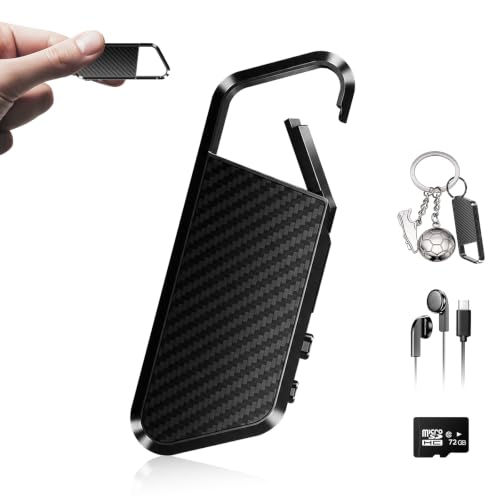
- 72GB storage rated for 10,860 hours
- DSP 6.0 noise reduction
- OTG transfer to phones and tablets
Best For: Lectures, meetings, interviews, and extended personal memos
Best AI Note Taker
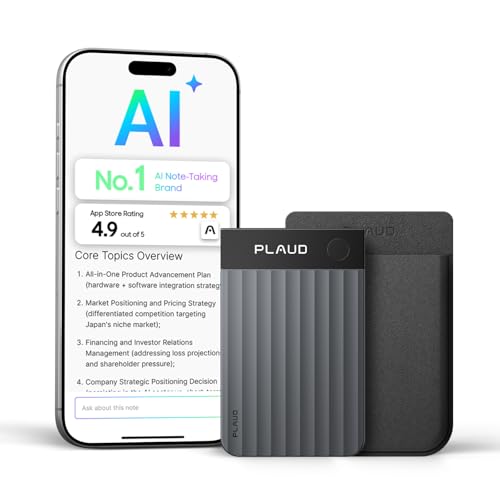
- Records in-person conversations, calls, and online meetings.
- Transcribes in 112 languages with speaker labels and summaries.
- Ultra-slim design with 64GB storage and 30-hour recording life.
Best For: Professionals who want automated meeting notes and follow-ups.
Best High-Capacity Pick
Hypamutek 64GB Magnetic Voice Recorder

- 64GB storage with up to 6,000 hours at 32kbps
- Up to 75 hours of continuous recording
- USB-C/OTG transfer and AI noise reduction
Best For: Long lectures, meetings, and portable recording
Best Simple Controls
Sunlan 16GB Digital Voice Recorder
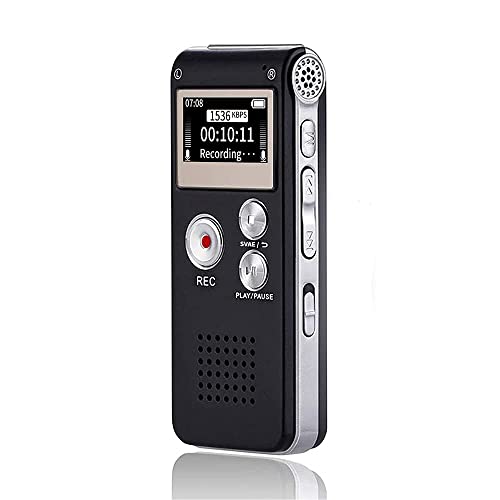
- Simple REC, STOP, and PLAY operation
- Voice activation and DSP noise reduction
- Up to 30 hours of recording with 16GB storage
Best For: Students, lectures, interviews, and everyday notes
Best Feature-Rich Option
Tonfarb A12 8GB Voice Recorder

- Supports internal and external recording
- 1536kbps PCM WAV and stereo recording
- Voice activation, scheduling, and password protection
Best For: Interviews, classes, field work, and flexible recording setups
Best All-Arounder – Zoom H4 Essential
The Zoom H4 Essential is a strong choice among voice recorders with external microphone input when you need more than basic dictation. Its built-in stereo microphones, two XLR/TRS inputs, four-track recording, and 32-bit float capture suit music, interviews, podcasts, video audio, and live performances.
Best For: Musicians, podcasters, filmmakers, and creators recording multiple sources.
Pros:
- Two XLR/TRS inputs connect external microphones, instruments, mixers, or soundboards.
- 32-bit float recording helps reduce worries about distorted takes.
- USB-C supports recording or streaming to a phone, tablet, or computer while saving to an SD card.
- Spoken menu guidance can make operation more accessible.
Cons:
- Its larger feature set may be more than needed for simple voice memos.
- Requires two AA batteries.
Choose the H4 Essential if flexible inputs and dependable recording options matter more than pocket-sized simplicity. It is particularly well suited to projects involving instruments, multiple microphones, or live sound sources.
Best for AI Note-Taking – EVISTR L359 AI Voice Recorder
The EVISTR L359 focuses on convenient meetings, lectures, and interviews rather than traditional external-mic workflows. It records in up to 3072Kbps, offers noise reduction and voice activation, and works with the AI DVR Link app for transcription, summaries, speaker identification, and related insights.
Best For: Students and professionals who want compact recording with app-based transcription and summaries.
Pros:
- AI transcription supports 113 languages and can generate smart summaries and mind maps.
- 128GB storage and up to 33 hours of continuous recording support extended use.
- One-touch recording, a HOLD switch, and password encryption improve everyday convenience and privacy.
- Wired OTG transfer connects directly to compatible phones without Bluetooth.
Cons:
- The supplied specifications list a built-in microphone rather than an external microphone input.
- AI features depend on the AI DVR Link app and a compatible phone connection.
This is better viewed as a smart digital note-taker than a conventional recorder for external microphones. Pick it when transcription and organized notes are more important than connecting XLR or other outside microphones.
Best Compact XLR Option – Zoom H1 XLR Recorder
The Zoom H1 XLR is a compact pick among voice recorders with external microphone input, offering two locking XLR/TRS combo inputs in a small recorder. It supports 32-bit/96kHz recording, a waveform display, 3.5mm stereo input and headphone output, making it practical for interviews, podcasts, music, and camera-related setups.
Best For: Filmmakers, musicians, and podcasters who need two external inputs in a portable recorder.
Pros:
- Two locking XLR/TRS inputs accommodate microphones, instruments, and other sources.
- 32-bit float recording helps support clean capture across changing levels.
- OLED waveform display provides a quick way to monitor levels.
- Supports SDXC cards up to 1TB and includes 3.5mm stereo input and headphone output.
Cons:
- Requires two AA batteries.
- The 0.96-inch display is relatively small for detailed navigation.
For buyers who specifically want external microphone connectivity without stepping up to a larger recorder, the H1 XLR is a focused option. Its two combo inputs and compact design make it especially useful for mobile production.
Best for Long-Duration Memos – NekSide 72GB Voice Recorder
The NekSide USB-02 is designed for straightforward lectures, meetings, interviews, and personal memos. It combines a built-in microphone with DSP 6.0 noise reduction, voice activation, playback, and 72GB of storage, while OTG support allows transfers directly to compatible smartphones or tablets.
Best For: Users who prioritize extensive built-in storage and simple voice-activated recording.
Pros:
- DSP 6.0 noise reduction is designed to filter background noise.
- 72GB of storage is rated for up to 10,860 hours of audio.
- OTG supports direct file transfer to smartphones or tablets.
- Portable design suits lectures, meetings, interviews, and personal notes.
Cons:
- The supplied specifications list a built-in microphone and do not identify an external microphone input.
- Recordings default to WAV; MP3 requires conversion through a computer.
- The listed headphone connection is mini-USB rather than a standard 3.5mm jack.
This recorder makes the most sense for buyers seeking storage capacity and simple voice-activated operation, not a flexible external-microphone setup. Confirm your connection requirements before choosing it for the target keyword category.
Best AI Note Taker – Plaud Note Pro
If you want voice recorders with external microphone input for meetings and calls, the Plaud Note Pro stands out as an AI-focused option. Its built-in microphone array captures voices across a room, while automatic transcription and summaries help turn recordings into organized notes.
Best For: Professionals who want automated transcripts, summaries, action items, and cross-device access for meetings, calls, and online conversations.
Pros:
- Supports in-person, phone-call, and online meeting recording workflows.
- Transcribes in 112 languages with speaker labels and structured summaries.
- Compact 0.12-inch-thin design with a 0.95-inch AMOLED display, magnetic case, and 64GB storage.
- Includes a free starter plan with 300 minutes of AI transcription per month.
Cons:
- Uses built-in microphones rather than an external microphone input.
- Some higher usage levels require a paid Pro or Unlimited upgrade.
- It does not include a headphone jack.
The Plaud Note Pro is best viewed as a connected AI workspace rather than a conventional standalone recorder. Choose it when transcription and meeting follow-up matter more than external-mic flexibility.
Best High-Capacity Value – Sbwwas 128GB Voice Recorder
For shoppers comparing voice recorders with external microphone input, this Sbwwas model is a practical traditional recorder that includes a clip-on microphone. It combines large built-in storage, voice activation, playback, and simple one-switch recording for lectures, interviews, and meetings.
Best For: Students, professionals, and journalists who need extensive local storage, long recording sessions, and a bundled clip-on microphone.
Pros:
- Includes a clip-on microphone, headphones, OTG adapters, and a USB-C cable.
- 128GB storage holds up to 9,800 hours at the stated 32kbps setting.
- Supports up to 70 hours of continuous recording and up to 100 hours of voice-activated recording.
- Offers playback, a 3.5mm headphone jack, MP3/WAV support, and USB flash-drive functionality.
Cons:
- AI noise reduction is described as improving audio quality, but the product does not provide transcription or summaries.
- The supplied details list a one-year manufacturer warranty, while the marketing copy also references a lifetime warranty.
- Recording capacity varies with bitrate, so the maximum-hour claim is not representative of every setting.
This recorder is a strong fit if you prefer local files and straightforward controls over app-based AI features. Its included clip-on microphone makes it more adaptable than models limited to a built-in mic.
Best Simple USB-C Recorder – 72GB Digital Voice Recorder
This 72GB digital recorder is a straightforward choice for shoppers seeking voice recorders with external microphone input, although its supplied specifications emphasize a built-in 360-degree microphone rather than a dedicated external mic jack. USB-C file transfer, voice activation, and included audio accessories make it convenient for everyday recording.
Best For: Users recording classes, meetings, interviews, and personal notes who want simple controls, large storage, and easy USB-C transfers.
Pros:
- Built-in USB-C connector supports file transfer and temporary external-drive use.
- One-touch recording and voice activation help simplify longer sessions.
- 72GB storage holds up to 7,600 hours at low bitrate settings, with up to 35 hours of continuous recording.
- Includes headphones, USB-C audio accessories, cable, replacement refills, and a screwdriver.
Cons:
- The supplied notes do not specify a dedicated external microphone input.
- The maximum recording-hour figure depends on low-bitrate settings.
- Built-in DSP noise reduction is intended to improve clarity but does not provide AI transcription.
Choose this model for uncomplicated recording and file management rather than advanced note automation. Its timestamped files, adjustable segment saving, and voice-activated mode are useful for organizing long recordings.
Best High-Capacity Pick – Hypamutek 64GB Magnetic Voice Recorder
If you need voice recorders with external microphone input for extended lectures, meetings, or interviews, this Hypamutek model stands out for its large storage capacity and included connection accessories. It offers 64GB of built-in storage, voice activation, USB-C/OTG transfer, and AI-assisted noise reduction. However, the supplied specifications identify the microphone as built-in, so confirm external-microphone compatibility before buying.
Best For: Users prioritizing long recording capacity, compact magnetic placement, and easy USB-C file transfer.
Pros:
- 64GB storage can hold up to 6,000 hours at 32kbps, according to the listing.
- Voice activation, low-battery auto-save, and up to 75 hours of continuous recording support unattended use.
- AI-driven noise reduction, USB-C OTG support, a built-in magnet, headphones, and adapters add convenience.
Cons:
- The listed microphone form factor is built-in, so external microphone support is not clearly specified.
- Mono microphone operation may be less suitable for stereo or music recording.
This is a strong choice when storage, battery endurance, and portability matter most. For buyers specifically seeking a recorder with an external microphone input, verify the connection type and supported microphone setup before placing an order.
Best Simple Controls – Sunlan 16GB Digital Voice Recorder
For shoppers comparing voice recorders with external microphone input, the Sunlan 16GB model offers a straightforward alternative for lectures, interviews, and meetings. Its physical REC, STOP, and PLAY controls are easy to understand, while voice activation and DSP noise reduction help conserve power and reduce unwanted background sound. The product details list a built-in microphone, so external-input capability should be confirmed separately.
Best For: Students and casual users who want simple controls, playback, and a familiar 3.5mm headphone connection.
Pros:
- One-button recording and dedicated playback controls make operation simple.
- Voice activation can begin recording when sound is detected and reduce idle recording time.
- 16GB storage, up to 30 hours of recording, DSP noise reduction, and a built-in speaker provide practical everyday functionality.
Cons:
- The supplied details list only a built-in microphone, not a confirmed external microphone input.
- Its 16GB capacity and approximately 30-hour recording life are lower than those of the higher-capacity options here.
This recorder makes sense for uncomplicated voice capture and playback rather than advanced microphone setups. If an external mic is essential, check the manufacturer’s compatibility information before relying on the 3.5mm jack for input.
Best Feature-Rich Option – Tonfarb A12 8GB Voice Recorder
The Tonfarb A12 is worth considering among voice recorders with external microphone input because its supplied accessories include a mic cable and line-in cable, while the feature list explicitly supports internal and external recording. It combines one-click recording, PCM WAV capture, voice activation, scheduled recording, file segmentation, and password protection in a portable design.
Best For: Users who want flexible recording modes, external-recording support, and detailed file-management features.
Pros:
- Supports internal and external recording and includes a mic cable and line-in cable.
- 1536kbps PCM WAV recording, stereo microphone operation, and noise reduction support detailed capture.
- Voice activation, scheduled recording, bookmarking, A-B loop playback, and password protection add versatility.
- 8GB storage, up to 575 hours of recordings, and a claimed 48-hour battery life suit extended use.
Cons:
- 8GB of storage is less than the capacity offered by the 16GB and 64GB alternatives.
- The supplied details do not specify the exact external microphone connector or compatibility limits.
Among these options, the A12 provides the clearest fit for buyers seeking external recording alongside advanced controls. Its 8GB capacity is more modest, but stereo operation, high-quality WAV capture, and a two-year warranty make it a versatile choice for interviews, classes, and field work.
How We Picked the Best Voice Recorders with External Microphone Input
We focused on practical recording flexibility, microphone connectivity, portability, storage, battery operation, playback options, and ease of transferring files. The selection includes purpose-built audio recorders for music and film, as well as compact devices aimed at lectures, meetings, interviews, and personal notes.
We also considered useful extras such as noise reduction, voice activation, USB-C connectivity, magnetic mounting, AI transcription, and summarization. These features can be valuable, but they do not replace a suitable external microphone or good recording technique.
Quick Comparison
| Best For | What to Prioritize | Recommended Type |
|---|---|---|
| Music and filmmaking | Quality preamps, gain control, and reliable inputs | Zoom H4 Essential or H1 XLR |
| Meetings and interviews | Simple controls, clear playback, and transcription | EVISTR or Plaud Note Pro |
| Lectures and personal notes | Long battery life, voice activation, and storage | Compact high-capacity voice recorder |
| Discreet or hands-free recording | Small size and secure placement | Magnetic or portable voice-activated model |
Key Buying Factors for Voice Recorders with External Microphone Input
Input Type and Microphone Compatibility
Check whether the recorder accepts the microphone you already own. XLR inputs suit professional microphones and often provide stronger control, while 3.5mm inputs are convenient for lavalier and compact consumer microphones. Confirm plug-in power or phantom-power requirements before buying.
Audio Quality and Controls
Look for adjustable input gain, monitoring through headphones, limiter or safety-track features, and support for an appropriate recording format. For speech, simple controls may be enough; music and film work usually benefit from better preamps and more detailed level management.
Storage, Battery, and File Transfer
Large advertised capacities are useful for extended speech recording, but actual runtime depends on format, battery condition, and voice-activation settings. USB-C or USB connectivity makes moving files easier. Rechargeable batteries are convenient, while replaceable cells can be preferable on long shoots.
AI Transcription and Noise Reduction
AI transcription and summarization can save time after meetings, but check supported languages, subscription requirements, privacy policies, and processing methods. Noise reduction may improve speech intelligibility, although it cannot fully repair heavy background noise or distorted recordings.
Who Should Buy Which Voice Recorders with External Microphone Input?
Choose the Zoom H4 Essential if you need a versatile recorder for musicians, filmmakers, or serious interviews. The Zoom H1 XLR is a better fit when you want a smaller two-channel setup with external microphone support.
For students, office users, and everyday note-taking, consider an EVISTR, Tonfarb, or one of the compact high-capacity voice-activated models. These prioritize simple operation, long recording times, and convenient playback. The Plaud Note Pro is the most suitable option for buyers who value automated transcription and summaries, provided its connected services match their privacy and workflow needs.
Before purchasing, verify the exact input connector, included accessories, recording format, and advertised storage claims. The right model should match both your microphone and the way you plan to capture, transfer, and use your recordings.