The best condenser microphone for a home studio can make vocals, instruments, podcasts, and voiceovers sound clearer without requiring a professional recording room. The right choice depends on your connection, room acoustics, recording goals, and budget.
We’ve selected 10 options ranging from convenient USB kits to full-size XLR microphones, including models with useful accessories for getting started quickly.
Best 10 Condenser Microphone for Home Studio Picks for 2026
Proven Studio Value
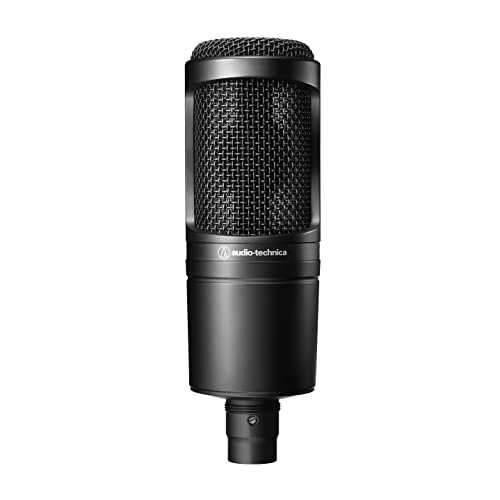
- Cardioid XLR condenser for home studios
- High SPL handling and wide dynamic range
- Includes mount, adapter, and pouch
Best For: Project studios using an audio interface
Simple Large-Diaphragm Starter

- Affordable XLR condenser microphone
- Cardioid pattern reduces room ambience
- Includes shock mount and XLR cable
Best For: Budget home studios recording vocals or instruments
All-in-One USB Setup
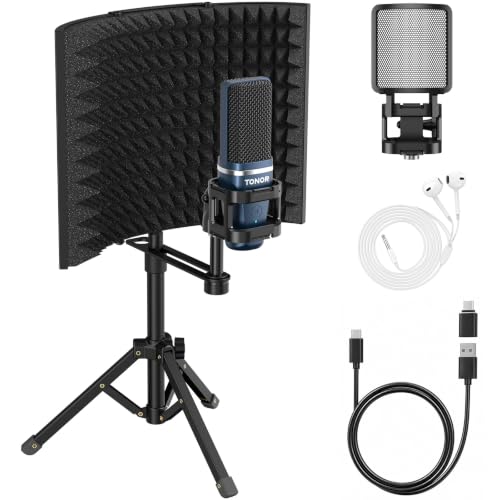
- USB plug-and-play recording bundle
- Includes shield, tripod, pop filter, and headphones
- Mute and gain controls for desktop use
Best For: Podcasters, streamers, and beginner home studios
Feature-Rich XLR Detail
TechZoneAudioProducts Stellar X3

- K67-style large-diaphragm capsule
- High-pass filter and -10dB pad
- Includes shock mount and aluminum flight case
Best For: XLR voice-over and vocal recording setups
Premium Noise Control
Shure SM4 XLR Studio Condenser Microphone Kit

- Smooth, detailed sound with controlled low end
- RF shielding and cardioid rejection reduce unwanted noise
- Includes pop filter, shock mount, and carrying case
Best For: XLR home studios recording vocals, instruments, and podcasts
Plug-and-Play Value
MAONO A04 USB Condenser Microphone Kit

- USB connection works without extra drivers or an interface
- Includes boom arm, shock mount, pop filter, and windscreen
- Designed for podcasting, streaming, voice-over, and recording
Best For: Beginners and creators who want a complete USB desk setup
Affordable XLR Flexibility
AKG P120 Studio Condenser Microphone

- Clear detail for vocals, speech, and instruments
- 150 dB SPL handling supports loud recording sources
- Includes -20 dB pad and 300 Hz bass-cut filter
Best For: Budget-conscious home studios building an XLR recording setup
Best Value XLR Kit

- 16mm condenser capsule for detailed audio
- Includes boom arm and vocal accessories
- Requires 48V phantom power and XLR equipment
Best For: Home-studio users building an affordable XLR recording setup
Best Plug-and-Play Setup
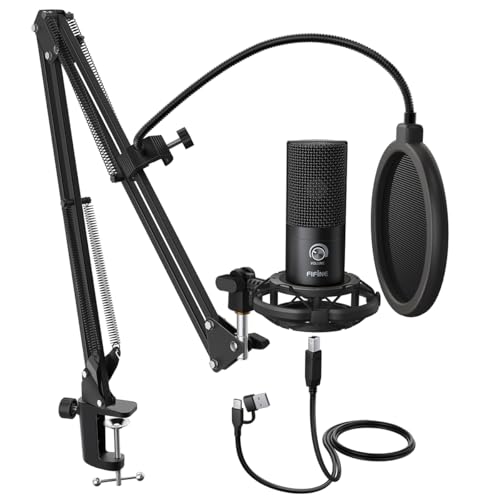
- Direct USB connection for compatible computers
- Includes boom arm, shock mount, and pop filter
- Convenient for podcasts, vocals, and streaming
Best For: Beginners recording directly to a PC or laptop
Best for Warm Vocal Detail

- 34mm gold large-diaphragm capsule
- Includes shock mount, pop filter, and XLR cable
- Requires 48V phantom power and an interface
Best For: Vocal recording and home music production
Proven Studio Value – Audio-Technica AT2020
The Audio-Technica AT2020 is a dependable condenser microphone for home studio setups, especially when you already have an audio interface with phantom power. Its cardioid pattern helps isolate the sound source, while high SPL handling supports a range of recording applications.
Best For: Project studios recording vocals, instruments, and other sources through an XLR audio interface.
Pros:
- Cardioid pickup helps reduce sound from the sides and rear.
- Wide dynamic range and high SPL handling suit varied sources.
- Includes a stand mount, threaded adapter, and protective pouch.
Cons:
- Requires an XLR connection and phantom power.
- Does not include a USB connection or complete desktop recording kit.
The AT2020 is a straightforward choice for buyers who want a proven, flexible XLR microphone without unnecessary extras. Plan on adding an audio interface and a suitable stand if you do not already have them.
Simple Large-Diaphragm Starter – Mackie EM-91C
The Mackie EM-91C is an affordable large-diaphragm condenser microphone for home studio vocals and instruments. Its cardioid pattern helps limit ambient pickup, and the included shock mount and XLR cable make it easier to get started.
Best For: Budget-conscious home studios that need an XLR microphone for vocals or instruments.
Pros:
- Large-diaphragm condenser design is suited to studio vocals and instruments.
- Cardioid pattern helps reduce room ambience.
- Includes a shock mount and XLR cable.
Cons:
- Requires compatible XLR equipment, such as an audio mixer or interface.
- Its feature set is more basic than microphones with built-in controls.
The EM-91C focuses on the essentials: a studio-oriented capsule, cardioid pickup, and a rugged build at an accessible price. It is a practical starting point if your recording setup already supports XLR microphones.
All-in-One USB Setup – TONOR TC777 Pro-IS
The TONOR TC777 Pro-IS is a convenient condenser microphone for home studio recording, podcasting, and streaming. Its USB plug-and-play connection, isolation shield, tripod, pop filter, headphones, and gain controls create a ready-to-use desk setup.
Best For: Beginners, podcasters, streamers, and creators who want a complete USB recording bundle.
Pros:
- Includes an isolation shield, tripod, shock mount, pop filter, headphones, and cables.
- USB connectivity supports computers and compatible mobile devices.
- Offers one-touch mute, real-time monitoring, and a bottom gain dial.
Cons:
- Its stated frequency range is 100Hz–16kHz.
- Not compatible with iPhone 14 and earlier models or Xbox.
- The included setup is less suited to traditional XLR-based studio chains.
This bundle is appealing when convenience matters more than modular studio hardware. The shield and accessories can help create a focused desktop recording station, while the USB design avoids the need for a separate audio interface.
Feature-Rich XLR Detail – TechZoneAudioProducts Stellar X3
The TechZoneAudioProducts Stellar X3 is a large-diaphragm condenser microphone for home studio vocals and voice-over work. Its K67-style capsule, high-pass filter, and -10dB pad provide useful control when managing proximity effect, rumble, or louder sources.
Best For: XLR users who want added recording controls and a complete shock-mounted microphone package.
Pros:
- High-pass filter can reduce proximity effect and low-frequency rumble.
- -10dB pad adds headroom for louder recordings.
- Includes a spring shock mount, flight case, adapter, wind cover, and pouch.
Cons:
- Requires a 48V audio interface.
- Does not offer USB connectivity for direct computer connection.
- Its controls are most useful within an XLR recording setup.
The Stellar X3 is a strong fit for a more deliberate home studio workflow. Its selectable filter and pad offer greater flexibility than a basic condenser, while the included protection and shock-mount accessories add practical value.
Premium Noise Control – Shure SM4 XLR Studio Condenser Microphone Kit
If you want a condenser microphone for home studio recording with a polished, controlled sound, the Shure SM4 is built for vocal and instrument work. Its uniform cardioid pattern helps reject off-axis noise, while the integrated pop filter, RF shielding, and shock mount support cleaner recordings with less setup.
Best For: Home-studio vocalists, podcasters, and musicians who already use an XLR audio interface and want a durable, mix-ready microphone kit.
Pros:
- Smooth, detailed reproduction from the brass 1-inch dual-diaphragm capsule.
- RF interference shielding helps reduce noise from phones, laptops, and Wi-Fi routers.
- Integrated pop filter, shock mount, and carrying case are included.
- Handles sound levels up to 140 dB without distortion.
Cons:
- Requires phantom power and an XLR audio interface.
- At 2.5 pounds, it is heavier than many compact USB microphones.
The SM4 is a strong choice when recording quality, noise rejection, and included mounting accessories matter more than plug-and-play convenience. Its XLR connection makes it best suited to an established home-studio setup.
Plug-and-Play Value – MAONO A04 USB Condenser Microphone Kit
The MAONO A04 is a practical condenser microphone for home studio use when you want to connect directly to a computer without an audio interface. Its USB design, cardioid pickup, and included boom-arm kit make it suitable for recording, podcasting, streaming, and voice-over work.
Best For: Beginners, streamers, podcasters, and creators who need an all-in-one USB recording setup for a computer or compatible mobile device.
Pros:
- Plug-and-play USB connection requires no extra driver software or sound card.
- Includes a scissor arm stand, shock mount, pop filter, windscreen, and cables.
- 16mm electret condenser capsule provides clear audio with strong bass response.
- Supports listed 192kHz/24-bit recording and works with many computers, consoles, and phones.
Cons:
- Not compatible with Xbox according to the supplied notes.
- The desk clamp is designed for desktops less than 2.1 inches thick.
- USB connectivity does not provide the same upgrade path as an XLR setup.
For creators who value simple setup and included accessories, the A04 offers a convenient starting point. It is especially appealing for desk-based recording, though users planning a larger studio system may prefer an XLR microphone.
Affordable XLR Flexibility – AKG P120 Studio Condenser Microphone
The AKG P120 is a straightforward condenser microphone for home studio recording, offering XLR connectivity and a cardioid pattern for vocals, speech, and instruments. Its low-mass diaphragm is designed for clear detail, while the high-SPL handling and switchable controls add flexibility for louder sources.
Best For: Home-studio users who want an affordable XLR microphone for vocals, instruments, and project-studio recording.
Pros:
- 20 Hz–20 kHz frequency response supports a broad range of recording applications.
- Handles sound pressure levels up to 150 dB for loud sources.
- Includes a -20 dB preattenuation pad and a 300 Hz bass-cut filter.
- Metal construction and an included stand adapter support dependable studio use.
Cons:
- Requires phantom power and a compatible audio interface.
- The box includes a stand adapter but not a complete shock-mount or pop-filter kit.
- Its XLR connection is less direct than a USB microphone for computer recording.
The P120 is a sensible entry point for an XLR-based studio, particularly if you record both vocals and instruments. Its pad and bass-cut filter make it more adaptable than a basic fixed-feature condenser, but you will need supporting interface and mic accessories.
Best Value XLR Kit – MAONO PM320S
The MAONO PM320S is a practical condenser microphone for home studio setups that already include an audio interface, mixer, or preamp. Its 16mm capsule, cardioid pickup, and included boom-arm accessories make it suitable for vocals, podcasting, streaming, and voice-over work.
Best For: Home-studio users who want an XLR microphone kit with a boom arm, shock mount, pop filter, and windscreen included.
Pros:
- 16mm condenser capsule supports detailed vocal and recording capture.
- Cardioid pattern helps reduce off-axis ambient noise.
- Includes a boom arm, shock mount, pop filter, windscreen, and XLR cable.
- Metal housing is designed for regular studio use.
Cons:
- Requires a stable 48V phantom-power source.
- Needs an audio interface, mixer, or preamp rather than connecting directly by USB.
The PM320S is a strong value when you want a ready-to-position XLR setup and already have the required phantom-power equipment. It is less convenient for beginners seeking a direct-to-computer USB connection.
Best Plug-and-Play Setup – FIFINE T669
The FIFINE T669 simplifies getting a condenser microphone for home studio recording up and running. Its USB connection works directly with compatible computers, while the included boom arm, shock mount, and double pop filter create a convenient package for podcasts, voice-over, streaming, and vocals.
Best For: PC and laptop users who want a USB microphone kit with adjustable boom-arm positioning and no separate audio interface.
Pros:
- USB plug-and-play setup requires no additional drivers or hardware for compatible computers.
- Cardioid capsule focuses on sound from the front and helps limit ambient noise.
- Includes a sturdy scissor arm, shock mount, double pop filter, and long USB cable.
- Gain knob allows convenient level adjustment.
Cons:
- Incompatible with Xbox.
- USB connectivity is less suited to users who specifically want an XLR recording chain.
The T669 is the most straightforward option here for computer-based recording. Its bundled arm and pop-filter setup reduces the need for extra purchases, making it a convenient starting point for home podcasting and voice work.
Best for Warm Vocal Detail – Melon Audio MA-67
The Melon Audio MA-67 is a large-diaphragm condenser microphone for home studio vocal recording, music production, and podcasting. Its 34mm gold capsule is designed for detailed, warm-toned capture, and the package includes a shock mount, hydro pop filter, XLR cable, and carry pouch.
Best For: Vocalists and home producers who want a large-diaphragm XLR microphone with essential recording accessories.
Pros:
- 34mm gold capsule is designed to capture vocal detail and warmth.
- Large-diaphragm design suits singing and voice recording.
- Includes a metal shock mount, hydro pop filter, 6-foot XLR cable, and carry pouch.
- Solid metal body and grille provide a durable build.
Cons:
- Requires 48V phantom power.
- Requires an audio interface for operation.
- Does not include a boom arm or stand in the listed package.
The MA-67 is a focused choice for vocal-oriented recording, especially if you value a larger capsule and warm presentation. Plan for a compatible interface and separate stand or boom arm when building the rest of the setup.
How We Picked the Best Condenser Microphone for Home Studio
We focused on microphones suited to common home-recording tasks, including vocals, acoustic instruments, podcasting, streaming, and voiceover work. Our selection balances sound quality, connection type, included accessories, setup requirements, brand reputation, and value. USB models are convenient for beginners, while XLR microphones offer more flexibility when paired with an audio interface or mixer.
Large-diaphragm condenser models are represented because they are a popular choice for detailed vocal and spoken-word recording. We also included practical kits with boom arms, pop filters, shock mounts, isolation shields, or cables where those extras can reduce setup costs.
Quick Comparison
- Best for a straightforward XLR setup: Audio-Technica AT2020 or AKG P120.
- Best for USB recording: MAONO A04 or FIFINE T669.
- Best for an all-in-one starter kit: TONOR or MAONO PM320S.
- Best for detailed studio-oriented recording: TechZoneAudioProducts Stellar X3 or Shure SM4.
- Best for accessory-rich value: MA-67, TONOR, or MAONO PM320S.
Key Buying Factors for a Condenser Microphone for Home Studio
USB or XLR Connection
USB microphones connect directly to a computer and typically include a built-in analog-to-digital converter, making them simple for podcasts, calls, streaming, and basic music recording. XLR microphones require an audio interface, mixer, or compatible preamp, but they provide a more expandable path for gain control, monitoring, and future equipment upgrades.
Room Acoustics and Pickup Pattern
Most microphones in this roundup use a cardioid-style pickup pattern that emphasizes sound from the front and reduces noise from behind. This helps in a home studio, but it does not replace acoustic treatment. Hard walls, fans, keyboards, and nearby traffic can still be captured clearly by a sensitive condenser microphone. Position the mic away from reflective surfaces and use a pop filter for close vocals.
Phantom Power and Compatibility
XLR condenser microphones generally need 48-volt phantom power. Confirm that your interface or mixer supplies it before buying. Also check whether the included cable, stand, shock mount, or boom arm fits your intended setup. USB models are easier to install, but computer and operating-system compatibility should still be verified.
Accessories and Recording Controls
A shock mount can reduce stand vibration, while a pop filter helps control plosive sounds such as “p” and “b.” Some kits include isolation shields, monitor controls, headphone outputs, or gain knobs. These features can be valuable, but a strong capsule and appropriate placement matter more than a long accessory list.
Who Should Buy Which Condenser Microphone for Home Studio?
Choose a USB model if you want the fastest route to podcasting, streaming, online lessons, or voiceovers. Choose an XLR model if you already own an interface or plan to build a more flexible recording chain. Musicians should prioritize a microphone that suits the source and room rather than assuming the most sensitive model is best. For untreated rooms, careful placement and basic acoustic improvements may produce a larger upgrade than changing microphones.